





Victorian Workbox
A victorian workbox organises needlework and small treasures with the careful craftsmanship characteristic of the nineteenth century.
Victorian Workbox
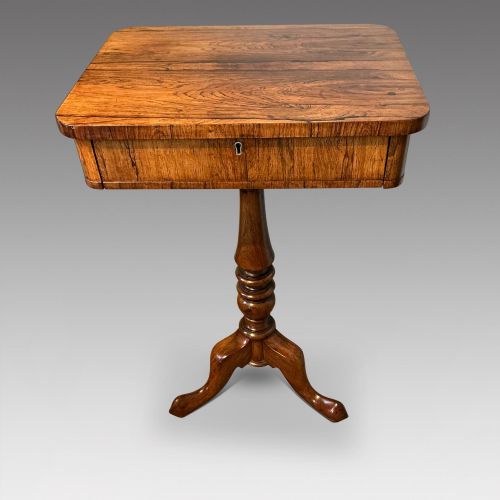
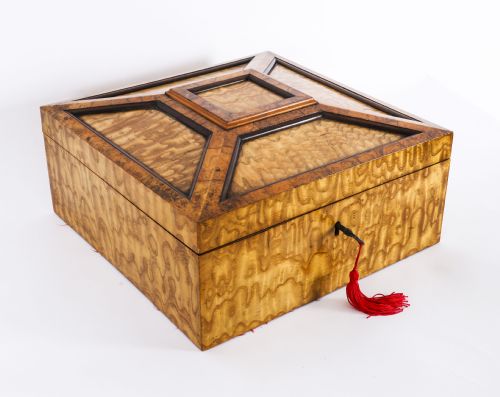
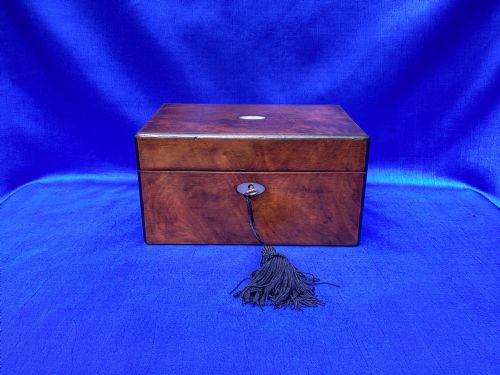
A victorian workbox encompasses portable desktop caskets and freestanding pedestal or trumpet tables designed specifically for sewing, games, and writing. The surviving examples range from compact inlaid wooden boxes to substantial walnut sewing tables fitted with interior compartments.
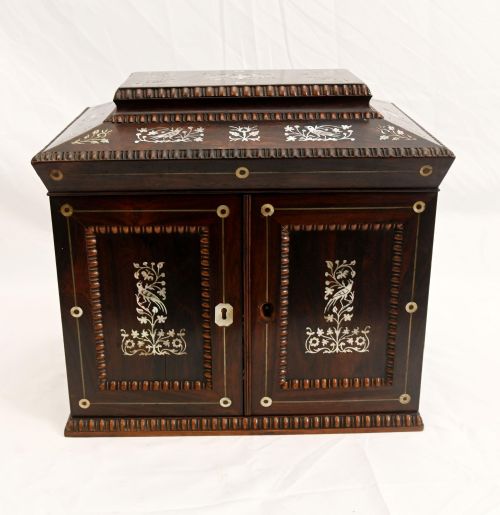
The freestanding trumpet tables and folding games tables dominate the pieces seen here, alongside smaller lap caskets finished with mother-of-pearl or Tunbridge ware. These items served a central role in nineteenth-century domestic interiors as both utilitarian sewing stations and decorative occasional furniture.
Materials and construction
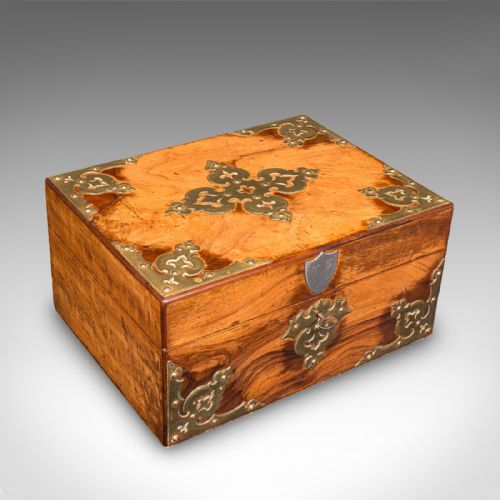
Cabinet makers utilised dense hardwoods including walnut, rosewood, and mahogany as the primary foundations, frequently applying burr walnut or maple veneers to create rich surface patterns. Decorative embellishments such as mother-of-pearl inlay, brass hardware, and intricate Tunbridge ware mosaics completed the exterior finish.
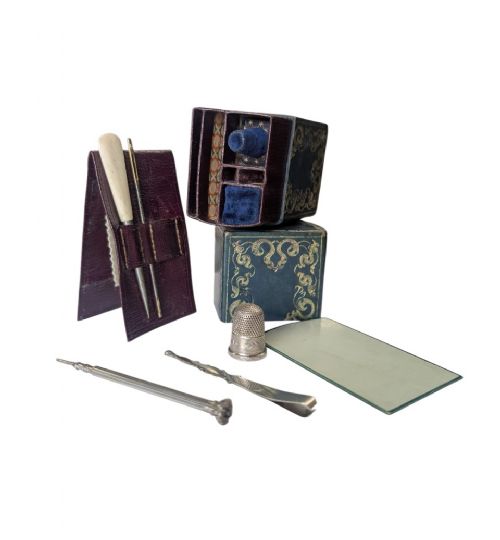
Interiors typically featured compartmentalised trays lined with fabric or velvet to hold needles, thread, and notions securely. Structural forms varied from folding octagonal trumpet bases to pedestal supports and occasional side tables.
The surviving forms range widely from miniature lap caskets and etuis to full-scale pedestal sewing tables and games boards.
Distinctions in quality
The refinement of the internal fittings and the precision of the exterior woodwork distinguish superior pieces from standard domestic examples. Finer items incorporate complex marquetry, specialised game boards, or intricate micro-mosaic Tunbridge ware rather than plain veneered surfaces.
The integrity of the original interior compartments and the execution of mechanical elements, such as pivoting tops or fitted drawers, mark the difference between master cabinet work and simpler utilitarian boxes.
The Victorian Workbox Glossary
- Trumpet workbox
- A freestanding sewing table featuring an octagonal or circular body that flares outward toward the base, resembling a trumpet. This form typically conceals a fabric storage bag beneath the hinged lid.
- Tunbridge ware
- A meticulous woodworking technique originating in Kent that creates detailed mosaic pictures from thousands of tiny coloured wood blocks. These geometric or pictorial designs frequently adorn the lids of nineteenth-century boxes.
- Etui
- A small decorative case designed to hold needles, scissors, tweezers, and other delicate implements. These portable containers appear in various materials including brass and mother-of-pearl.
- Marquetry
- The art of applying decorative veneer pieces of different woods, shell, or ivory to a structural surface to create pictorial or geometric patterns. It provides the elaborate ornamentation seen on many nineteenth-century table tops.
Victorian Workbox: Frequently Asked Questions
What is a trumpet workbox?
A trumpet workbox is a freestanding nineteenth-century table featuring a flared, octagonal body used for storing sewing materials and needlework. The hinged top opens to reveal fitted compartments above a suspended fabric bag.
Cabinet makers produced these pieces primarily in walnut and rosewood, combining the utility of a sewing station with the elegance of a small occasional table.
How were workboxes used?
Nineteenth-century women utilised workboxes to store sewing paraphernalia, threads, needles, and ongoing needlework projects. Tabletop caskets sat on side surfaces, while larger pedestal versions stood beside chairs in the parlour.
Many examples incorporate integrated chess or draughts boards on the lid, allowing the furniture to serve a dual purpose for leisure games as well as practical craft.
What woods are typical for these pieces?
Makers predominantly employed walnut, burr walnut, rosewood, and mahogany for the construction of nineteenth-century workboxes and sewing tables. Secondary woods such as maple and oak occasionally appear in internal trays or simpler country pieces.
Exotic materials including coromandel and olive wood also feature in specialised or imported caskets from the period.
How do I care for a wooden workbox?
Protect antique wood surfaces by keeping them away from direct sunlight and sudden temperature shifts that can cause veneers to split or lift. Regular dusting with a soft, dry cloth preserves the polished finish without moisture damage.
Interior velvet and fabric linings require gentle brush cleaning to remove dust while protecting the delicate original textile compartments.