

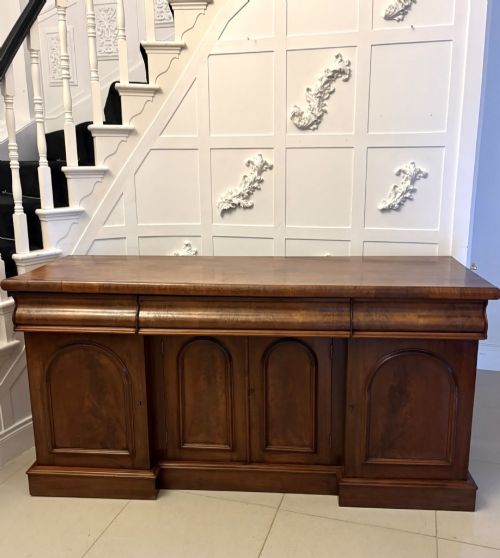
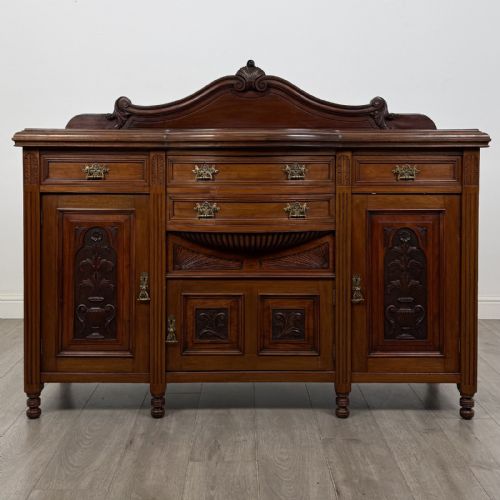
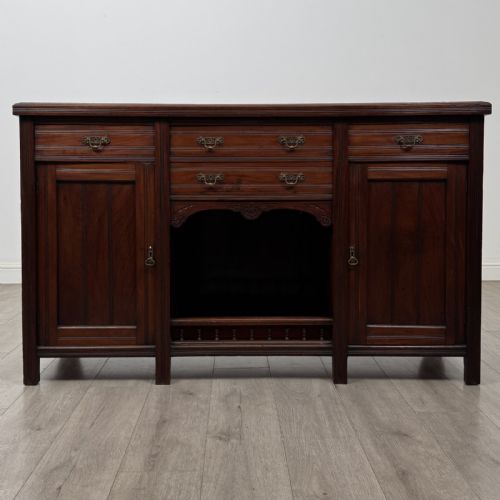
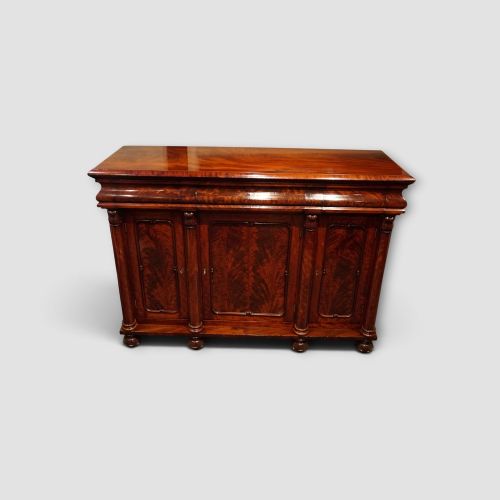
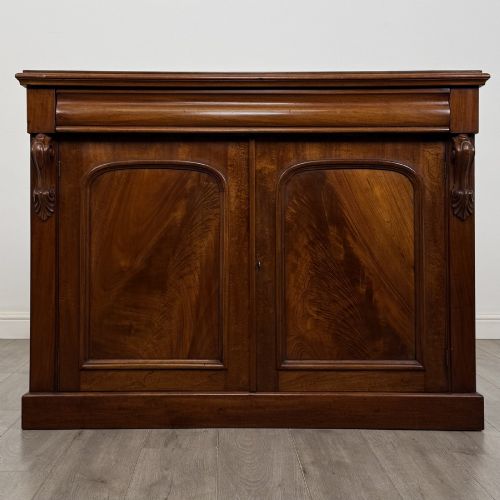
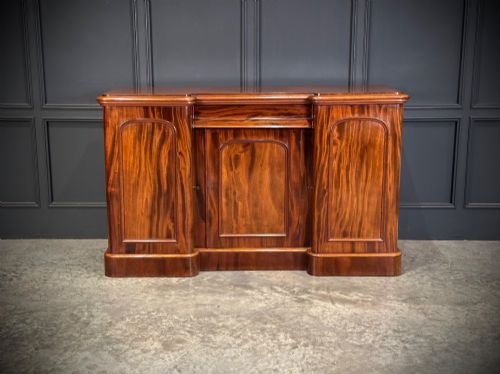
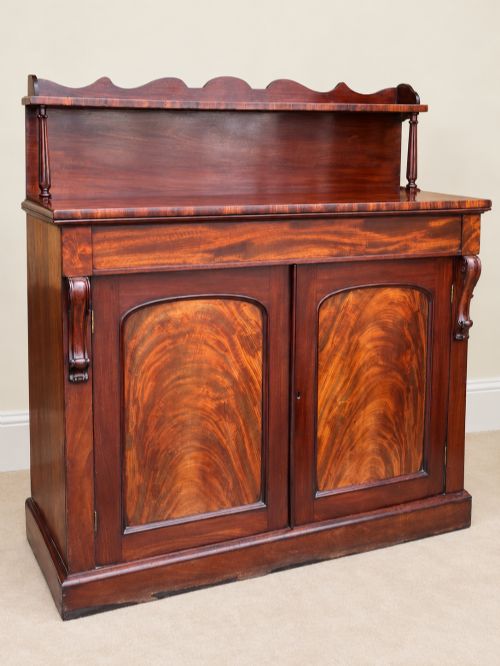
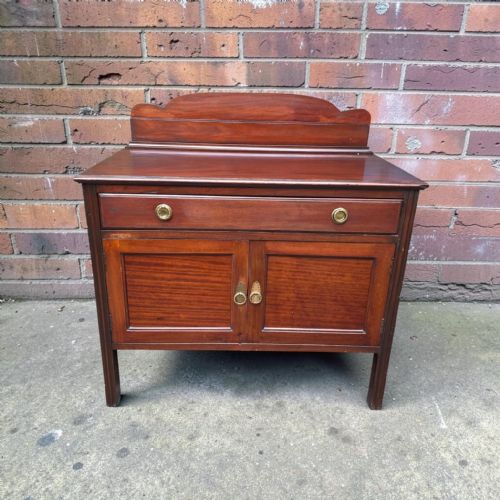
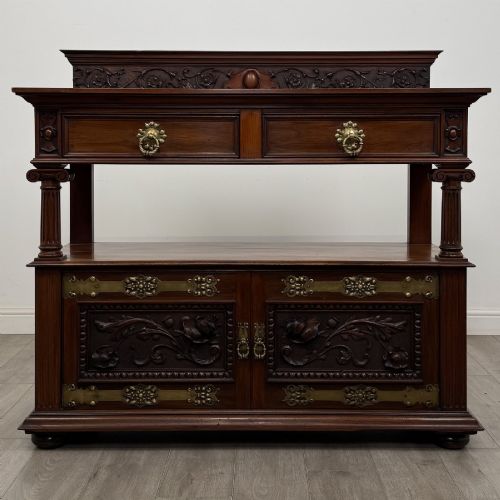
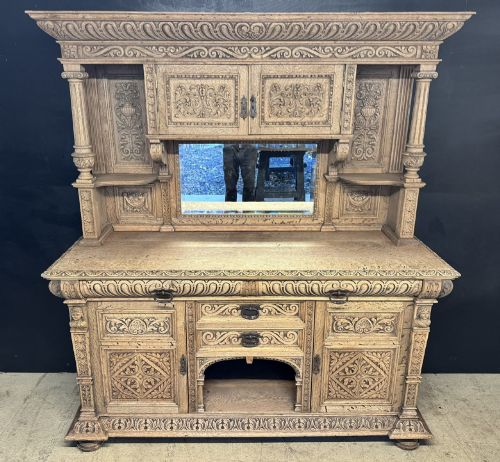
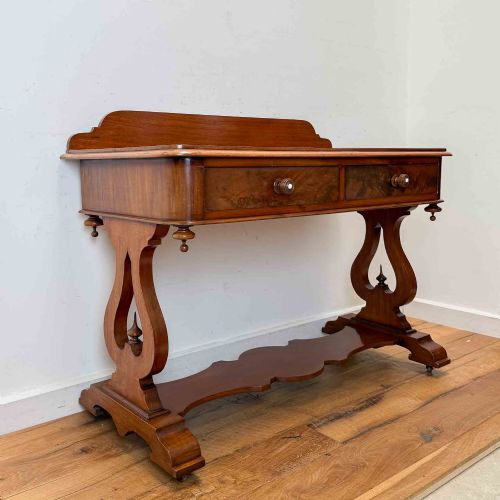
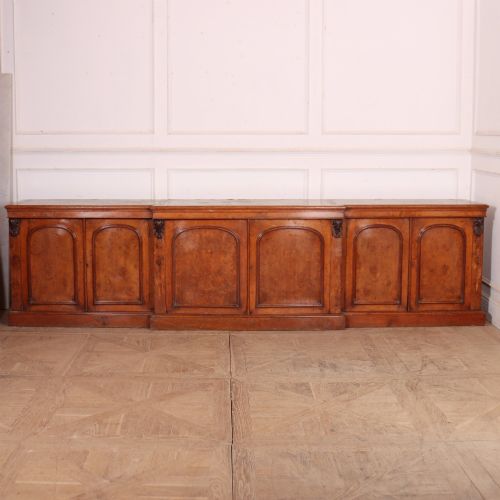
Victorian Wooden Server Cabinet
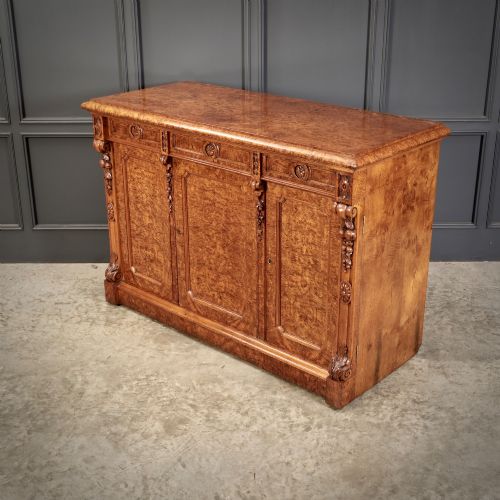
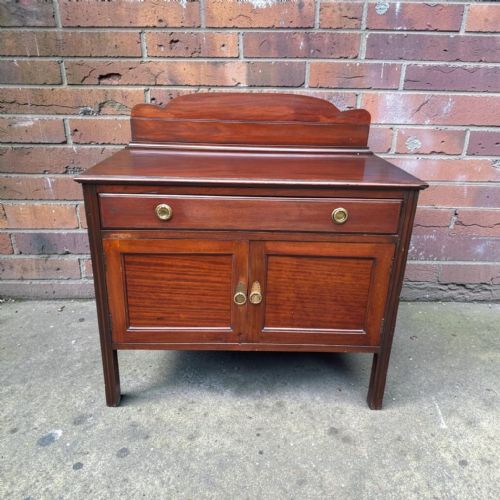
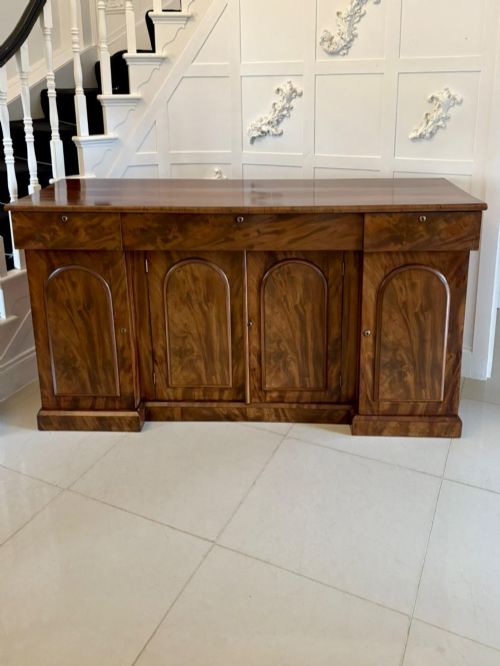
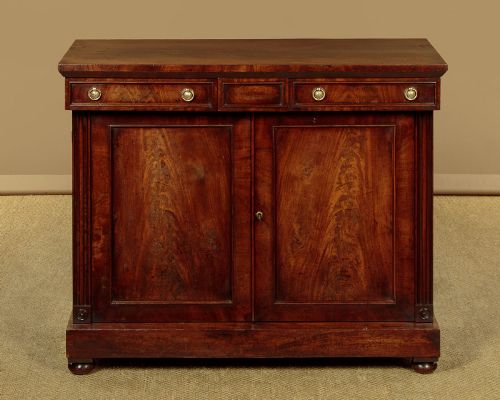
A victorian wooden server cabinet provides substantial dining room storage through heavy timber construction and fitted interior drawers.
Victorian Wooden Server Cabinet
A victorian wooden server cabinet encompasses large dining room storage forms such as sideboards, chiffoniers, credenzas, and buffet units. These heavy case pieces typically feature multiple doors, internal shelving, and dedicated cutlery drawers for entertaining.
The pieces appearing on this page span the broader Victorian period alongside related 19th-century styles including William IV, Regency, and Aesthetic Movement designs. Mahogany remains the dominant timber, accompanied by walnut, oak, and pine.
Buyers will encounter formal pedestal sideboards with carved panel doors alongside lower chiffonier cabinets and kitchen dresser bases. Many incorporate practical surfaces, enclosed cupboards, and occasional mirror backs.
How they were made
Cabinet makers utilised dense native and imported timbers, pairing solid mahogany, oak, and walnut with figured veneers like flame mahogany and pollard oak. Carved details such as ionic columns, lion mask motifs, and urn panels were applied by hand to solid carcases.
Internal construction relied on traditional joinery methods, incorporating dovetailed drawer boxes and panelled doors hung on brass hinges. Decorative elements occasionally extended to brass hardware, marble tops, and mother-of-pearl inlay.
Victorian Wooden Server Cabinet Retail Price Guide 2026
Typical asking prices for victorian wooden server cabinet among the pieces listed under this phrase on Sellingantiques today, from the lower quarter to the upper quarter. They describe what is for sale here now, not the wider market.
Several Victorian sideboards include specially fitted interior compartments designed solely to keep heavy silver cutlery from rattling.
What varies in quality
Quality reveals itself in the selection of timber figures, where book-matched flame mahogany veneer or figured walnut creates striking grain patterns across large surfaces. The depth and crispness of hand-carved architectural details, such as ionic columns or lion masks, distinguish finer examples from standard production.
Structural integrity and internal fittings mark further distinctions, with superior pieces offering fitted cutlery drawers, robust secondary timbers, and well-executed joinery that maintains smooth operation across heavy doors and multiple tiers.
The Victorian Wooden Server Cabinet Glossary
- Chiffonier
- A compact sideboard or side cabinet featuring enclosed lower cupboards and often a raised shelf or mirror superstructure.
- Pedestal sideboard
- A large dining room case piece comprising two heavy end pedestals connected by a central board or recessed cupboard.
- Flame mahogany veneer
- A decorative wood slice cut from the branch junction of a mahogany tree to produce a distinctive flickering flame pattern.
- Pollard oak
- Timber taken from trees that have been pollarded, creating dense growth rings and highly textured, mottled figuring.
- Credenza
- A low dining room cabinet or sideboard, sometimes fitted with a marble top and mirrored back in Victorian revivals.
Victorian Wooden Server Cabinet: Frequently Asked Questions
What is a chiffonier?
A chiffonier is a compact sideboard style that typically includes enclosed lower cupboards with a small shelf or mirror tier above.
These pieces served smaller dining spaces or drawing rooms during the nineteenth century.
How were these cabinets used?
Dining room cabinets stored heavy porcelain, glassware, silver, and table linens ready for formal meals.
Fitted interior drawers kept cutlery organised, while the top surface held serving dishes during dinner.
Where should I place a sideboard?
These substantial wooden cabinets anchor dining rooms, large hallways, or spacious living areas against a blank wall.
Ensure adequate floor space is available for the heavy case and the swing of wide cupboard doors.