


Victorian Wooden Buffet Table
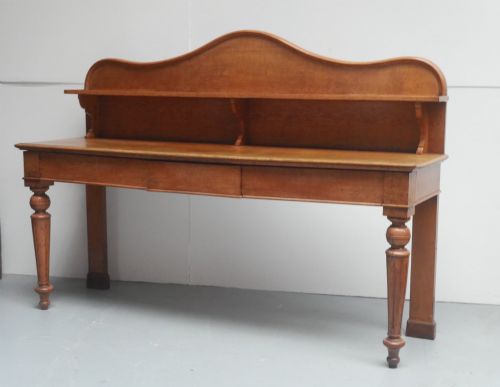
A victorian wooden buffet table brings grand proportions and rich timber grain to a dining room, offering serious surface space for serving food.
Victorian Wooden Buffet Table
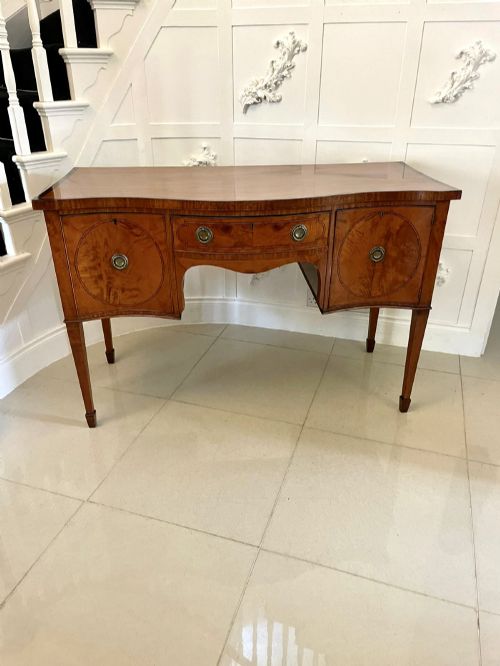
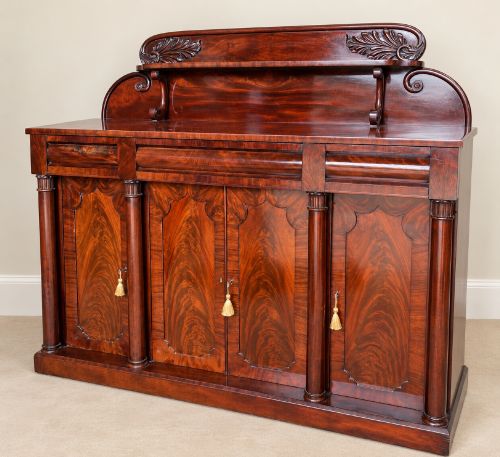
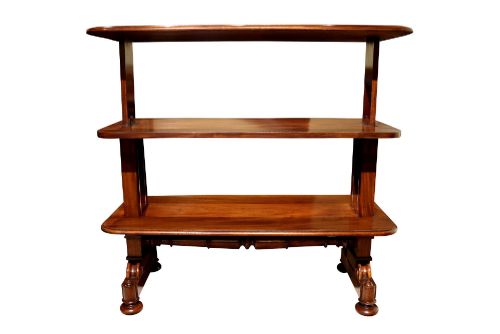
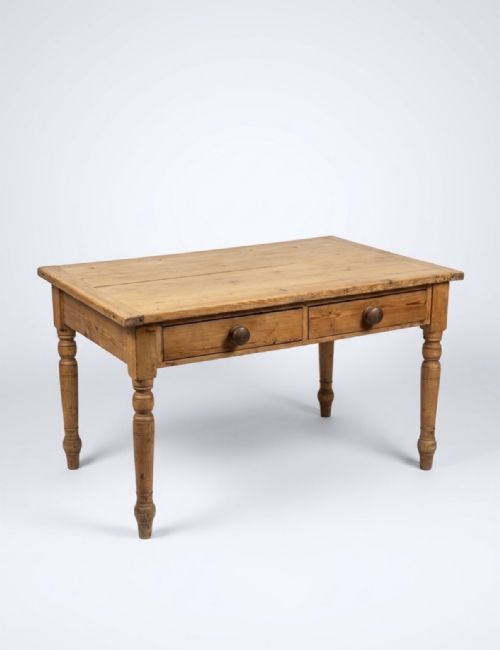
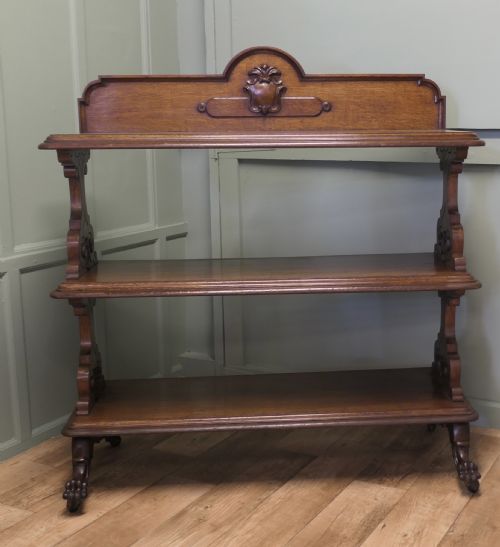
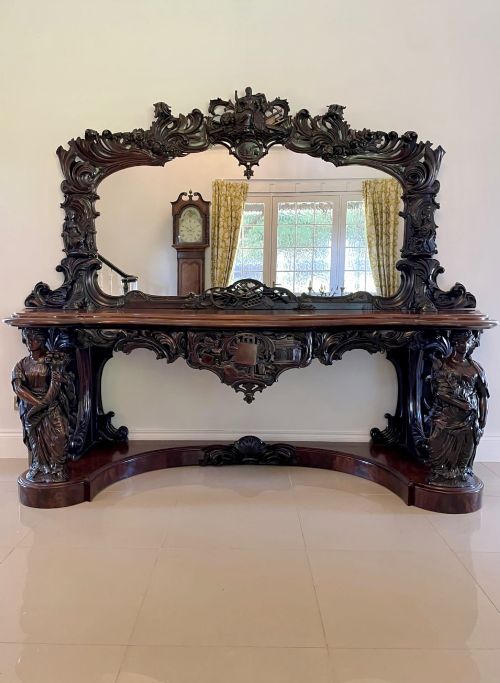
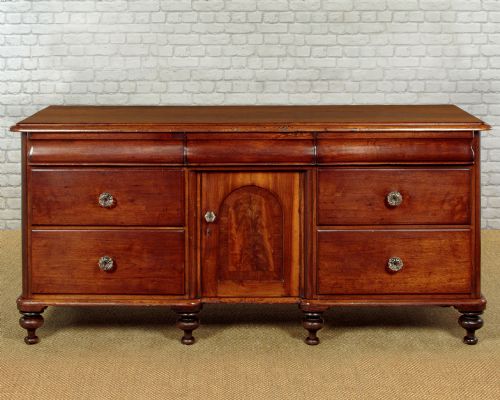
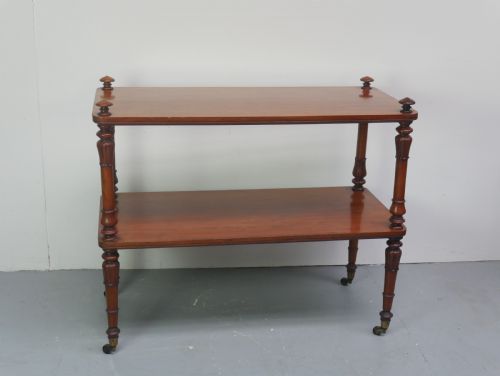
When searching for a victorian wooden buffet table, you encounter substantial serving furniture built to handle heavy dining rooms in the nineteenth century. The examples found here span formal pedestal sideboards, tiered dumb waiters, and carved servers designed to hold dishes during large meals.
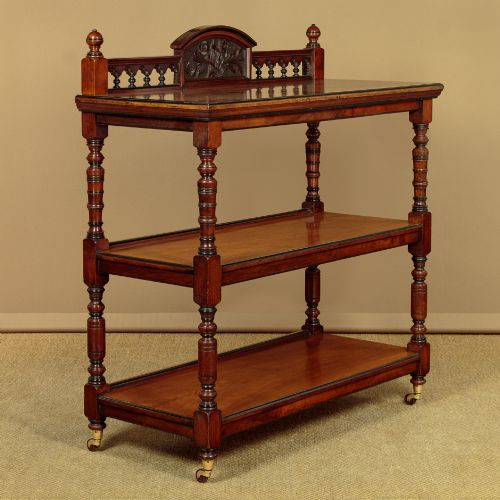
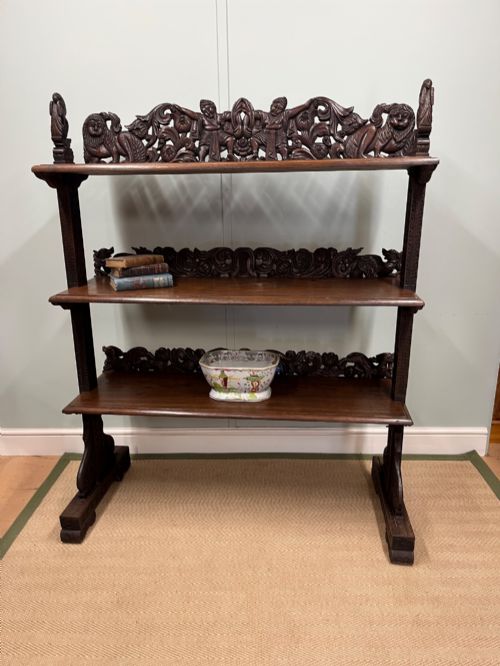
Mahogany and walnut dominate the selection, often shaped into three-tier revolving or stationary dumb waiters alongside larger breakfront sideboards. Pieces frequently exhibit regional variations, including Scottish oak servers and intricate Anglo-Indian padouk or Burmese carved examples.
Makers and styles stretch from William IV adaptations into Aesthetic Movement and Gothic Revival forms, reflecting changing domestic fashions across the decades. Smaller proportions appear alongside exhibition-quality pieces, ensuring options suit both intimate parlours and spacious dining halls.
Materials and construction methods
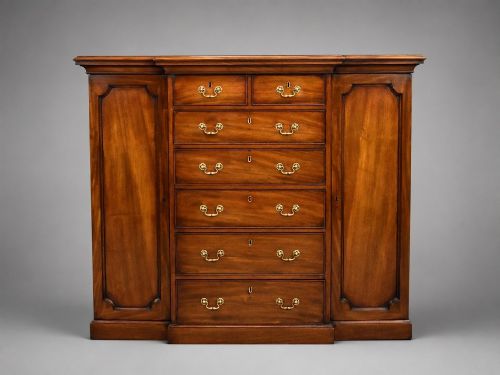
Cabinet makers relied heavily on solid mahogany, walnut, and oak, frequently applying flame mahogany veneer to drawer fronts and doors for visual depth. Secondary timbers like pitch pine support internal structures, while brass handles, castors, and gallery rails provide durable metallic accents.
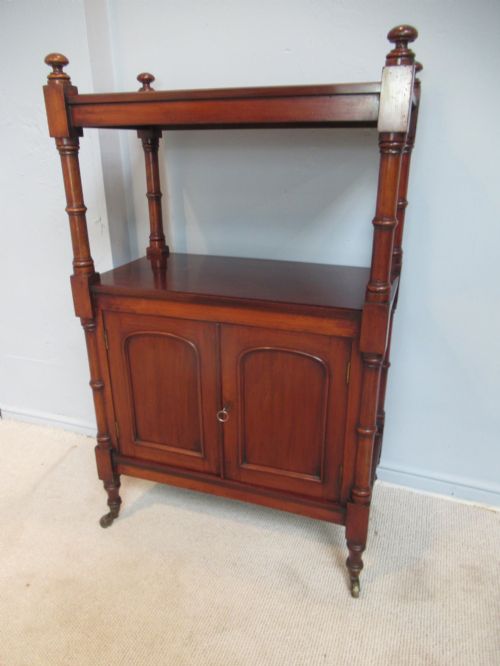
Carved details appear across many pieces, executed by hand on oak and walnut panels with deep relief work typical of Gothic Revival and late nineteenth-century workshops. Dumb waiters often utilise clever rising mechanisms or multi-tiered shelves joined by turned columns and supported on original brass castors.
Listings feature items built from 1830 through the late Victorian period, incorporating materials like brass, glass, and flame mahogany veneer.
Judging quality in period sideboards
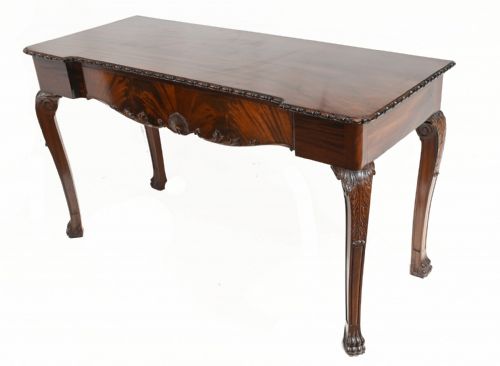
The distinction between standard utility items and top-tier pieces rests on timber selection and the crispness of the hand-carving. Superior examples employ highly figured flame veneers, thick solid drawer linings, and substantial brass hardware that has survived intact.
Proportion and structural integrity dictate value, particularly in multi-tiered dumb waiters where upright supports must remain rigid under weight. Pieces retaining their original castors, polished finishes, and smooth operating mechanisms represent the finest tier of workshop output.
Gillows of Lancaster and London·Robson and Sons
The Victorian Wooden Buffet Table Glossary
- Dumb waiter
- A multi-tiered serving table or stand used in dining rooms to hold dishes without requiring servants present. These typically feature two or three graduating shelves on a central column or upright supports.
- Flame mahogany veneer
- A thinly sliced wood layer displaying a distinct flickering flame pattern cut from the fork of the mahogany tree. Cabinet makers applied this to focal points like doors and drawer fronts for decorative impact.
- Chiffonier
- A compact sideboard or low cupboard developed during the nineteenth century for smaller drawing rooms. They frequently incorporate shelved superstructures or mirrored backs.
- Serpentine shaped
- A curved front edge undulating outwards at the centre and inwards at the sides. This contour requires skilled carpentry and appears on higher-grade case furniture.
- Padouk wood
- A dense, heavy tropical timber displaying rich reddish-brown tones, utilised in imported Anglo-Indian and Burmese furniture. It takes a fine polish and resists splitting.
Victorian Wooden Buffet Table: Frequently Asked Questions
What is a three-tier buffet used for?
These tiered pieces functioned as mobile serving stations during large meals, holding plates, cutlery, and dishes close to the dining table.
Today, they suit living spaces as display shelves, book racks, or occasional tables for lamps and decorative objects.
What wood was most commonly used?
Mahogany and walnut form the vast majority of these pieces, often enhanced with flame mahogany veneers or decorative carved details.
Oak, pitch pine, and imported padouk wood also appear frequently, reflecting both regional British tastes and global trade connections.
Are these pieces suitable for modern dining rooms?
Their substantial proportions and deep timber surfaces provide practical storage and serving areas that rival contemporary furniture.
Placing one against a dining room wall offers an authentic period surface for drinks, dishes, or lamps.