
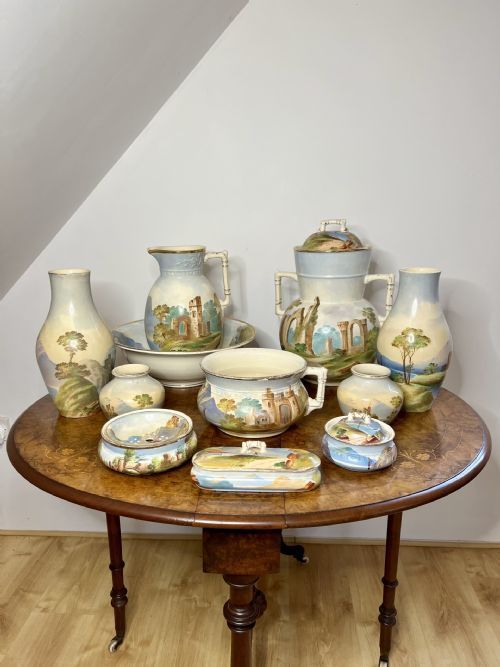


Victorian Wash Set
These robust earthenware and porcelain vessels make a striking visual statement while connecting your home to nineteenth-century domestic routines.

How they were made
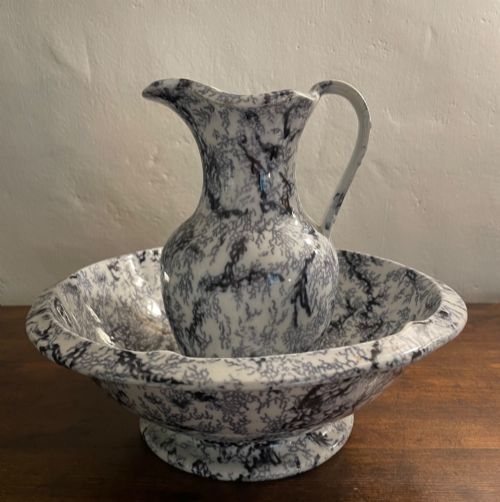
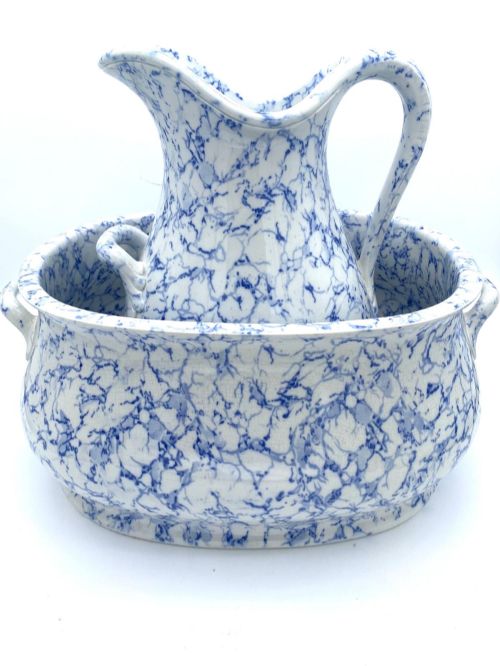
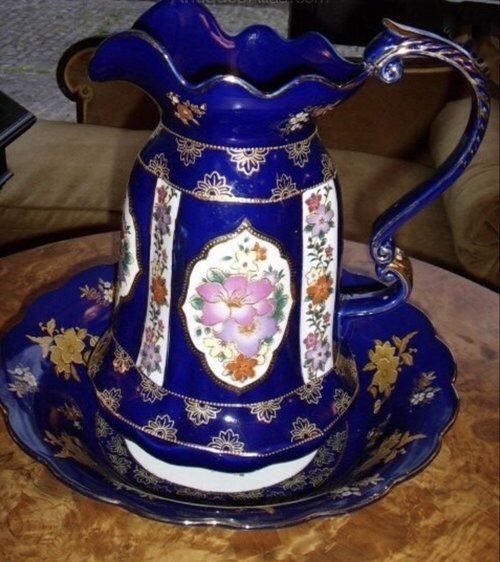
Potters shaped these vessels using earthenware, ironstone, and porcelain bodies, which were then fired and coated with a glaze. Decoration was applied using transfer printing techniques, such as flow blue, or through hand-painted floral designs and gold leaf accents.
Glass sets utilised blown or moulded cranberry glass, reflecting different manufacturing demands than their ceramic counterparts. Wooden washstands and accessories incorporated turned pine or bentwood construction to support the heavy basins and jugs during daily use.
What varies in quality
Quality reveals itself in the crispness of the transfer print or the precision of the hand-painted flower design, alongside the weight and resonance of the ceramic body. Pieces produced by established factories exhibit finer potting and more consistent glaze application than standard utility wares.
Completeness dictates much of the value in these sets, as surviving four-piece or multi-piece configurations remain harder to find intact than solitary jugs or basins. The presence of secondary items like matching soap dishes or chamber pots elevates a set from a simple basin and pitcher combination.
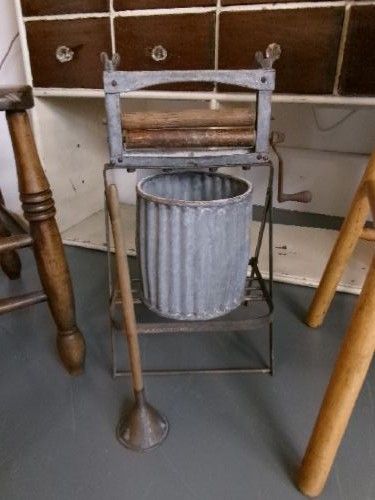
Travellers squeezed miniature laundry mangles into tiny spaces to press their Victorian garments on the road.
Masons Ironstone·Doulton Burslem
The Victorian Wash Set Glossary
- Flow blue
- A cobalt blue transfer printing style from the nineteenth century where the colour intentionally bled slightly into the white glaze during firing.
- Ironstone
- A heavy, durable type of earthenware patented in the nineteenth century that resists chipping better than standard porcelain.
- Earthenware
- Porous ceramic fired at lower temperatures, commonly used for utilitarian nineteenth-century wash sets before being glazed.
- Cranberry glass
- A rich pinkish-red glass produced by adding gold chloride to the molten glass mixture during the Victorian era.
Victorian Wash Set: Frequently Asked Questions
How were wash sets used daily?
Victorian households filled the large pitcher with water from a kitchen or pump, pouring it into the basin for morning and evening washing. Servants or family members emptied the basin into slop buckets once the ablutions finished.
These routines took place in bedrooms on wooden washstands before indoor bathrooms became standard fixtures in homes. The sets provided a practical means of personal hygiene when running water was absent.
What pieces belong in a complete set?
A standard nineteenth-century ensemble centres on a large water jug and a deep washing basin. Additional matching components often included soap dishes, toothbrush holders, slop pails, and chamber pots.
Many surviving listings contain only the core jug and bowl pair due to breakage over the decades. Finding a matched group with supplementary vanity vessels is less common.
How do I date an antique wash set?
Maker marks stamped or printed on the undersides of ceramics provide the most reliable chronological indicators. Stylistic clues, such as heavy Victorian floral transfers versus simpler Edwardian patterns, also help narrow the decade.
Materials offer further context, as ironstone and flow blue decoration point firmly to the nineteenth century. Glass sets and specific aesthetic movement shapes correspond to distinct periods of popularity.
Where can I display a wash set?
These large ceramic pieces suit heavy wooden washstands, sideboards, or deep shelves where their weight and scale remain supported. Placing the jug inside or beside the matching basin creates a traditional focal point.
Care must be taken to position them away from high-traffic household edges due to their size and fragile ceramic or glass composition. Many collectors utilise them as decorative floor or table accents in bathrooms and hallways.