
Victorian Walnut Writing Table
A victorian walnut writing table brings deep burr veneers and fitted leather skivers together into a practical study piece.
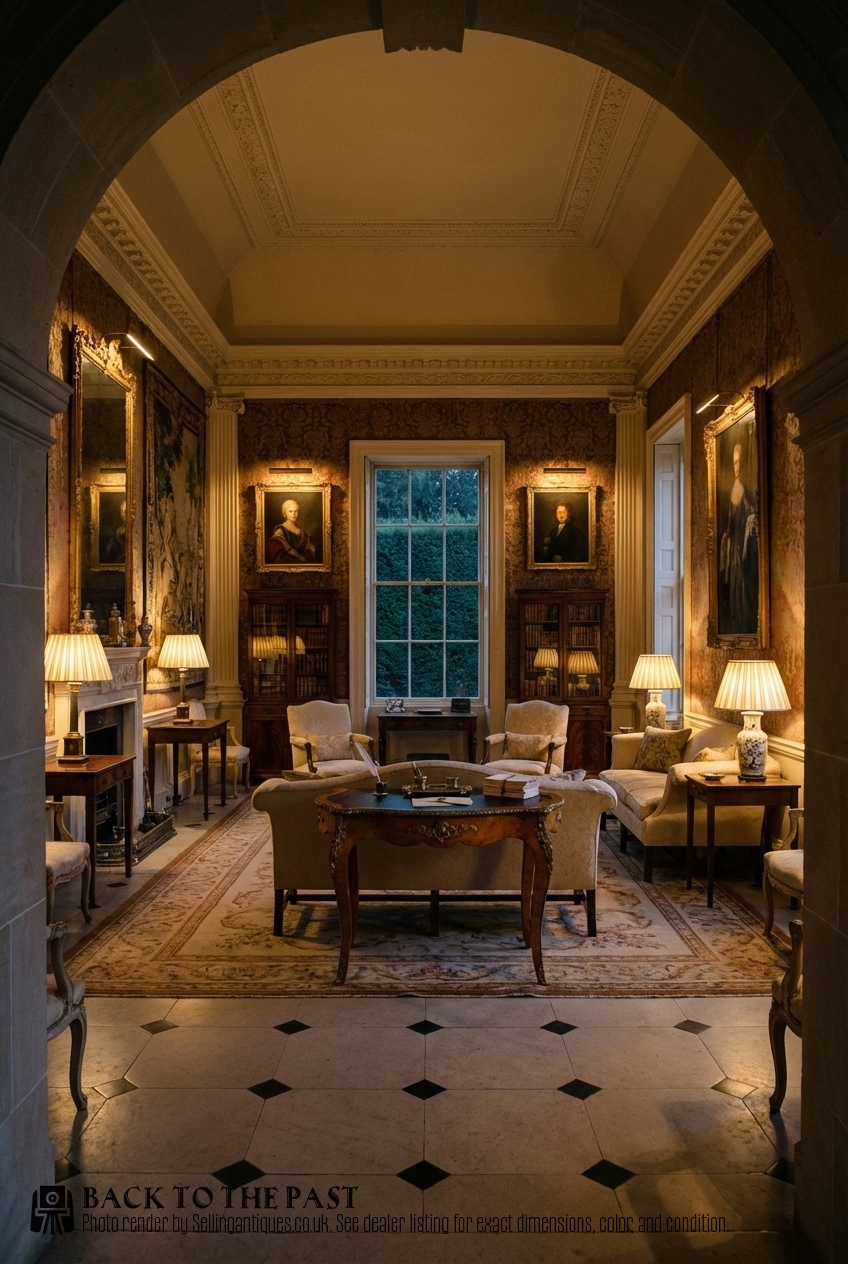
Victorian Walnut Writing Table
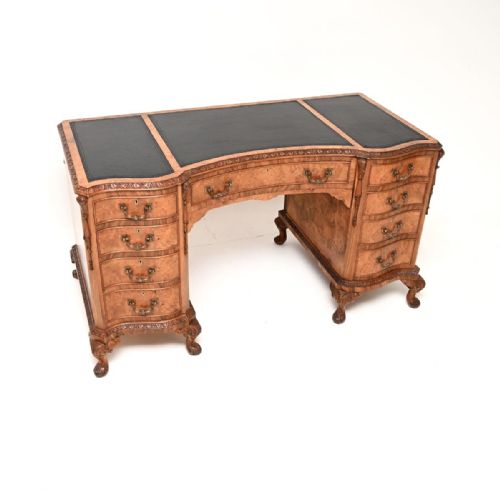
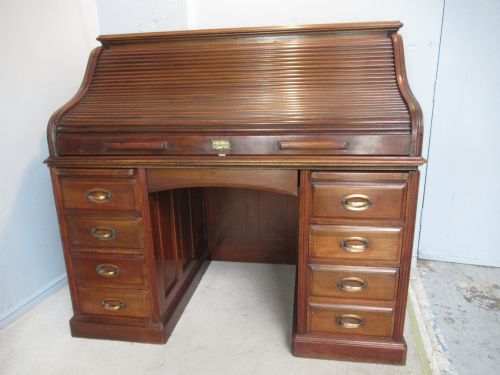
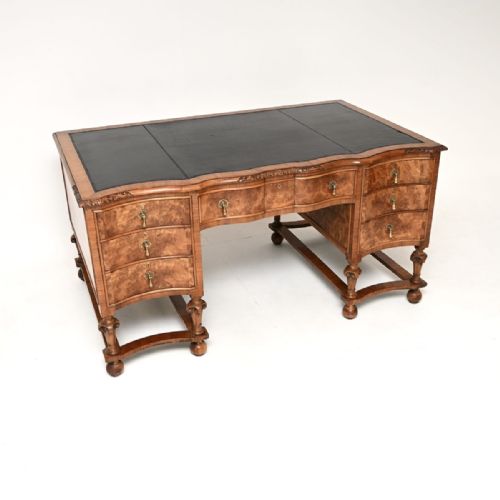
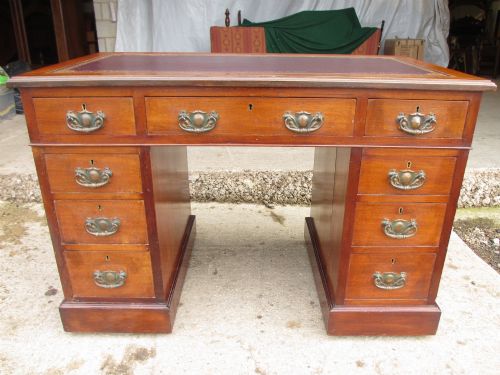
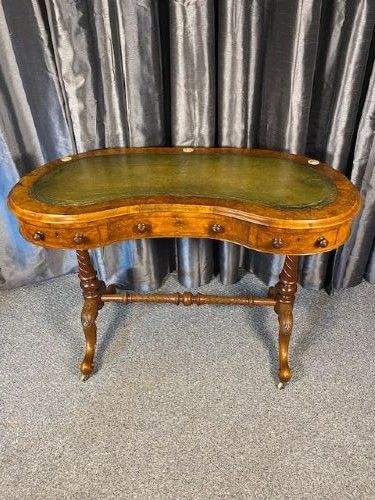
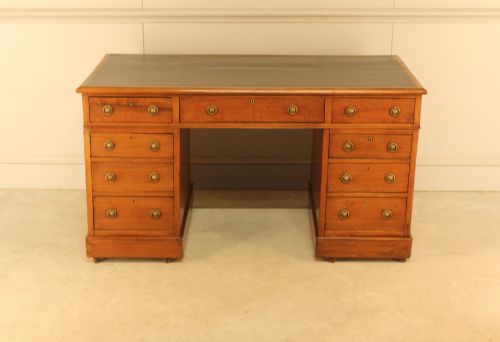
A victorian walnut writing table unites mid to late nineteenth-century cabinetmaking with rich timber surfaces designed for the study or library. These pieces range from compact kidney-shaped writing desks intended for domestic sitting rooms to large partners tables built for communal office work.
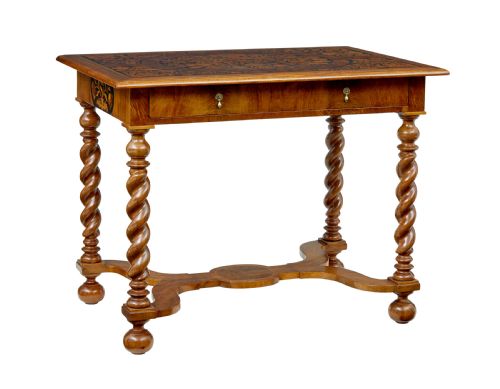
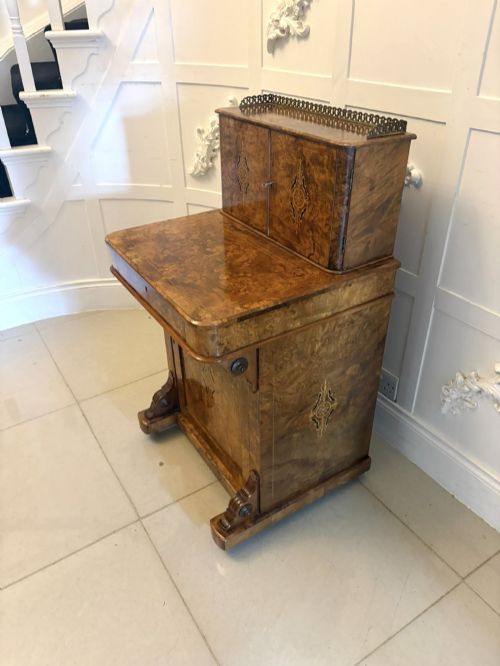
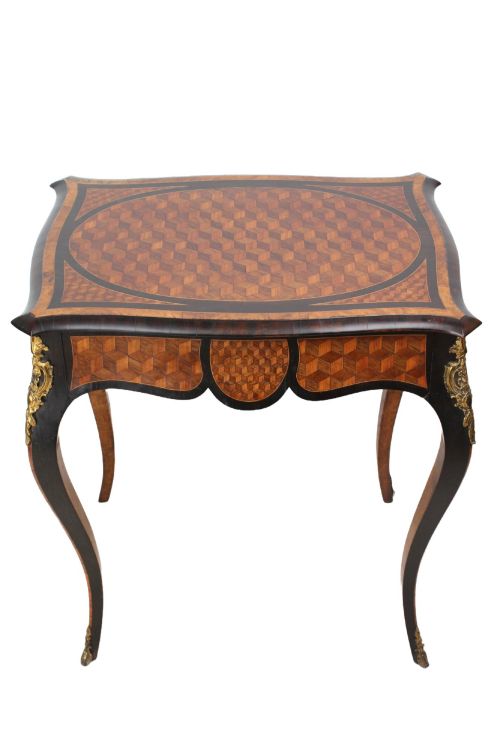
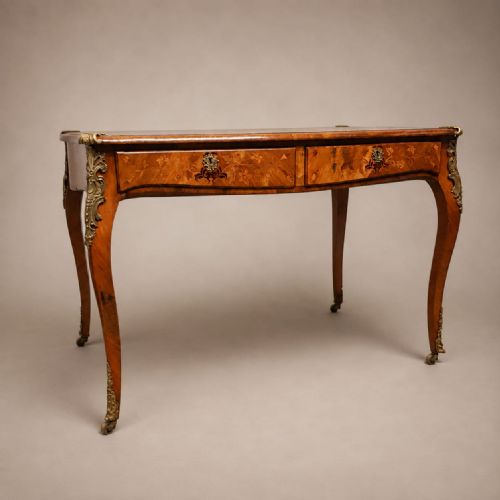
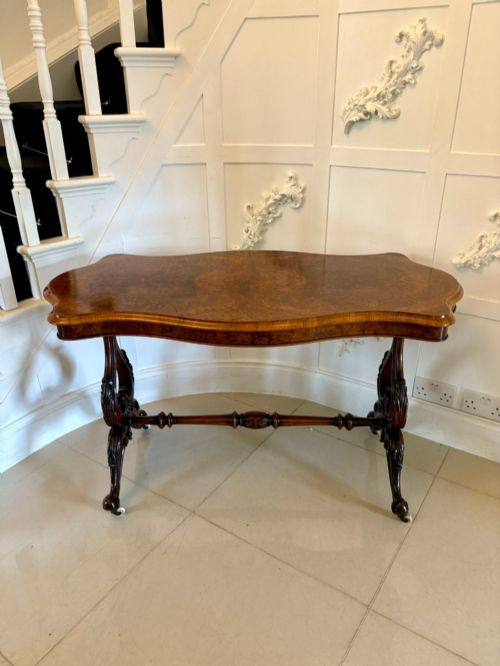
The version most commonly encountered on this page relies on burr walnut veneers, often paired with inset tooled leather surfaces and turned or carved supports. Makers frequently incorporated small drawers, stationery compartments, or intricate parquetry inlay to elevate the utility of the design.
How they were made
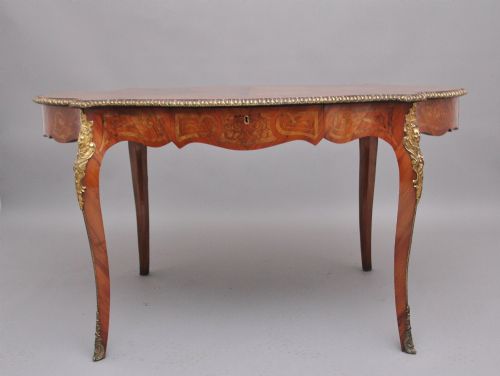
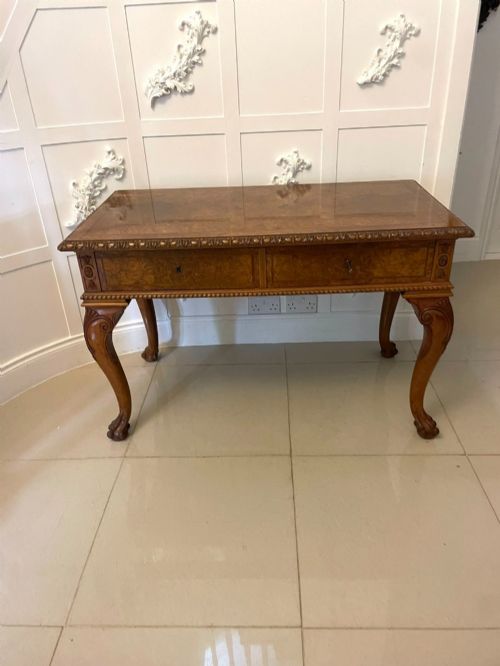
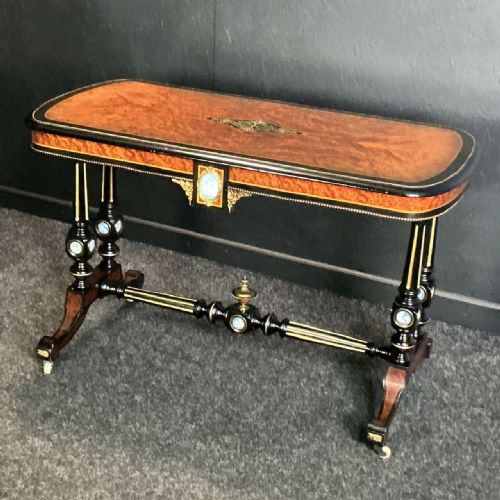
Cabinetmakers selected figured burr walnut veneers for their swirling grain patterns, laying them over secondary woods such as oak or pine to form stable tabletops and drawer fronts. Sections were often accented with crossbanding in contrasting timbers like kingwood, whilst brass mounts, ormolu, and ebonised details provided decorative contrast.
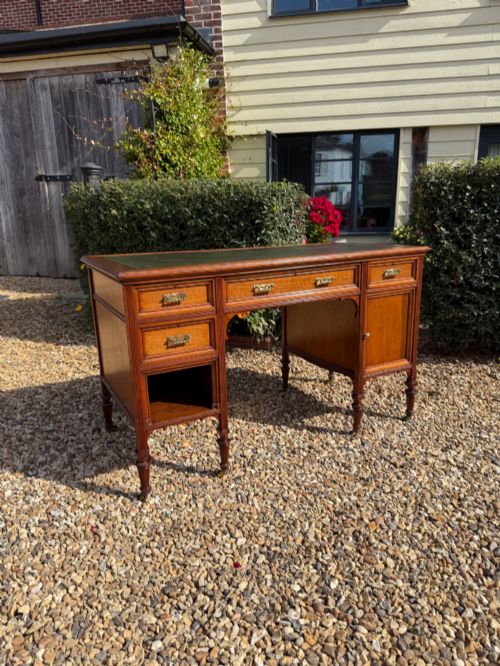
Writing surfaces were typically inset with hand-tooled leather skivers, secured by delicate gilt tooling around the perimeter. Joinery relied on traditional dovetailing for the drawer boxes and robust framing for the undercarriages to support the weight of the solid timber.
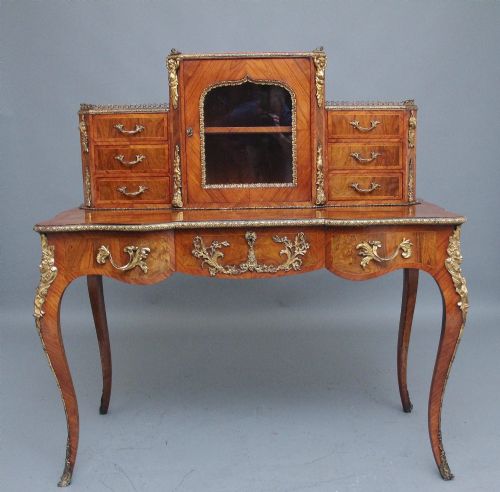
Some nineteenth-century ladies desks include hidden stationery compartments designed to secure secret correspondence.
What varies in quality
Quality rests upon the selection and matching of the burr walnut veneer across the primary surfaces, where symmetrical grain alignment indicates superior workshop standards. The crispness of hand-carved mahogany or walnut mounts and the precision of inlaid stringing further distinguish standard commercial production from bespoke commissions.
Internal construction reveals the maker's hand through secondary woods chosen for drawer linings and the weight of the brass hardware utilised throughout. Pieces originating from documented cabinetmakers frequently display superior finishing to the interior partitions and drawer divisions.
JAS Shoolbred·Maple and Co·Edwards and Roberts·Hindley and Sons·Holland and Sons
The Victorian Walnut Writing Table Glossary
- Burr walnut
- A prized timber harvested from walnut tree growths, displaying complex swirling grain patterns. It was sliced into thin veneers for tabletops and drawer fronts.
- Partners desk
- A large double-sided writing table designed for two people to work opposite each other. These examples feature banks of drawers on both long sides.
- Kidney shaped
- A curved desk or table silhouette resembling a kidney bean. This form gained popularity during the mid-nineteenth century for smaller writing and sewing tables.
- Crossbanding
- A decorative border technique where veneer strips are laid perpendicular to the main grain. It frames the perimeter of tabletops and drawer fronts.
- Parquetry
- Geometric wood inlay patterns assembled from small contrasting veneer tiles. It frequently decorates the tops of finer writing tables and centre tables.
Victorian Walnut Writing Table: Frequently Asked Questions
How are these tables cleaned?
Dust surfaces regularly with a soft, dry cloth to prevent particulate accumulation on the delicate burr walnut veneer.
Feed the timber periodically with traditional beeswax and maintain leather skivers using specialist neutral leather balms.
Where should a writing table sit?
Freestanding examples with finished backs suit central room placements as library tables or hallway centrepieces.
Pedestal and kneehole versions fit against walls or beneath windows where natural light aids writing tasks.
Did these tables have leather tops?
Many nineteenth-century writing desks featured inset leather skivers to provide a smooth, resilient writing surface.
Tooling in gold leaf around the perimeter was standard practice for finer library tables and partners desks.
What defines a kidney table?
The curved plan view allows the user to sit close to the centre whilst maintaining a compact footprint.
These pieces were frequently constructed as ladies writing desks or occasional tables during the Victorian period.