


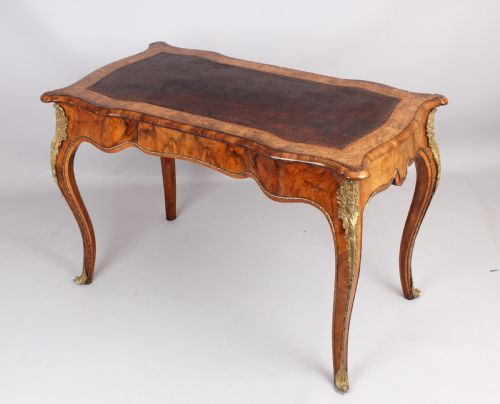


Burr Walnut Bureau Plat
A burr walnut bureau plat is a grand writing table built to sit proudly in the middle of a room rather than against a wall.
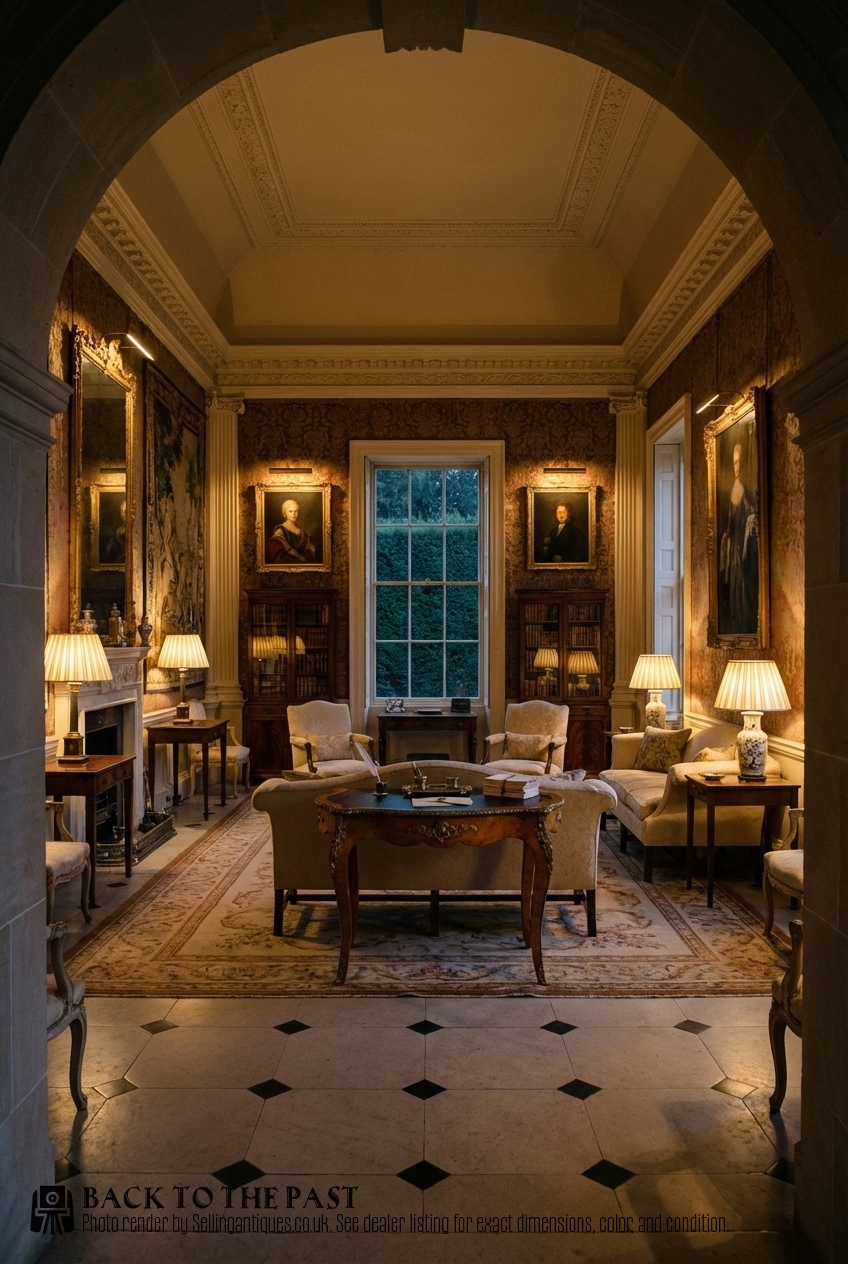
Burr Walnut Bureau Plat
When you search for a burr walnut bureau plat, you are looking at fine freestanding writing tables that draw upon nineteenth-century French revival designs. These pieces frequently emerge from the nineteenth century, spanning decades such as eighteen-sixty, eighteen-seventy, eighteen-eighty, and eighteen-ninety within the Victorian period.
The forms on this page include kidney-shaped writing desks, centre tables, and tables featuring floral marquetry. Most examples display the rich influence of Louis XV style and French rococo revival aesthetics, combining workspace utility with decorative presence.
Origins represented in these records encompass English workshops as well as French cabinet-makers. Buyers meet everything from simple walnut writing tables to elaborately mounted centre desks intended for prominent domestic placement.
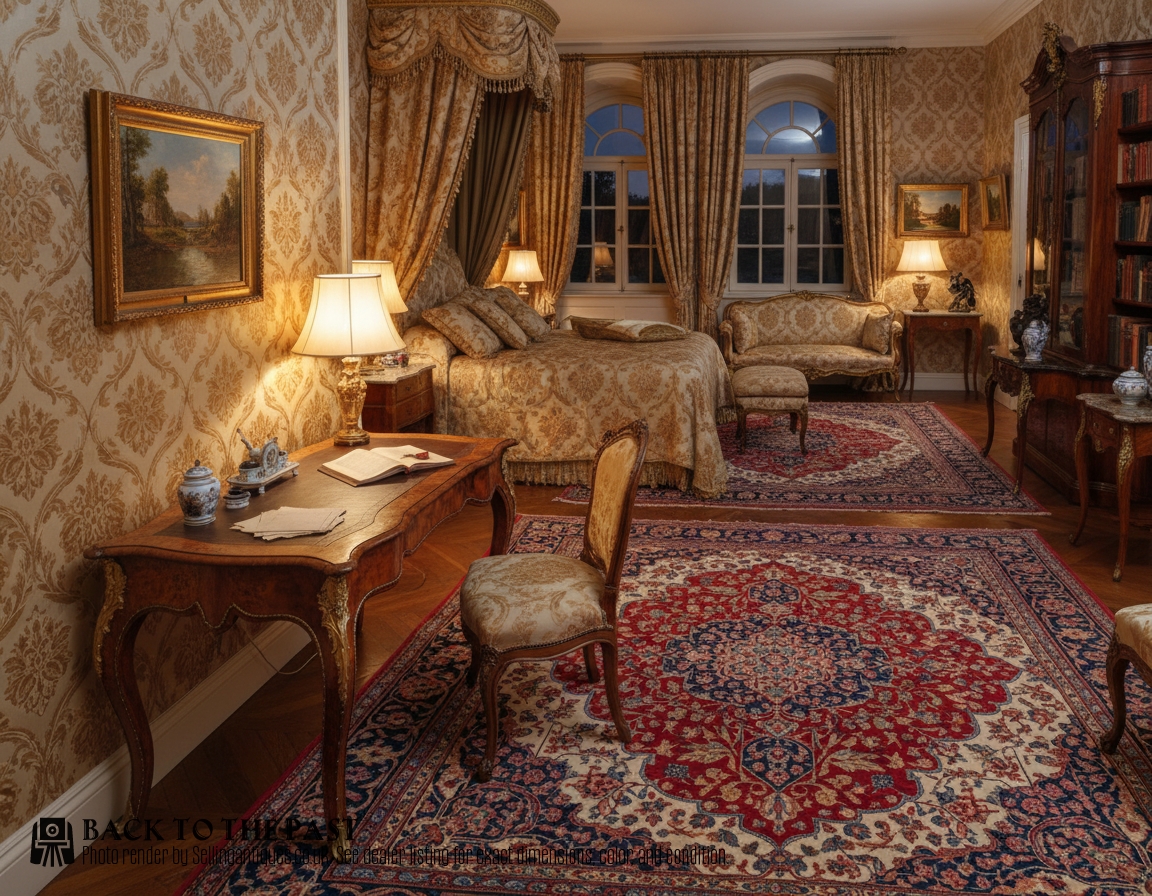
Distinguishing quality
The selection of the burr walnut veneer dictates the immediate visual impact of the desk, where tightly swirled grain patterns command greater appreciation than plain timber. The crispness and weight of the ormolu mounts further separate standard production from superior craftsmanship.
Meticulous joinery and the presence of fine floral marquetry indicate higher tiers of nineteenth-century manufacture. Tables finished carefully on the reverse side demonstrate the proper execution expected of a true bureau plat designed to stand in open space.
Listings feature burr walnut, coromandel, ormolu, and leather across nineteenth-century Victorian forms.
The Burr Walnut Bureau Plat Glossary
- Bureau plat
- A freestanding writing table fitted with drawers, designed to be viewed from all sides in the centre of a room. These tables originate largely from French fashion and nineteenth-century revivals.
- Burr walnut
- Timber taken from the wart or burl of a walnut tree, yielding a twisted, highly decorative grain pattern. Cabinet-makers sliced this wood into thin veneers for tabletops.
- Ormolu
- Gilded bronze mounts applied to furniture edges and legs for decoration. The technique involves applying a mercury-gold amalgam to cast bronze.
- Marquetry
- The art of applying pieces of veneer to a structure to form decorative patterns and pictures. Floral designs are common in nineteenth-century examples.
Burr Walnut Bureau Plat: Frequently Asked Questions
Where did these desks sit?
Owners placed these desks in the centre of studies, libraries, or reception rooms where the finished back could be seen. They served as primary writing surfaces for correspondence and estate management.
Because they are decorated on every side, they functioned as room-dividing furniture in grand Victorian interiors.
How do I identify Louis XV style?
Louis XV style furniture is characterised by asymmetrical curves, cabriole legs, and naturalistic rococo ornament. You will notice sweeping lines and floral motifs rather than straight classical geometry.
Nineteenth-century revival pieces embraced these flowing French shapes with enthusiasm.
What is burr walnut?
Burr walnut comes from a growth on the walnut tree where the grain has grown in a deformed, swirling manner. When sliced into veneers, it produces intricate, eyesore patterns highly prized by cabinet-makers.
This timber provides the rich, mottled texture seen across the surfaces of these desks.