
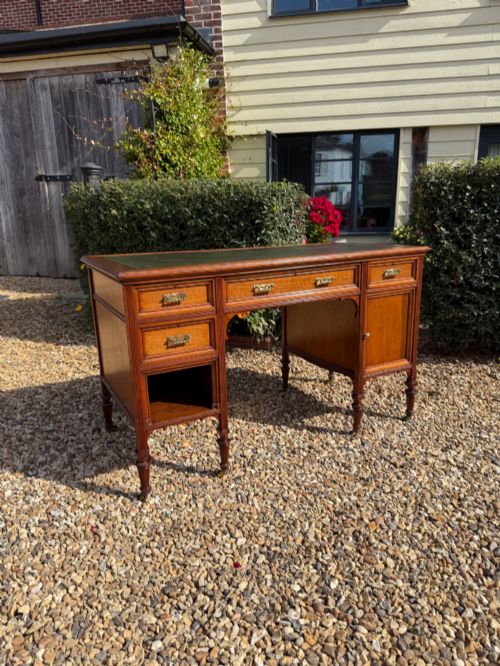
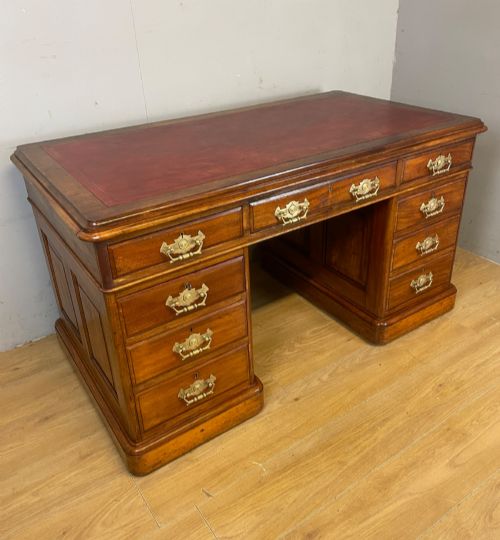
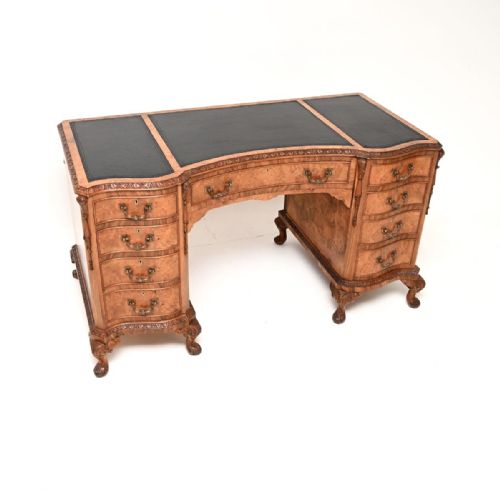
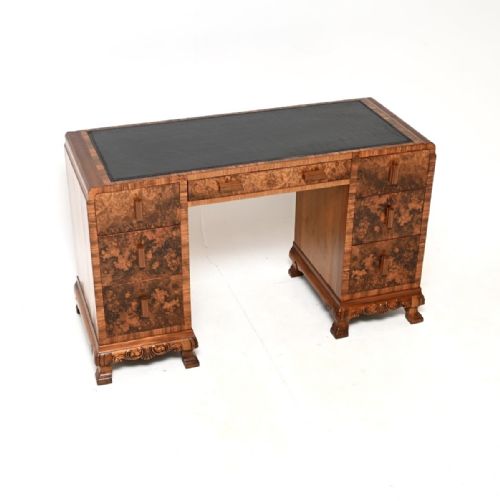

Executive Walnut Writing Desk
An executive walnut writing desk brings rich timber grain and fitted drawers to a study, offering a generous workspace built for daily correspondence.
Executive Walnut Writing Desk
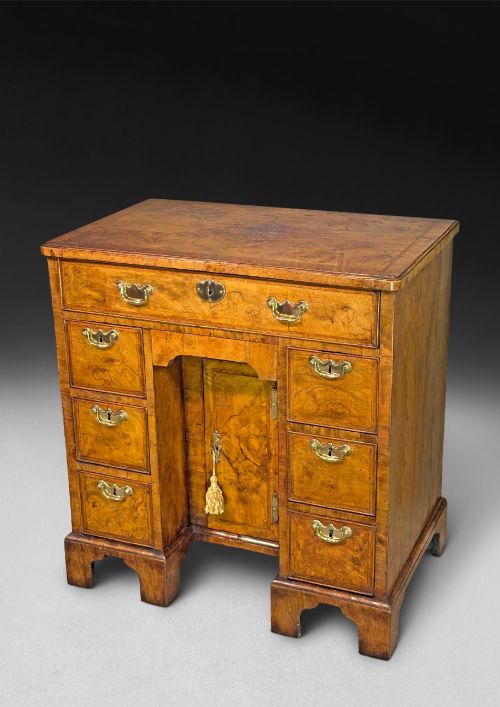
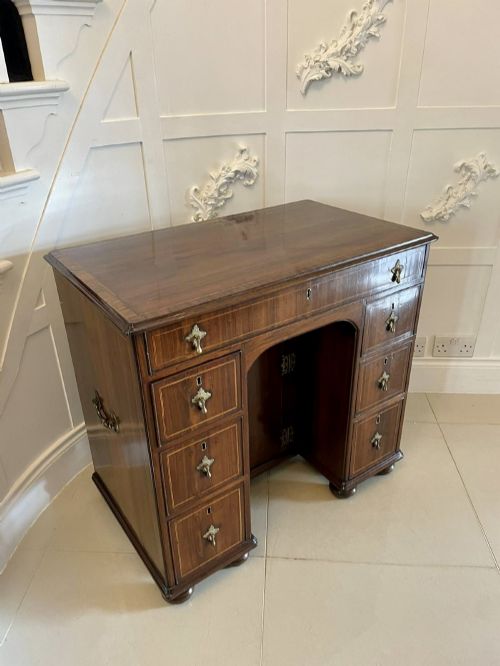
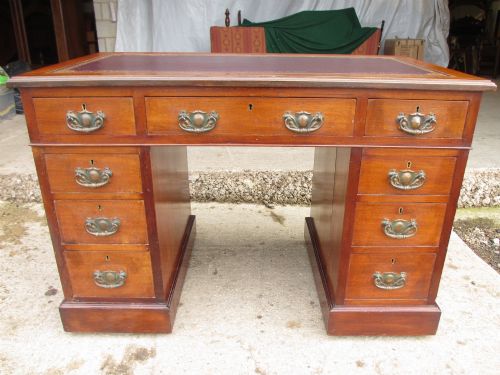
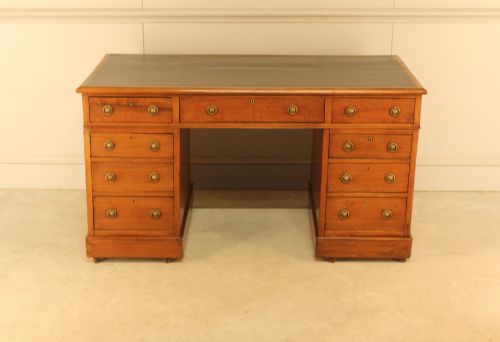
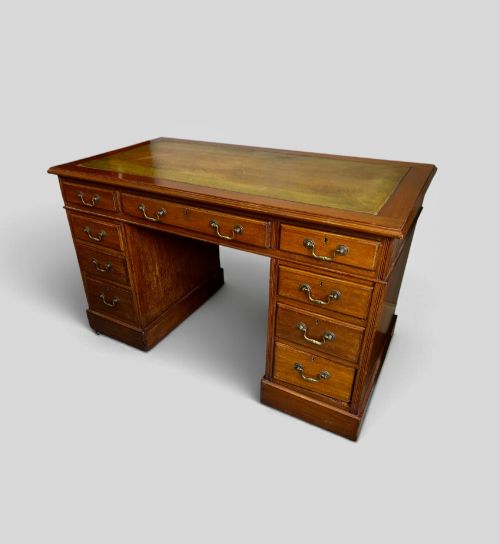
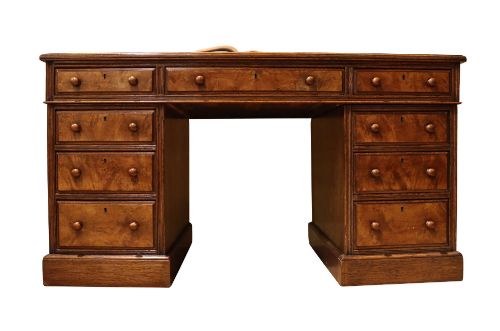
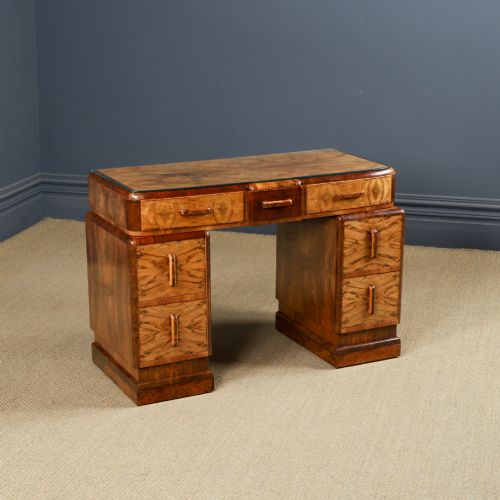
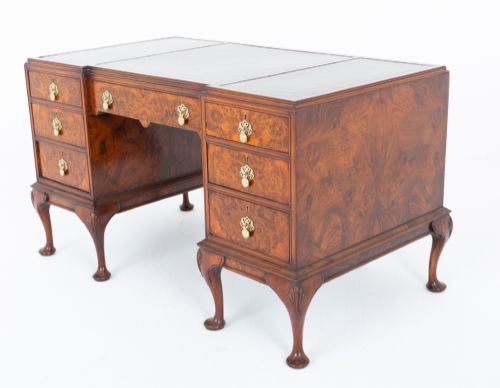
An executive walnut writing desk serves as a primary workspace, combining large writing surfaces with substantial storage drawers. These pieces appear primarily as pedestal desks, partners desks, and kneehole forms designed for central room placement.
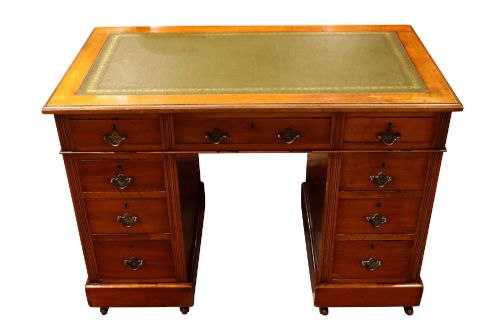
The pieces on this page span the Victorian, Edwardian, and Art Deco periods, alongside revivals referencing George I and Queen Anne styles. Buyers will frequently encounter pedestal formats featuring nine drawers and inset leather writing surfaces.
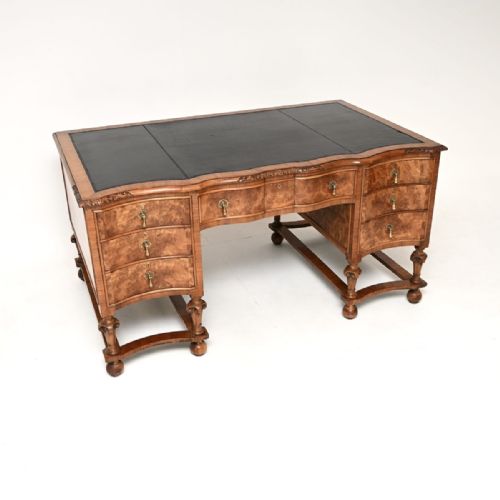
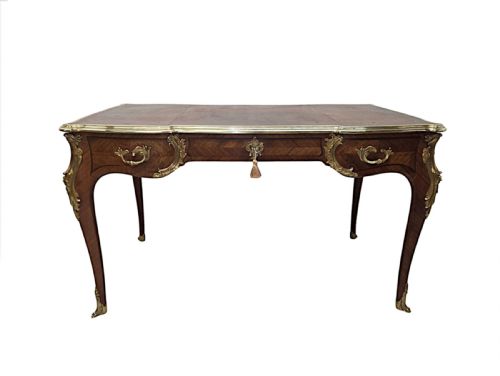
Timbers range from straight-grained walnut to highly figured burr walnut, often complemented by oak carcases and kingwood crossbanding. French bureau plat forms and freestanding library tables also appear among the selections.
How they were made
Cabinet makers utilised solid walnut and decorative burr walnut veneers applied to stable secondary timbers such as oak. Surfaces frequently incorporate tooled leather writing inserts alongside brass hardware and occasional ormolu mounts.
Construction methods involve traditional joinery to build multi-drawer pedestal carcasses and breakfront frames. Marquetry inlay, glass panels, and detailed crossbanding appear on specific Art Deco and period revival examples.
Materials documented across the inventory include solid walnut, burr walnut, oak, kingwood, ormolu, and leather.
What varies in quality
The distinction between standard commercial pieces and superior items rests in the selection of timber figure and the precision of the cabinet work. Finely matched burr walnut veneer and crisp mouldings elevate certain examples above simpler constructions.
Makers of note and documented firm attributions introduce higher craftsmanship in the internal drawer framing and decorative details. Secondary woods, drawer linings, and the crispness of brass or ormolu mounts indicate the standard of manufacture.
Maple and Co·Wylie and Lochhead Glasgow·Edwards and Roberts·Betty Joel
The Executive Walnut Writing Desk Glossary
- Pedestal desk
- A heavy freestanding writing table supported by two vertical stacks of drawers with a central opening for the user. These forms dominate the available selection.
- Partners desk
- A large double-sided writing table designed for two people to work opposite one another, featuring drawers on both elevations. These often date to the nineteenth century.
- Bureau plat
- A freestanding writing table, typically French in origin, featuring a leather-inset top and a frieze containing one or more drawers. These pieces display finished backs for room placement.
- Kneehole desk
- A compact desk with a central recess for the legs, flanked by modest banks of drawers. Georgian and revival periods favour this precise configuration.
Executive Walnut Writing Desk: Frequently Asked Questions
What is an executive walnut writing desk?
An executive walnut writing desk is a substantial piece of study furniture designed for serious correspondence and administrative work. It typically incorporates multiple drawers arranged in pedestals beneath a wide writing surface.
These desks often feature inset leather tops and decorative wood veneers such as burr walnut. They serve as central focal points in private offices and traditional libraries.
How do I use a partners desk?
A partners desk provides workspace on both sides, allowing two people to sit opposite each other. The design includes matching banks of drawers facing in both directions.
Positioning the desk away from the wall allows full access to all drawers from both sides. It functions effectively in open study spaces where multiple users require surface area.
How do I clean a leather top?
Cleaning a leather writing surface requires a soft, dry cloth to remove dust and debris. Specialised leather cleaners and conditioners help maintain the suppleness of the material without damaging the surrounding wood.
Harsh chemical solvents and excess moisture must be avoided to prevent staining or degrading the tooling. Proper maintenance preserves the gold or blind tooling found on period desk inserts.
How do I date a walnut desk?
Dating a walnut desk involves examining the construction techniques, drawer linings, and hardware styles. Victorian, Edwardian, and Art Deco pieces each display distinct design characteristics and structural details.
Secondary woods and veneer patterns also offer clues regarding the period of manufacture. Maker stamps or labels provide definitive evidence of origin and date.