


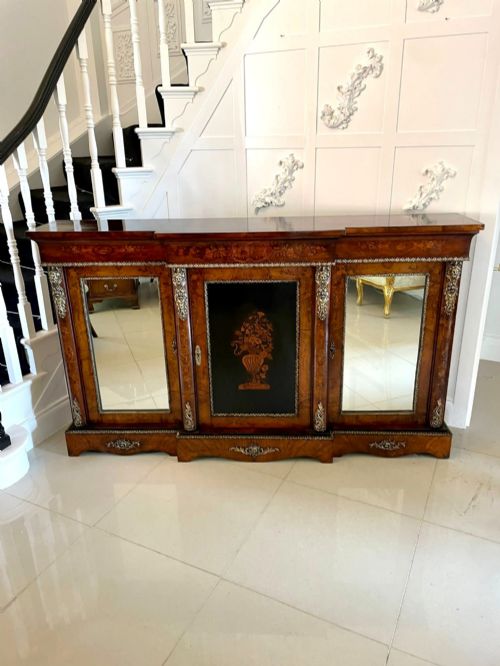
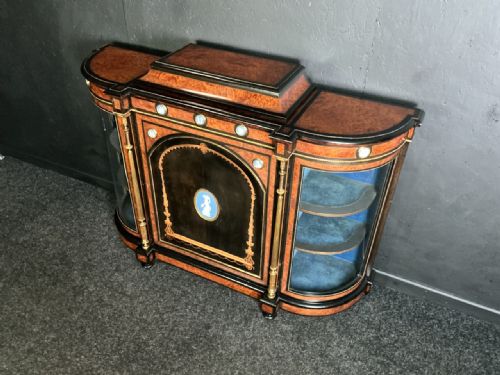
Victorian Walnut Sideboard Cabinet
A victorian walnut sideboard cabinet brings figured timber, gilt mounts and mirror glass together in grand nineteenth-century reception rooms.
Victorian Walnut Sideboard Cabinet
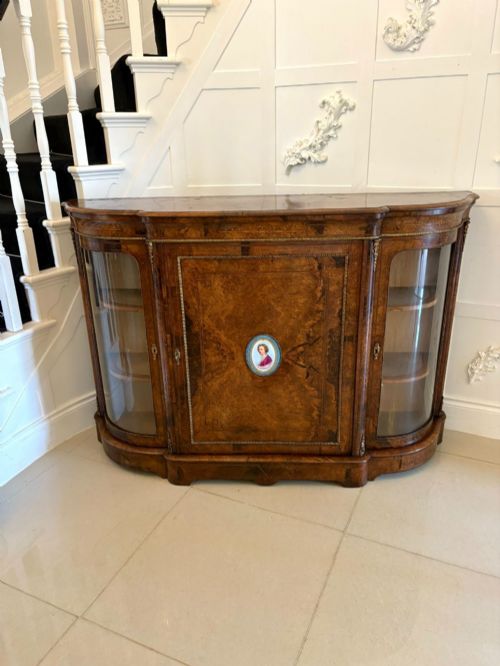
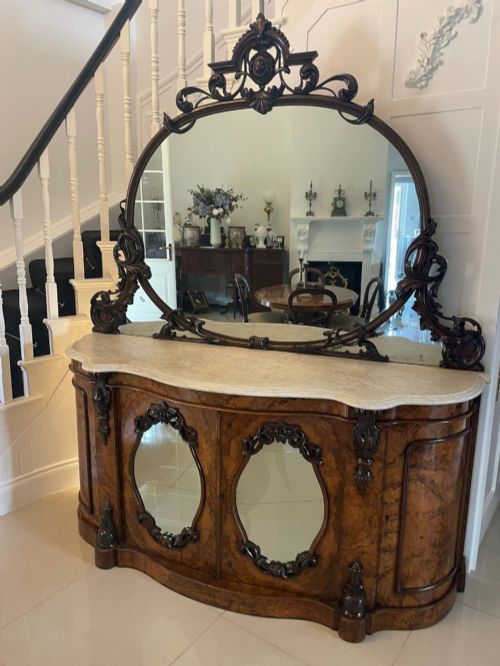
When you search for a victorian walnut sideboard cabinet, you encounter formal low-profile storage furniture produced across the nineteenth century, most frequently taking the form of credenzas, pier cabinets and mirrored sideboards.
The pieces on this page span the Victorian era from the middle decades through to 1900, with styles shifting from mid-century revivalism to the later Aesthetic Movement and Late Victorian utilitarian forms.
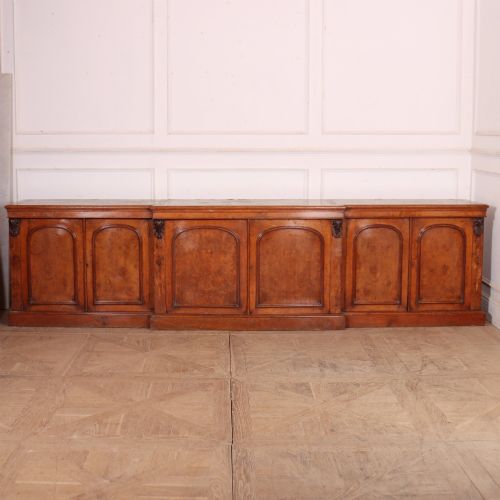
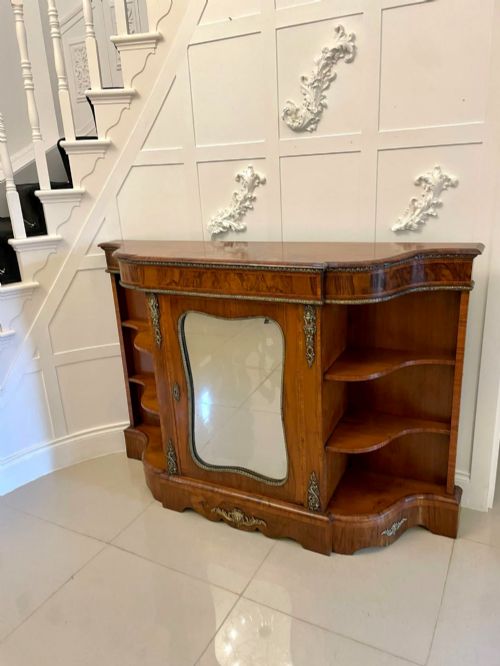
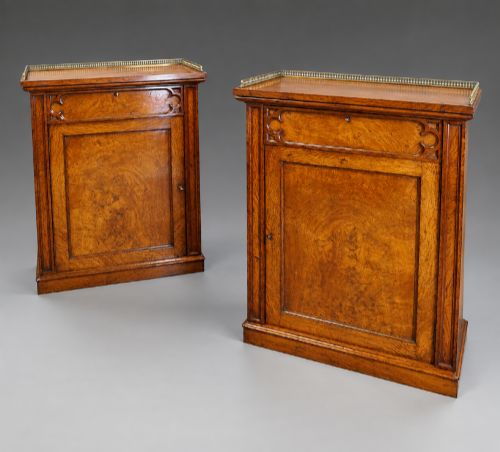
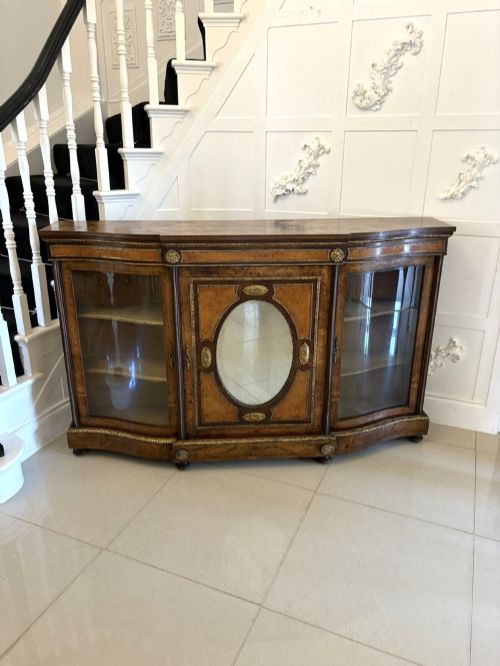
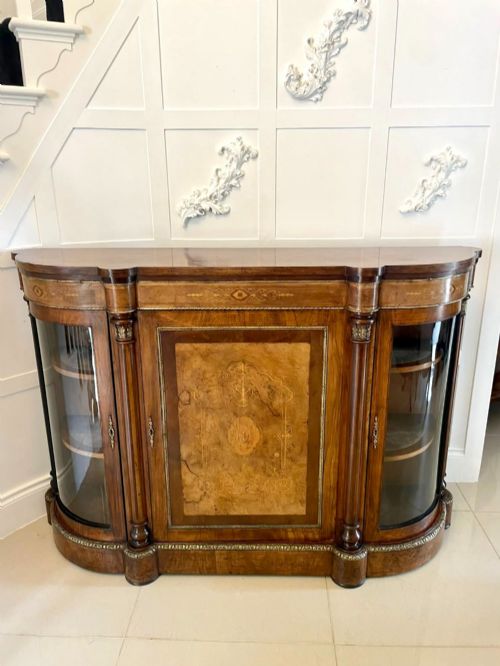
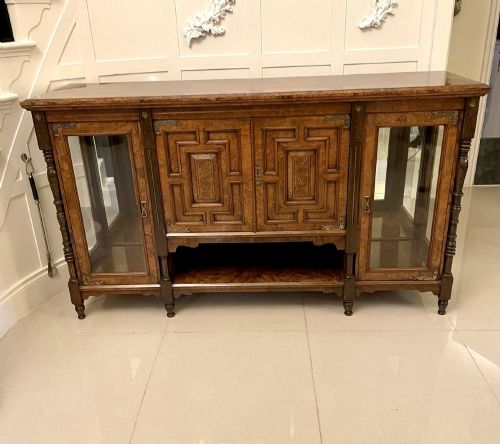
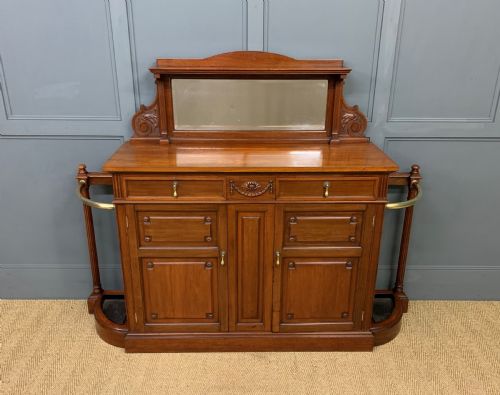
Credenzas dominate the selection, offering enclosed central cupboards flanked by curved glass display doors, alongside simpler side cabinets, hall cupboards and marble-topped chiffoniers.
Materials and construction methods
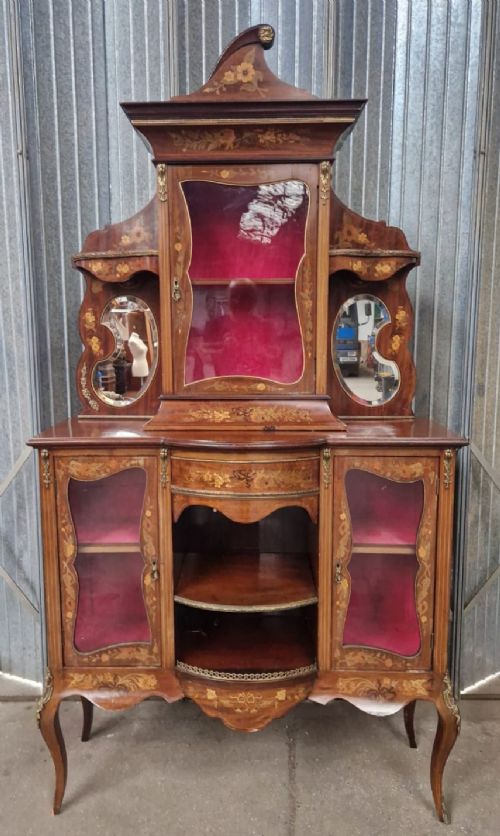
Cabinetmakers utilised rich burr walnut veneers selected for their swirling grain patterns, often laid over solid carcases and enhanced with boxwood inlay, mother-of-pearl or delicate floral marquetry.
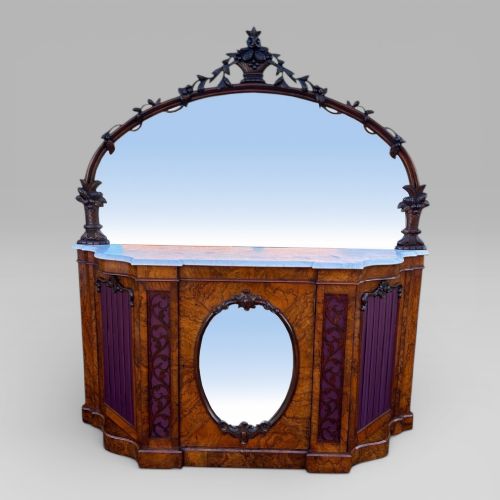
Gilded bronze or ormolu mounts punctuate the timber surfaces around door panels and pilasters, while glass doors and mirrored backs brighten interiors by reflecting light across reception rooms.
Some cabinets hide their treasures behind curved glass doors designed to show off delicate porcelain without collecting dust.
Distinctions in grade and execution
The hierarchy of execution rests on the density of the burr walnut grain, the crispness of the cast ormolu mounts and the intricacy of the marquetry work rather than sheer scale.
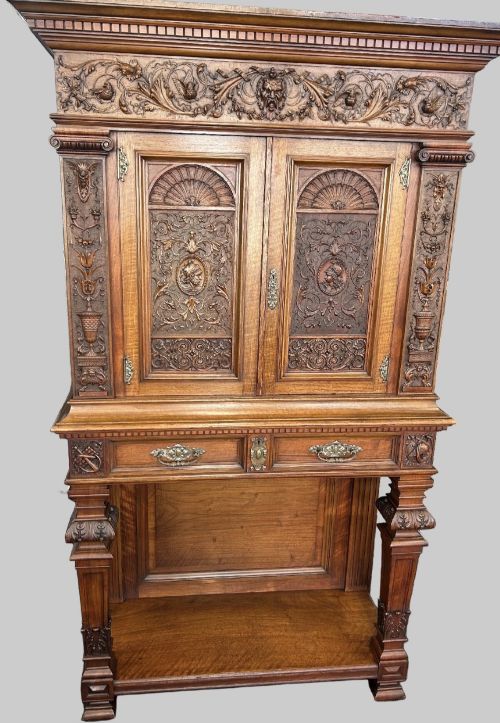
Superior examples feature serpentine fronts, inset marble tops, porcelain plaques and fitted architectural mirror backs, marking them out from plain utility cupboards of the later decades.
Shoolbred & Co.·Gillows·Maison Gagneau
The Victorian Walnut Sideboard Cabinet Glossary
- Credenza
- A low nineteenth-century cabinet featuring a central cupboard flanked by glass-fronted side display sections. This form sits centrally in the selection.
- Burr Walnut
- Highly figured timber harvested from walnut tree growths, prized for intricate patterns. Cabinetmakers sliced it into thin veneers for decorative fronts.
- Ormolu
- Gilded bronze mounts cast in decorative scrollwork and applied to furniture edges. It provides metallic contrast against dark timber.
- Marquetry
- Inlaid patterns formed from different tinted woods fitted together into a veneer sheet. Floral motifs appear frequently on these doors.
- Pier Cabinet
- A narrow display cabinet designed to stand against the wall space between windows. These slim glazed units often incorporate rich inlays.
Victorian Walnut Sideboard Cabinet: Frequently Asked Questions
What is a credenza?
A credenza is a low freestanding cabinet designed for nineteenth-century reception rooms, featuring a central cupboard enclosed by doors.
Most examples include curved glass side cabinets for displaying porcelain and decorative objects alongside the main storage space.
How do I spot burr walnut?
Burr walnut displays swirling, knotty grain patterns created by abnormal tree growths rather than straight timber lines.
Cabinetmakers sliced these complex growths into thin veneers to create highly decorative facades on high-status cabinets.
Where were these placed?
These low cabinets stood against principal walls in Victorian drawing rooms and formal dining spaces.
Mirrored backs and glass panels helped bounce natural daylight around dimly lit Victorian interiors.
How do I date these cabinets?
Dating relies on combining the stylistic evidence of revival motifs with construction traits and wood choices.
Mid-century pieces favour heavy ormolu and marquetry, whereas late-century examples lean towards simpler utility forms.