




Entomology Drawer Chest
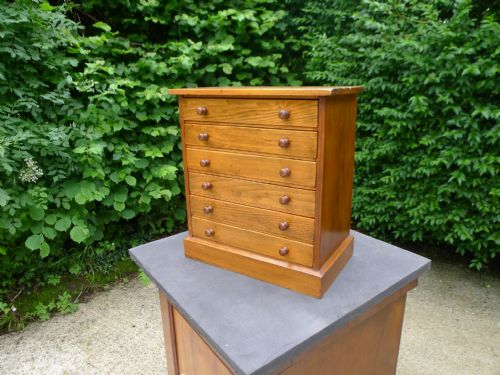
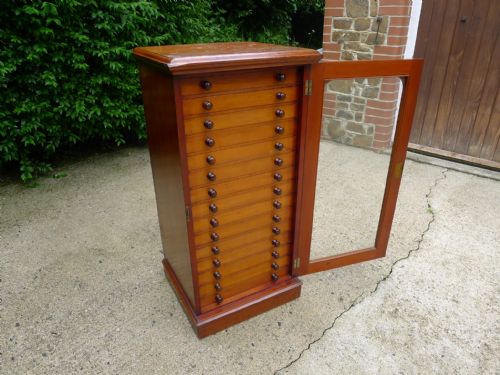
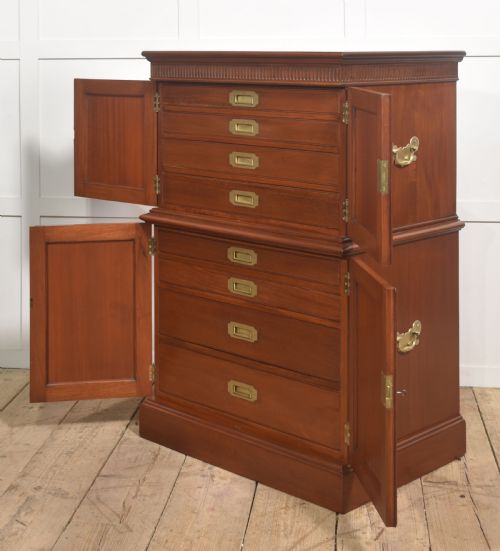
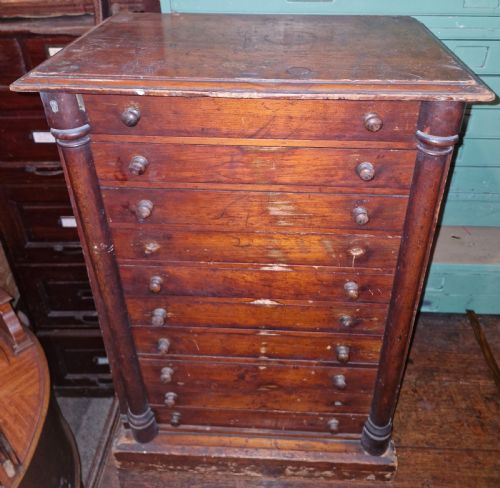
An entomology drawer chest houses delicate natural history specimens within multiple tight-fitting glass-topped drawers.
Entomology Drawer Chest
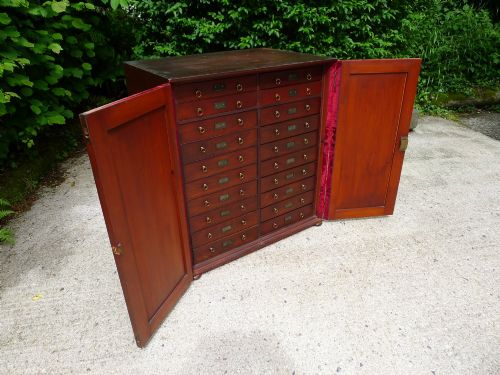
The versions most frequently encountered on this page date from the Victorian and Edwardian eras, spanning the nineteenth and early twentieth centuries. These period examples often feature banks of numerous shallow drawers secured by locking doors or glazed fronts.
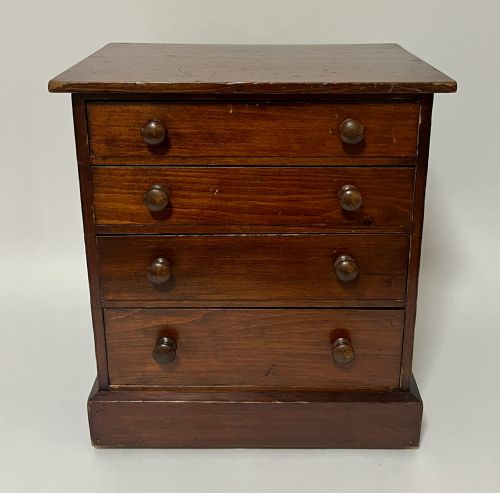
Makers designed these units for functionality, employing dense timbers to protect contents from light, dust, and pests. Surviving examples range from small six-drawer bedside chests to large forty-drawer institutional cabinets.
What varies in quality
The caliber of an entomology drawer chest depends heavily on the precision of the drawer joinery and the selection of timber figures, such as flame mahogany or burr walnut. Specialist workshops employed superior wood seasoning and tighter tolerances to prevent warping, ensuring each drawer moves smoothly within its bay.
Attribution to known natural history cabinet makers elevates the stature of a piece, reflecting meticulous internal construction designed to house scientific collections securely. The overall scale, structural integrity, and retention of original glazed frames further distinguish standard utility pieces from exceptional examples.
Some nineteenth-century collectors crammed forty shallow drawers into a single cabinet, proving that beetles take up surprisingly little room.
Watkins And Doncaster·Brady Of Edmonton·Charles William Schofield·J T Crockett
The Entomology Drawer Chest Glossary
- Deal
- Fir or pine timber commonly utilised for secondary framing and internal drawer carcases in nineteenth-century cabinetry.
- Escutcheon
- A protective brass plate surrounding a keyhole, designed to prevent the surrounding wood from wearing down through repeated use.
- Pitch pine
- A resinous North American pine variety valued for its prominent grain patterns and robust structural stability.
- Specimen cabinet
- A specialised storage unit containing multiple shallow drawers intended for organising natural history artefacts.
Entomology Drawer Chest: Frequently Asked Questions
What were entomology drawer chests used for?
These cabinets served natural historians and collectors as secure repositories for classifying insects, eggs, and botanical specimens. The shallow drawers kept delicate items flat and organised.
Each drawer typically featured a glazed or removable top to allow inspection while protecting the contents from dust and handling.
How do I date an antique specimen cabinet?
Dating relies on examining the timber selection, construction methods, and hardware styles. Victorian and Georgian pieces often display hand-cut dovetails and solid native hardwoods.
Makers' stamps or labels pasted inside the doors or drawer sides provide definitive chronological markers when present.
Are all drawers glass-fronted?
Not all drawers feature glass tops, as many traditional entomology cabinets utilise solid wooden drawer floors lined with cork or paper. External locking panel doors frequently provide the primary glass viewing barrier for the entire bank of drawers.
Cabinets with individual glass-topped drawers allowed collectors to inspect specimens without exposing them directly to ambient air.
How should I care for an antique collectors chest?
Position the cabinet away from direct sunlight and fluctuating heat sources to prevent timber warping and veneer cracking. Maintain stable indoor humidity levels to preserve the original wood and internal linings.
Clean exterior surfaces gently with a dry cloth, avoiding harsh chemical polishes that might damage historic finishes.