



Glazed Specimen Chest
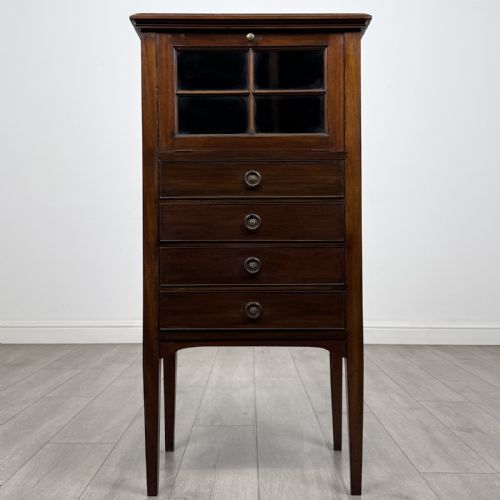
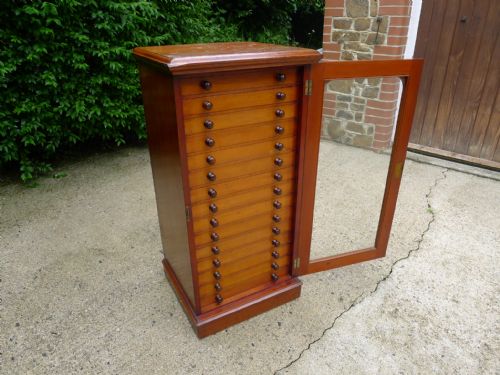
These glazed specimen chest pieces are purpose-built storage units designed to protect and display collections, offering glass fronts and numerous small drawers.
Glazed Specimen Chest
A glazed specimen chest provides secure storage and display space through multi-drawer forms fitted with glass doors or panels. When searching for a glazed specimen chest, buyers encounter variations ranging from compact table cabinets to large multi-drawer floor-standing units.
The objects stem predominantly from the eighteenth and nineteenth centuries, including Victorian, Edwardian, and Arts and Crafts examples. These pieces serve specific collecting interests, housing items such as insects, microscope slides, and ornithological specimens.
Materials and construction
Cabinet makers utilised dense hardwoods including mahogany, Cuban mahogany, walnut, oak, teak, and pitch pine to build durable frames. Glass and brass hardware form standard components, providing transparent viewing panels and secure locks for the drawers.
Construction techniques focus on multi-drawer utility, incorporating fitted interiors designed to safeguard delicate contents. Panel doors and glazed compartments protect the contents from dust while maintaining visual access to the items stored within.
Glazed Specimen Chest Retail Price Guide 2026
Typical asking prices for glazed specimen chest among the pieces listed under this phrase on Sellingantiques today, from the lower quarter to the upper quarter. They describe what is for sale here now, not the wider market.
Listings feature woods including mahogany, Cuban mahogany, walnut, oak, teak, and pitch pine, alongside glass, brass, and mirror elements.
Factors of quality
The grade of timber selected for the cabinet body and drawer construction dictates the baseline standard of the piece. Fine figure in the wood grain and solid timber execution separate standard storage pieces from superior examples.
Specialised hardware, such as brass locks, key escutcheons, and maker signatures, distinguishes the execution. The integrity of the glass panels and the precision of the multi-drawer fitting further define the standard of manufacture.
Watkins and Doncaster·Brady of Edmonton·J.T. Crockett
The Glazed Specimen Chest Glossary
- Specimen cabinet
- A multi-drawer storage unit designed for holding natural history collections or scientific items. These pieces feature shallow drawers to organise small objects.
- Table cabinet
- A compact storage chest scaled to sit upon a desk, table, or surface rather than standing on the floor. These items provide miniature drawer arrangements behind glass doors.
- Standish
- A term associated with fitted desk or table equipment holding writing implements or small containers. In this context, it relates to matched pairs of storage cabinets.
- Cuban mahogany
- A dense, highly figured timber species utilised in eighteenth-century cabinet making. This material yields dark, rich tones and substantial weight in furniture pieces.
- Pitch pine
- A resinous softwood variant employed in nineteenth-century utilitarian and workshop furniture. It provides structural stability for large multi-drawer carcasses.
Glazed Specimen Chest: Frequently Asked Questions
What were glazed specimen chests originally used for?
These cabinets housed natural history collections, including insects, botanical samples, and microscope slides. Naturalists and hobbyists relied on the multiple shallow drawers to organise and protect delicate objects.
The glass doors allowed owners to inspect their collections without exposing the contents to dust, handling, or environmental damage. This combination of visibility and security made them essential for scientific storage.
How do I date a glazed specimen chest?
Dating relies on timber selection, construction methods, and hardware styles found across the piece. Mahogany and walnut dominate earlier pieces, while pitch pine and teak appear frequently in later nineteenth and early twentieth-century examples.
Maker signatures, lock stamps, and specific design movements like Arts and Crafts provide further chronological markers. Examining the drawer joints and glass framing helps confirm the period of manufacture.
Can I use these cabinets for modern collections?
The shallow drawers and enclosed glass compartments adapt well to displaying modern curiosities, small artefacts, or jewellery. The configuration protects delicate items while keeping them visible in a domestic setting.
Placement away from direct sunlight preserves both the timber exterior and any sensitive items stored inside. The substantial construction requires adequate floor or table space to support the weight of the drawers.