
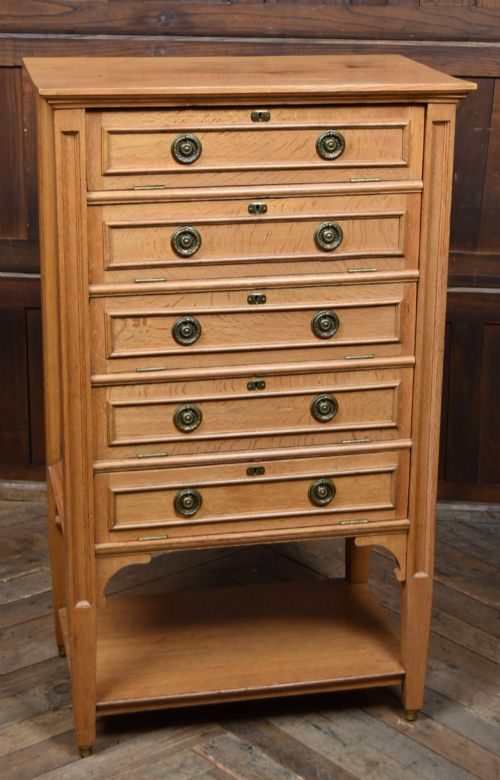
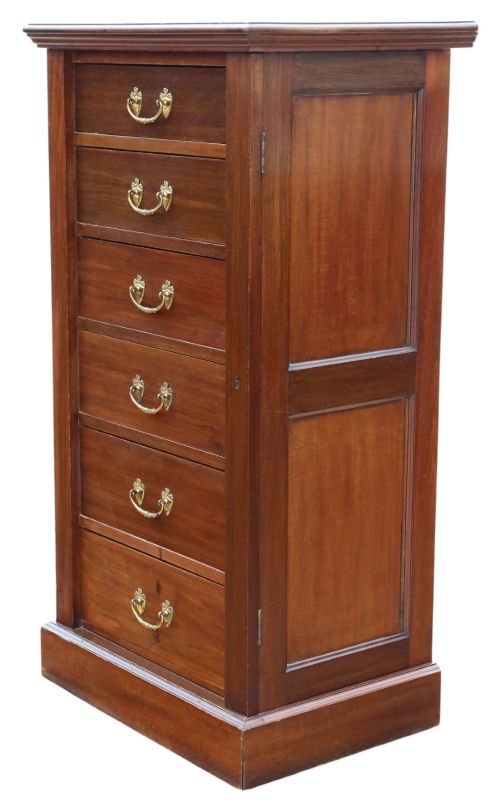
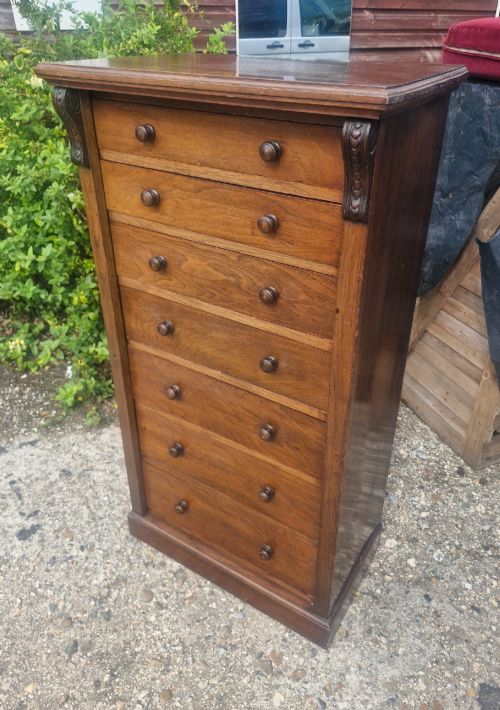
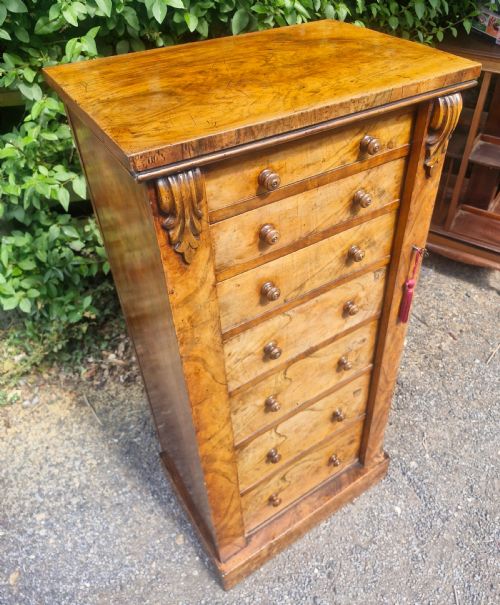




Edwardian Collector Drawers
Edwardian collector drawers unite practicality and craftsmanship, offering compact storage designed for specimens, documents and precious items.
Edwardian Collector Drawers
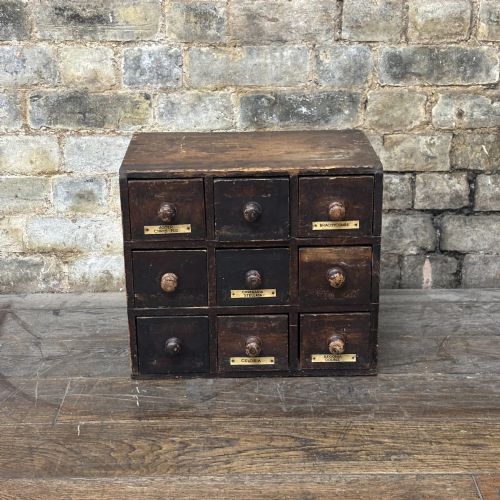
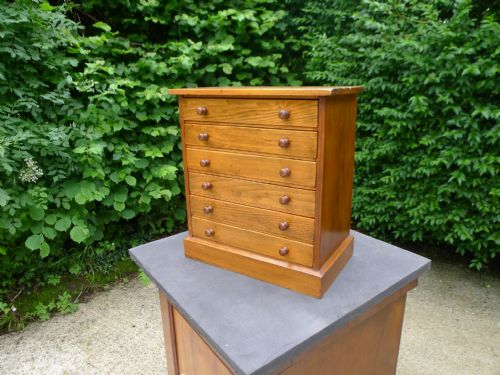
Edwardian collector drawers encompass specialised storage pieces designed for specimens, documents and small items, appearing frequently in formats such as multi-drawer filing cabinets, Wellington chests and designated collector cabinets. These items originate from a period spanning the late nineteenth century through to the early decades of the twentieth century, reflecting the rigorous classification interests of the era.
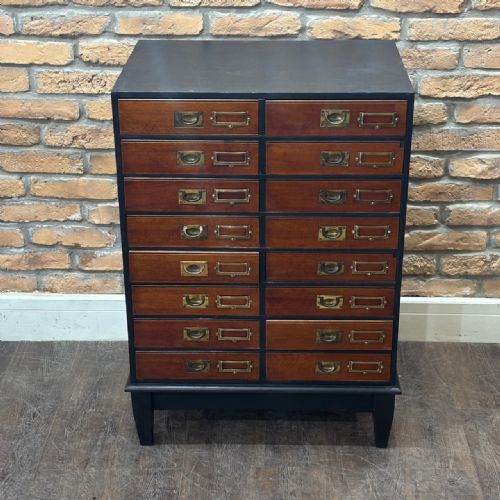
Buyers seeking edwardian collector drawers will most commonly encounter mahogany, oak and walnut constructions featuring numerous small tiers. Many examples derive from commercial, medical or domestic filing contexts, translating utilitarian storage into refined household furniture.
Materials and Construction
Carpenters utilised dense hardwoods such as mahogany, oak and walnut alongside softer timbers like pine and deal to build these multi-tiered carcasses. Drawer construction frequently incorporated precision dovetail joints to withstand the repetitive pulling motion inherent in multi-drawer furniture.
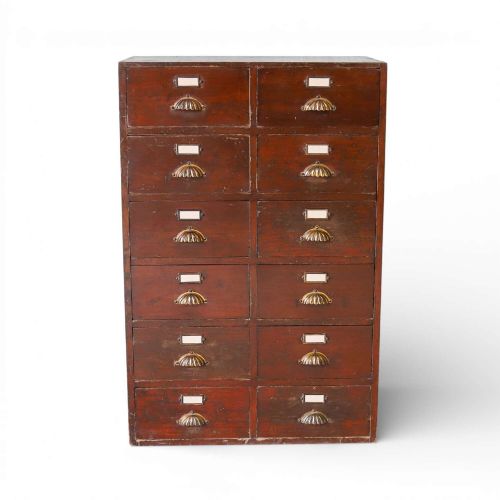
Metal hardware played a crucial role in daily operation, with brass shell pulls, label holders and locking mechanisms fitted securely to individual drawers. Glass panels occasionally appeared in doors protecting display storage, while interior linings utilised baize or similar textiles for specimen protection.
Recorded forms include Wellington chests, florist seed chests, medical carrying chests, and multi-drawer filing cabinets.
Distinctions in Execution
Quality rests upon the selection of timber figures, such as highly figured English oak, satin walnut or fiddleback mahogany, which elevate standard utility pieces into master cabinetwork. The presence of original maker signatures, designated brass label holders and functioning locking mechanisms with matching keys further distinguish superior examples.
The density and uniformity of the drawer dovetailing and the smoothness of the timber runners dictate mechanical longevity. Cabinets retaining original glass fronts, brass pulls and uncompromised internal linings command greater appreciation among discerning collectors.
Brady of Edmonton·Gillows of Lancaster
The Edwardian Collector Drawers Glossary
- Wellington chest
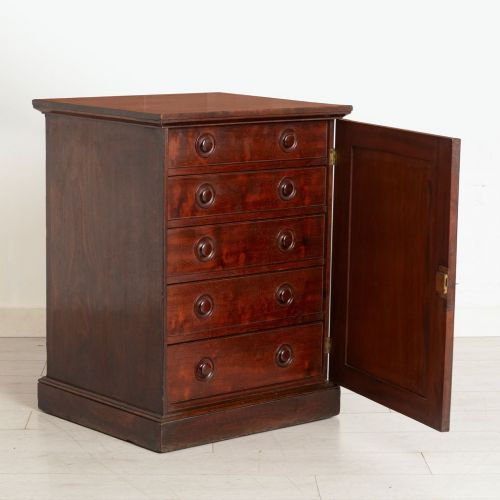
- A tall, narrow chest of drawers secured by a hinged vertical locking flap on one side. This design locks all drawers simultaneously with a single key.
- Shell pull
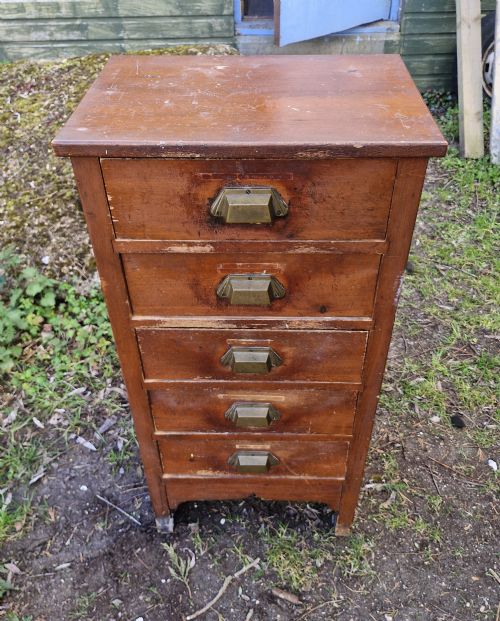
- A stamped brass handle shaped like a scallop shell, frequently incorporating a slot for paper labels. These fixtures appeared extensively on office and filing furniture.
- Fiddleback mahogany
- A figured hardwood exhibiting a wavy grain pattern resembling the back of a violin. Cabinetmakers reserved this timber for visually prominent drawer fronts and panels.
- Specimen cabinet
- A specialised piece of furniture featuring shallow drawers designed to hold botanical, geological or entomological collections. Interiors often remained unadorned to protect delicate items.
- Dovetail
- A interlocking joint formed by interlocking wedge-shaped fingers, prized for its structural tenacity in drawer construction.
Edwardian Collector Drawers: Frequently Asked Questions
What were collector drawers originally used for?
These multi-tiered units served naturalists, collectors and offices for organising butterflies, botanical samples, coins, and paper documents. Their numerous shallow compartments kept delicate items separated and protected from dust and light.
Over time, domestic environments adopted these storage chests for general household tidying, jewellery, and stationery. Their functional origins meant sturdy construction designed for heavy daily use.
How do I identify an Edwardian piece?
Edwardian furniture typically displays lighter timber tones, restrained inlay work, and functional brass hardware without the heavy ornamentation of earlier Victorian designs. Construction methods shifted toward standardisation while retaining solid wood frames.
Look for characteristics such as brass shell pulls, oak or mahogany secondary timbers, and proportions suited to domestic studies rather than grand reception rooms.
Are these cabinets suitable for modern homes?
The compact footprints and numerous small compartments make these pieces exceptionally practical for modern storage needs. They fit easily on tabletops, desks, or as standalone floor chests.
Owners frequently utilise the shallow drawers for organising art supplies, office stationery, or small collections. The aesthetic variety ranges from industrial utility to polished mahogany cabinetwork.
What is a Wellington chest?
A Wellington chest is a tall, narrow set of drawers distinguished by a hinged pilaster locking strip on one side. Swinging this locking bar aside allows the single key to secure every drawer at once.
Originating in the nineteenth century and continuing into the Edwardian era, this secure format protected confidential documents and valuable specimens from unauthorized access.