
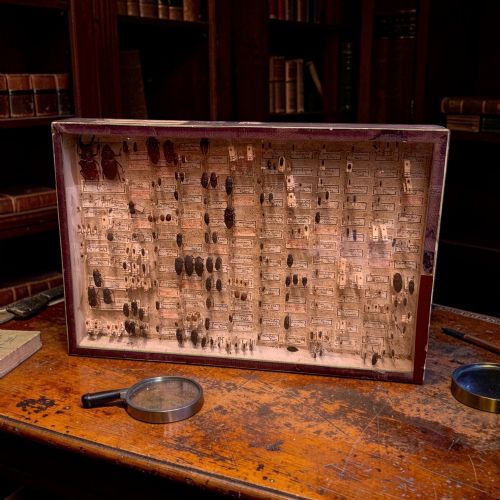


Entomology Display Cabinet
An entomology display cabinet holds natural history collections securely behind glass, offering serious collectors and interior decorators a structured way to house delicate specimens.
Entomology Display Cabinet
An entomology display cabinet is a specialised piece of furniture designed to organise and protect butterfly, moth, and insect collections. When searching this phrase, buyers encounter various formats ranging from wall-mounted taxidermy cases to large multi-drawer chests.
The examples seen on this page span several distinct eras, notably the Victorian period, the Georgian era, and the early twentieth century. These origins influence the overall proportion and internal drawer capacity of each piece.
Formations vary between upright cabinet chests and shallow glazed wall frames. Most examples utilise traditional formats intended to shield fragile paper and insect specimens from light and dust while maintaining clear visibility.
How they were made
Cabinet makers constructed these storage pieces primarily from solid hardwoods such as mahogany, walnut, and figured pitch pine. These dense timbers provide the structural stability required to house multiple shallow drawers without warping.
Glass panels fitted into doors and frames allow visual inspection of the contents without opening the enclosures. Brass hardware, including small drop handles and hinges, frequently secures the glazed compartments and drawer fronts.
Internal components incorporate card, paper, and wood elements to line the drawers where specimens are pinned. Joinery prioritises tight tolerances to ensure dust-proof seals around every drawer compartment.
Some specimens arrived preserved behind glass alongside their original handwritten identification labels.
What varies in quality
The distinction between standard storage furniture and exceptional examples lies in timber selection and drawer construction. Cabinets built with highly figured pitch pine or dense mahogany represent finer craftsmanship than simpler utility pieces.
Drawer operation separates everyday items from superior specimens. Smooth-running drawers with precise internal fitting indicate higher workshop standards during the original period of manufacture.
J.T.Crockett
The Entomology Display Cabinet Glossary
- Specimen cabinet
- A piece of furniture containing multiple shallow drawers intended for organising natural history items. These units keep collections flat and orderly.
- Collectors cabinet
- A broader term for storage furniture designed to hold objects of curiosity, medals, or natural specimens. They often feature glazed doors to display the contents.
- Pitch pine
- A resinous softwood utilised for cabinet construction during the nineteenth century. It provides a distinct grain pattern when finished.
- Taxidermy wall display
- A shallow glazed case meant for hanging on a wall rather than resting on a floor or chest. These frames present single insects or small groupings.
- Georgian
- A stylistic period spanning the eighteenth and early nineteenth centuries, preceding the Victorian era. Pieces from this time often exhibit restrained classical proportions.
Entomology Display Cabinet: Frequently Asked Questions
What fits inside an entomology display cabinet?
These cabinets store pinned insect specimens, butterflies, and moths within their shallow drawers. They also suit the storage of small natural history artefacts and delicate paper items.
The internal depth of each drawer dictates the size of the items that can be housed inside safely.
How do I date a Victorian specimen cabinet?
Dating relies on timber choice, construction methods, and hardware styles associated with the nineteenth century. Mahogany and walnut usage shifted across different decades alongside manufacturing techniques.
Makers marks or labels pasted inside drawers occasionally provide a more specific year of creation.
Where should I place a collector cabinet at home?
Position these cabinets away from direct sunlight and damp environments to protect the wood and internal contents. Stable room temperatures prevent timber movement and seal degradation.
Wall-mounted display cases require secure fixings into solid masonry or studs to support the combined weight of glass and hardwood.
What is the difference between a wall display and a cabinet chest?
A wall display is a shallow framed case designed to hang vertically and show a limited number of specimens. A cabinet chest stands on the floor and contains numerous horizontal drawers for larger collections.
Chest formats offer greater storage capacity, whereas wall displays function primarily as decorative art pieces.