
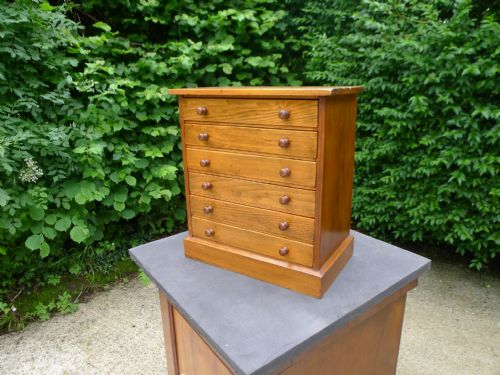
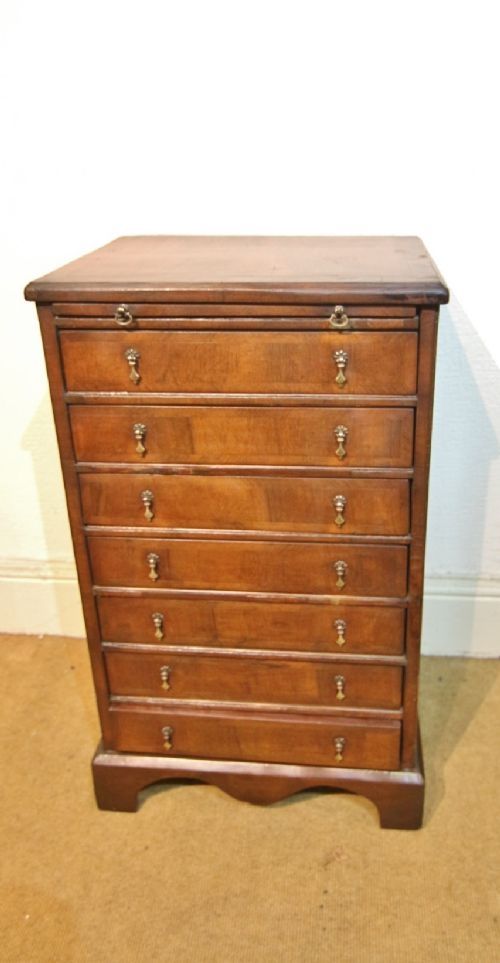


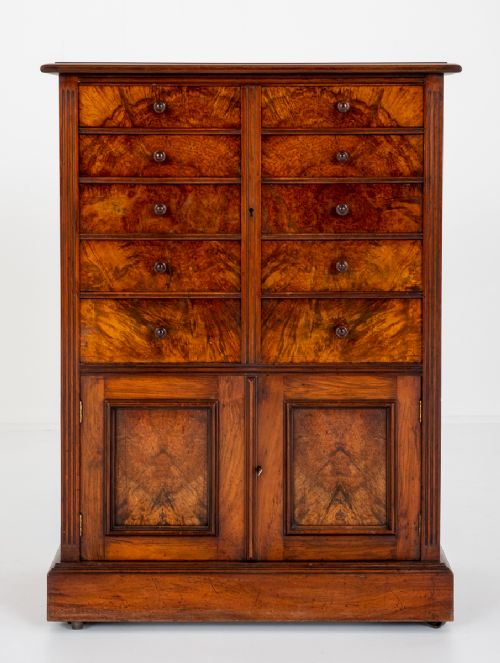


Walnut Coin Cabinet
These walnut coin cabinet pieces offer serious collectors a handsome home for small treasures, drawn mainly from Victorian and Georgian hands.
Walnut Coin Cabinet
A walnut coin cabinet is a specialised piece of furniture built to house small objects safely and discreetly, appearing in forms such as compact chests of drawers and collectors cabinets. When you search for walnut coin cabinet, you encounter pieces designed with multiple shallow internal storage spaces tailored for numismatic collections or delicate keepsakes.
The pieces listed here span the Georgian and Victorian eras, stretching from the mid-nineteenth century up to nineteen hundred, alongside Edwardian examples and George II styles. You will find items constructed in rich timbers like burr walnut, plain walnut, and satin walnut, frequently paired with mahogany or satin birch.
Common formats range from diminutive gentleman's library chests to multi-drawer examples holding forty small drawers, sometimes built in campaign styles. These cabinets rely on dense hardwoods to protect their contents while displaying the striking grain patterns prized by period cabinet makers.
How they were made
Cabinet makers constructed these pieces primarily using solid walnut and burr walnut veneers over secondary timbers such as mahogany, applying brass handles, hinges, and lock plates for structural security. The exterior surfaces often highlight the natural figured grain of burr walnut, while internal drawers utilise tighter, stable woods to prevent friction against delicate items.
Joinery methods of the nineteenth and eighteenth centuries ensured tight tolerances within the banks of small drawers, preventing dust from reaching the contents. Campaign style variations incorporated inset brass hardware to withstand travel, while traditional carcass construction relied on precise housing joints and dovetailed drawer boxes.
One extraordinary example packs forty distinct drawers into a single burr walnut frame, designed for a very obsessive collector.
What varies in quality
The distinction between standard utility storage and top-tier cabinet work lies in the selection of timber veneers and the intricacy of the internal drawer construction. Finer examples feature book-matched burr walnut across the entire facade and exceptional timber density in the secondary woods used for the drawer linings.
Proportion and scale also dictate the standing of a piece, with diminutive or campaign formats commanding greater attention due to the specialist skill required to build smaller, multi-drawer configurations. Hardware integration, such as flush-fitting brasses and original locking mechanisms, further separates standard production items from master workshops.
The Walnut Coin Cabinet Glossary
- Burr walnut
- A figured timber harvested from the tree's root growth or wart-like growths, creating swirling patterns. It is sliced into thin veneers for decorative surfaces.
- Campaign style
- Portable furniture design originating for military officers on the move. These pieces feature flush brass fittings and reinforced corners to endure travel.
- Diminutive proportions
- Furniture built to a significantly smaller scale than standard domestic pieces. This scale required exceptional miniature joinery skills.
- George II style
- Design characteristics spanning the mid-eighteenth century reign of George II. It often emphasises heavy walnut construction and conservative classical proportions.
Walnut Coin Cabinet: Frequently Asked Questions
What were walnut coin cabinets used for?
These cabinets served collectors who needed secure, organised storage for valuable coins, medals, and small specimens. The numerous shallow drawers kept delicate metal items from rubbing together.
Over time, owners also repurposed them for jewellery, miniatures, and natural history specimens, taking advantage of the dust-tight drawer construction.
How do I date a Victorian walnut cabinet?
Dating relies on examining construction methods, secondary timbers, and hardware styles. Mid-nineteenth century pieces often feature hand-cut dovetails and heavy burr walnut veneers.
Later Victorian and Edwardian examples show machine assistance in timber preparation while retaining traditional carcass assembly techniques.
Are all these cabinets made of solid walnut?
Most pieces combine solid walnut frames with decorative burr walnut veneers applied over secondary woods like mahogany or pine. This technique prevented warping while displaying dramatic grain patterns.
Inspect the drawer linings and carcase backs to identify the underlying timbers used by the maker.
How do I care for antique walnut furniture?
Keep walnut furniture away from direct sunlight and sudden temperature shifts to protect the wood and delicate veneers. Regular dusting with a dry, soft cloth maintains the finish.
Apply occasional quality wax feeds sparingly to nourish the timber without building up heavy residues on the antique surface.