



Victorian Walnut Music Stand
A victorian walnut music stand brings functional elegance into a room, holding scores and folios with adjustable grace.
Victorian Walnut Music Stand
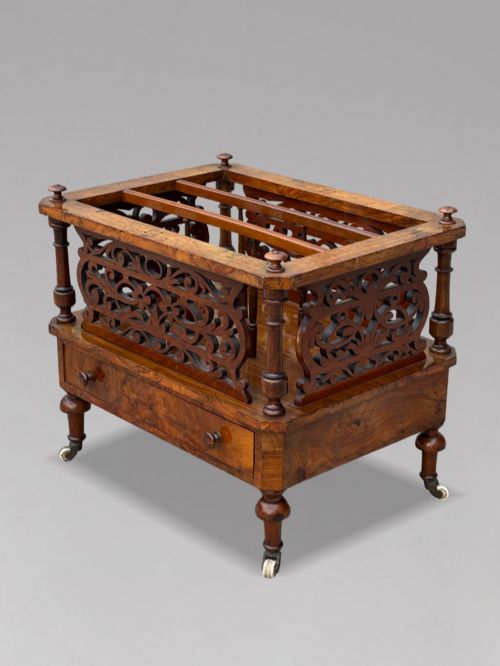
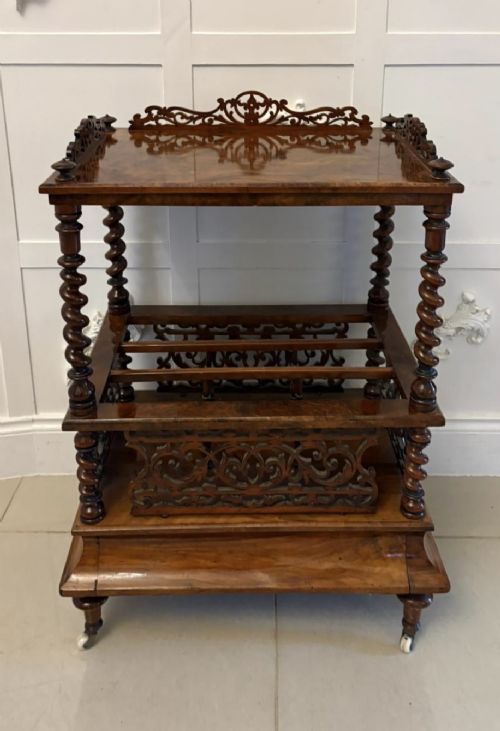
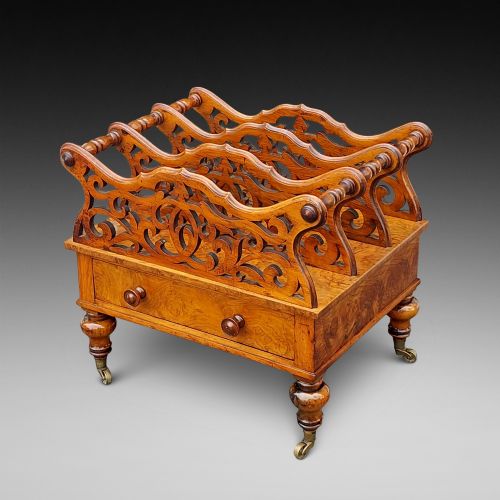
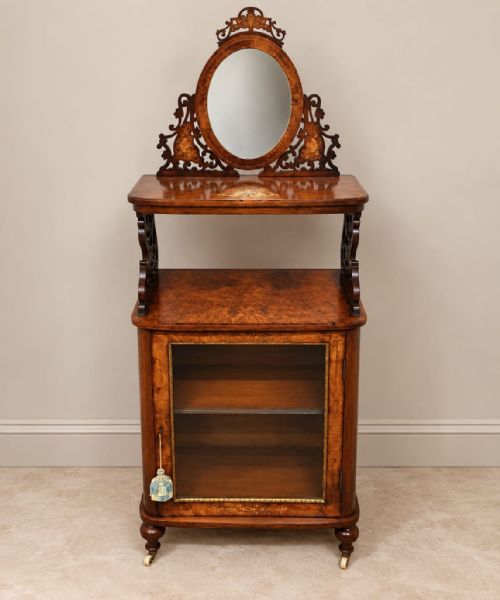
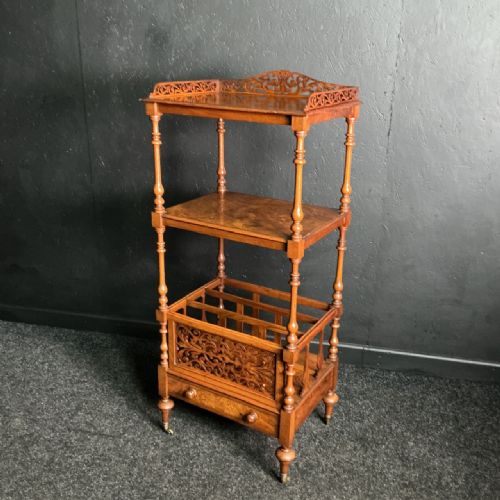
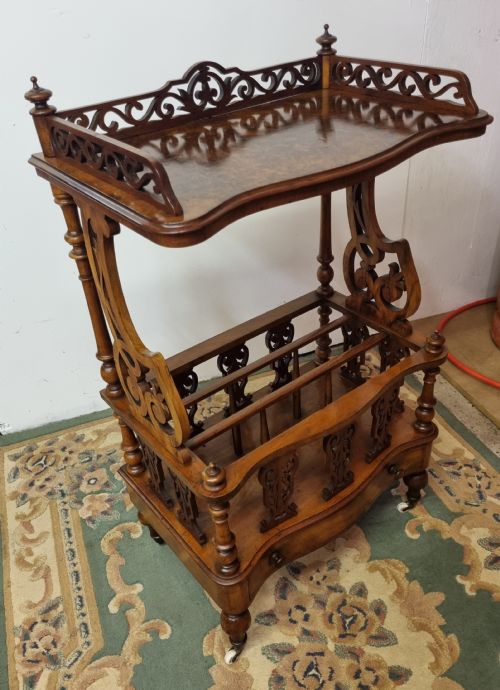
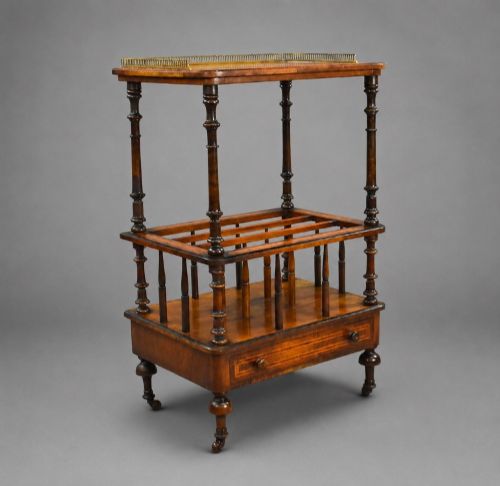
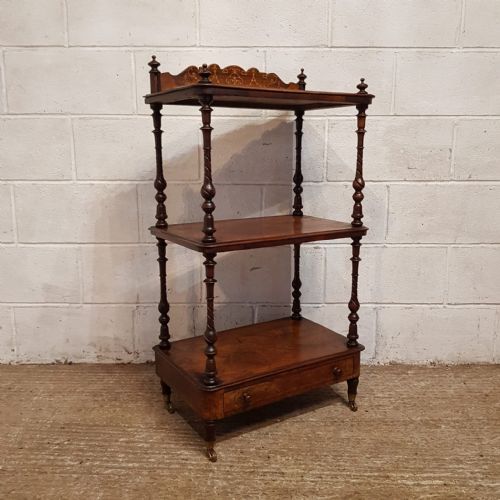
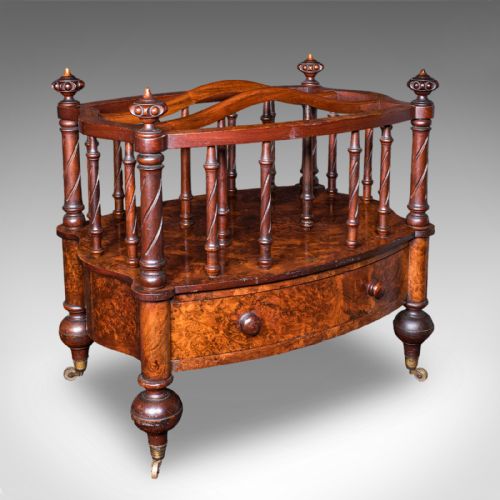
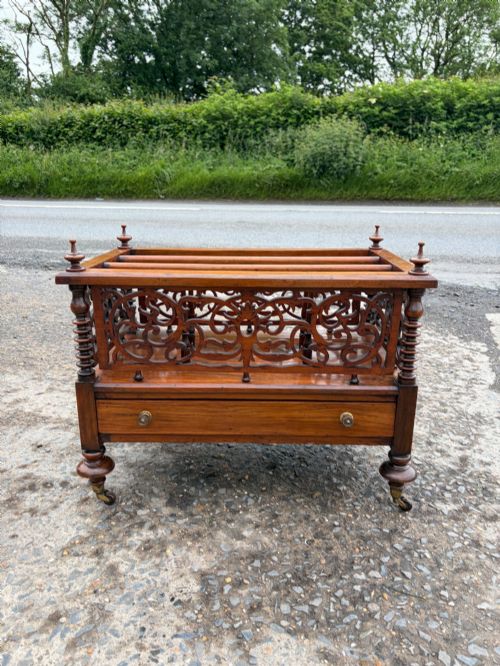
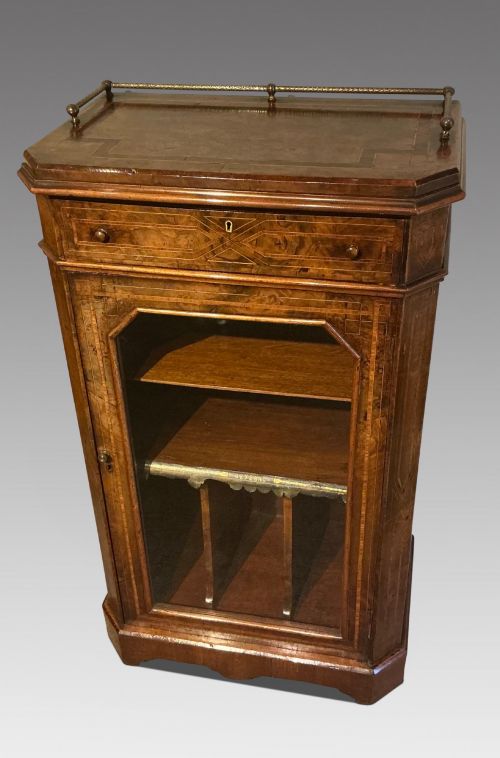
A victorian walnut music stand serves as a dedicated piece for holding sheet music, folios, and books in the nineteenth-century parlour. Buyers searching for a victorian walnut music stand encounter various forms, most commonly adjustable lecterns, duet stands, and fitted cabinets.
The selections span the mid-nineteenth century through the late Victorian era, often merging the function of a music stand with a Canterbury or whatnot. These versatile pieces reflect the domestic music-making habits of the period, accommodating single musicians or pairs sharing a duet score.
How They Were Made
Cabinet makers utilised solid walnut and figured burr walnut veneers, often selecting timber with rich grain patterns for the main surfaces. Boxwood and ebony stringing, along with marquetry inlay, frequently decorate the panels and shelves.
Metal components played a crucial role in functionality, with brass and iron mechanisms allowing stands to adjust in height or angle. Ceramic castors often supported the legs of larger music cabinets and canterburys, while carved details added texture to the solid walnut frames.
Victorian Walnut Music Stand Retail Price Guide 2026
Typical asking prices for victorian walnut music stand among the pieces listed under this phrase on Sellingantiques today, from the lower quarter to the upper quarter. They describe what is for sale here now, not the wider market.
Dating spans from the Regency era through the late Victorian period, with a strong concentration around eighteen-sixty.
What Varies in Quality
Quality rests in the crispness of the carving, the selection of the burr walnut veneer, and the fidelity of the inlaid details. Pieces featuring integrated drawers, turned columns, and well-executed marquetry represent higher tiers of craftsmanship.
The mechanical integrity of the adjustable brass and iron ratchets or screws distinguishes superior stands from simpler designs. Sound construction in the dividers and joints ensures the piece withstands regular use for holding heavy folios.
Gabriel Viardot·Edwards and Roberts
The Victorian Walnut Music Stand Glossary
- Canterbury
- A low stand with partitions for holding sheet music, newspapers, or folios, often fitted with a drawer below.
- Duet stand
- A music stand designed to accommodate two people reading sheet music simultaneously from opposite sides.
- Burr walnut
- Timber taken from the warted growths of walnut trees, prized for its swirling, highly figured grain patterns.
- Marquetry
- The art of applying pieces of veneer to a structure to form decorative patterns and pictures.
- Etagere
- A piece of furniture consisting of a set of open shelves for displaying small objects.
Victorian Walnut Music Stand: Frequently Asked Questions
How do I adjust the height?
Many Victorian music stands use a sliding stem secured by a brass thumb screw or a ratcheted mechanism beneath the reading desk.
Turn the screw gently to release the inner rod, slide the desk to the desired eye level, and tighten it securely.
Can I use these for modern books?
These stands accommodate large books, cookbooks, and sheet music quite well, provided the weight remains balanced on the ledge.
Adjustable duet stands offer a sturdy platform for heavier volumes, though delicate book rests require careful handling.
How do I care for burr walnut?
Maintain the wood by keeping it away from direct heat sources and strong sunlight that can dry out the veneer.
Apply a traditional beeswax polish occasionally to nourish the grain and preserve the rich lustre of the walnut.