




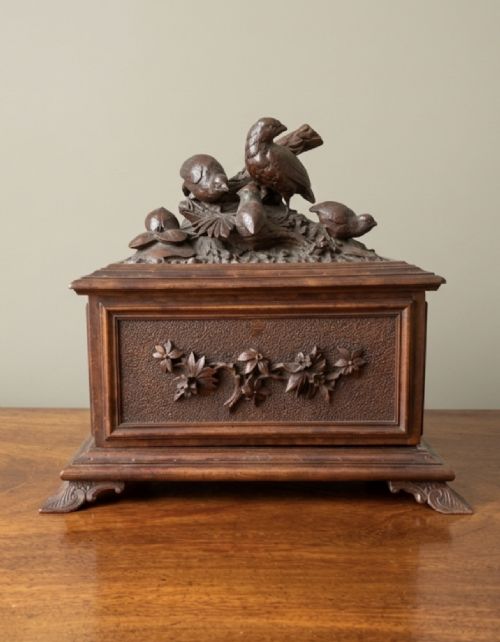
Victorian Walnut Casket
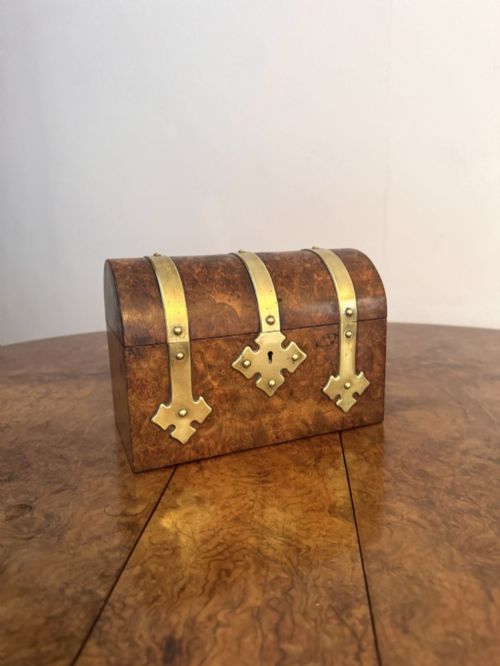
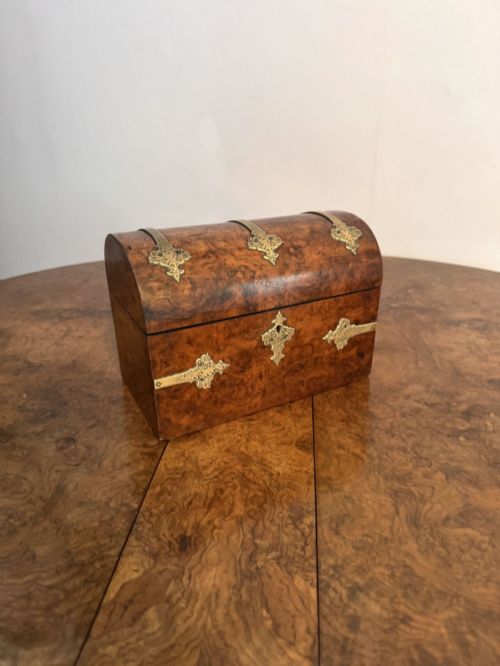
A victorian walnut casket brings rich dark timber and bright brass mounts to a desk or dressing table.
Victorian Walnut Casket
A victorian walnut casket is a container designed for correspondence, jewellery, gaming pieces or precious keepsakes, emerging primarily from nineteenth century workshops. These pieces span stationery boxes, writing slopes, games compendiums and dressing chests created to organise the domestic surface. Buyers meeting this search phrase encounter diverse iterations reflecting the tastes of the mid to late nineteenth century.
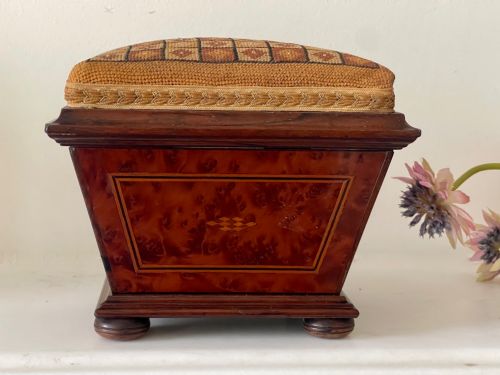
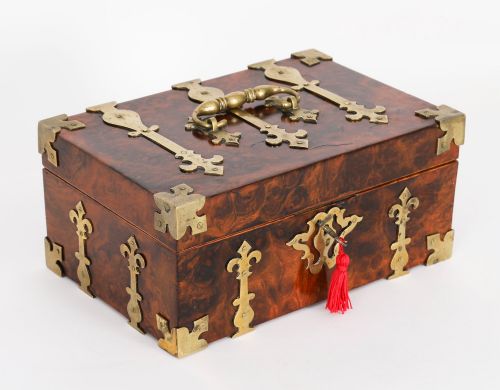
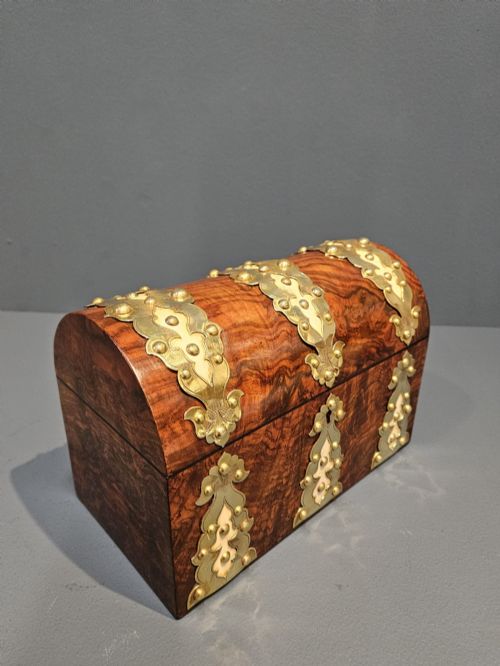
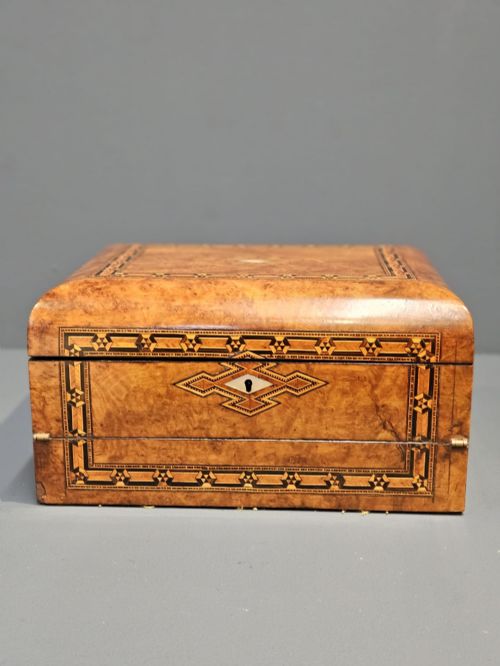
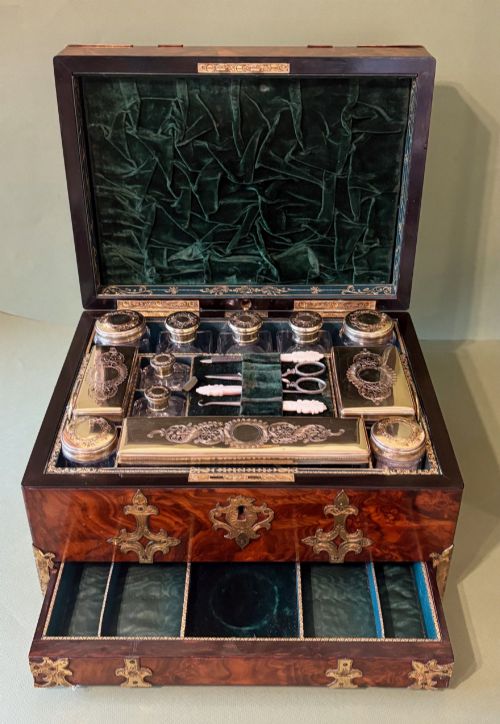
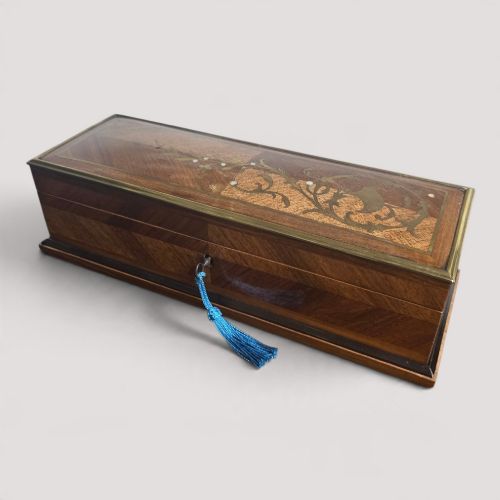
The specimens recorded on this page lean heavily into burr and figured walnut veneers, frequently reinforced with brass strapping or detailed with parquetry. Forms range from dome top letter caskets and scent cases to heavily carved Black Forest and Tunbridge ware variations. They represent the industrious output of British and continental makers catering to affluent Victorian households.
Materials and Construction
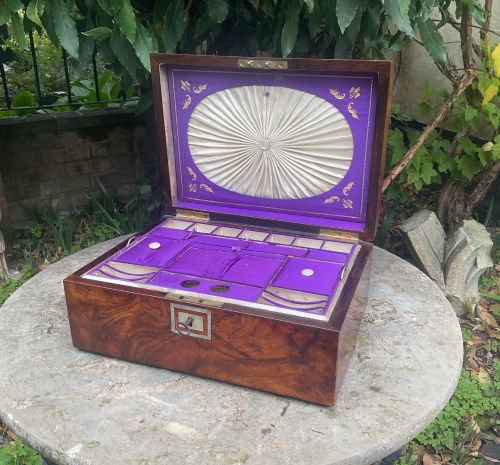
Makers utilised solid walnut and decorative veneers like burr and figured walnut applied over a secondary timber carcase. The grain patterns of the wood form the primary visual surface, chosen for deep figuring and warm tone. These panels are frequently paired with brass binding, mother-of-pearl inlay, or silk and velvet linings inside fitted compartments.
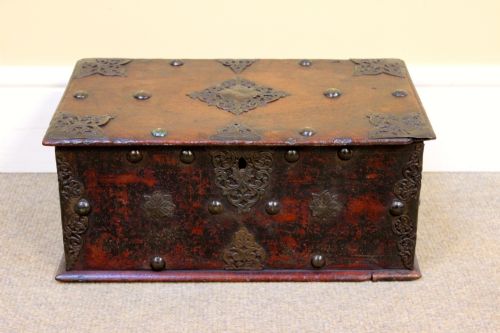
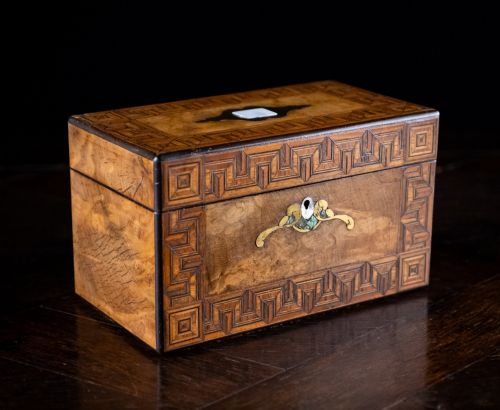
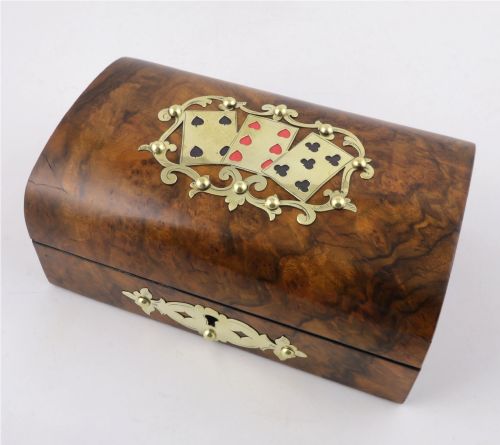
Surface ornamentation extends to parquetry, marquetry, and intricate hand carving seen in Black Forest and Tunbridge ware examples. Brass mounts and escutcheons secure the corners and lids, while specialised hinges support heavy domed or sloping lids designed to protect the contents within.
Victorian Walnut Casket Retail Price Guide 2026
Typical asking prices for victorian walnut casket among the pieces listed under this phrase on Sellingantiques today, from the lower quarter to the upper quarter. They describe what is for sale here now, not the wider market.
Some caskets hid poker dice alongside playing cards, proving that Victorian stationery storage doubled as a clandestine gaming den.
Judging Quality
Quality rests in the selection of the burr walnut veneer and the precision of the brass work or parquetry. Superior examples display symmetrical grain matching across the lid and sides, alongside tightly fitted interiors with original silk or velvet linings, mirrors, and working locks.
At the higher end, boxes bear maker signatures or retailer stamps, indicating superior construction by established workshops. Lesser pieces show simpler plain walnut finishes with minimal hardware and simpler internal layouts lacking specialised compartments.
George Betjemann·Trussell Brighton·Aspreys
The Victorian Walnut Casket Glossary
- Burr walnut
- A veneer sliced from the gnarled growth of a walnut tree, producing swirling patterns of grain. It was highly prized by nineteenth century cabinet makers for decorative surfaces.
- Parquetry
- A geometric mosaic of wood pieces inlaid into a panel. Makers utilised contrasting timbers to create crisp, angular patterns on the lids of boxes.
- Tunbridge ware
- A form of woodwork originating in Kent, consisting of minute mosaic tiles assembled to picture flora or geometric designs. These tiny wood blocks decorate the panels of small trinket and stationery boxes.
- Escutcheon
- A flat plate surrounding a keyhole. On these caskets, they are frequently cast in brass and serve both a structural and decorative purpose.
- Ormolu
- Gilt bronze mounted to furniture and decorative boxes. It provides a bright metallic contrast to the dark walnut timber.
Victorian Walnut Casket: Frequently Asked Questions
What did they store inside them?
These caskets held correspondence, writing equipment, jewellery, sewing supplies, and gaming pieces such as cards and dice. Interiors were often partitioned or fitted with velvet lined trays to secure delicate personal items.
Stationery boxes featured vertical slots for paper and envelopes, while dressing chests included mirrors and small compartments for bottles and trinkets.
How do I date a walnut box?
Dating relies on stylistic clues, construction methods, and materials such as brass mountings and lining fabrics. Pieces bearing Gothic Revival or Arts and Crafts motifs often point towards the later decades of the nineteenth century.
Makers' stamps, lock signatures, and the presence of specific decorative techniques like Tunbridge mosaic also help narrow down the decade of production.
Where were they placed in a home?
They sat prominently on library desks, drawing room tables, and bedroom dressing chests. Their decorative exteriors ensured they served as ornamental objects as well as practical storage.
Larger compendiums of games remained in communal rooms for evening entertainment, while smaller trinket boxes stayed in private quarters.
How do I care for the wood?
Maintain the timber by keeping it away from direct sunlight and sudden changes in humidity to protect the delicate veneers from cracking. Gentle dusting with a dry cloth preserves the polished surface.
Avoid using modern liquid polishes that can seep into the grain or damage antique silk and velvet interior linings.