



Burr Walnut Stationery Box
A burr walnut stationery box brings tactile warmth and figured grain to a desk, offering an orderly home for letters and correspondence.
Burr Walnut Stationery Box
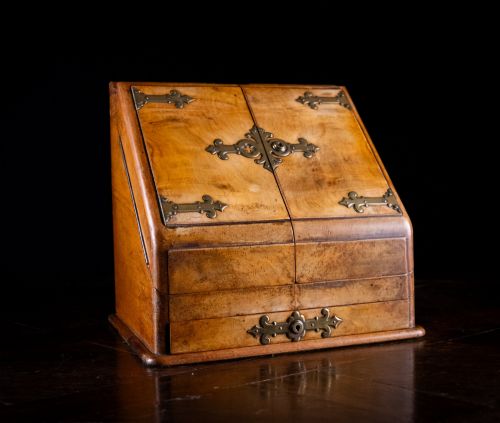
A burr walnut stationery box is a desk accessory designed to hold paper, envelopes and writing equipment neatly upright or tiered. Most examples met here date from the Victorian period, alongside late Georgian, nineteenth-century and Edwardian pieces.
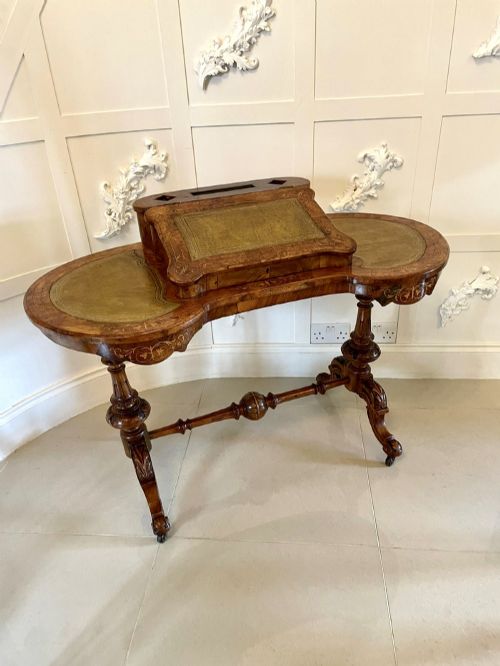
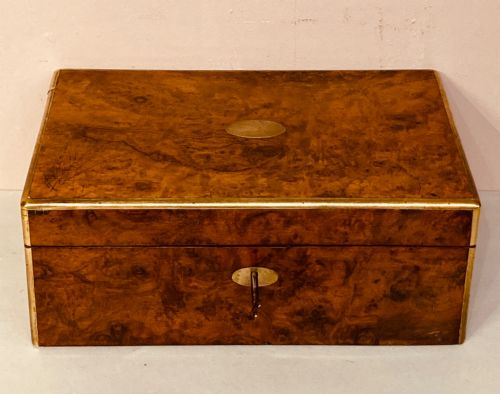
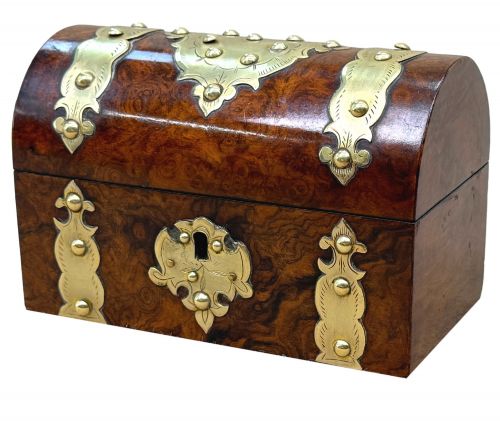
Makers shaped these items primarily as tabletop stationery cabinets, document boxes, and domed caskets. Alongside dedicated stationery boxes, the listings frequently include related desk forms such as writing slopes, writing boxes, and inkstands.
The materials span burr walnut and plain walnut, often enhanced with brass mounts, brass binding, mother-of-pearl, porcelain inserts, leather, boxwood, and mixed wood inlay including tunbridge ware and parquetry.
How they were made
Cabinetmakers selected burr walnut veneers for their swirling, knotty figure, applying them over solid timber carcases to create rich surface patterns. They integrated boxwood stringing, parquetry, and tunbridge ware mosaic panels to frame the panels.
Functional metalwork defined the construction, utilising brass for protective corner mounts, campaign-style banding, and structural reinforcement. High-security mechanisms such as Bramah locks required precise mortising into the walnut timber.
Burr Walnut Stationery Box Retail Price Guide 2026
Typical asking prices for burr walnut stationery box among the pieces listed under this phrase on Sellingantiques today, from the lower quarter to the upper quarter. They describe what is for sale here now, not the wider market.
Listings feature Victorian, Edwardian, and late Georgian periods, using burr walnut, brass, porcelain, and mother-of-pearl.
What varies in quality
Quality rests upon the density and visual impact of the burr walnut grain, alongside the crispness of any parquetry or tunbridge ware inlay. Superior cabinets display continuous veneer matching across the lid and sides.
The caliber of the hardware distinguishes finer boxes, particularly substantial brass mounts, robust hinges, and specialised locks by makers like Bramah. Fitted interiors lined in leather or silk velvet further elevate the standard.
Mappin & Webb
The Burr Walnut Stationery Box Glossary
- Burr walnut
- A figured veneer taken from the wart-like growths on walnut trees, prized for its complex, swirling grain patterns. It creates a highly decorative surface on nineteenth-century boxes.
- Stationery box
- A tabletop cabinet designed with internal compartments and tiered slots for letters, envelopes and paper. These pieces often feature sloping or domed lids.
- Writing slope
- A portable box with an inclined writing surface that folds down, traditionally lined with leather or velvet. Interiors generally conceal inkwell recesses, pen trays and secret drawers.
- Bramah lock
- A high-security cylindrical lock patented by Joseph Bramah in the late eighteenth century. These mechanisms appear on better quality Victorian boxes and desks.
- Tunbridge ware
- A form of mosaic woodwork created from many small tinted wood blocks to form geometric or pictorial scenes. It is found inlaid into Victorian boxes.
- Parquetry
- A geometric mosaic of wood veneers arranged in repeating patterns across the exterior surface. It provides texture and visual depth to walnut desk accessories.
Burr Walnut Stationery Box: Frequently Asked Questions
What is a burr walnut stationery box?
A burr walnut stationery box is a desktop cabinet built to store writing paper, envelopes and correspondence neatly. These pieces use decorative burr walnut veneer over a wooden carcase.
Most examples feature internal divisions and tiered compartments designed specifically for nineteenth-century letter writing habits.
How were stationery boxes used?
Owners placed them on desks or tables to keep writing materials organised and protected from dust and light. The upright compartments allowed letters to be sorted by category or urgency.
Many boxes included locking mechanisms to keep private correspondence secure from servants and guests.
How do I date a walnut stationery box?
Dating relies on stylistic clues, construction methods, and hardware styles associated with the Victorian, Georgian and Edwardian periods. Architectural domed lids and brass bound edges are typical of mid-nineteenth-century work.
Makers' marks on locks, such as Bramah signatures, help narrow the production date to specific decades.
Where should I place a stationery box?
These boxes sit comfortably on top of modern desks, side tables, or bookshelves as both decorative objects and functional storage. They provide a practical spot for contemporary mail and notebooks.
Keep them away from direct sunlight and heat sources to protect the walnut veneer and prevent the wood from drying out.