


Victorian Walnut Card Table
A victorian walnut card table brings nineteenth-century craftsmanship into a modern home, offering a clever fold-over surface for games and entertaining.
How They Were Made
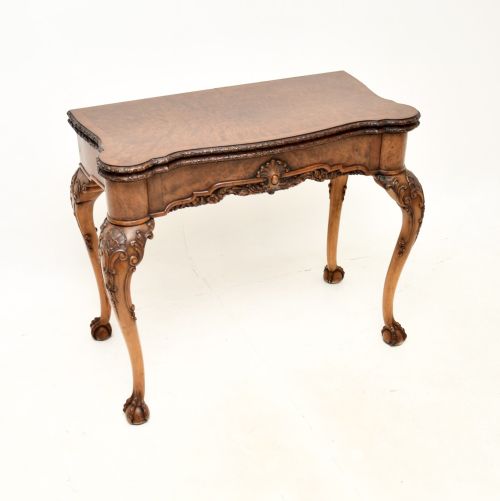
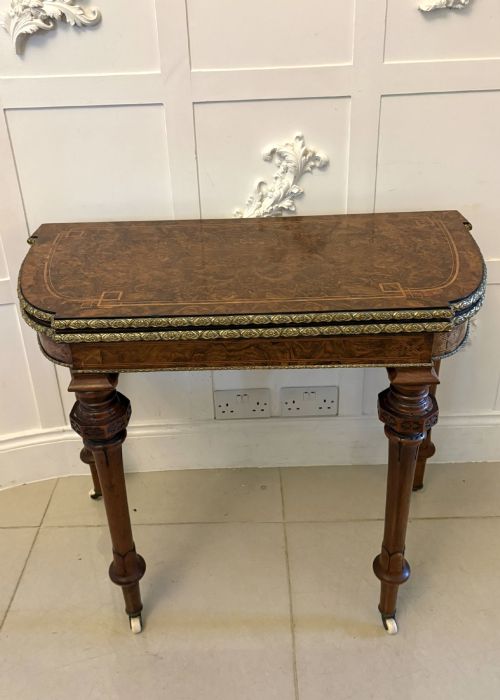
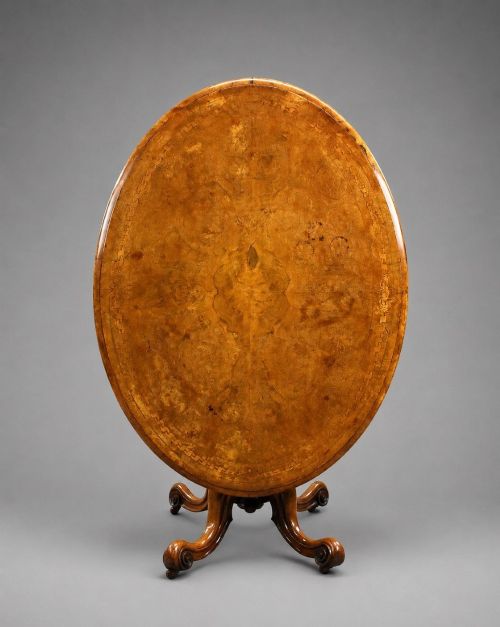
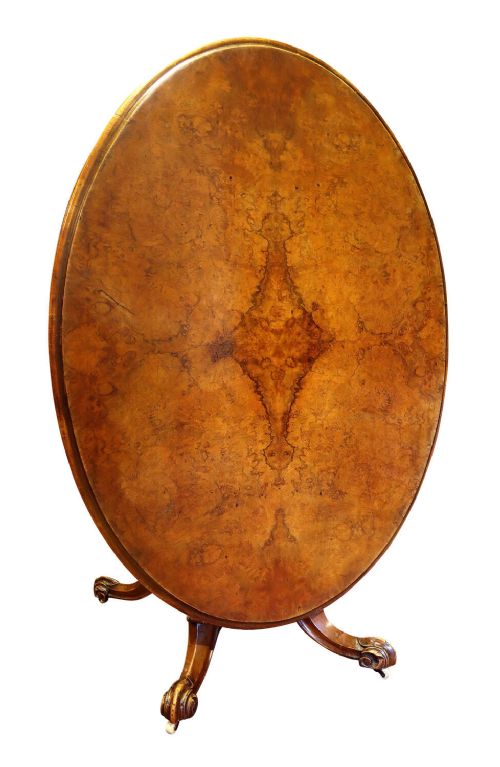
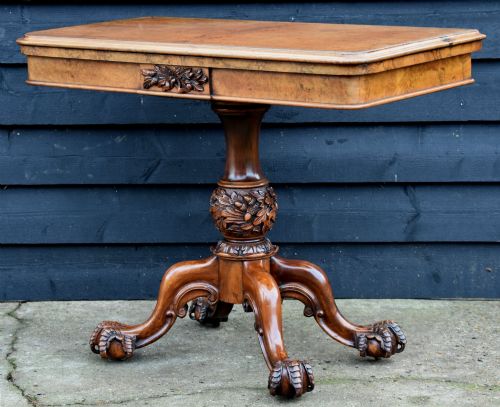
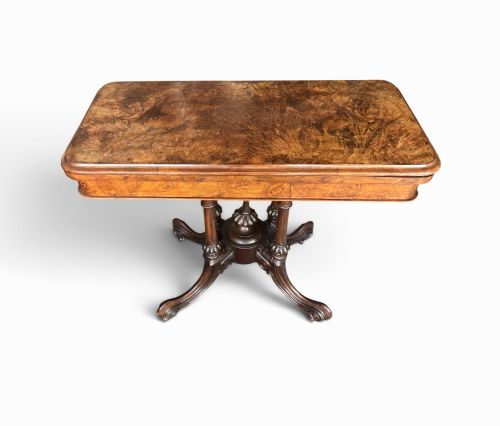
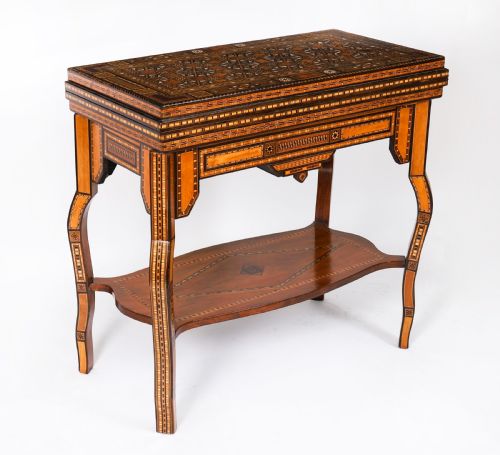
Cabinetmakers constructed these tables using solid carcases faced with thin veneers of walnut or burr walnut, chosen for its swirling, decorative grain. Marquetry inlay in boxwood and other light timbers often decorates the top surface, creating floral motifs or geometric borders.
Structural elements frequently incorporate secondary timbers like mahogany or pine beneath the walnut show-wood. Metal components such as brass hinges, ormolu mounts, and ceramic castors facilitate the movement and positioning of the heavy folding tops.
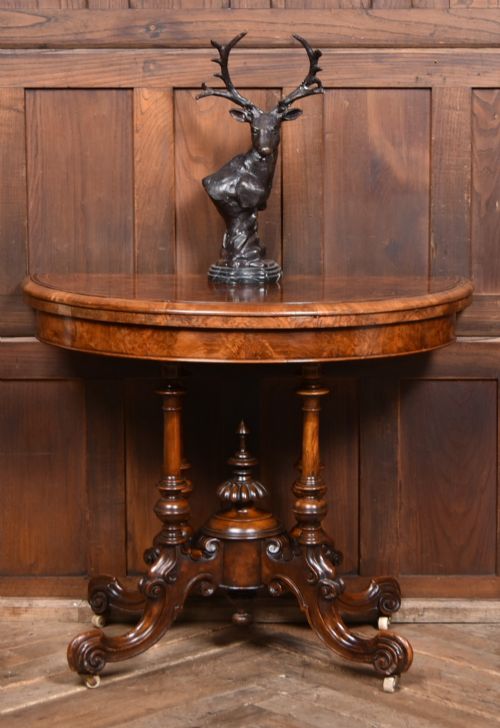
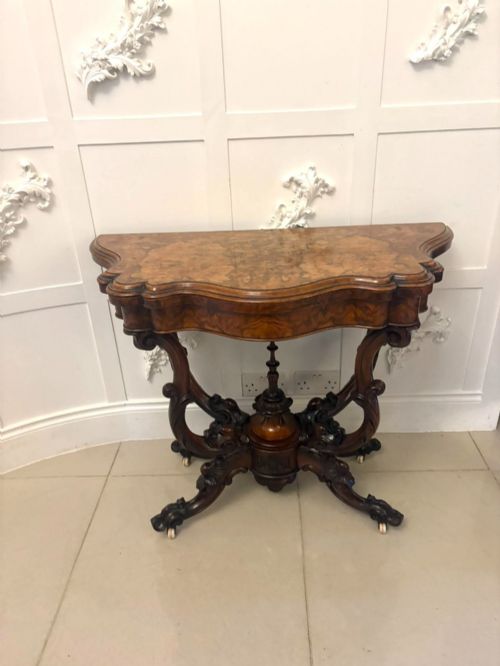
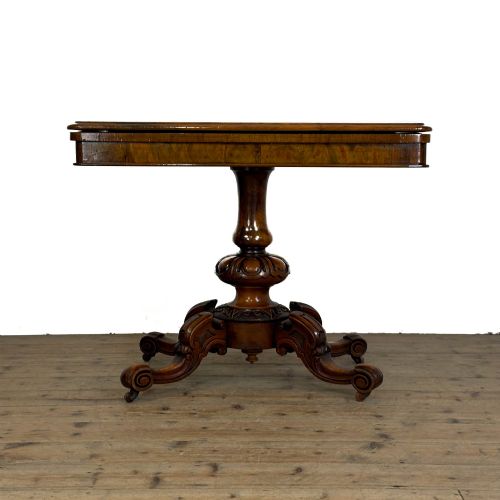
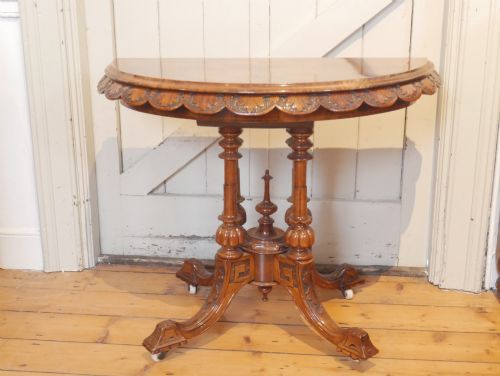
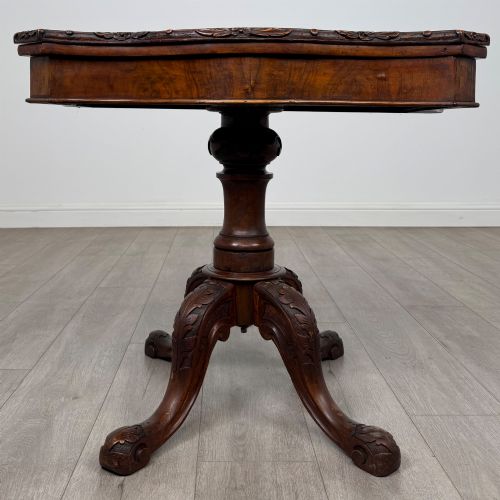
Carved supports range from pillar-and-claw pedestals to elaborate serpentine legs and carved basket bases. French polishing completed the process, sealing the grain and developing a deep, reflective lustre that highlights the natural figuring of the walnut.
What Varies in Quality
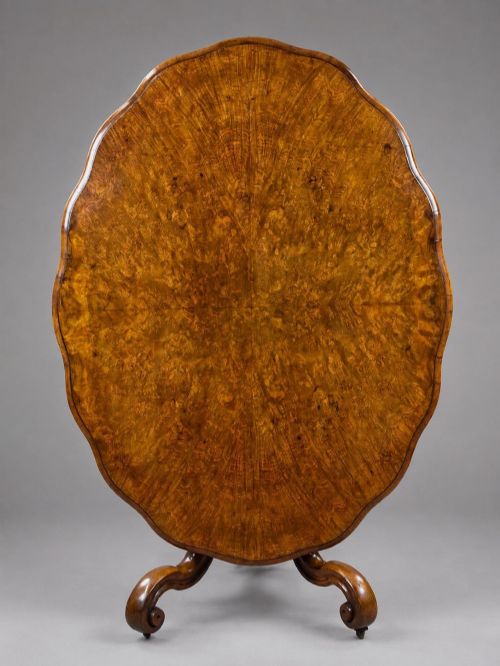
The distinction between standard pieces and exhibition-quality items lies in the selection of the burr walnut veneer and the precision of the marquetry inlay. Superior examples display dense, symmetrical grain patterns matched across the fold-over top, whereas lesser items use plain or heavily patched veneers.
Carving execution separates the ordinary workshop output from master cabinetmakers. Crisp, deep relief work on the pedestal bases and serpentine frames indicates skilled hand-carving, while softer edges point towards hurried production.
The integrity of the pivoting mechanism and the alignment of the hinged top when closed dictate everyday utility. High-end pieces maintain tight joints and smooth swivel actions that withstand decades of opening and closing without sagging.
Victorian Walnut Card Table Retail Price Guide 2026
Typical asking prices for victorian walnut card table among the pieces listed under this phrase on Sellingantiques today, from the lower quarter to the upper quarter. They describe what is for sale here now, not the wider market.
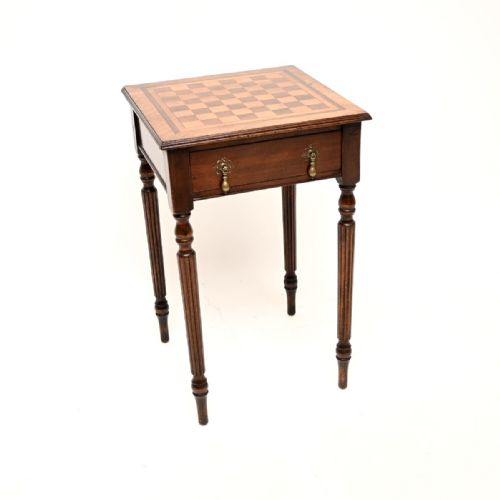
Several tables conceal miniature chess boards inside, ready for a sudden parlour rematch.
Holmes Baldock·Edwards & Roberts·Gillows of Lancaster
The Victorian Walnut Card Table Glossary
- Burr Walnut
- A timber derived from the abnormal growth or burl of a walnut tree, yielding highly figured, swirling veneer patterns prized for decorative furniture tops.
- Marquetry
- The art of applying small pieces of veneer to a structure to form decorative patterns, frequently utilising boxwood and ebonised wood on these tables.
- Ormolu
- Gilded bronze ornamentation applied to furniture mounts, adding metallic contrast to the dark walnut timber in revival styles.
- Serpentine
- A curved line of furniture shaping that undulates inward and outward, commonly seen on the edges and aprons of better nineteenth-century tables.
- Loo Table
- A large round or oval parlour table used for the nineteenth-century card game of loo, sharing construction traits with contemporary games tables.
Victorian Walnut Card Table: Frequently Asked Questions
How do you open a folding card table?
The hinged top typically swivels ninety degrees on its base before folding open flat to rest upon the expanded frame or a swing-out leg. This mechanism requires a gentle lift and turn to release the internal wooden pivot lock.
Forcing the top without clearing the pivot pin can damage the internal pivot block. Owners should support the weight of the flap evenly while operating the hinge.
What games were played on these tables?
These pieces accommodated whist, cribbage, and draughts, often incorporating inlaid chess or backgammon boards beneath the removable or reversible top panels. The baize lining provided a soft surface to prevent cards from sliding and to dampen the sound of dice.
Victorian households utilised the versatile top for writing or sewing when gaming boards were not in active use. The concealed well beneath the folding top frequently stored counters, markers, and card packs.
How should walnut furniture be polished?
Maintaining nineteenth-century walnut involves applying traditional beeswax sparingly with a soft cloth and buffing to a gentle sheen. Avoid modern silicone sprays, which penetrate old polish layers and attract dust to the carved recesses.
Keeping the timber away from direct sunlight and radiators prevents the walnut veneer from drying and lifting. Consistent indoor humidity protects both the wood and the delicate boxwood inlay.
Are all walnut tables from the Victorian era?
While the majority of these pieces date from the mid-to-late nineteenth century during the height of revival styles, production extended into the early twentieth century. Examining the construction techniques, secondary woods, and screw types helps determine the exact manufacturing period.
Later copies occasionally adopt earlier proportions but lack the characteristic hand-cut dovetails and patination of genuine nineteenth-century workshop output.