





Victorian Uranium Glass
Victorian uranium glass is bright, glowing tableware and decorative objects that collectors value for its distinct yellow-green radiance under ultraviolet light.
Victorian Uranium Glass
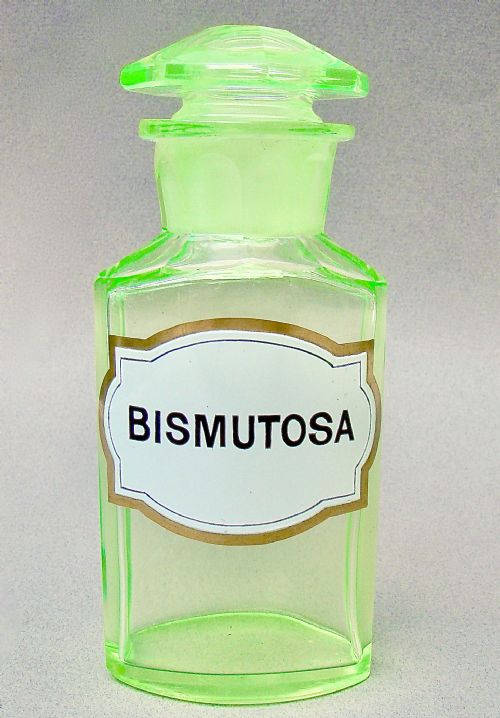
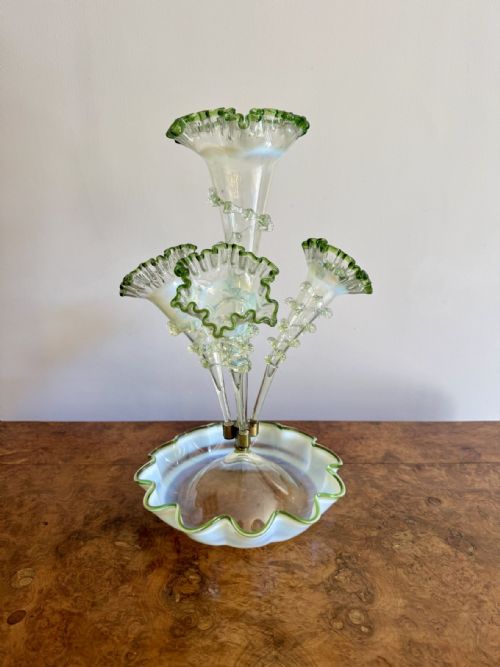
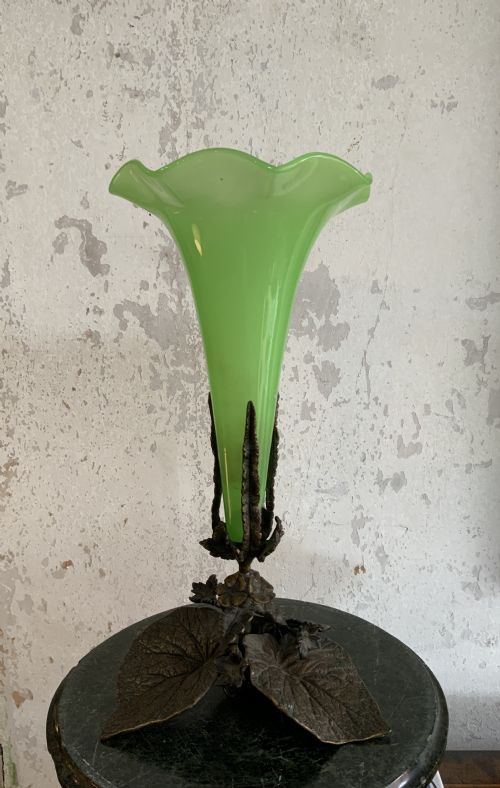
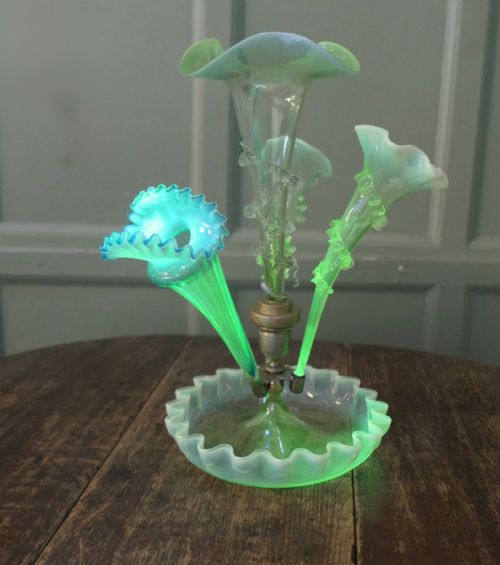
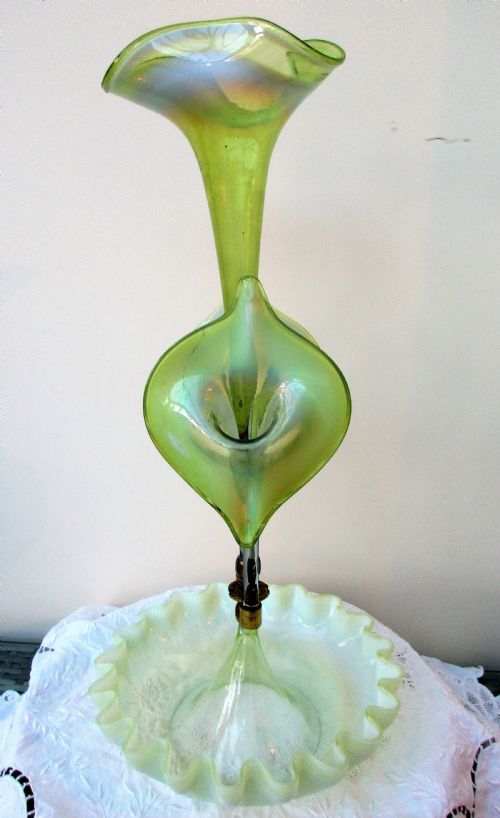
When buyers search for victorian uranium glass, they encounter an array of functional and decorative items produced during the nineteenth century. The most common forms on this page include wine glasses, scent bottles, and table epergnes.
The objects date from periods spanning the 1870s through to 1900, reflecting Victorian, Gothic Revival, and Art Nouveau design movements. Vases, bowls, and table lamps also appear frequently across these listings.
Pieces range from simple pressed or blown vessels to elaborate centrepieces mounted in silver plate, brass, or bronze. Collectors frequently group these items by colour shade, ranging from pale yellow vaseline to deep green and cranberry hues.
Materials and production methods
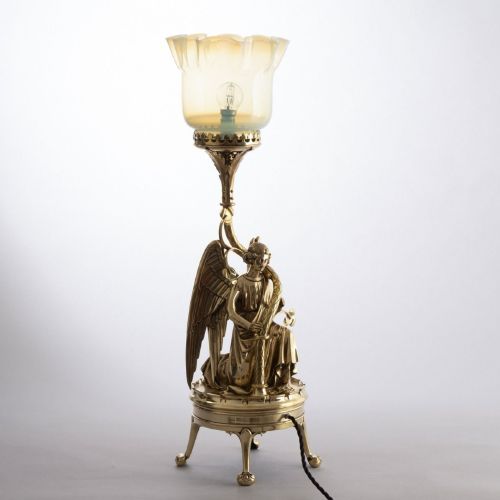
Glassmakers added uranium oxide to the molten batch to achieve the characteristic transparent yellow-green colour that glows brightly under blacklight. Artisans combined this glowing glass with metal mounts in brass, silver plate, and bronze to form lamps, epergnes, and scent bottles.
Many items display hand-blown forms, while others utilise cut, engraved, or threaded decorative techniques. Makers also produced opalescent, Burmese, and milk glass variants by altering chemical additions and cooling rates in the furnace.
Victorian Uranium Glass Retail Price Guide 2026
Typical asking prices for victorian uranium glass among the pieces listed under this phrase on Sellingantiques today, from the lower quarter to the upper quarter. They describe what is for sale here now, not the wider market.
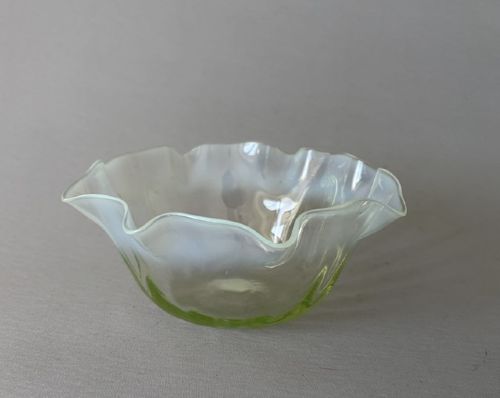
Victorian dinner parties relied on these glowing bowls to spark conversation when gas lamps dimmed.
Distinctions in quality
Quality rests upon the crispness of the glass cutting, the weight of the metal mountings, and the overall complexity of the form. Elaborate epergnes with multiple trumpets or scent bottles featuring hallmarked silver work represent the upper tier of the range.
Plain domestic glassware sits at the simpler end, though intensity of the uranium glow and clarity of the metal or glass remain consistent markers of well-executed nineteenth-century production.
Thomas Webb and Sons·Stevens and Williams·Charles May
The Victorian Uranium Glass Glossary
- Vaseline glass
- A transparent or translucent yellow-green glass coloured with uranium oxide. The term derives from its visual similarity to petroleum jelly.
- Epergne
- A large table centrepiece featuring a central bowl with multiple detachable trumpets or hanging baskets. Victorian examples frequently combine uranium glass components with silver-plated frames.
- Vinaigrette
- A small ornamental box fitted with an internal grille, designed to hold a sponge soaked in aromatic vinegar. These containers often feature silver mounts and uranium glass bodies.
- Posy vase
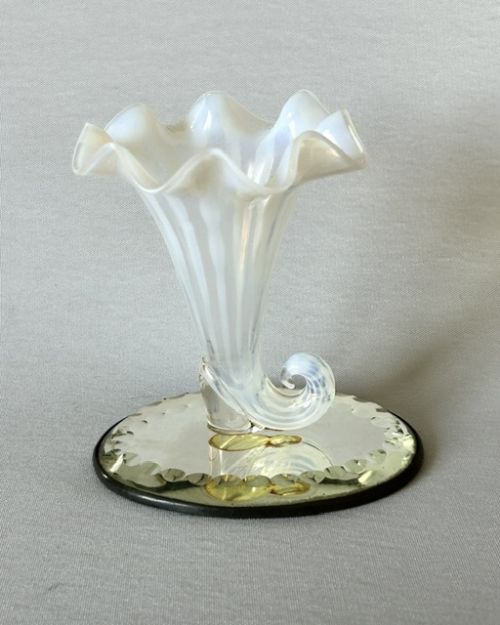
- A small vessel intended for holding a short bouquet of flowers. These pieces appear in various forms, including cornucopia shapes and tinted glass shades.
Victorian Uranium Glass: Frequently Asked Questions
How do I test for uranium glass?
Uranium glass emits a vivid neon green glow when exposed to a 395nm ultraviolet light source. This fluorescence stems from the uranium oxide content mixed into the molten batch during manufacture.
Natural light reveals a characteristic yellow-green or vaseline tint, though the ultraviolet test remains the definitive method for confirming the material.
Is Victorian uranium glass safe to use?
The objects contain low levels of uranium trapped within the glass matrix, emitting minimal radiation. Normal handling poses no health risks to collectors.
Using these pieces for acidic food or drink is generally discouraged, though they remain entirely safe for display and decorative purposes.
How should I clean my glass pieces?
Wash the glass gently in warm water using a mild, non-abrasive detergent. Avoid harsh scrubbing brushes that can scratch antique surfaces or damage delicate metal mounts.
Dry the pieces thoroughly with a soft cloth, taking extra care around silver-plated or bronze mounts to prevent tarnishing.
How do I date Victorian glass items?
Dating relies on stylistic markers such as Gothic Revival motifs, Art Nouveau curves, and manufacturing techniques recorded in the piece design. Silver mounts often bear hallmarks providing exact assay office years.
Comparing forms against documented nineteenth-century catalogues helps narrow the production window.