

Victorian Upholstery Armchair
A victorian upholstery armchair brings deep comfort and traditional craft to a room, offering generous seating built for long hours of reading or fireside rest.
Victorian Upholstery Armchair
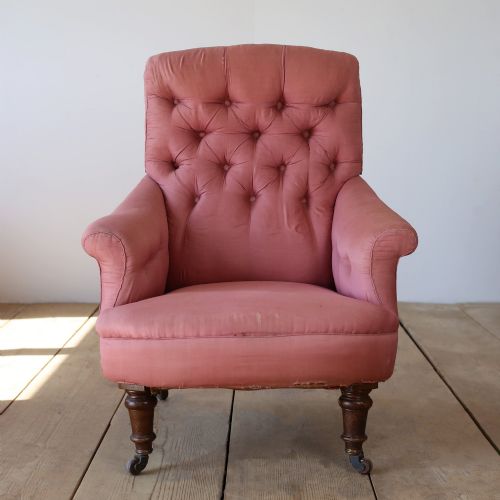
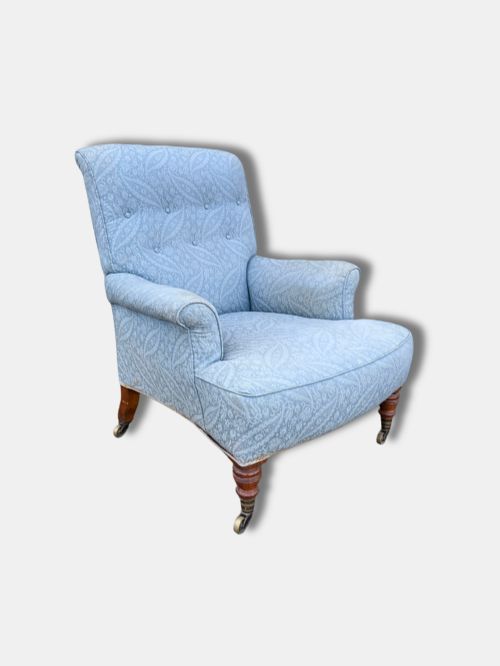
A victorian upholstery armchair encompasses a variety of substantial seating forms, ranging from deep country house designs to button back library chairs and low nursing seats. Buyers look for pieces that combine solid period frames with comfortable padded seating designed for daily use.
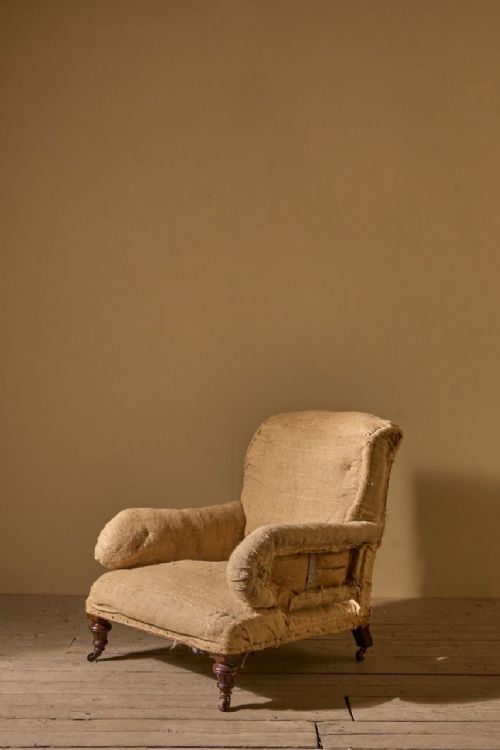
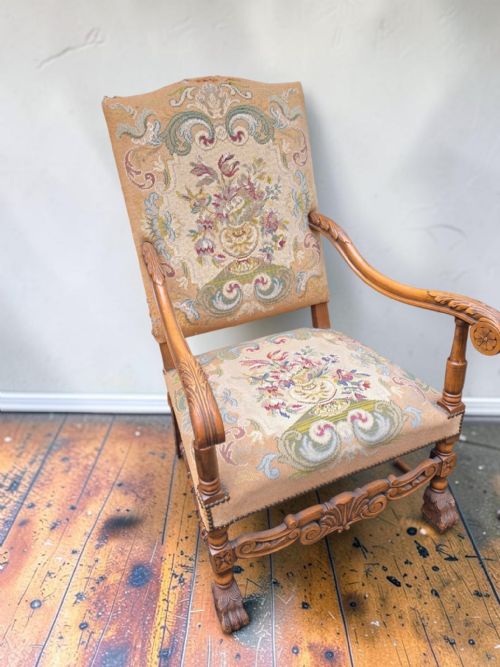
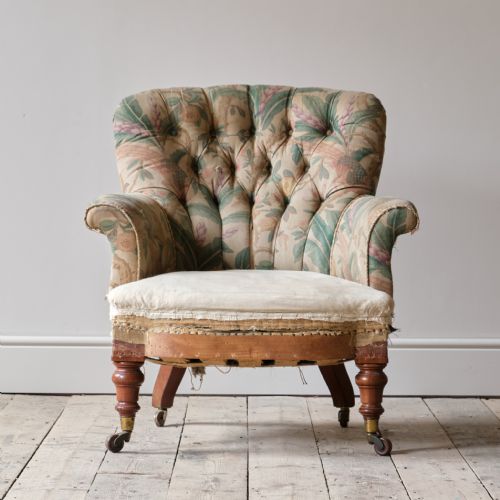
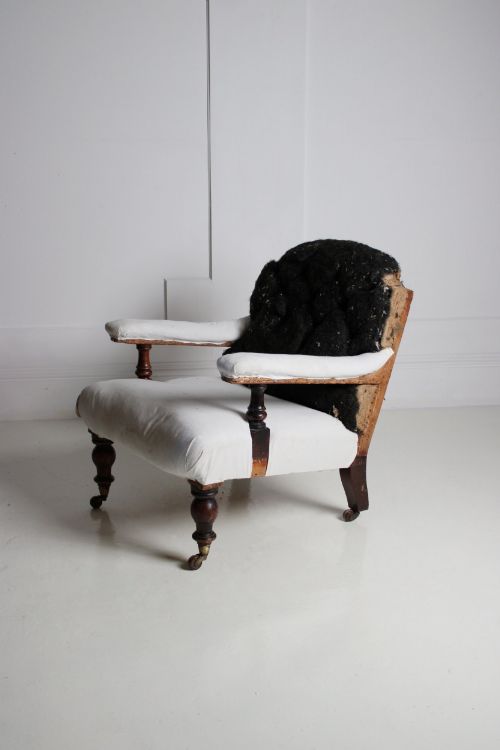
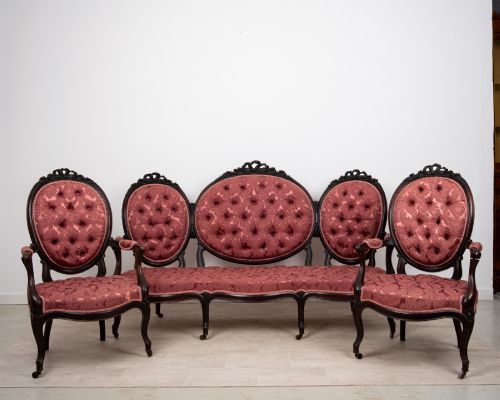
The selections available here lean heavily toward nineteenth-century origins, featuring English country house proportions alongside French Napoleon III models and revival styles. Many examples arrive ready for fresh fabric or finished in traditional textiles like velvet, tapestry, and calico.
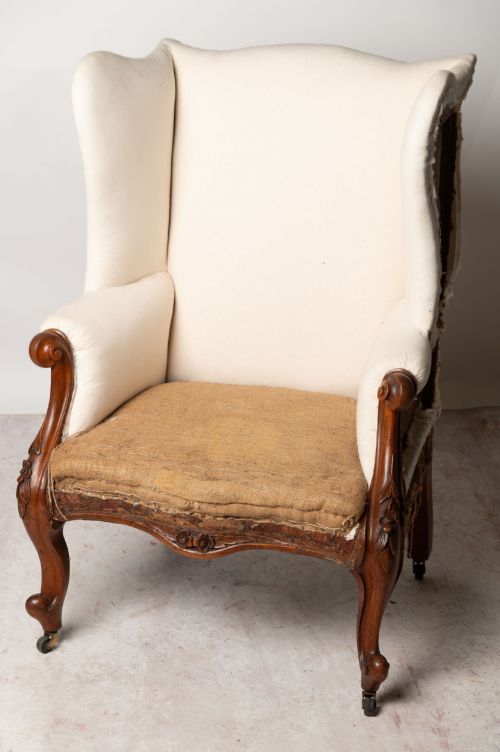
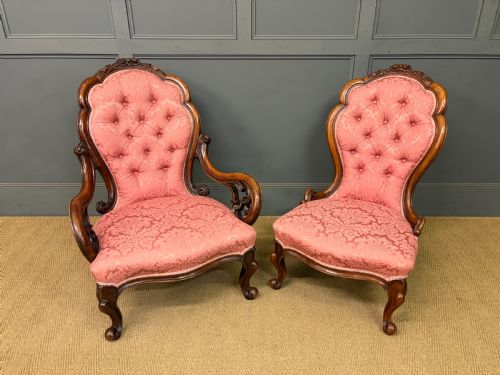
Buyers frequently encounter variations including tub backs, wingchairs, and low salon chairs originating across the Victorian and Edwardian eras. These seating types reflect the changing domestic comfort priorities of the nineteenth century, moving from rigid frames toward deeply padded, sprung interiors.
Materials and construction methods
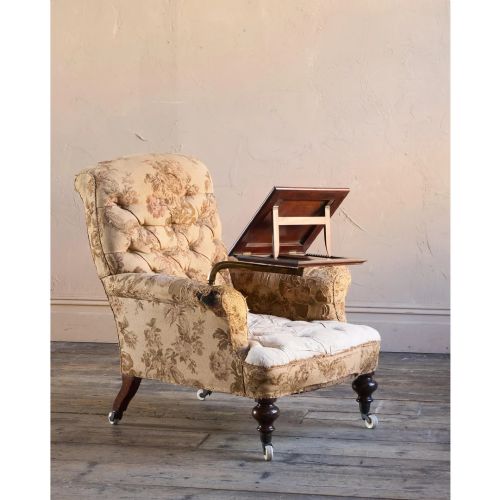
Frames rely upon dense hardwoods such as mahogany, walnut, and general solid timber to support internal steel springing and webbed foundations. Exposed woodwork often displays carved details, scroll arms, or turned legs fitted with brass castors.
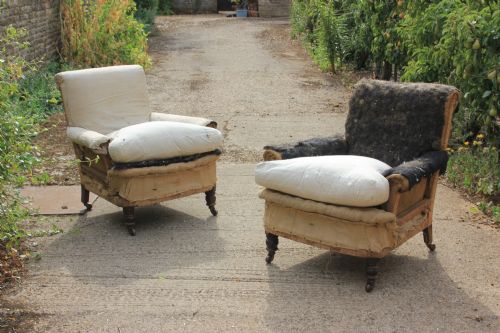
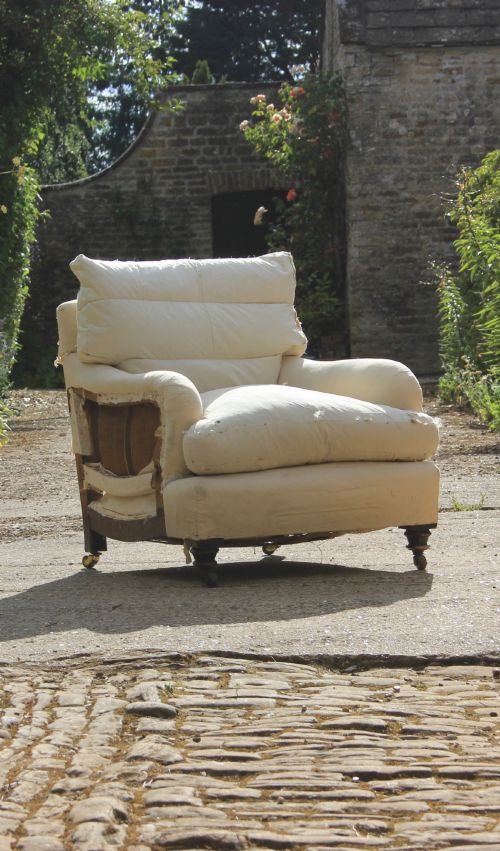
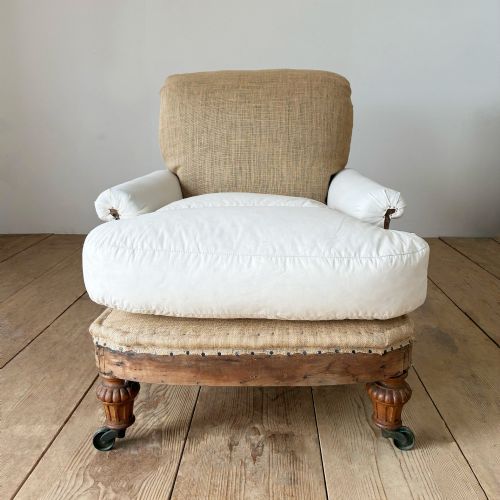
Internal stuffing uses traditional layers of hessian, calico, hair, and wool padding before outer covers of velvet, damask, chenille, or printed fabric are applied. Many pieces preserve their original internal stuffing methods while others arrive stripped to the calico stage for custom recovering.
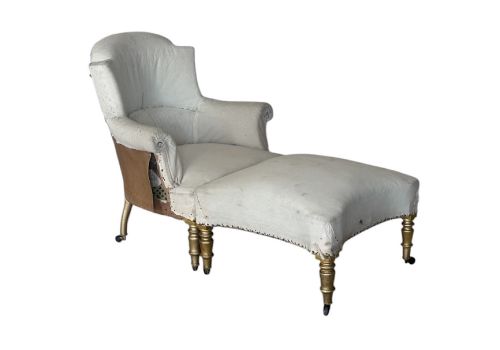
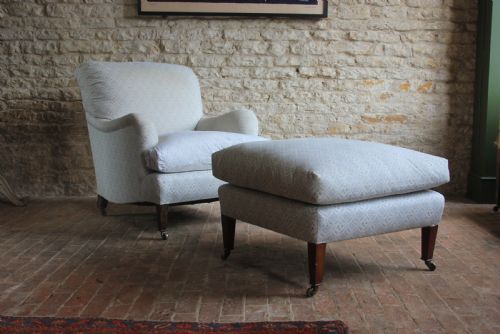
Several armchairs include integrated reading stands and matching foot-stools, catering to nineteenth-century literary endurance.
Distinguishing quality across examples
Quality rests primarily upon the integrity of the underlying hardwood frame and the sophistication of the original sprung architecture. Superior examples maintain firm structural rigidity in the joints without excessive movement in the arms or back.
The execution of the joinery and any carved wooden show frames separates standard production from finer cabinetmaker output. Hand-turned legs, secure brass fittings, and well-balanced proportions indicate higher workshop standards.
Howard and Sons·Gillows·Robert Strahan·William Morris
The Victorian Upholstery Armchair Glossary
- Calico
- A plain-woven cotton fabric used as the foundational inner layer beneath decorative top covers.
- Button back
- A traditional upholstery technique where deep indentations are secured with covered buttons in a geometric diamond pattern.
- Show frame
- An exposed wooden structural frame, typically carved in walnut or mahogany, surrounding the upholstered sections.
- Hessian
- A coarse woven fabric utilised for internal webbing and foundation support beneath stuffing layers.
- Wingback
- An armchair featuring protective side panels designed to shield the occupant from draughts.
Victorian Upholstery Armchair: Frequently Asked Questions
What is a calico stage armchair?
A chair sold at the calico stage has been stripped down to its foundational white cotton layer and fully restored internally. This leaves the final choice of decorative outer fabric entirely to the buyer.
Such pieces allow interior decorators to match specific colour schemes without altering the historical integrity of the restored Victorian frame underneath.
How do I identify a Howard style armchair?
Howard style armchairs are characterised by deep, low seating proportions, rolled arms, and low wooden legs terminating in brass castors. They prioritise relaxed domestic comfort over formal posture.
Original pieces from the firm often bear maker stamps on the castors or legs, while later style equivalents replicate the signature generous padding.
Are these chairs suitable for daily seating?
Victorian armchairs were built for sustained domestic use using robust hardwood frames and resilient internal springing systems. Many retain a supportive, deep seated comfort that rivals modern furniture.
Chairs requiring re-upholstery will need new interior padding before regular use, whereas restored examples are ready for immediate placement in a living space.
What is the difference between a nursing chair and a salon chair?
Nursing chairs typically feature low seats and supportive high backs designed originally for comfort by the fireside or nursery. They often lack arms to accommodate voluminous Victorian skirts.
Salon chairs are generally lighter occasional seats intended for drawing rooms, displaying decorative show frames in walnut or mahogany with varied upholstery.