


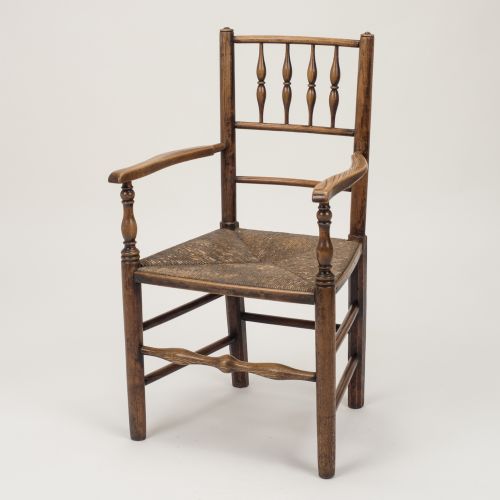


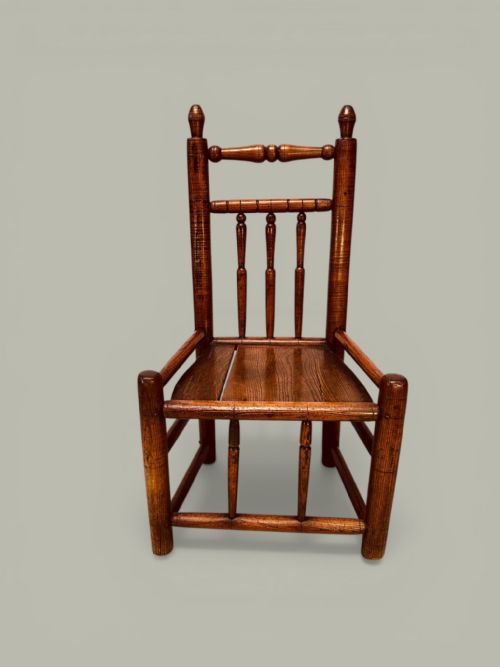

Turned Spindle Arm Chair
A turned spindle arm chair brings together repetitive wooden turnings and solid timber construction, offering both vernacular charm and sturdy seating.
Turned Spindle Arm Chair
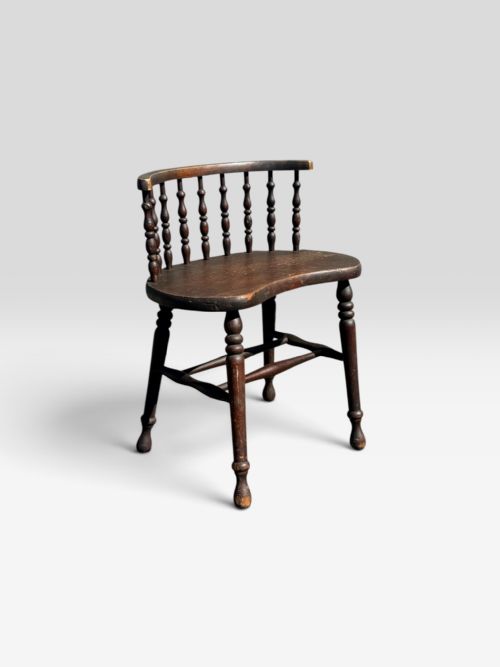
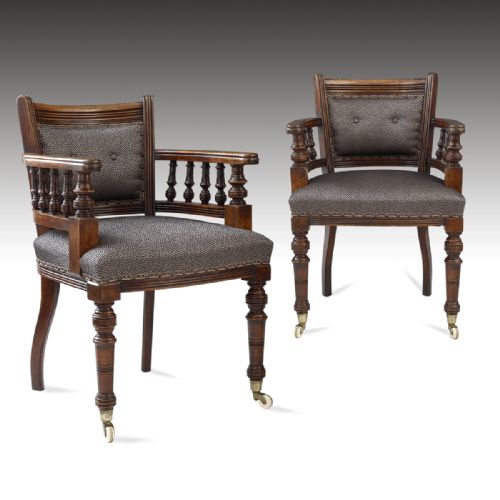
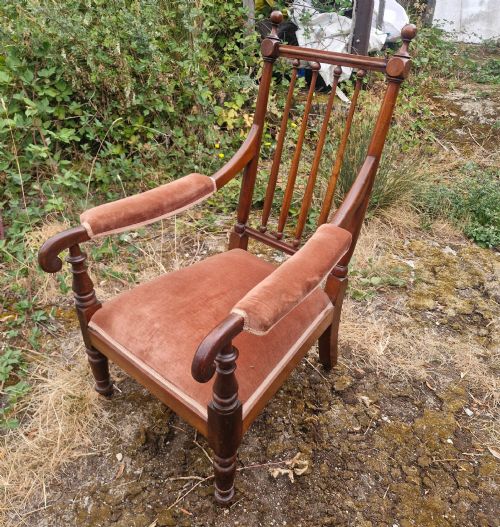
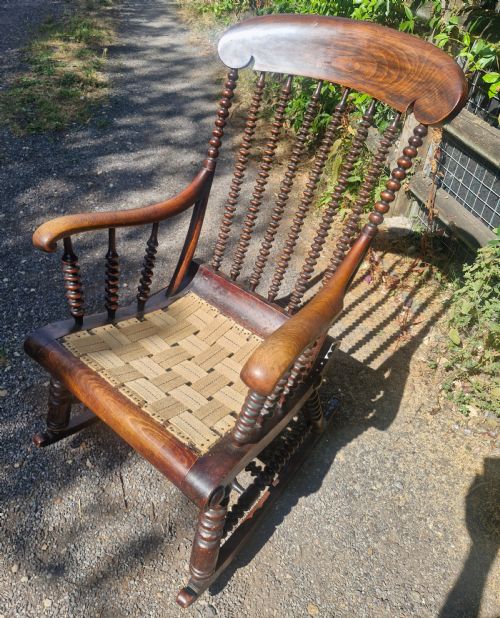
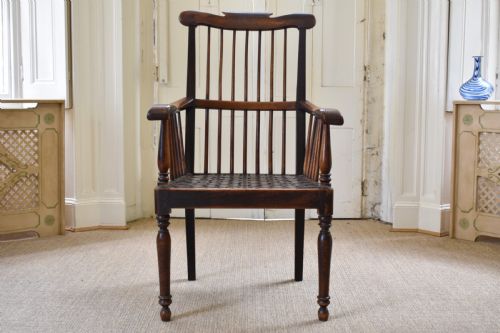
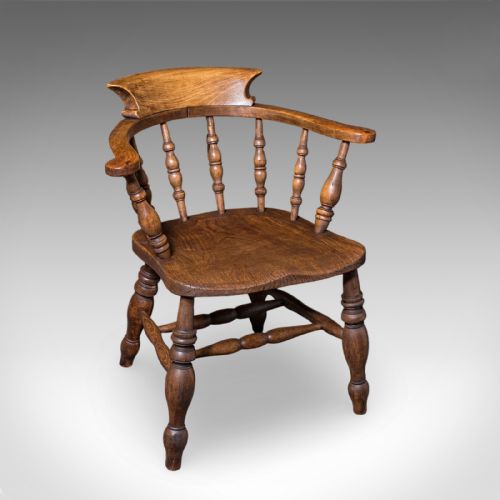
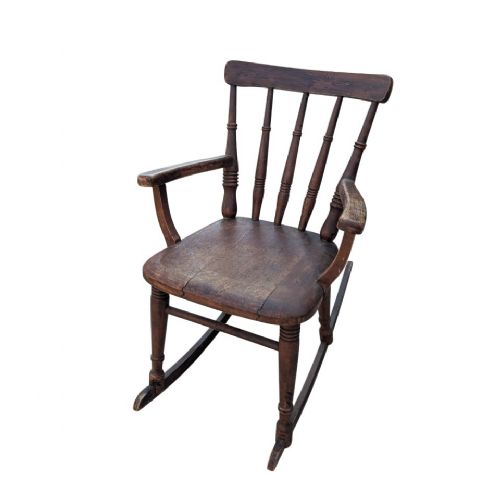
A turned spindle arm chair is a seating form defined by its rhythmic arrangement of turned wooden uprights, commonly found in regional country styles from the eighteenth and nineteenth centuries. When searching for a turned spindle arm chair, buyers encounter pieces ranging from simple elm and ash country armchairs to more elaborate bobbin framed rocking chairs and smoker's bows. These forms draw on English, Scottish, and Scandinavian vernacular traditions, spanning periods from the Georgian era through to the Edwardian period.
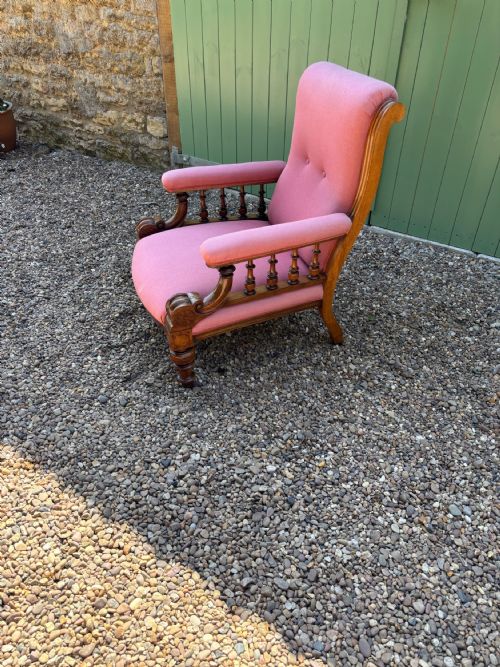
The materials visible across these pieces reflect local timber supplies, with elm, ash, beech, and oak dominating the selection alongside occasional uses of fruitwood and mahogany. Many examples feature solid timber seats, sometimes paired with rush seating or leather inserts, while other variations incorporate upholstered elements or rocking mechanisms. Buyers frequently find Captain's chairs, Windsor variants, and daybeds sharing the characteristic spindle and bobbin framing that unites this category.
Materials and construction methods
Chair makers utilised lathe-turned components such as bobbins and spindles to build both the structural framework and the decorative backrests of these seats. Hardwoods like ash, beech, and elm provided the necessary tensile strength for slender spindles and steam-bent arms, while denser woods formed the sturdy seats.
Joinery relied on traditional methods including pegged mortise and tenon joints, enabling rigid construction without excessive metal hardware. Surfaces were often left with simple polished finishes or historic painted coats that highlight the natural grain of the timber.
Several miniature versions appear among full-sized seating, suggesting nineteenth-century children or apprentices practiced their fine joinery on tiny turned armchairs.
Factors influencing quality
The primary distinction in quality lies in the crispness and consistency of the lathe work, where sharp, well-defined turnings reflect greater skill from the maker. Timber selection also dictates grade, with figured grain patterns and robust combinations like elm seats paired with ash spindles showing higher craftsmanship.
Structural integrity depends on the tightness of the original joints and the retention of factory components rather than modern replacements. Pieces retaining original surface patination and authentic rush or wooden seats hold greater integrity than heavily restored examples.
Morris and Co
The Turned Spindle Arm Chair Glossary
- Spindle
- A cylindrical turned piece of wood used repetitively in chair backs and frames. Spindles provide lightweight structural support while creating a decorative visual rhythm.
- Bobbin
- A specific type of lathe turning characterised by rounded swellings resembling spools of thread. This motif is typical of nineteenth-century vernacular seating.
- Smoker's Bow
- A low-backed Windsor-style armchair featuring a continuous curved arm rail supported by turned spindles. It is commonly associated with nineteenth-century tavern and domestic use.
- Vernacular
- Regional furniture made by local craftsmen for everyday use rather than following strict high-style metropolitan fashions. These pieces utilise locally available timbers and traditional techniques.
- Rush Seat
- A seating surface woven from dried marsh reeds or sedges. This technique provides a flexible, durable platform common on country chairs.
Turned Spindle Arm Chair: Frequently Asked Questions
How do I identify a genuine nineteenth-century turned chair?
Examine the timber shrinkage, tool marks left by lathes, and the wear patterns on the seat and footrests. Genuine older pieces display hand-turned irregularities rather than uniform modern machining.
Check the joinery underneath the seat for handmade wedges and traditional pegs. Historic repairs and consistent surface patination further confirm age.
How should I care for a rush-seated spindle chair?
Keep rush seats away from excessive moisture and direct heat sources to prevent the dried reeds from becoming brittle. Cleaning should be limited to gentle dusting with a dry cloth.
Apply microcrystalline wax sparingly to the wooden frame to nourish the timber. Avoid soaking the woven seat during any maintenance.
Are these chairs comfortable for daily sitting?
Many antique spindle chairs feature sculpted wooden seats designed to fit the body comfortably for reasonable periods. However, they lack modern padding unless fitted with an upholstered drop-in pad or loose cushion.
Rocking and reclining variants offer more relaxed seating positions. Adding a thin, period-appropriate textile cushion provides extra comfort without altering the chair.