



Velvet Bedroom Armchair
A velvet bedroom armchair offers a comfortable seat for dressing rooms and parlours, bringing texture and period character to domestic spaces.
Velvet Bedroom Armchair
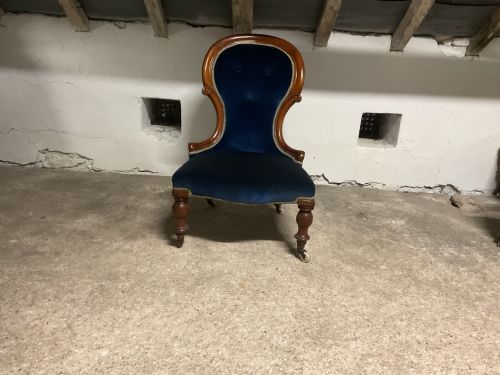
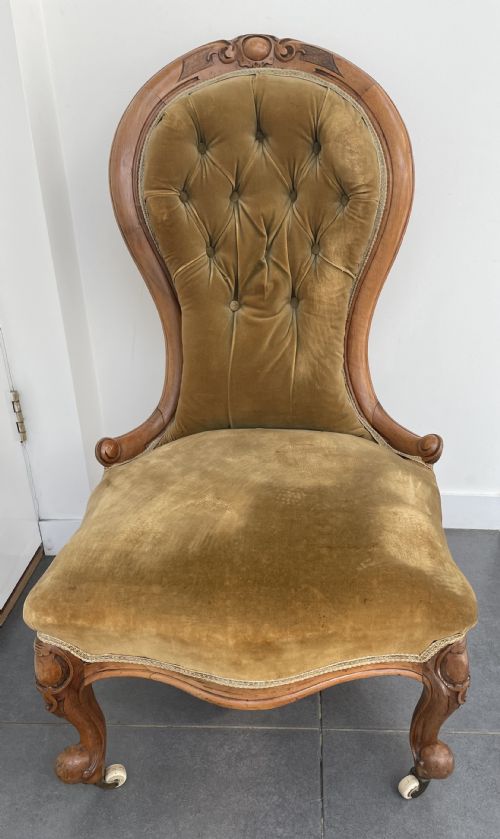
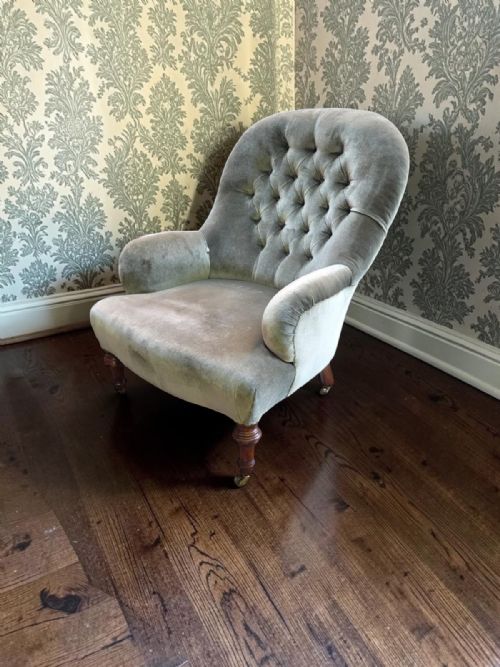
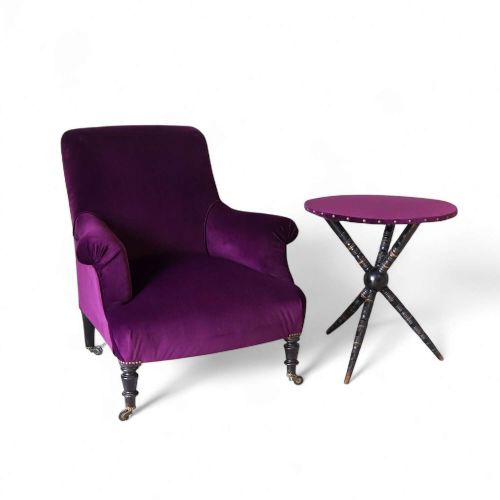
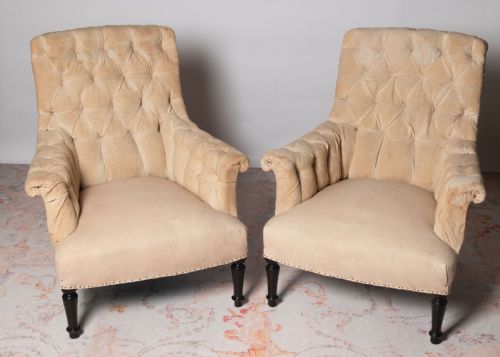
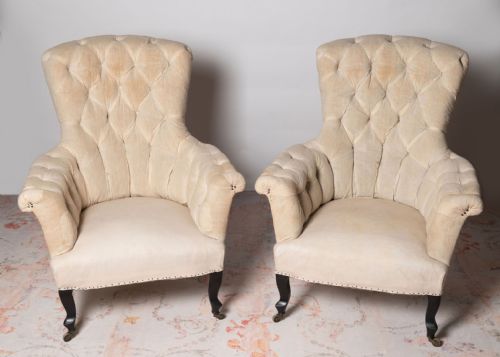
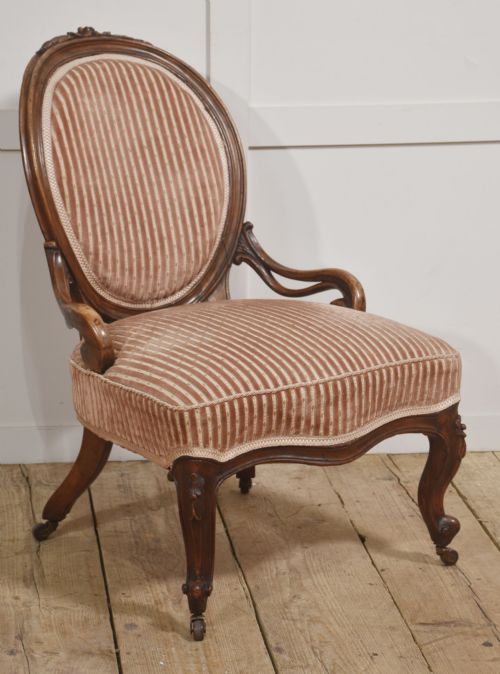
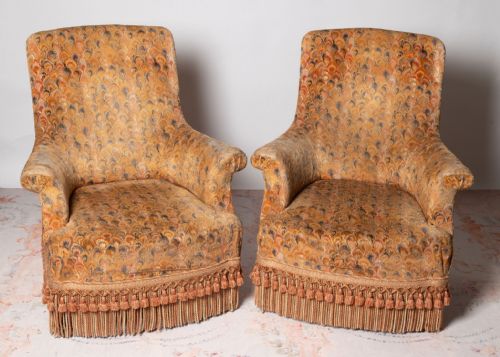
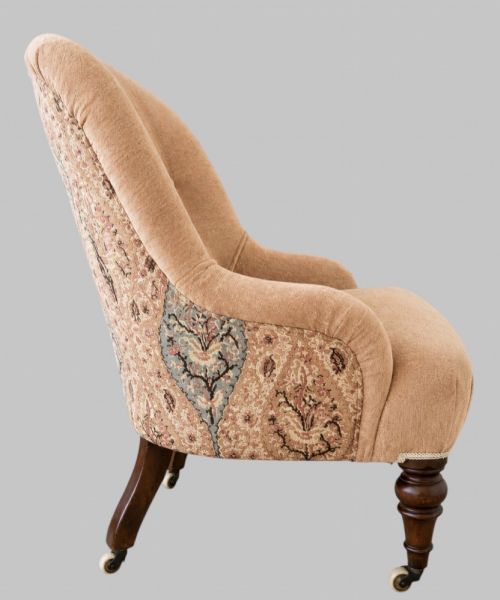
The velvet bedroom armchair covers a diverse group of seating designed primarily for nineteenth-century bedrooms, dressing rooms, and intimate sitting spaces. These items appear in various forms, including low-slung nursing chairs, compact slipper chairs, open-framed occasional chairs, and button-backed tub chairs.
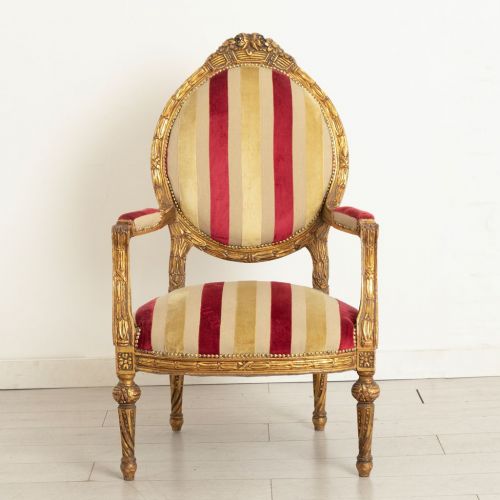
Victorian and Edwardian examples dominate the selection, alongside continental styles such as Napoleon III and Louis XVI revival pieces. Makers constructed these seats for private quarters, meaning dimensions often remain smaller and more intimate than standard parlour armchairs.
How they were made
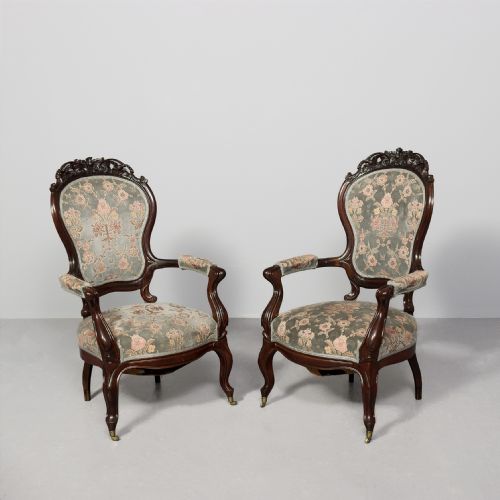
Frames rely predominantly on timber foundations of walnut, mahogany, rosewood, and ebonised wood, sometimes accented with giltwood, brass fittings, and ceramic castors. Craftsmen shaped these hardwoods into turned supports, barley twists, and carved cabriole legs.
Upholstery techniques involve traditional sprung or iron-backed supports finished with deep buttoning and tight velvet coverings. Workshops utilised both traditional horsehair stuffing and modern designer textiles during restoration work.
Listings feature walnut, mahogany, rosewood, and ebonised wood frames paired with diverse velvet textiles.
What varies in quality
Construction integrity distinguishes standard production seating from high-end workshop pieces. Solid walnut and carved rosewood frames demonstrate superior cabinet-making compared to simpler utilitarian hardwoods.
The precision of the frame joinery, the execution of carved ornamentation such as cabriole legs and gilt details, and the pedigree of stamped maker marks or attributable workshop designs elevate individual pieces significantly.
Howard and Sons·Hindley and Sons·Miles and Edwards
The Velvet Bedroom Armchair Glossary
- Nursing chair
- A low-seated armchair historically designed to allow women to nurse infants comfortably. These items feature shortened legs and supportive high backs.
- Slipper chair
- A low-framed upholstered chair lacking arms, originally intended for a bedroom or dressing room to assist with putting on footwear.
- Button back
- An upholstery style where depressions are formed in the padding by pulling thread tight and securing it with buttons. This technique secures the internal filling and creates a patterned surface.
- Fauteuil
- An open-armed wooden armchair originating in France, typically featuring exposed carved woodwork and upholstered back and seat panels.
- Tub armchair
- A comfortable seat featuring a continuous curved back and arms that form a rounded enclosure. These often sit on low wooden legs or castors.
Velvet Bedroom Armchair: Frequently Asked Questions
What is a velvet bedroom armchair?
A velvet bedroom armchair is a compact antique seat designed for private chambers, dressing rooms, and boudoirs during the Victorian and Edwardian eras. These chairs combine plush velvet upholstery with supportive wooden frames in various stylistic revivals.
Craftsmen built these smaller seats to fit domestic bedroom spaces without overwhelming the room, often pairing low profiles with comfortable padded backs.
Where were these chairs used?
Victorian households placed these seating options in bedrooms, dressing rooms, and ladies' boudoirs for daily personal use. Their compact footprints suited private spaces rather than formal reception rooms.
They provided comfortable seating near dressing tables or fireplaces, acting as functional furniture pieces that also added decorative warmth through coloured textiles.
How do I date a Victorian armchair?
Dating relies on examining the timber frame, carving styles, and structural framing methods used by the cabinet maker. Victorian pieces often transition from heavy mahogany frames to walnut or ebonised woods with balloon or button backs.
Reference points include specific stylistic markers such as mid-Victorian barley twist legs or later Edwardian design influences found across the listings.
How do I live with antique velvet?
Living with antique velvet involves gentle brushing to maintain the pile and placing the furniture away from direct sunlight to preserve textile colours. Regular light maintenance keeps the fabric looking rich and well-kept.
Many period examples feature restored or replaced designer velvet fabrics that blend traditional craftsmanship with modern interior durability.