
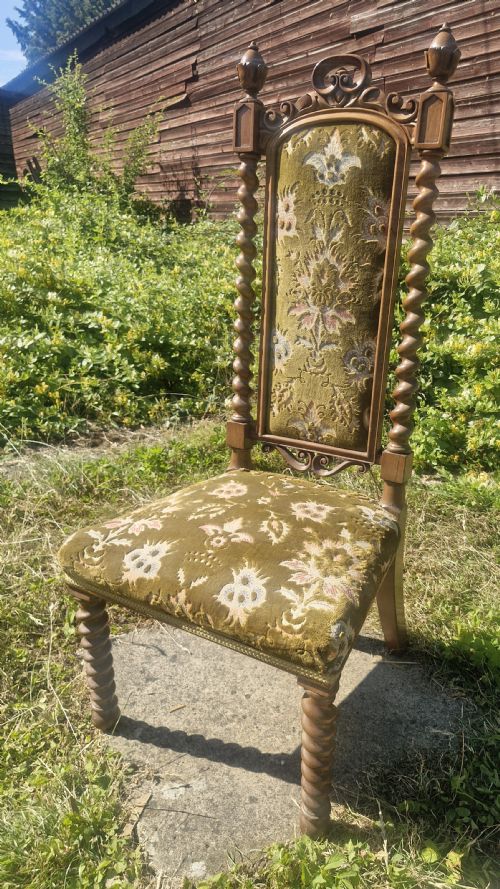
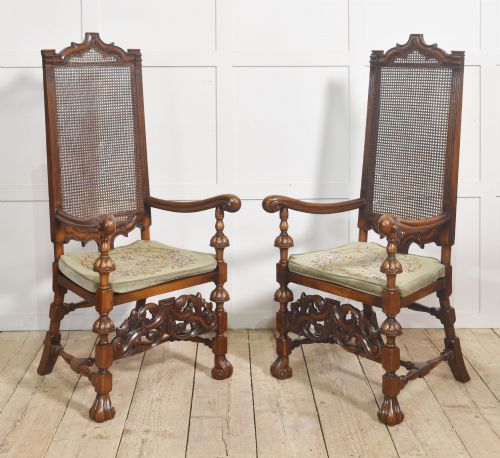
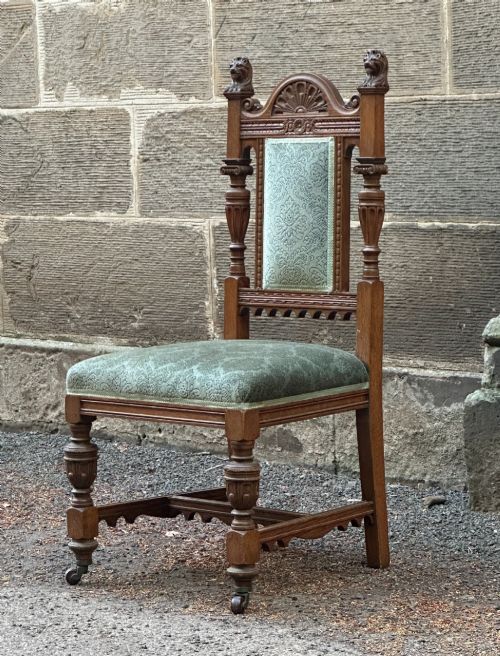


Victorian Upholstered Hall Chair
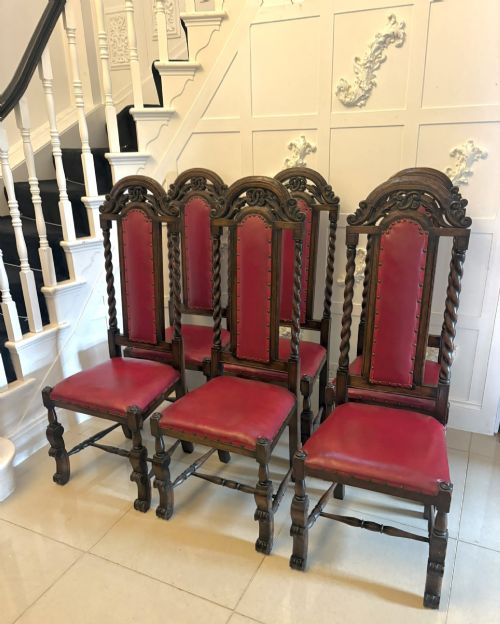
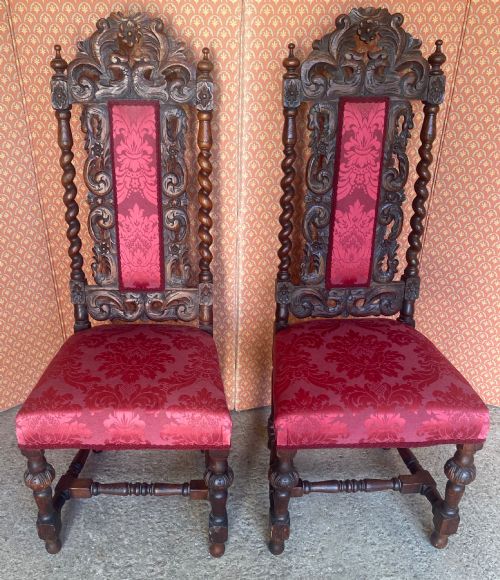
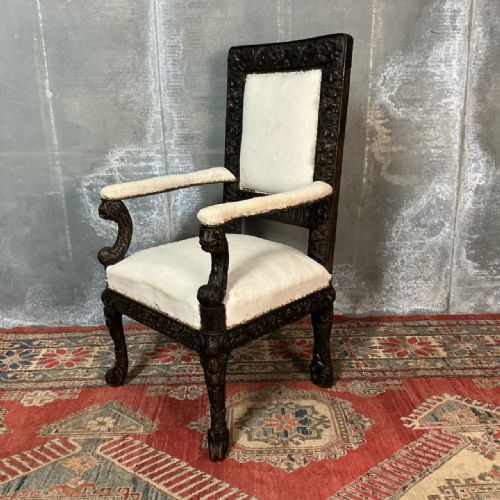
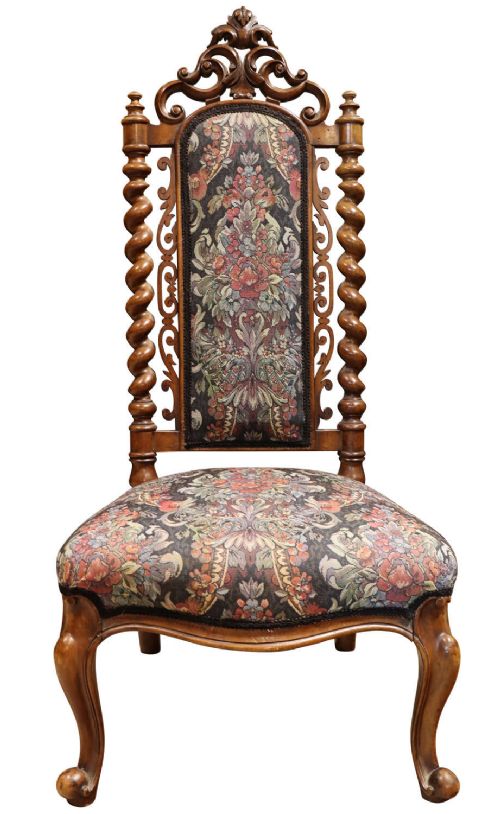
These Victorian upholstered hall chair pieces offer a sturdy seat with period character, shaped by nineteenth-century tastes.
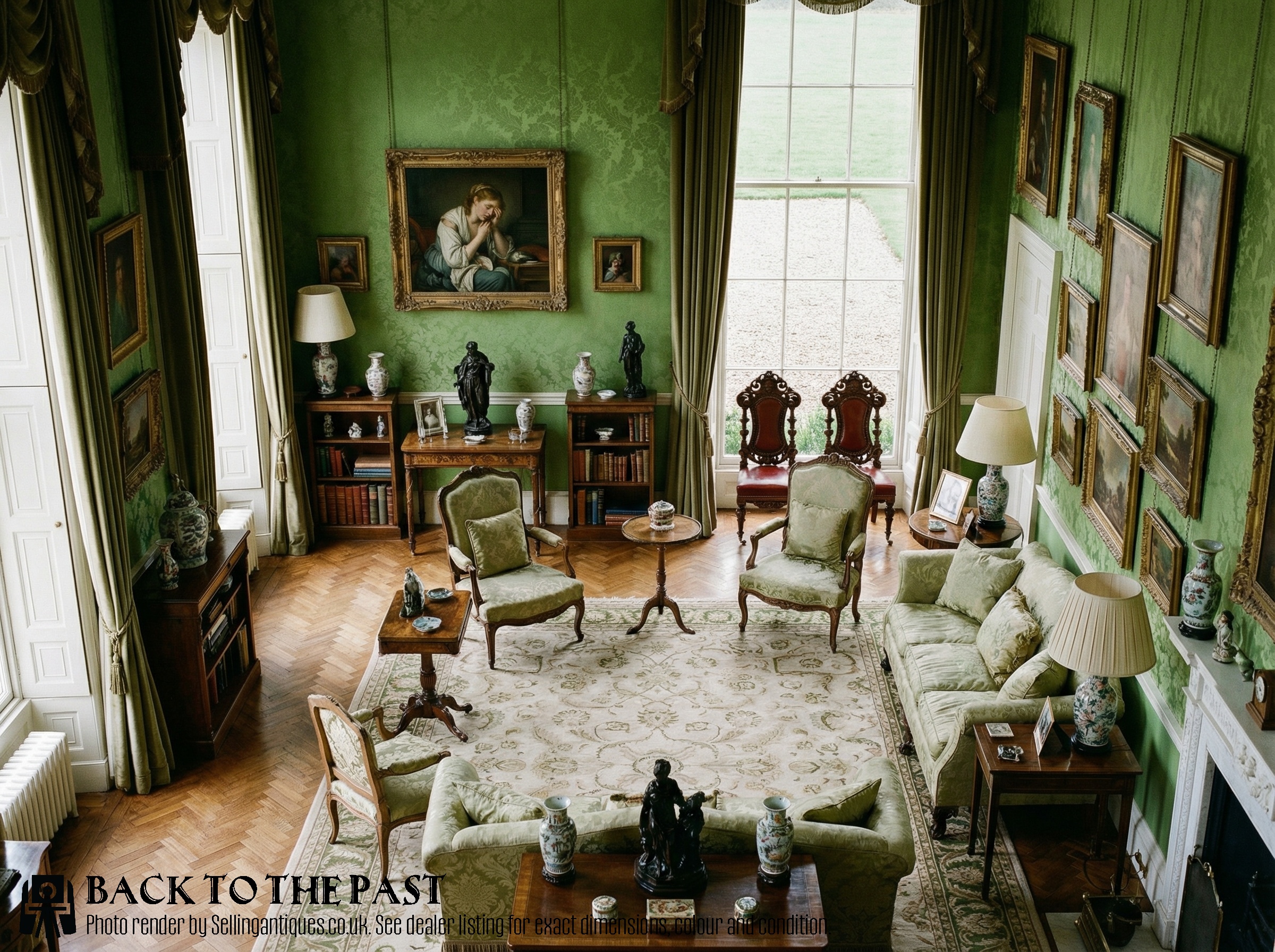
Victorian Upholstered Hall Chair
A victorian upholstered hall chair brings nineteenth-century seating into modern spaces, typically taking the form of a side chair, high-back chair, or occasional chair. These items originate from the 1850s, 1860s, 1870s, 1880s, and 1890s, reflecting various stylistic revivals of the period.
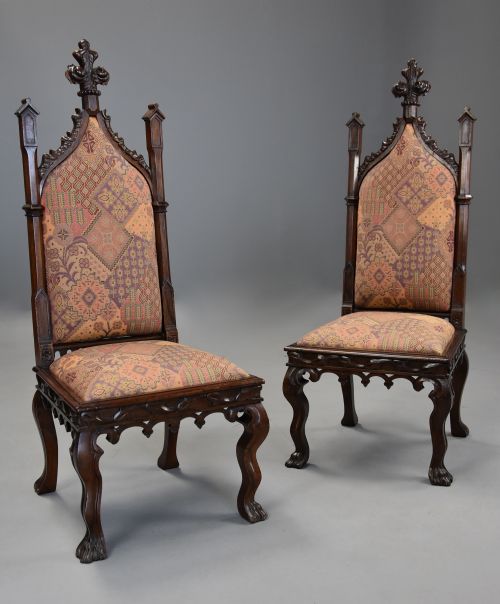
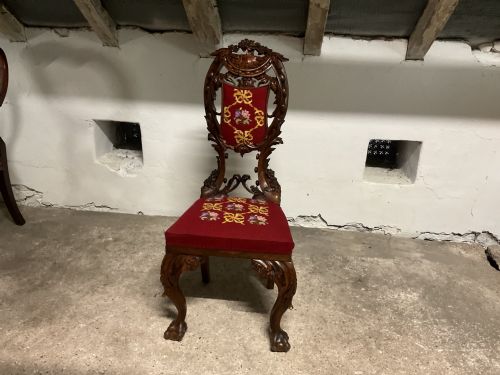
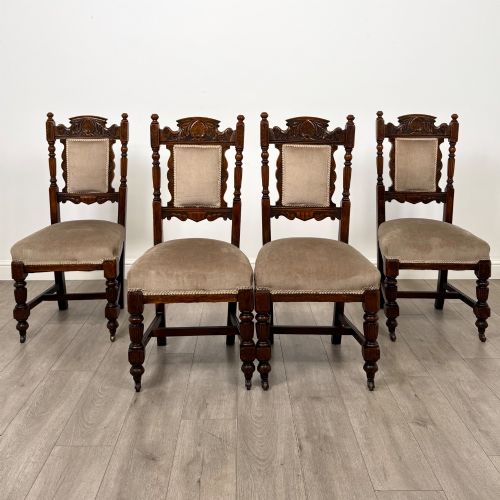
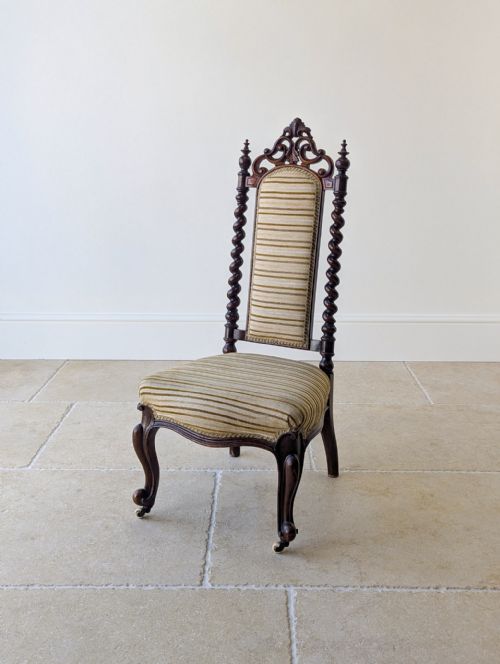
The pieces on this page most commonly appear in oak, mahogany, or walnut, often featuring upholstered pads or full backs in fabric, velvet, or tapestry. Many examples show stylistic influences such as Gothic revival, Rococo revival, or Carolean revival.
Makers and designers from the era occasionally marked their work, though many survive as anonymous examples of regional cabinet-making. Buyers find both single items and pairs or sets intended for entrance halls, parlours, and bedrooms.
How They Were Made
Cabinet-makers of the period utilised dense timbers including oak, mahogany, walnut, and rosewood to construct the frames of a victorian upholstered hall chair. These hardwoods were carved by hand, displaying scrollwork, pierced splats, or architectural Gothic motifs.
Upholstery techniques involved securing fabrics, velvet, leather, or tapestry over padded foundations supported by brass fixings or traditional webbing. The joinery relied on sturdy mortise and tenon joints designed to withstand daily use in a nineteenth-century household.
Some nineteenth-century makers carved grinning green men into heavy oak throne chairs to watch over the hallway.
What Varies in Quality
The depth and crispness of the hand-carving distinguish standard production from superior examples, particularly on scroll-carved backs and pierced splats. Timbers selected for the frame also indicate grade, with figured rosewood or dense quarter-sawn oak representing the upper tier of execution.
The integrity of the original frame construction and the quality of the textile upholstery determine the overall standard of survival. Pieces bearing maker stamps or attributed workshops demonstrate documented provenance that elevates their standing among collectors.
Gillows·Bruce Talbert·Liberty and Co
The Victorian Upholstered Hall Chair Glossary
- Gothic Revival
- An architectural and decorative style drawing on medieval pointed arches and structural motifs. This aesthetic appears frequently on nineteenth-century oak seating.
- Pierced Splat
- The central vertical slat of a chair back pierced with decorative cut-out patterns. It lightens the visual weight of mahogany or walnut frames.
- Carolean Revival
- A decorative style imitating late seventeenth-century English furnishings. Scrollwork and high carved backs characterise this revival.
- Padouk
- A heavy tropical hardwood with a reddish hue used for carved furniture. It offers exceptional durability and distinct grain patterns.
Victorian Upholstered Hall Chair: Frequently Asked Questions
What rooms suit a victorian upholstered hall chair?
These chairs function well in entrance halls, studies, or bedrooms where a compact seat with architectural presence is required. Their upright backs and sturdy construction make them practical for occasional seating.
Pairing them with modern interiors creates a deliberate contrast between contemporary design and nineteenth-century craftsmanship.
How do I identify a Gothic revival chair?
Gothic revival pieces display architectural elements such as pointed arches, trefoils, and heavy carved tracery. They are typically constructed from dark oak or walnut.
These designs reflect the nineteenth-century fascination with medieval forms, distinguishing them from simpler classical styles.
Are these chairs comfortable for daily use?
Victorian hall chairs with upholstered seats and high backs provide firmer support than modern lounge seating. They were built for upright posture in entrance spaces and parlours.
Replacing internal padding and fabric allows contemporary users to adjust the comfort level to personal preference.
How do I tell walnut from mahogany?
Walnut displays a rich brown tone with prominent grain swirls and lighter figuring. Mahogany tends to feature a deeper reddish-brown colour with a straighter grain.
Cabinet-makers utilised both timbers extensively throughout the nineteenth century depending on the desired aesthetic.