
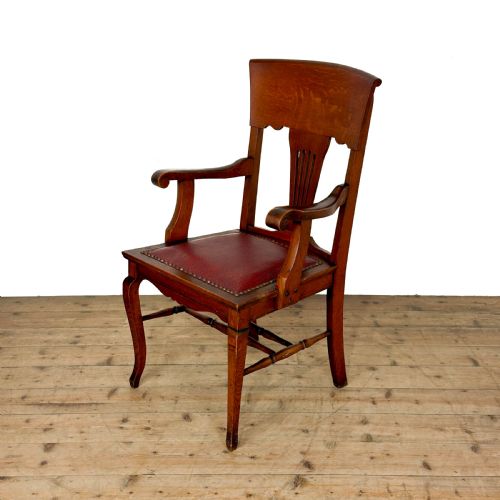


Oak Red Leather Chairs
Oak red leather chairs bring solid timber frames and rich hide upholstery together for durability and classic seating.
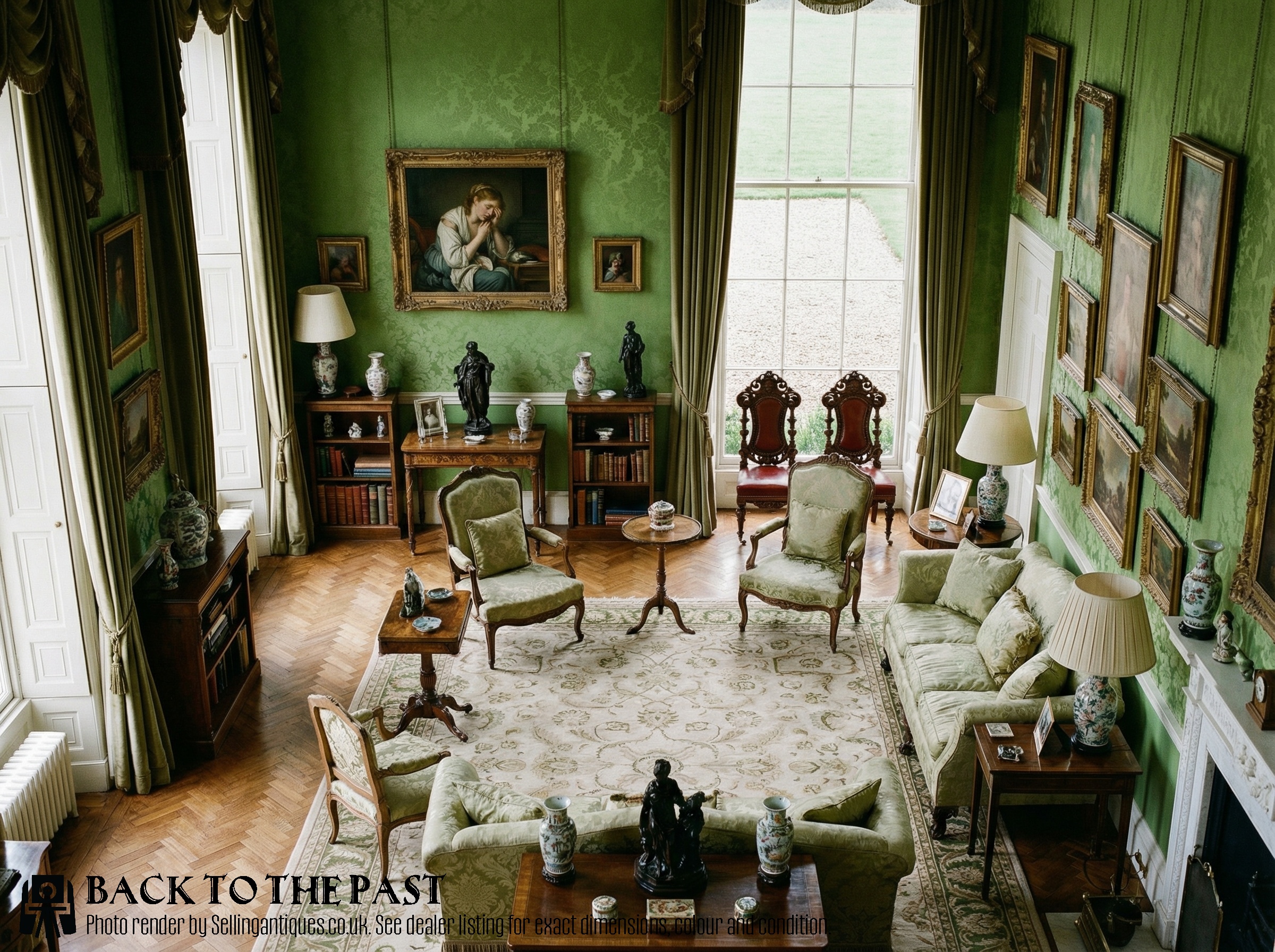
Oak Red Leather Chairs
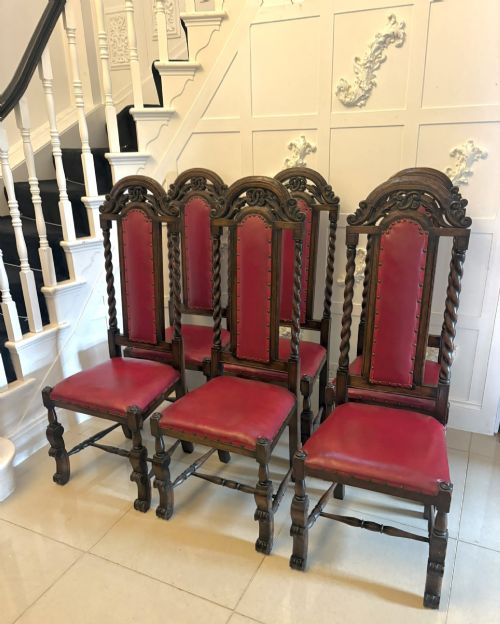
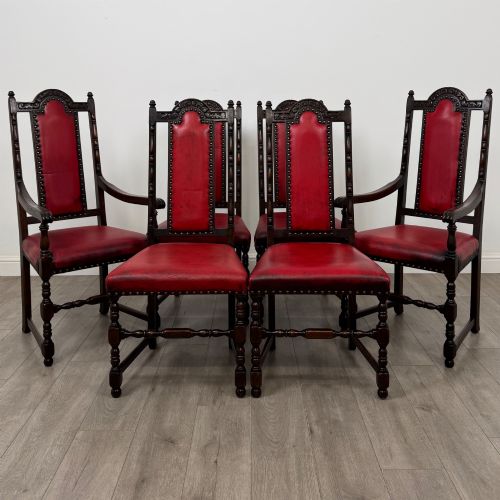
When searching for oak red leather chairs, buyers examine robust timber seating built for endurance. These pieces span dining sets, library armchairs, and swivel desk chairs across the nineteenth and twentieth centuries.
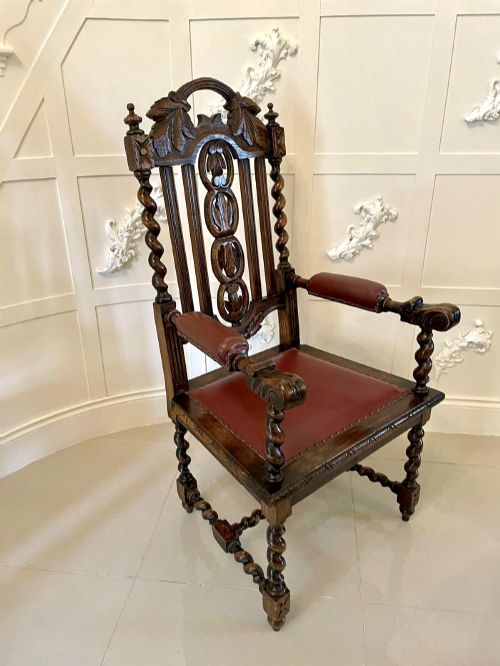
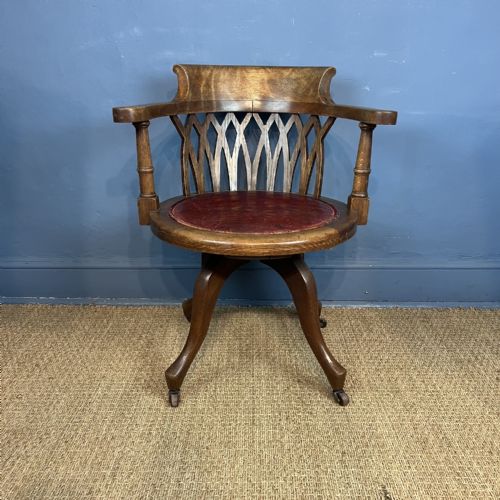
The selections on this page highlight distinct forms, from heavy Victorian carved frames to functional Edwardian office chairs. Dining chairs appear frequently in sets of six or eight, alongside individual desk armchairs.
Revivalist movements shape many examples, incorporating Jacobean, Gothic, and Arts and Crafts details into solid timber frames. These styles combine architectural presence with practical seating.
Materials and Construction
Cabinetmakers utilised quarter-sawn and plain oak to construct sturdy frames that withstand decades of use. Timber components receive carving, turning, or plain finishing depending on the period and style.
Upholstery involves fitting red leather over padding and securing the hide with brass studs or iron tacks. Revolving desk variants incorporate metal swivel mechanisms and tilt adjustments.
Listings feature oak combined with leather, brass, iron, and cane across Victorian, Edwardian, and twentieth-century periods.
Assessing the Pieces
Construction integrity separates standard furniture from superior examples, visible in the tightness of frame joints and the depth of timber carving. Heavy Victorian and Gothic revival models rely on substantial timber sections to maintain stability.
The condition and tanning of the red leather influence overall merit. Original hides showing deep patination contrast with later replacements, while hand-tooled details and secure stud work indicate careful original assembly.
S&H Jewell·Kendrick & Jefferson
The Oak Red Leather Chairs Glossary
- Barley Twist
- A turned column resembling a wound rope, commonly found on chair legs and stretchers during the Victorian and later periods. This technique adds decorative movement to solid timber frames.
- Carver Chair
- An armchair designed to match a set of dining chairs, typically positioned at the head of a table. These pieces often feature more substantial arms and carving than the single chairs.
- Gothic Revival
- An architectural and decorative style drawing on medieval forms, featuring pointed arches, tracery, and heavy carving. This aesthetic appears frequently in mid-nineteenth-century seating.
- Swivel Desk Chair
- A rotating chair fitted with a central spindle and base, often incorporating a tilt mechanism for office use. Edwardian and Victorian examples frequently pair this function with leather upholstery.
Oak Red Leather Chairs: Frequently Asked Questions
How do I date an oak chair?
Dating relies on stylistic clues, construction methods, and hardware integration. Victorian pieces often display heavy carving, while Edwardian office variants introduce mechanical swivel mechanisms.
Material finishes and timber grain patterns also offer guidance, distinguishing mid-nineteenth-century examples from later twentieth-century revivals.
Are these chairs suitable for daily use?
Solid oak construction provides exceptional structural strength for regular seating. Dining chairs and desk armchairs handle daily demands effectively when joints remain tight.
Leather upholstery offers a resilient surface that withstands regular occupation while developing character over time.
What is a cockfighting chair?
A cockfighting chair is a specialised low armchair featuring a padded rest on the upper back rail. Occupants sat straddling the seat facing backward to view events.
Later interpretations retain the compact proportions and upholstered frame while serving as distinctive library or desk seating.
How should I care for red leather?
Leather surfaces benefit from regular dusting and occasional conditioning to prevent the hide from drying out. Avoiding direct sunlight preserves the original red tone and prevents cracking.
Timber frames require standard polishing with beeswax to maintain the surface finish without building up excessive residue.