
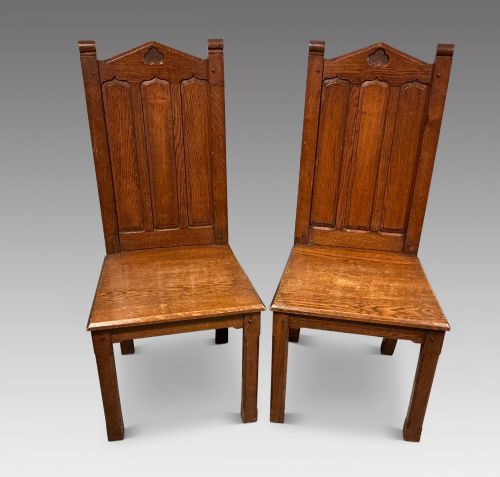
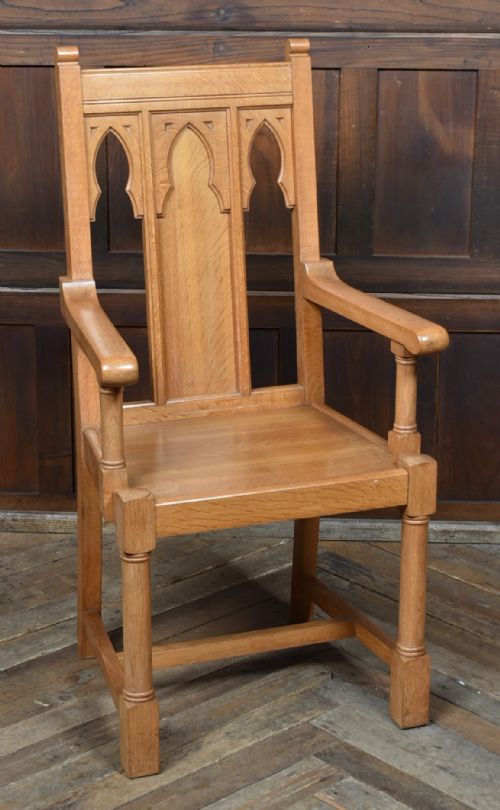


Gothic Arch Carved Chairs
Gothic arch carved chairs combine medieval structural lines with nineteenth-century craftsmanship, offering seating that anchors a room with architectural presence.
Gothic Arch Carved Chairs
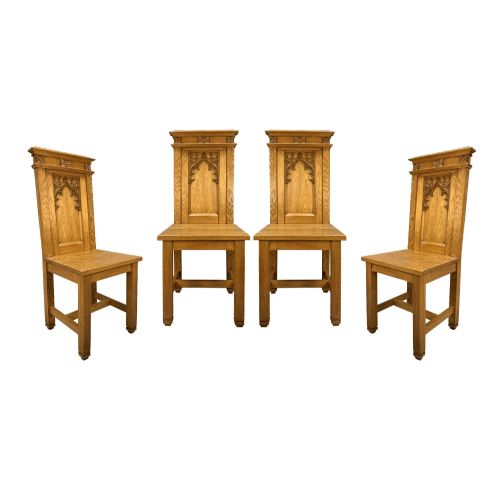
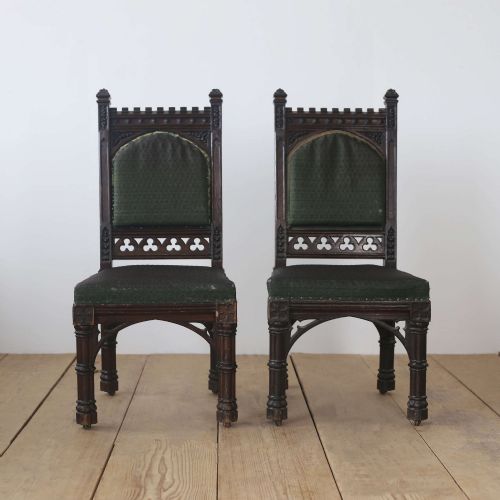
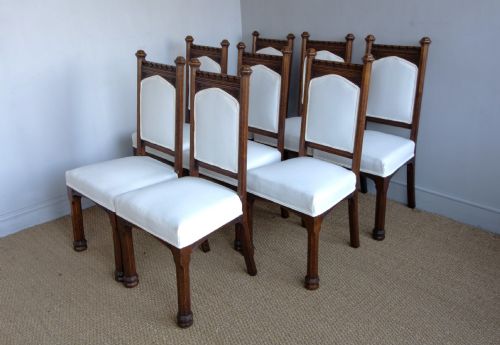
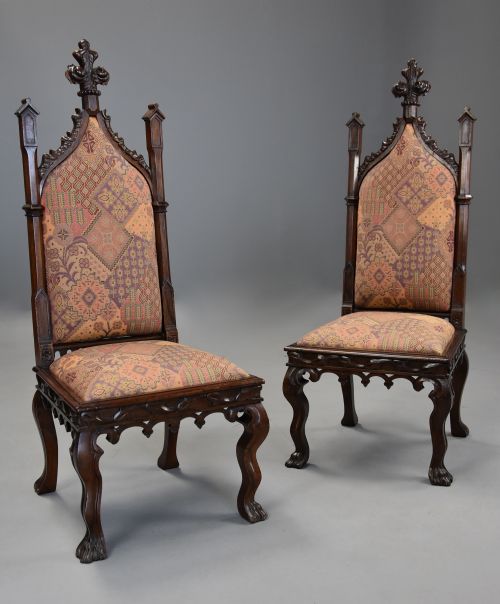
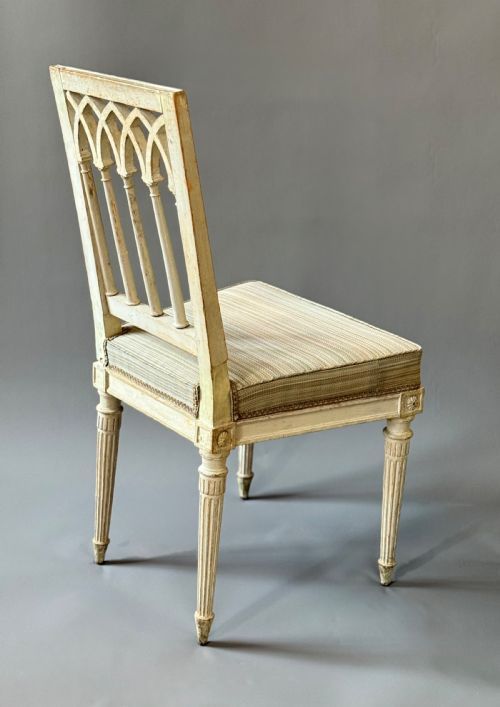
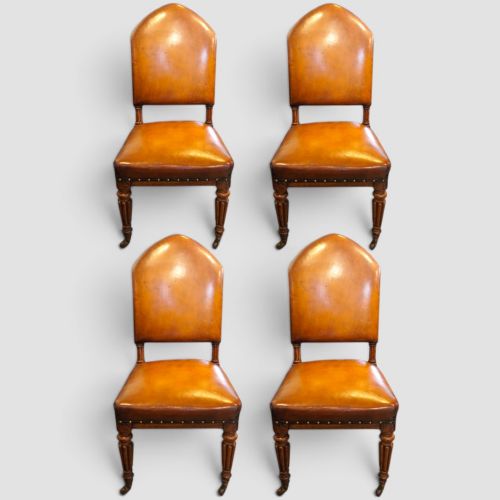
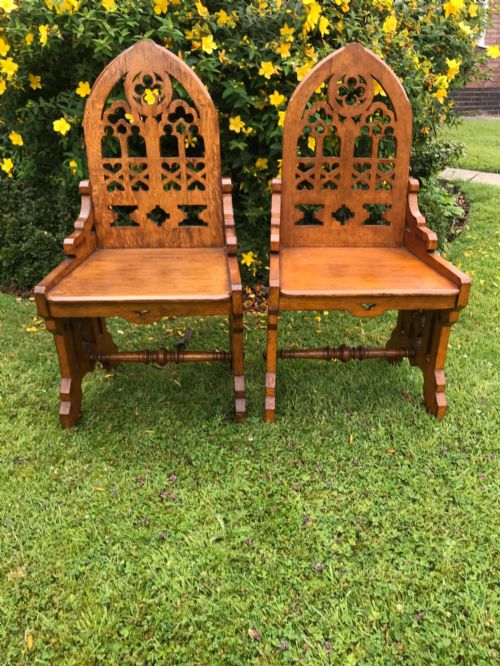
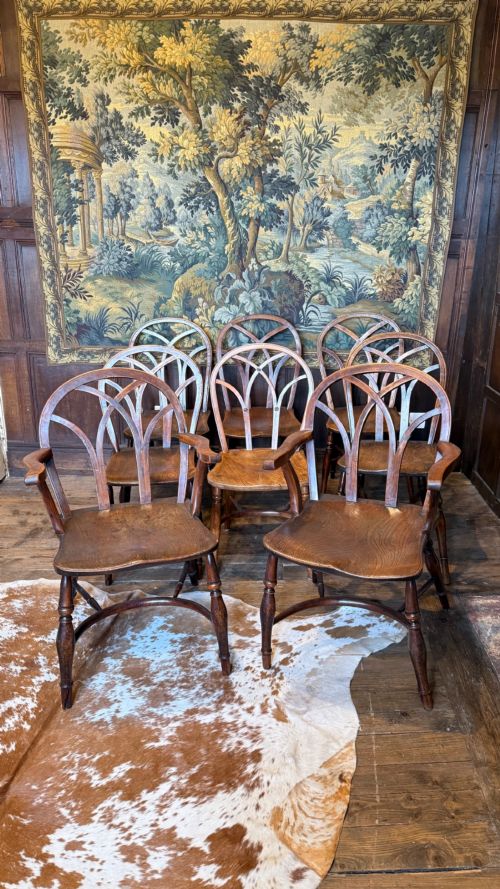
When searching for gothic arch carved chairs, you encounter seating built primarily during the nineteenth century, alongside earlier eighteenth-century Gothick taste examples and later pieces up to nineteen-twenty. These items appear across several distinct forms, most frequently as hall chairs, side chairs, dining chairs, armchairs, and devotional chairs.
The material palette spans native timbers such as oak, mahogany, pitch pine, and rosewood, occasionally paired with painted wood finishes, brass accents, and upholstery in leather, fabric, and textile. You meet pairs and sets alongside substantial single throne chairs and chapel seating.
Origin points range across England, Scotland, the Channel Islands, France, and Paris, reflecting a broad European engagement with Gothic Revival and Victorian Gothic styles. The surviving examples demonstrate how builders adapted medieval ecclesiastical motifs for domestic reception rooms and halls.
What Varies in Quality
The distinction between standard production and top-tier work rests on the crispness of the carved architectural details and the selection of timber. Dense, well-figured oak or rosewood combined with deep, undercut tracery separates superior examples from plainer utility seating.
Attribution to documented makers or specific regional workshops elevates a piece, as does the integrity of original surfaces and matching sets. Structural cohesion in the joints and the preservation of period upholstery materials influence the standing of an individual chair.
Channel Islands makers evidently labeled their Gothic hall chairs just in case the Atlantic wind made everyone forget where they sat.
W.A. Willcocks·Gillows of Lancaster·A.W.N. Pugin·Charles Bevan
The Gothic Arch Carved Chairs Glossary
- Gothic Revival
- A design movement reviving medieval architectural forms, visible in pointed arches, trefoils, and heavy timber construction.
- Hall Chair
- A sturdy wooden seat placed in an entrance hall, often featuring a solid carved back displaying heraldry or architectural motifs.
- Tracery
- Openwork stonework patterns translated into wood carving, forming pointed arches and geometric shapes in chair backs.
- Glastonbury Chair
- A folding armchair design with an X-frame base and sloped back, popular during the nineteenth-century revival of medieval styles.
- Throne Chair
- A large, high-backed armchair with ecclesiastical proportions, often constructed in oak for ceremonial or chapel use.
Gothic Arch Carved Chairs: Frequently Asked Questions
Where were these chairs used?
These chairs served primarily in entrance halls, reception rooms, and dining spaces of nineteenth-century homes, where their architectural backs made a formal impression.
Certain specialised forms, such as chapel thrones or devotional kneelers, originated in ecclesiastical or institutional settings before entering domestic interiors.
How do I care for antique oak chairs?
Maintain wooden surfaces by applying appropriate wax polish sparingly and buffing with a soft cloth to preserve the finish.
Keep the timber away from direct heat sources and dramatic humidity shifts to prevent splitting in the dense grain.
Are leather seats original?
Many Victorian dining chairs and armchairs utilised leather or buttoned textile inserts secured directly to the wooden frame.
Replacement upholstery frequently occurs on surviving examples due to centuries of wear, though original hides occasionally survive on well-preserved pieces.
How do I distinguish Victorian Gothic from earlier work?
Victorian Gothic Revival pieces from the mid-nineteenth century typically display heavier proportions, machine-assisted precision alongside hand carving, and distinct institutional or domestic labeling.
Earlier eighteenth-century Gothick pieces often show lighter painted surfaces or different structural joinery characteristic of Georgian cabinetmaking.