
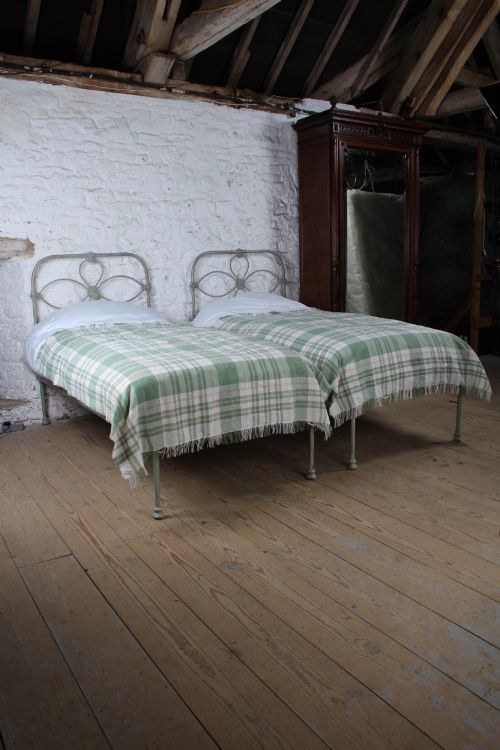


Victorian Twin Bedsteads
Victorian twin bedsteads offer matched sleeping arrangements for twin rooms, combining period metalwork and timber with practical dual setups.
Victorian Twin Bedsteads
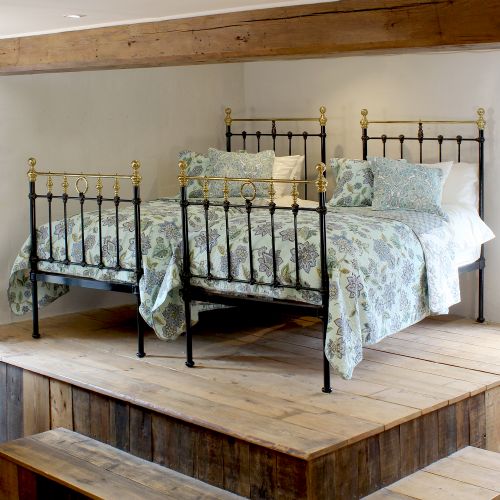
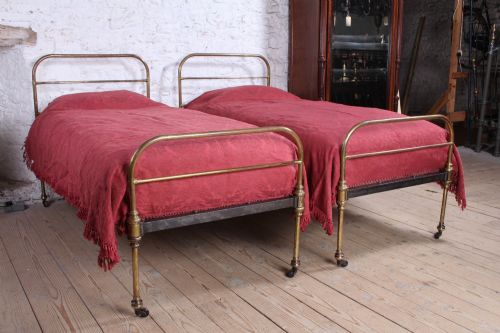
When you search for victorian twin bedsteads, you encounter matched pairs of antique single beds designed to sit side by side in a bedroom. The selection on this page centres primarily on Victorian and Edwardian examples, spanning the late nineteenth century down to 1900, alongside nineteenth-century and continental variations.
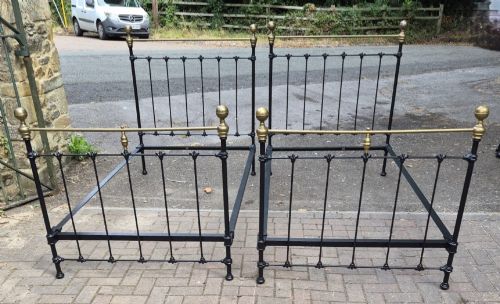
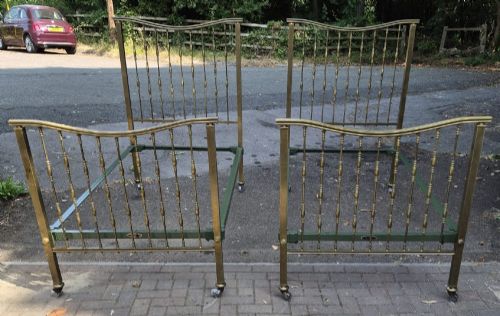
Most pieces appear as pairs of single beds or bedsteads that can be joined together to form a larger sleeping platform or kept separate. Forms range from iron and brass constructions with rings and decorative details to timber pieces in satinwood, oak, and mahogany.
Origins vary across English, French, and American styles, encompassing Gothic Revival, Arts and Crafts, and Continental Neoclassical designs. Buyers frequently find white, black, cream, and painted finishes alongside polished metal surfaces.
How they were made
Makers utilised cast iron, wrought iron, and heavy brass to construct durable frames, frequently pairing iron components with polished brass fittings, rails, and decorative finials. Paint finishes in cream, white, black, or charcoal were applied to iron frames to protect the metal and achieve desired aesthetics.
Timber examples rely on hardwoods such as oak, mahogany, and satinwood, shaped into headboards and footboards with panelled or polished surfaces. Ceramic elements occasionally appear as decorative components integrated into the metal frames.
Several iron beds hide clever little rings designed to keep the sheets in line.
What varies in quality
The degree of decorative elaboration separates standard frames from superior examples, particularly where cast brass decoration, applied rings, or intricate ironwork meet the main structure. Maker attribution also alters standing, with identified workshops commanding distinct interest.
Material selection dictates durability and visual weight, ranging from simple iron rods to substantial brass tubing and figured timber veneers like satinwood and mahogany. The integrity of matching pairs determines whether two single beds coordinate properly when joined.
Hoskins & Sewell·R W Winfield·Shapland and Petter
The Victorian Twin Bedsteads Glossary
- Bedstead
- The framework of a bed, consisting of headboard, footboard, and side rails, designed to support a mattress and base.
- Brass
- A yellow alloy of copper and zinc utilised extensively for rails, finials, and decorative tubing on nineteenth-century metal beds.
- Cast Iron
- Molten iron poured into a mould to create rigid structural components and decorative motifs for bed ends.
- Satinwood
- A durable, hard timber with a natural golden sheen and smooth grain, employed in high-quality cabinetmaking during the Victorian period.
- Gothic Revival
- A nineteenth-century architectural and decorative style drawing on medieval pointed arches, trefoils, and ecclesiastical motifs.
Victorian Twin Bedsteads: Frequently Asked Questions
Can victorian twin bedsteads be joined together?
Many pairs are specifically constructed to link together side by side, creating a wider sleeping platform while retaining two distinct frames.
Buyers should examine the specific listing notes to confirm whether joining hardware is included with the set.
What materials were used for these beds?
Construction materials include cast iron, wrought iron, and polished brass, alongside timbers such as oak, mahogany, and satinwood.
Painted finishes in white, black, cream, and charcoal appear frequently alongside bare metal surfaces.
How do I date a victorian bedstead?
Dating relies on stylistic clues, construction methods, and material preferences typical of periods from the 1870s through the Edwardian era.
Design influences range from Gothic Revival and Arts and Crafts to Continental Neoclassical patterns.
Are modern mattresses suitable for antique beds?
Most antique single beds accommodate standard modern single mattresses, though older frames may vary slightly from current dimensions.
Listing details often specify whether platforms or modern bases are included to support the mattress.