
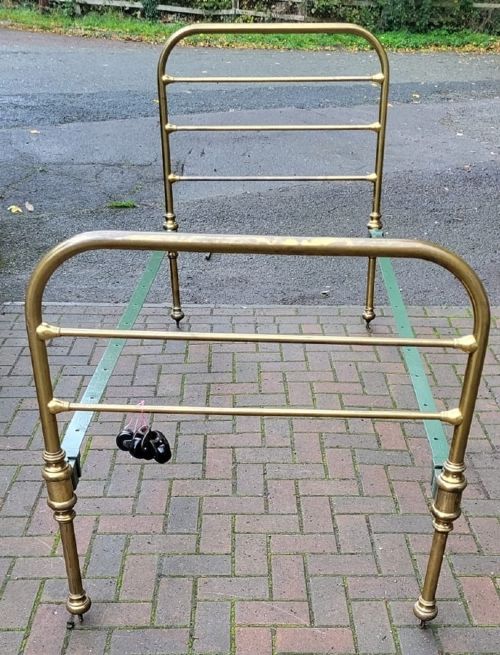
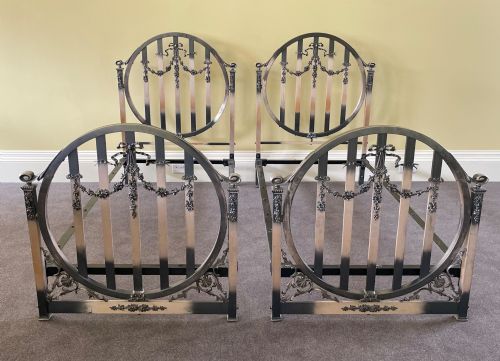
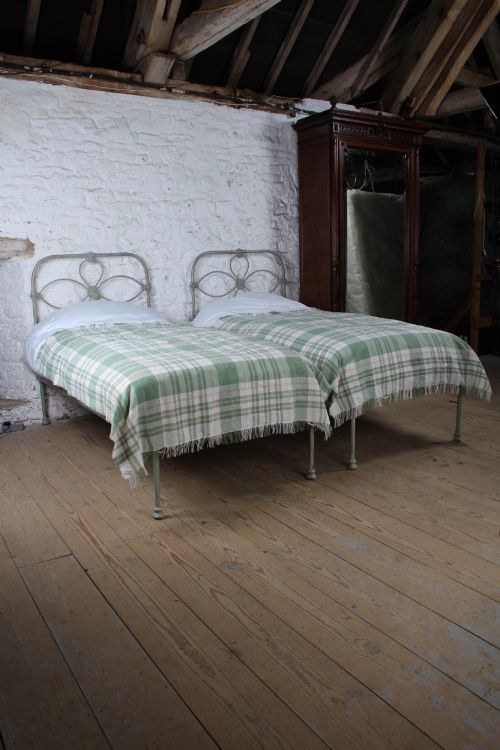


Iron Headboard Single Bed
An iron headboard single bed offers sturdy metal framing suited for compact spaces, combining historic character with practical daily use.
Iron Headboard Single Bed
An iron headboard single bed brings together nineteenth century metalwork and compact sleeping arrangements. These pieces appear across Victorian, Edwardian, and nineteenth century periods, offering robust construction for smaller rooms.
The selection on this page centres on single beds, bed frames, and bedsteads designed for one person. Many examples survive as pairs that can be joined together or utilised independently without footboards.
Makers and styles span domestic Victorian production alongside Continental examples such as Portuguese traditional and American influenced designs. Buyers encounter everything from simple metal frameworks to elaborate combinations featuring brass and nickel plating.
How they were made
Construction relies primarily on cast iron and wrought iron, forming the structural backbone of these beds. Manufacturers often combined iron with steel elements to ensure rigidity and long term durability.
Visual variety comes from applied finishes including paint and charcoal treatments, alongside metallic detailing. Brass and nickel plating provide bright contrast against the dark iron framework, while specialised components allow beds to be joined or separated.
Listings span Victorian and Edwardian periods, featuring materials such as cast iron, wrought iron, brass, and nickel plating.
What varies in quality
Quality rests in the finesse of the metalwork and the integrity of the combined materials. Pieces featuring integrated brass or nickel plating demonstrate higher ambition in design and finish.
Refinement shows in the complexity of the casting and the execution of distinct aesthetic movements such as Art Nouveau or Celtic motifs. Simpler utilitarian frames contrast with ornamental designs conceived for formal bedrooms.
R W Winfield
The Iron Headboard Single Bed Glossary
- Bedstead
- The framework of a bed, including the headboard, footboard, and side rails. This term frequently describes antique metal sleeping furniture.
- Nickel plating
- A thin protective coating of nickel applied to iron or steel components to create a bright, corrosion resistant surface. This finish gained popularity for its clean metallic sheen during the late nineteenth and early twentieth centuries.
- Cast iron
- Iron shaped by pouring molten metal into a mould, allowing for intricate decorative patterns and sturdy structural forms. It forms the solid foundation of many nineteenth century bed frames.
- Wrought iron
- Iron beaten or rolled into shape while hot, prized for its strength and fibrous texture. Artisans utilised this material for structural durability and hand shaped details.
- No end bed
- A bed frame constructed with a headboard but lacking a matching footboard. This configuration creates an open visual feel and suits compact interiors.
Iron Headboard Single Bed: Frequently Asked Questions
Can these single beds be joined together?
Many of the single beds on this page are specifically noted as capable of being joined together to form a larger sleeping arrangement. This practical feature allows pairs to function either as independent single beds or combined into a double setup.
Buyers should examine the specific listing details to confirm whether joining brackets or matching components are present for dual configuration.
How do I date an iron bed?
Dating relies on stylistic clues, manufacturing materials, and recorded period attributes such as Victorian or Edwardian design characteristics. The presence of specific decorative movements like Art Nouveau provides a clear chronological anchor.
Makers' stamps or brass plaques, when present, offer further documentation to verify the exact era of production.
Are these beds suitable for daily use?
Metal bed frames from the nineteenth century offer exceptional structural strength thanks to their iron and steel construction. Their robust framework supports modern mattresses securely for everyday sleeping.
Platform bases and adaptable side rails ensure these historical pieces integrate smoothly into contemporary living spaces.