
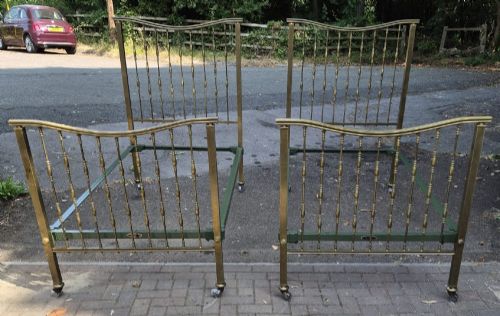
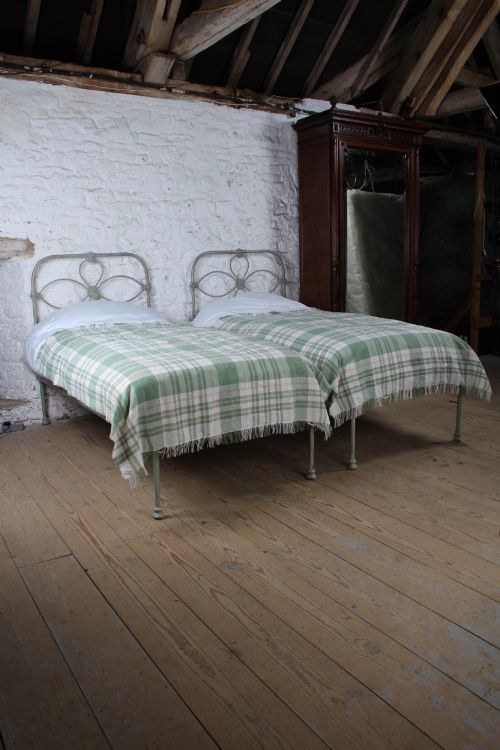


Pair Metal Bed Frames
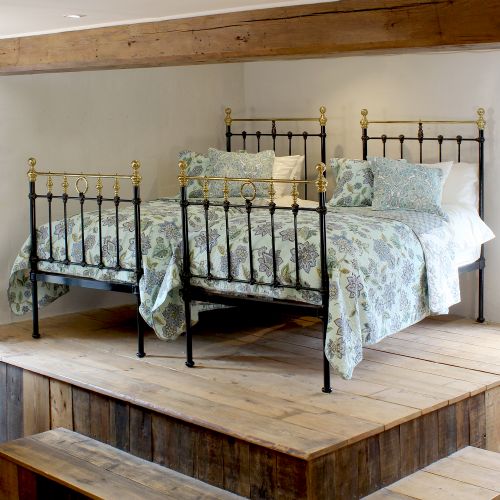
Pair metal bed frames are matched sleeping furniture offering twin symmetry and period character for a bedroom scheme.
Pair Metal Bed Frames
When you search for pair metal bed frames, you encounter matched sets of twin or single beds designed to sit together or apart in a bedroom. These pieces originate across the nineteenth century, the Victorian era, and the Edwardian period, spanning forms from standard bedsteads to no end single beds and platform beds.
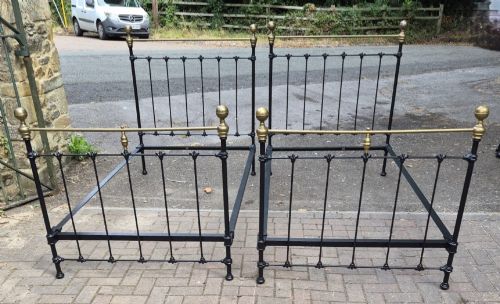
The most common examples on this page are Victorian and turn of the century iron and brass frames that feature ingenious construction allowing them to be joined together or used separately. You find simple black cast iron frames alongside nickel plated models and decorative brass designs.
Origins include English, French, and Portuguese workshops, bringing distinct regional touches such as Celtic ironwork or painted cream and white finishes. Buyers choose these matched frames to secure historical proportion and consistent design across a shared sleeping space.
How they were made
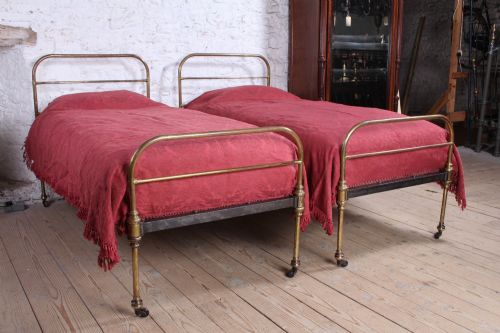
Makers utilised cast iron and wrought iron for structural strength, often pouring molten metal into sand moulds to create robust frames and decorative side rings. Brass components, including spinnings and tubing, were incorporated to add contrast and warmth against the darker iron cores.
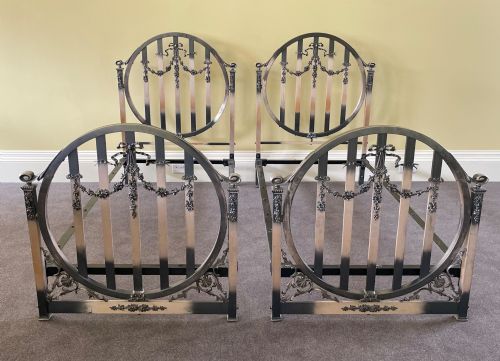
Surface treatments involved durable painted finishes in black, white, charcoal, and cream, alongside nickel plating applied over iron bases to achieve a bright, reflective sheen. Skilled metalworkers joined structural parts using mechanical joints and threaded fittings that allowed the beds to be easily dismantled.
Listings feature pieces spanning the Victorian period, the Edwardian era, and the nineteenth century, constructed from cast iron, brass, and wrought iron.
What varies in quality
Quality in these pieces rests upon the crispness of the casting detail and the integrity of the original joints, where finer examples display sharp definition in brass ornaments and iron mouldings. The presence of matching original components across both beds, rather than later replacements, dictates the overall coherence of the pair.
The sophistication of the design also separates standard utility pieces from more ambitious artistic expressions, such as Art Nouveau motifs or specialised nickel plated finishes. Heavier gauge metalwork and retained maker stamps indicate higher grade workshop production from the period.
Hoskins & Sewell
The Pair Metal Bed Frames Glossary
- Bedstead
- A framework of a bed designed to support a mattress and springs. It usually comprises a headboard, footboard, and side rails.
- Cast iron
- A hard, relatively brittle alloy of iron and carbon that can be readily cast in a mould. It forms the heavy structural body of many nineteenth century beds.
- Nickel plating
- A thin coating of nickel applied to the surface of another metal for corrosion resistance and a bright finish. It became popular in the Edwardian era for a clean, modern look.
- No end
- A bed design featuring either a low footboard or no footboard at all. This configuration creates a more open visual feel in smaller bedrooms.
- Wrought iron
- Iron that has been heated and shaped with hand tools by a blacksmith. It offers high tensile strength and distinct fibrous textures.
Pair Metal Bed Frames: Frequently Asked Questions
Can pair metal bed frames be joined?
Many nineteenth century examples feature integral brackets or manufacturer provisions allowing the two single frames to lock securely together into a wider bed base.
This practical flexibility means a household can configure the furniture as twin beds or unite them depending on the room layout.
What mattress sizes fit antique metal beds?
Older single and small single frames often measure slightly differently from modern standard sizes, requiring careful measurement of the internal frame dimensions.
Many buyers choose custom made mattresses to ensure a precise fit within the historic side rails and end panels.
How do I care for painted iron frames?
Maintain painted metal surfaces by dusting regularly with a dry cloth and avoiding harsh chemical cleaners that can damage the historic finish.
If the paint is original, gentle cleaning preserves the authentic surface patina accumulated over the decades.
How do I identify Victorian metal beds?
Victorian pieces typically display heavy cast iron construction combined with brass finials, decorative side rings, and robust structural joinery.
Stylistic cues range from plain utility frames to elaborate castings influenced by Art Nouveau and classical revival design.