

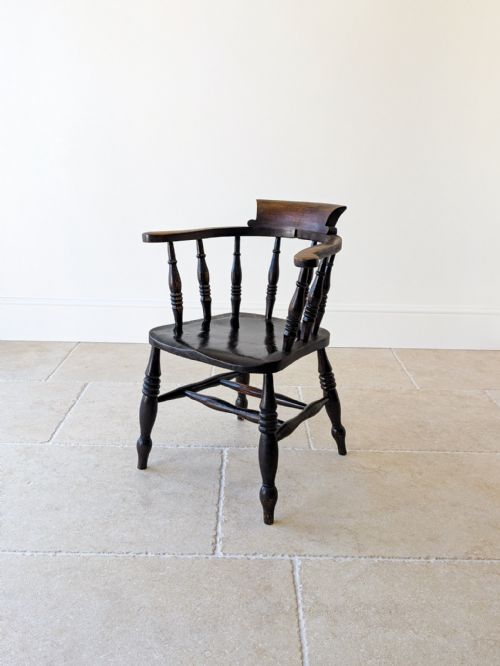
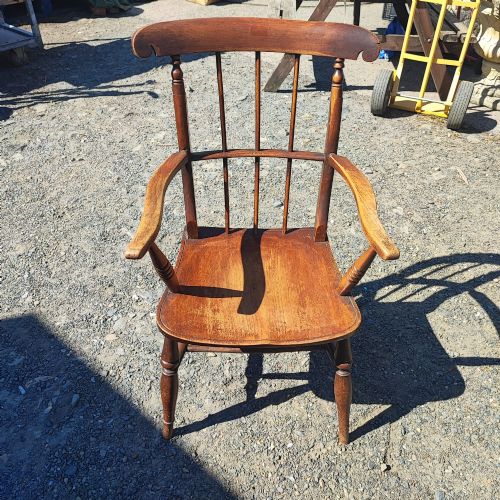
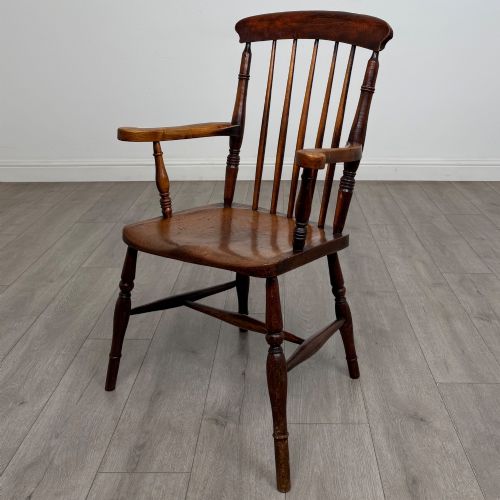

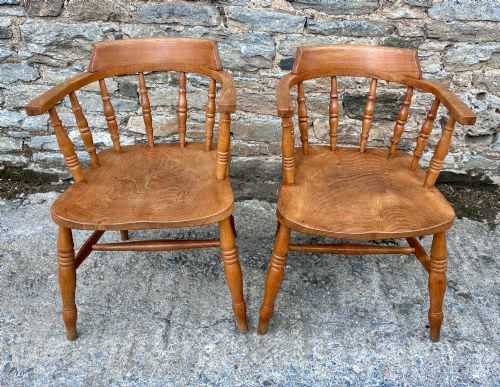
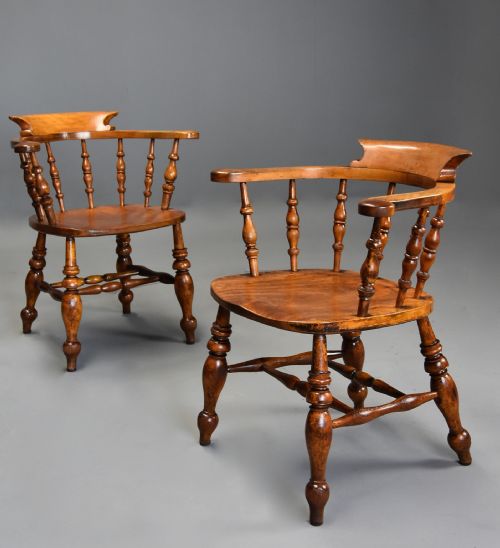
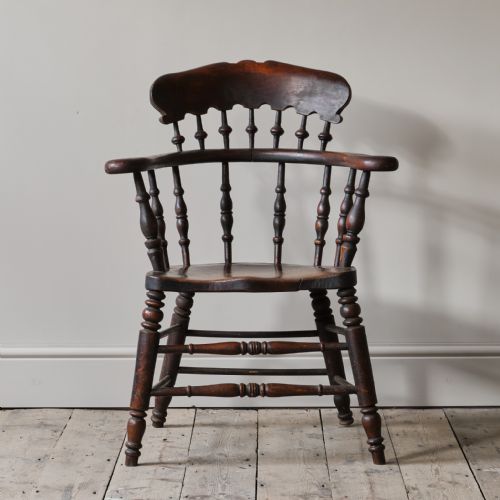
Victorian Turned Spindle Armchair
These pieces combine turned spindles and timber frames to create a distinct seat, offering a practical chair for daily use.
Victorian Turned Spindle Armchair
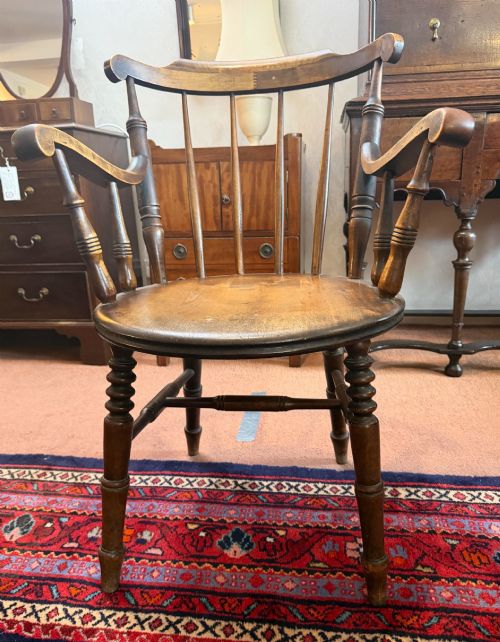
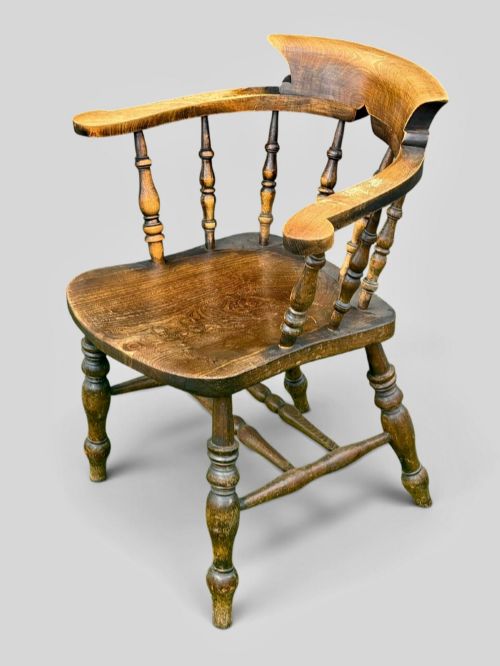
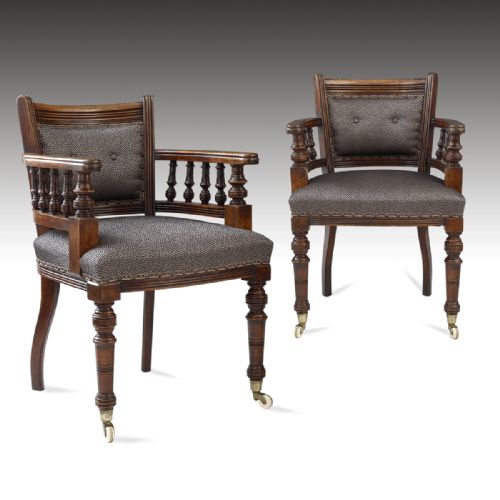
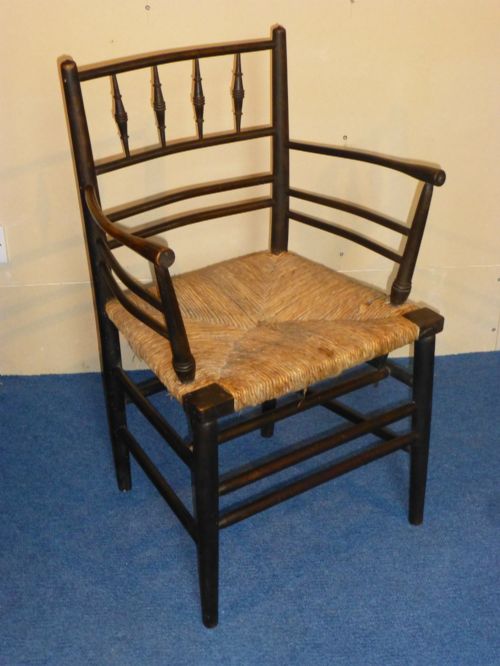
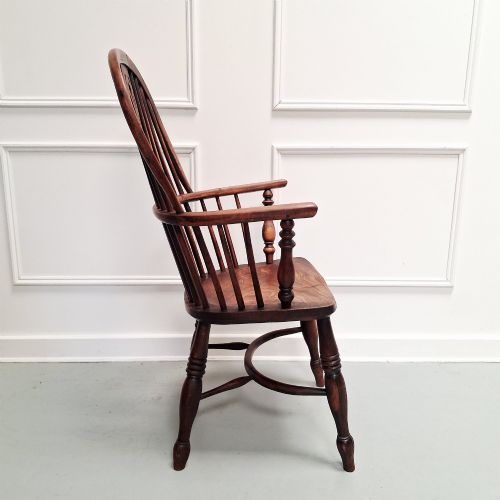
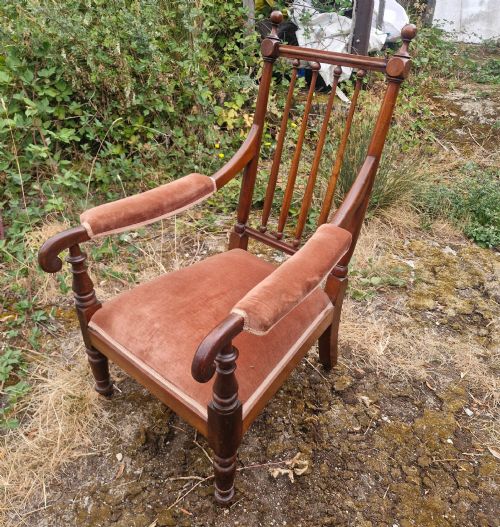
A victorian turned spindle armchair is a seat defined by its prominent timber uprights and upright spindles, taking forms such as captains chairs, smokers bows, and desk chairs. These items appear across nineteenth century periods, incorporating regional vernacular designs and country house styles.
The versions most common on this page span the Victorian era, alongside 19th Century and Edwardian pieces, often featuring rush or solid wood seats. Makers utilised local timbers to construct robust frames suited for studies, libraries, and country farmhouses.
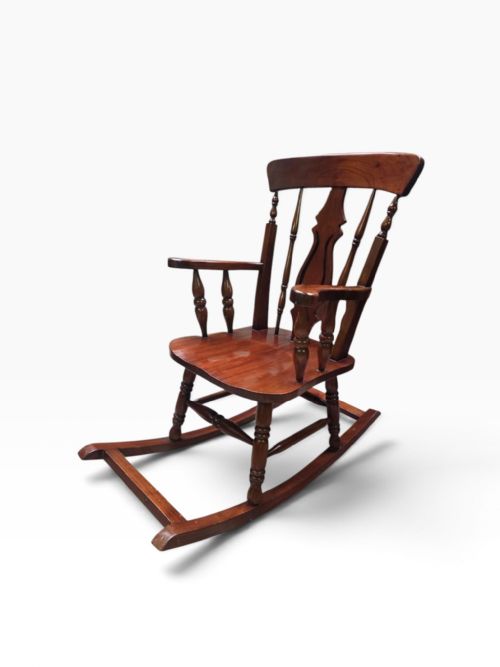
Many examples integrate rocking mechanisms, revolving bases, or curved backs into the traditional armchair format. Buyers encounter diverse regional interpretations, from Yorkshire farmhouse rockers to English country vernacular seating.
Judging quality and craftsmanship
Quality in these chairs rests on the precision of the turning work, the selection of timber grain, and the overall stability of the joined frame. Superior examples display crisp spindle turnings and well-matched woods that have developed a deep, honest patina through decades of use.
The integrity of the construction, such as tight joints and minimal replacement parts, distinguishes a high-grade piece from ordinary utility seating. Refined proportions and thoughtful ergonomics mark the difference between standard production items and finer workshop commissions.
Object forms recorded in the inventory include armchairs, rocking chairs, desk chairs, high chairs, dining chairs, children's seating, and captains chairs.
Morris & Co·J Spencer·Philip Webb·E W Godwin·Gillows
The Victorian Turned Spindle Armchair Glossary
- Spindle back
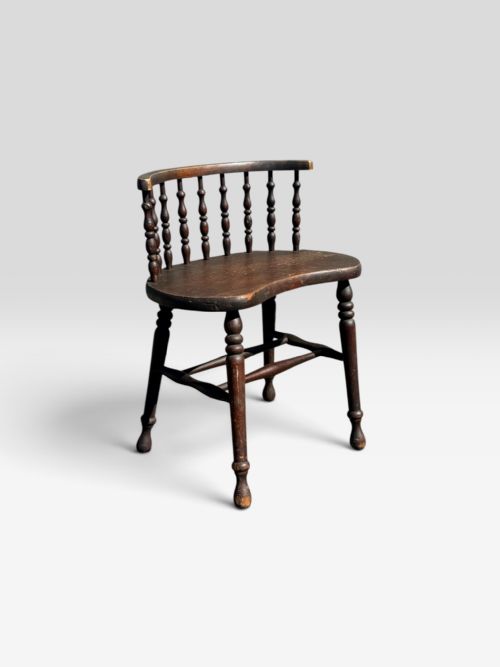
- A chair back composed of multiple slender, turned wooden uprights. These vertical elements provide flexible back support while maintaining an open, airy visual weight.
- Smoker's bow
- A low-backed Windsor armchair with a continuous curved arm rail and turned spindles. Originating in nineteenth-century Britain, this form served as a comfortable smoking or tavern chair.
- Turned
- Wood shaped on a lathe by rotating the piece against cutting tools. This technique produces symmetrical mouldings, rings, and decorative vertical shafts on legs and stretchers.
- Rush seat
- A seating surface woven from dried marsh rushes or sedges. This traditional method creates a textured, supportive base often found on Arts and Crafts and country chairs.
- Bobbin framing
- Furniture construction featuring turned segments resembling spools or bobbins threaded together. This decorative framing method gained popularity during the nineteenth century.
Victorian Turned Spindle Armchair: Frequently Asked Questions
What is a Victorian turned spindle armchair?
A Victorian turned spindle armchair is a nineteenth-century wooden seat featuring lathe-turned uprights and spindle components. These chairs include styles like smoker's bows, captains chairs, and desk chairs.
They combine vernacular country traditions with functional design, utilising native timbers like elm, beech, and ash. The spindle construction lightens the visual mass while providing sturdy back support.
How were these armchairs used originally?
These armchairs served multiple domestic and working purposes in nineteenth-century homes, offices, and country houses. They functioned as desk chairs, library seats, and fireside seating.
Versions with rocking mechanisms or rush seats provided comfort in farmhouses and studies. Their robust construction allowed them to endure heavy daily use across various household rooms.
How do I care for a wooden spindle chair?
Maintain wooden spindle chairs by keeping them away from direct heat sources and drastic humidity changes. This prevents the timber from drying out and the turned joints from loosening.
Apply a microcrystalline wax occasionally to nourish the wood surface and preserve the historic patina. Avoid harsh chemical cleaners that can strip the original finish from the elm or beech.
How do I distinguish regional styles?
Distinguish regional styles by examining the timber combinations, turning profiles, and seat construction methods. English country vernacular pieces often pair elm seats with ash or beech spindles.
Maker stamps, specific stretcher arrangements like crinoline stretchers, and regional proportions offer further clues to geographic origin. Comparing the turning crispness helps separate local workshop output from factory production.