
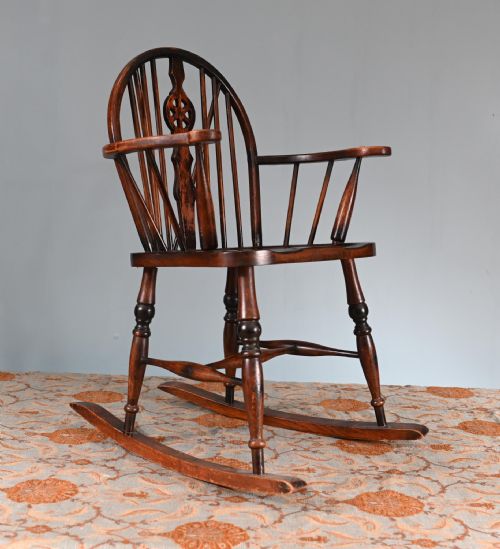


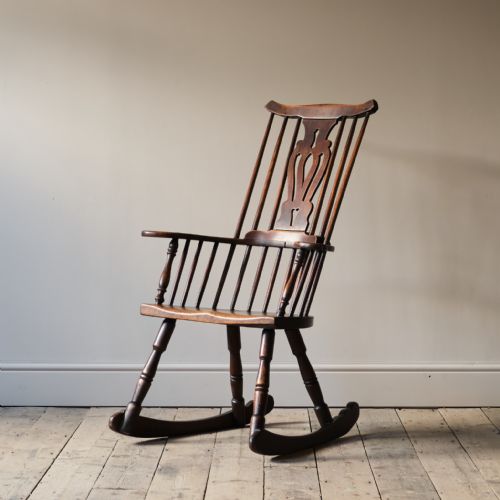


Oak Country Rocking Armchair
An oak country rocking armchair offers solid vernacular comfort, bringing centuries of rural craftsmanship and sturdy domestic utility straight to your fireside.
Oak Country Rocking Armchair
An oak country rocking armchair represents a robust tradition of vernacular seating, shaped by regional makers across the eighteenth and nineteenth centuries. These chairs combine the deep seated comfort of domestic rocking furniture with the straightforward utility of rural joinery.
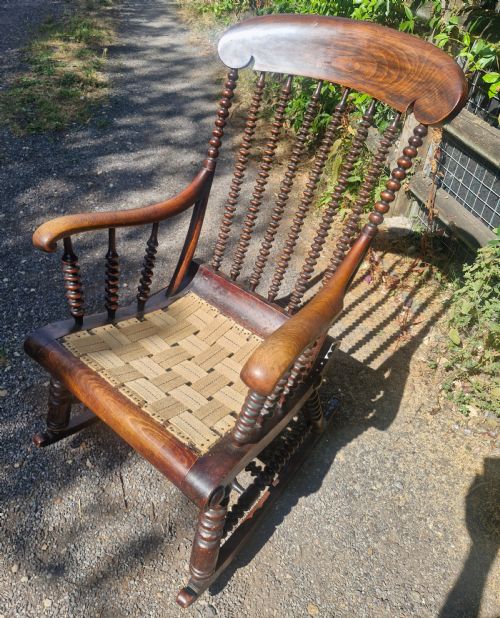
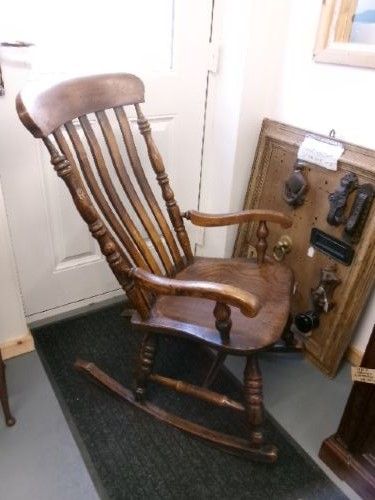
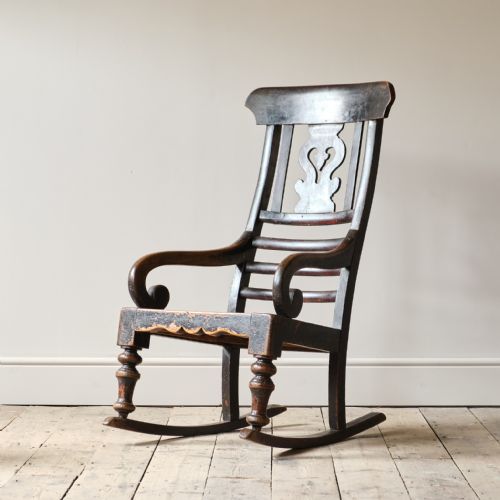
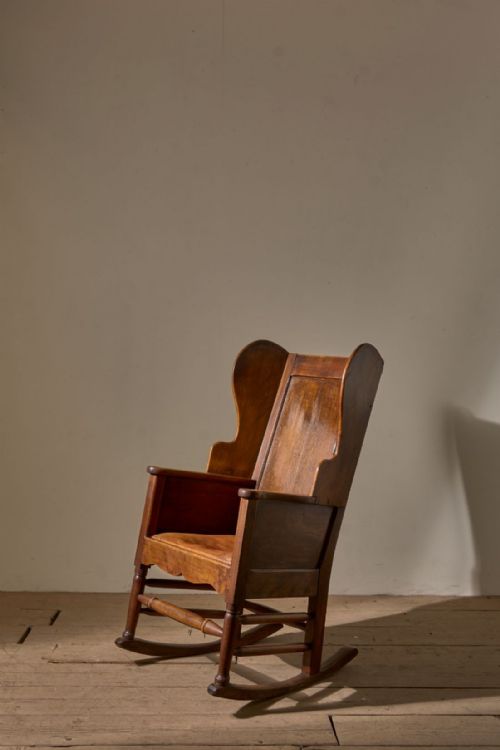
You are most likely to encounter Victorian and nineteenth century examples on this page, alongside earlier eighteenth century pieces and occasional twentieth century Windsor variants. Forms range from low fireside chairs and spindle backs to wheelbacks, lambing chairs, and bobbin framed designs.
Makers utilised local woods to build practical seating for farmhouses and cottages, resulting in sturdy armchairs designed for daily family life. Whether constructed as adult seating or scaled down for children, each piece carries the distinct regional characteristics of English and Scottish vernacular production.
Materials and construction methods
Makers relied primarily on native timbers such as oak, elm, beech, and ash, selecting each wood for its specific structural strength and grain. Elm often provided durable, unyielding seats, while oak and ash formed sturdy frames capable of withstanding the continuous motion of rocking.
Traditional construction involved pegged joints, turned spindles, and steam bent components, occasionally augmented by rush seating or fitted leather pads. Bobbin framing and wheelback designs demonstrate the distinct joinery techniques passed down through generations of regional craftsmen.
Listings feature pieces spanning the eighteenth, nineteenth, and early twentieth centuries, constructed from oak, elm, beech, rush, ash, and yew.
Assessing quality and authenticity
The distinction between ordinary and exceptional pieces lies in the integrity of the timber, the balance of the rocker sweep, and the preservation of original surfaces. Chairs retaining their early patination and uncompromised structural joints command greater appreciation among collectors of vernacular furniture.
Refurbishments, replaced rockers, and heavy timber alterations diminish the historical value of a rural armchair. Superior examples maintain their original proportions, whether built as a Thames Valley Windsor or a Scottish vernacular bobbin chair.
The Oak Country Rocking Armchair Glossary
- Vernacular furniture
- Domestic items made by local craftsmen using regional styles and readily available native timbers rather than following strict metropolitan designs. These pieces reflect the practical needs and aesthetic traditions of specific rural communities.
- Windsor chair
- A wooden seating form featuring a solid carved wooden seat into which the legs and back spindles are independently tenoned. They often incorporate bow backs, wheelbacks, or spindle arrangements.
- Bobbin framing
- A method of decorative turning where woodwork is shaped into a series of rounded, spool like swellings resembling bobbins. This technique appears frequently on nineteenth century vernacular seating.
- Lambing chair
- A traditional high backed fireside seat, historically designed to shield the occupant from drafts in cold rural homes. They often feature enclosed sides and solid wooden construction.
- Wheelback
- A Windsor chair variation featuring a pierced splat carved in the shape of a spoked cartwheel. This decorative motif became popular during the nineteenth century.
Oak Country Rocking Armchair: Frequently Asked Questions
What defines an oak country rocking armchair?
These pieces are traditional rural seating built from native timbers like oak, elm, and ash, featuring curved rockers for movement.
They combine practical domestic utility with regional craftsmanship, spanning eighteenth and nineteenth century vernacular styles.
How do I care for antique rocking chairs?
Keep wooden surfaces nourished with appropriate wax and protect them from direct heat sources and dramatic humidity changes.
Check the joints and rocker bases periodically to ensure the historical timber remains stable under normal use.
Where were these country armchairs made?
Regional workshops across England and Scotland produced these chairs using locally sourced woods and traditional joinery techniques.
Distinct regional characteristics often reveal whether a piece originated in the Thames Valley, Yorkshire, or northern Scotland.
Are children's rocking chairs period pieces?
Makers scaled down full size designs to create smaller chairs for children during the eighteenth and nineteenth centuries.
These smaller examples share the same construction methods and timber choices as adult armchairs.
How can I tell the age of a rocking chair?
Age is determined by examining tool marks, timber shrinkage, construction methods, and the wear patterns on the rocker base.
Stylistic details like bobbin framing or wheelback splats also help narrow down the period of manufacture.