

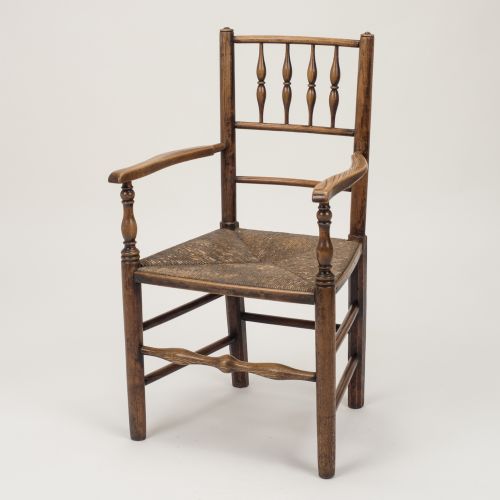


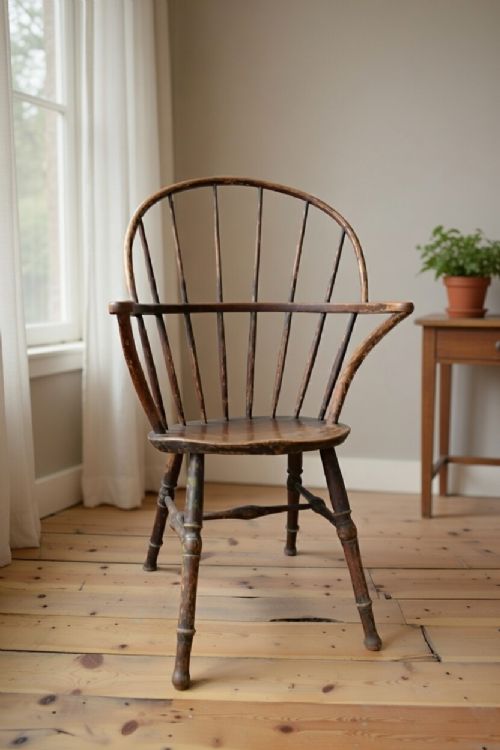


Brown Ash Elbow Chair
A brown ash elbow chair offers sturdy country craftsmanship, combining tactile native woods with comfortable seating designed for daily use.
Brown Ash Elbow Chair
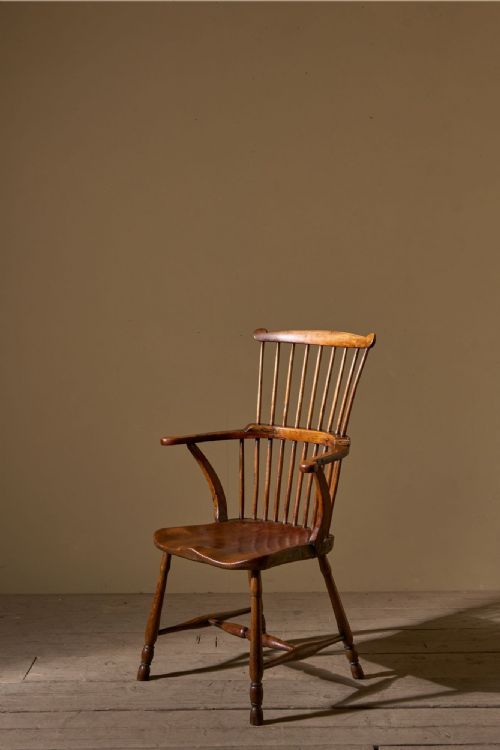
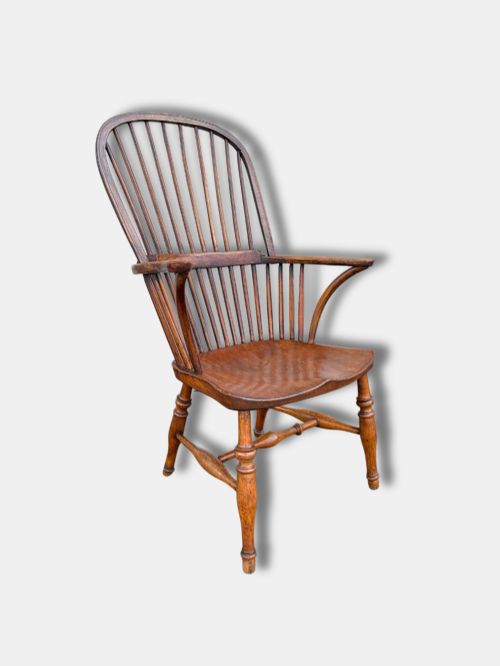
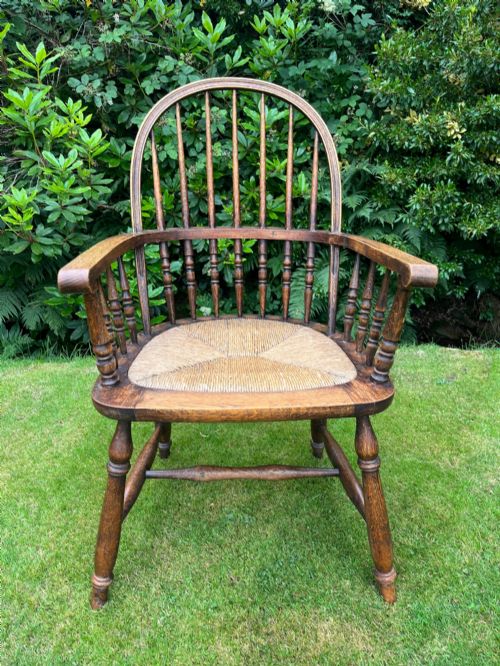
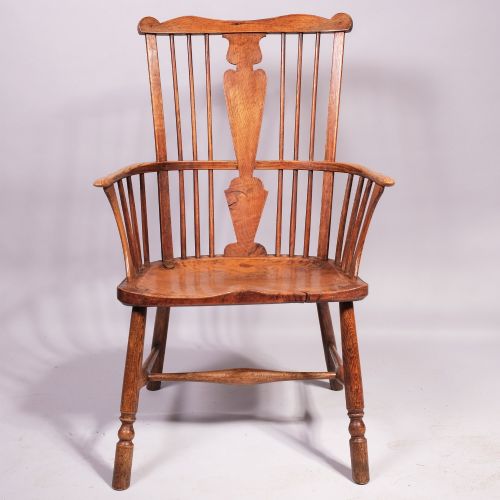
A brown ash elbow chair represents traditional vernacular seating, typically taking the form of a Windsor or stickback armchair originating from English, Scottish, and regional country workshops. These sturdy seats combine supportive arms with robust wooden frames designed for practical daily use in domestic spaces.
The versions most commonly met in these listings span the eighteenth and nineteenth centuries, including Georgian and Victorian periods. Makers frequently paired ash with elm for seats and incorporated rush or timber for bases, resulting in durable seating carrying distinct regional styles.
Materials and construction methods
These pieces rely on native timbers, predominantly utilising ash for bentwood bows and spindles alongside elm for solid, saddled seats. This combination provides both the flexibility needed for steam-bending components and the rigidity required for stable legs and arms.
Joinery methods involve traditional techniques such as wedged tenons and through-joints, securing spindles directly into thick plank seats without metal fixings. Workshops often integrated rush for woven seating inserts where timber panels were not utilised.
Several examples feature wonderfully dished elm seats, sculpted over generations by the simple act of sitting down.
Factors determining quality
Quality separates along the harmony of timber selection and the retention of original surface patination. Examples exhibiting well-matched ash grain and deep, unpolished wear on elm seats demonstrate superior workshop execution.
Structural integrity and the survival of original components, such as unreplaced spindles and unaltered legs, define the finer pieces. Chairs retaining crisp turnings and authentic regional traits stand apart from heavily restored alternatives.
Darvil
The Brown Ash Elbow Chair Glossary
- Ash
- A tough, elastic timber utilised extensively for Windsor chair frames, hoops, and spindles due to its bending qualities. It yields a notable grain pattern visible across the arms and backs of these elbow chairs.
- Elm
- A durable hardwood traditionally selected for chair seats because its interlocked grain resists splitting under pressure. Makers carved these planks into comfortable, saddled shapes.
- Windsor chair
- A seating form constructed with spindles inserted into a solid wooden seat rather than a framed back. These chairs appear in low-back, high-back, and comb-back variations.
- Stickback
- A vernacular chair style utilising simple turned spindles secured directly into the seat and top rail. This construction method defines many English and Scottish country examples.
Brown Ash Elbow Chair: Frequently Asked Questions
How do I date a brown ash elbow chair?
Dating relies on observing construction techniques, wood patination, and stylistic design markers. Eighteenth-century examples often feature comb backs and heavier country proportions, while Victorian pieces show sharper turnings and broader arms.
Seat shaping and spindle thickness also help distinguish earlier vernacular chairs from later nineteenth-century production. Comparing joinery methods to documented regional styles clarifies the period.
Where were these chairs made?
These elbow chairs originated in rural workshops across England and Scotland, with distinct regional variations emerging from places like Yorkshire and the West Country. Local carpenters utilised available native timbers.
Regional preferences influenced whether a chair featured a low back, high back, or smoker's bow configuration. This local production gives each piece a distinct character tied to its geographic origin.
How do I care for a wooden elbow chair?
Maintain these chairs by keeping them away from direct heat sources and drastic humidity changes to prevent timber shrinkage. Dusting with a dry cloth preserves the aged surface.
Avoid applying modern synthetic polishes that can build up on the historic wood finish. Simple beeswax applied sparingly helps nourish dry ash and elm surfaces over time.