
Traditional Smokers Bow Chair
These low-back armchairs combine sturdy provincial joinery with comfortable seated support.
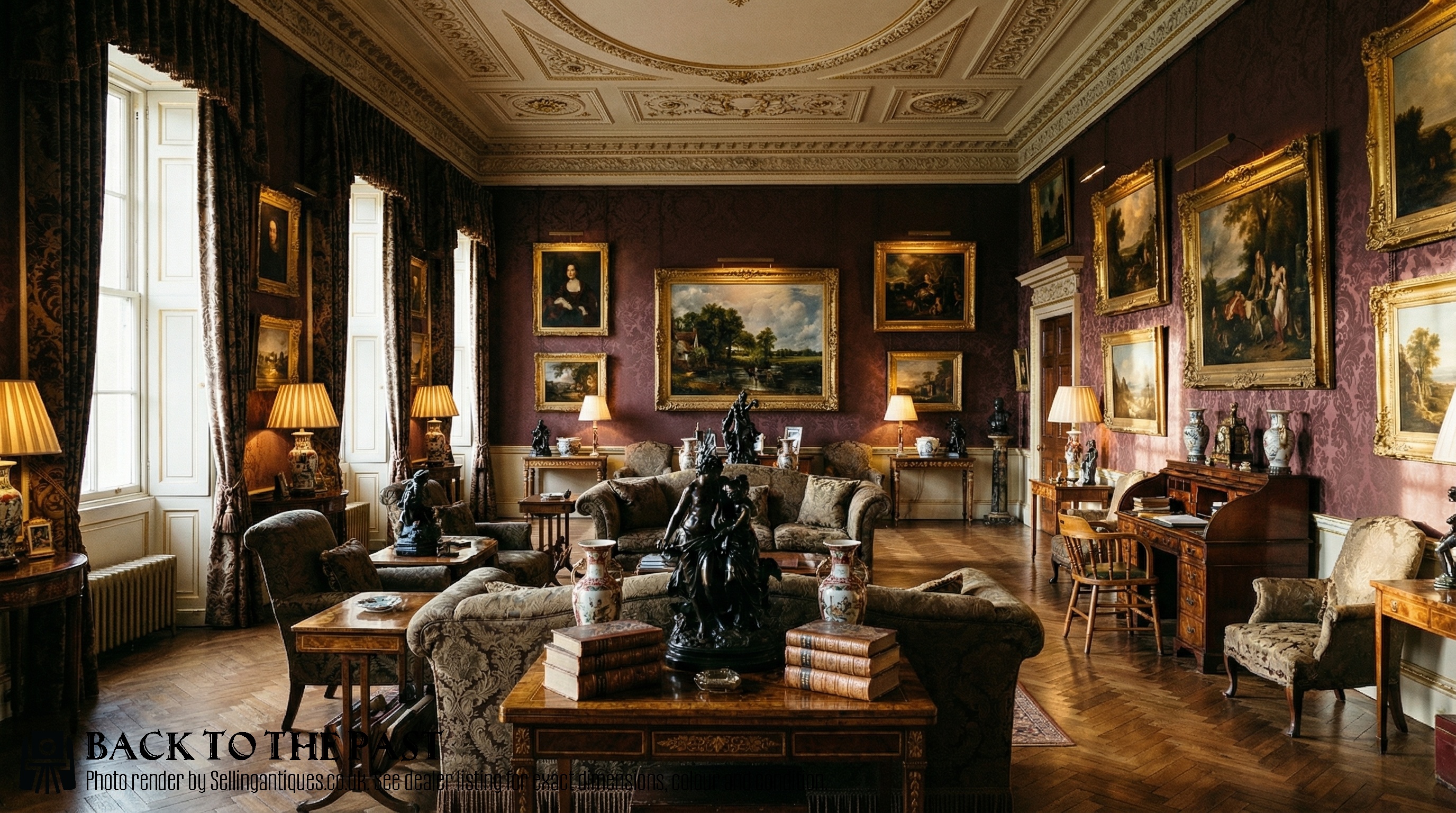
Traditional Smokers Bow Chair
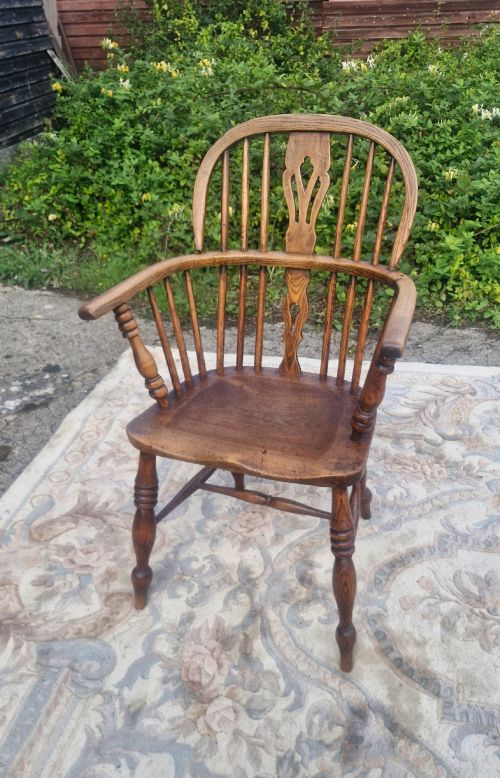
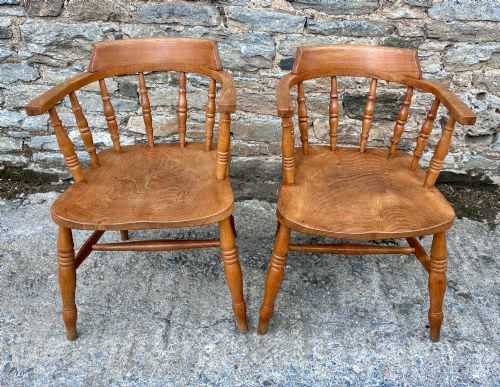
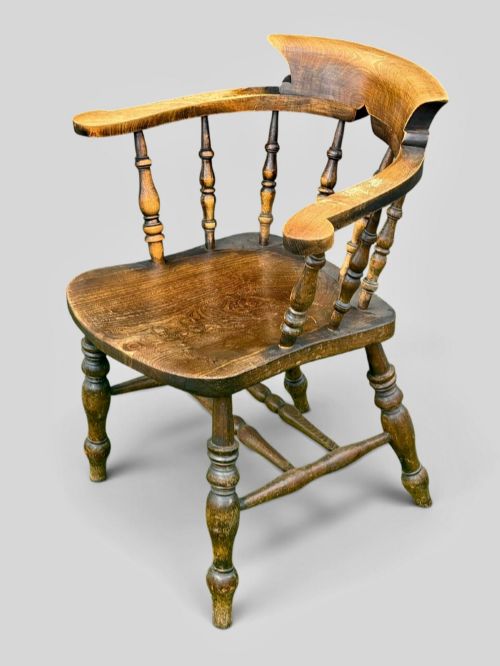
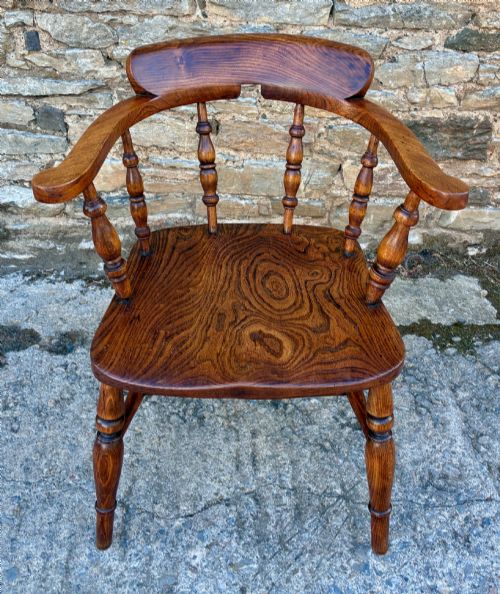
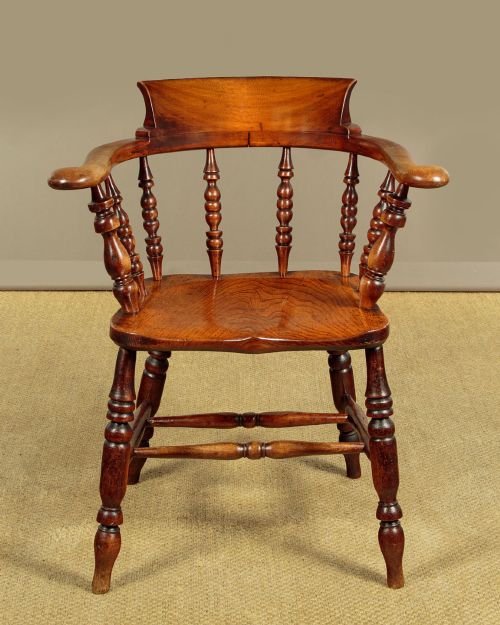
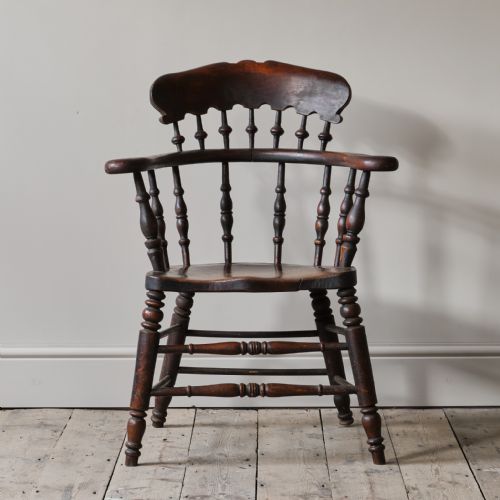
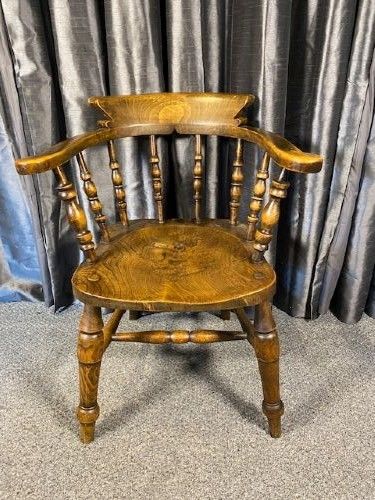
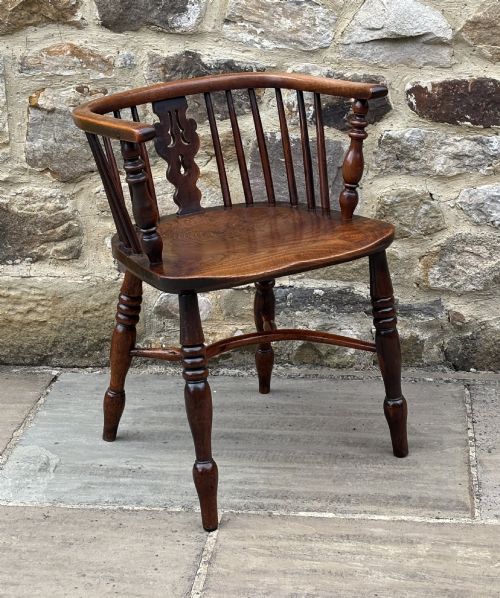
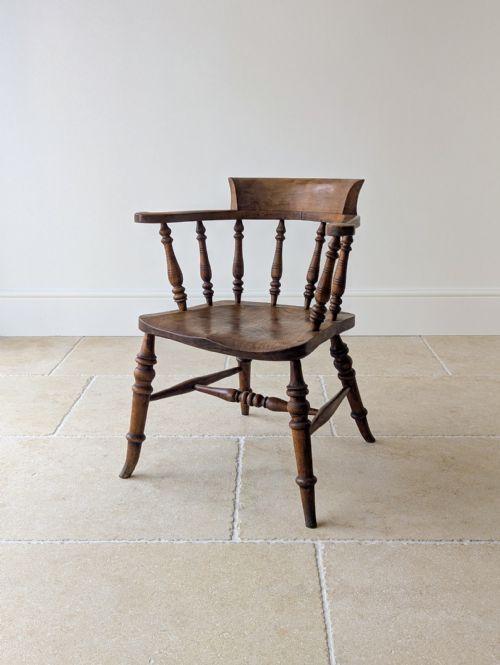
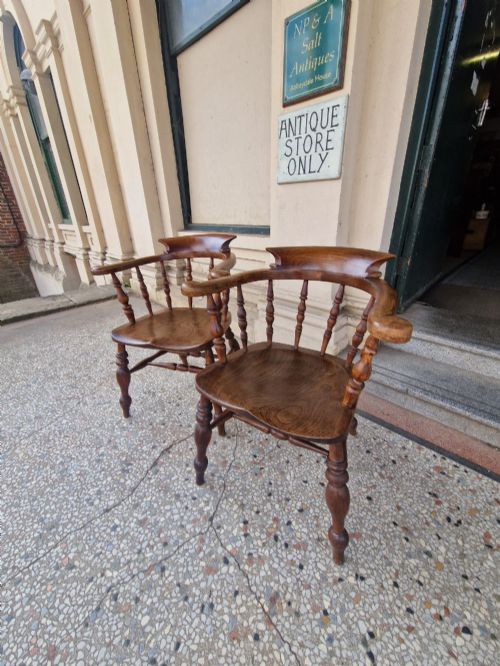
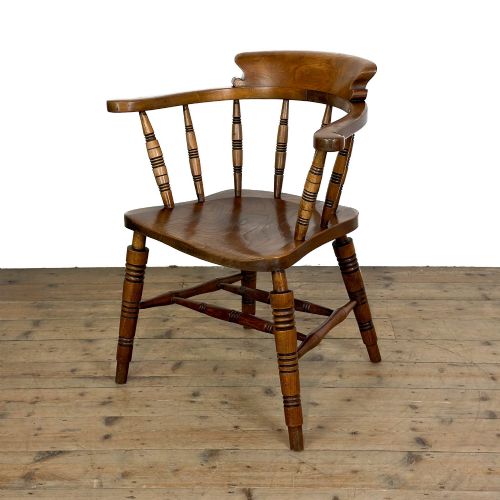
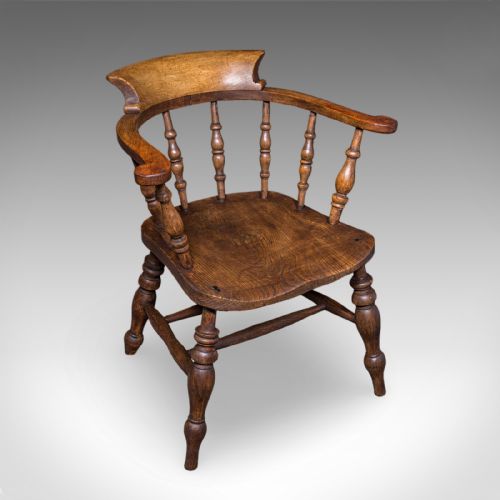
A traditional smokers bow chair is a robust low-back wooden armchair commonly found in Victorian and Edwardian country houses, provincial offices and farmhouse kitchens. The form shares close lineage with Windsor and captain's chairs, typically featuring a rounded hoop back and a solid plank seat.
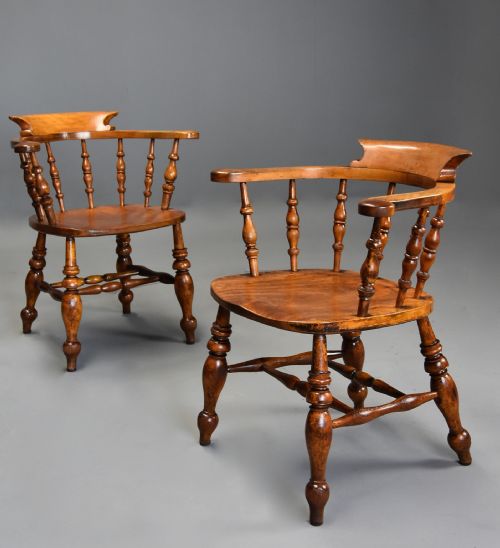
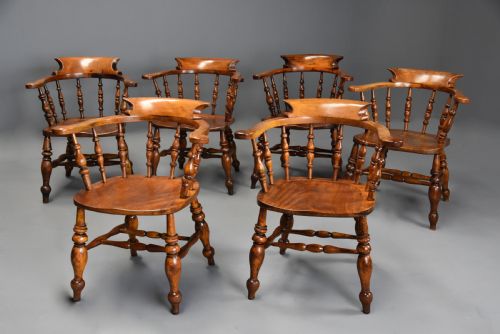
Most pieces seen here date from the nineteenth and early twentieth centuries, spanning periods from eighteen-fifty to nineteen-twenty. They appear primarily as single library desks chairs, matching pairs or larger dining and office sets.
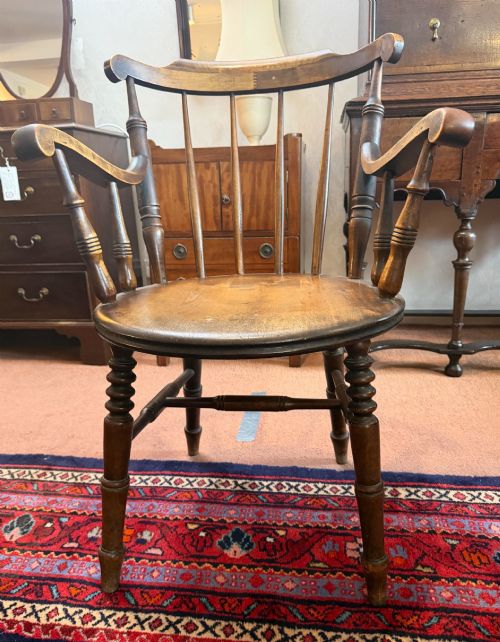
Provincial makers constructed these elbow seats for practical daily use, resulting in sturdy proportions and comfortable curved arm rails supported by turned spindles.
Materials and construction methods
Local timber selection defined the construction, pairing tough woods like elm for solid plank seats with flexible ash, beech or birch for steam-bent back bows and turned spindles. Some examples incorporate richer materials including yew, oak or mahogany.
Joinery relied on traditional Windsor framing techniques, wedging legs and spindle tenons directly into bored holes through the thick wooden seat plate.
Listings span Victorian, Edwardian and early twentieth-century periods, using elm, beech, ash, oak, yew, birch and mahogany.
Distinguishing quality factors
Quality rests in the selection of timber grain and the depth of natural patina built through decades of use. Yew and figured elm command higher regard than standard beech or birch frames.
Proportion and the complexity of spindle turnings separate standard provincial seating from finer country house examples. The sweep of the steam-bent arm bow dictates the elegance of the silhouette.
The Traditional Smokers Bow Chair Glossary
- Smoker's bow
- A low-back wooden armchair with a continuous curved rail forming the arms and backrest. It evolved from regional Windsor chair designs.
- Captain's chair
- A sturdy low-back wooden seating form used in offices, ships and studies. The name overlaps frequently with smoker's bow listings.
- Comb back
- A Windsor chair variation where vertical spindles extend upward through the seat to support a low headrest or comb piece.
- Patina
- The surface sheen and colour developed by wood over many decades of handling and cleaning. Collectors prize a deep, untouched wax finish.
- Windsor
- A chair style characterised by turned legs and spindles socketed directly into a solid sculpted wooden seat.
Traditional Smokers Bow Chair: Frequently Asked Questions
What is a traditional smokers bow chair?
A traditional smokers bow chair is a low-back wooden armchair featuring a continuous curved arm rail and a solid saddle-shaped seat. These sturdy seats derive from regional Windsor traditions and saw widespread use in offices and country houses.
Most surviving examples date from the Victorian and Edwardian eras, constructed from mixed timbers such as elm, beech and ash.
How were these chairs used originally?
These robust armchairs served versatile roles as desk, office, dining and smoking room seating. Their low profiles allowed them to fit neatly beneath writing tables while providing comfortable elbow support.
Commercial parlours, country houses and provincial homesteads relied on them for heavy daily seating needs.
How do I live with a wooden armchair?
These wooden chairs integrate easily into modern living spaces as desk seats, hallway chairs or reading room accents. Their durable construction suits everyday domestic use.
Maintain the wood by applying occasional beeswax to nourish the dry grain and preserve the surface patina.
How can I tell the period apart?
Dating relies on observing timber combinations, tool marks and the subtlety of spindle turnings. Mid nineteenth-century pieces often display richer elm grain and softer hand-carved seat contours.
Later Victorian and Edwardian iterations frequently utilise more uniform beech and machine-turned components.