

Antique English Club Armchair
When you search for an antique English club armchair, you seek deep comfort matched with the robust craft of Victorian and Edwardian seating.
Antique English Club Armchair
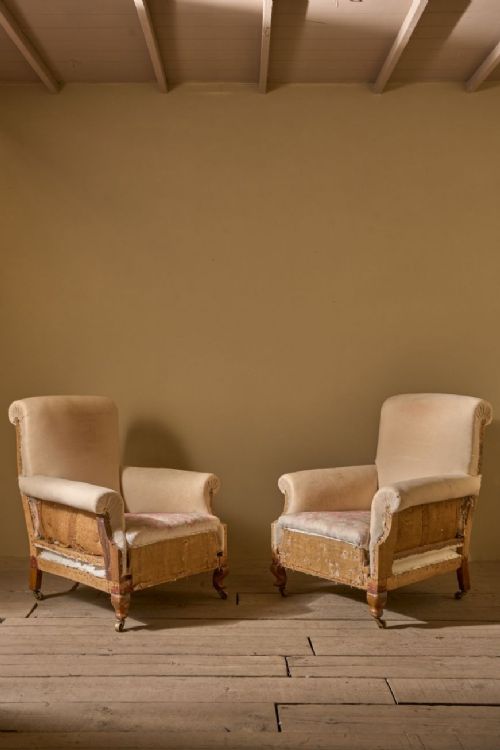
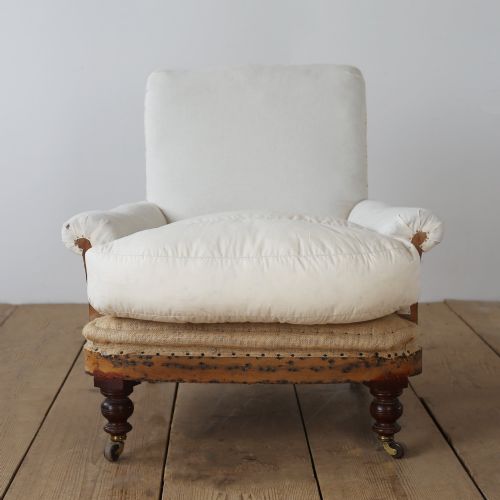
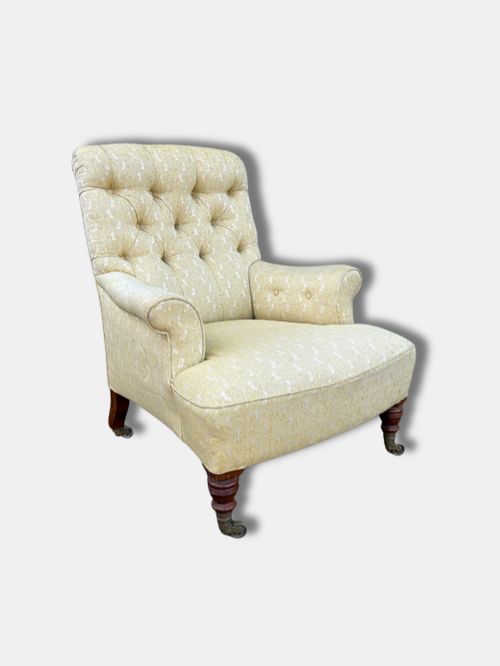
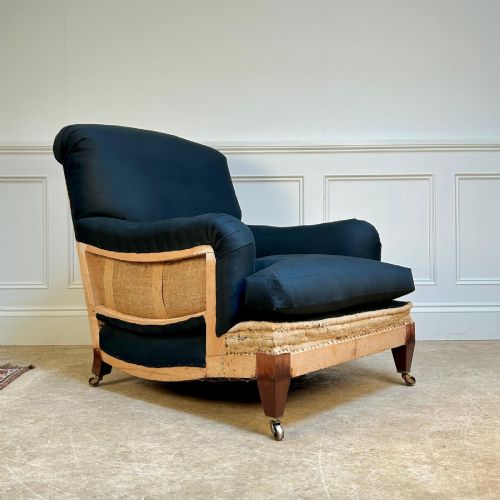
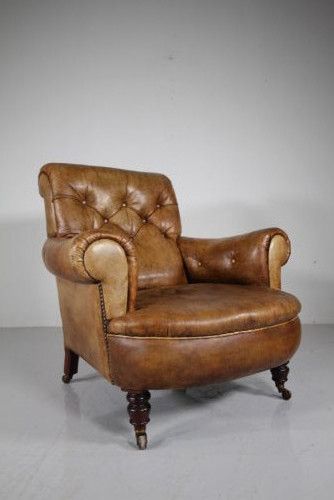
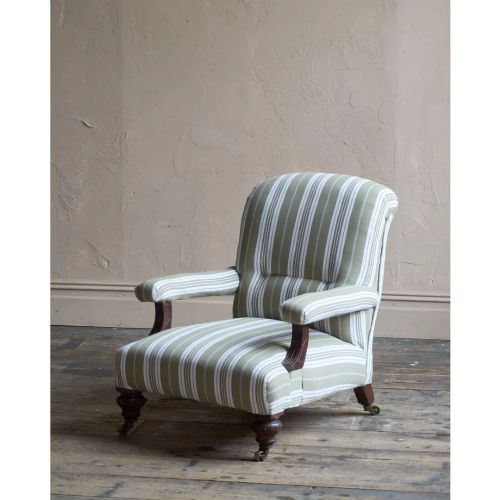
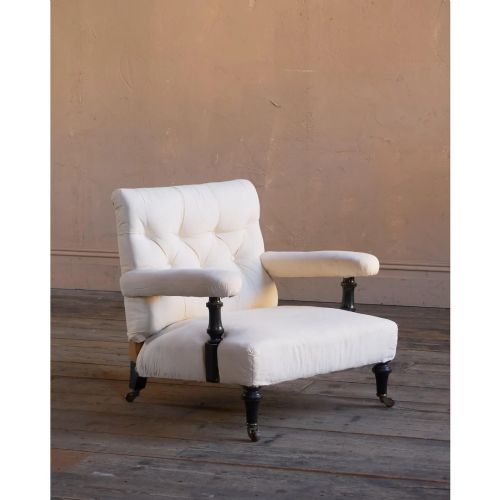
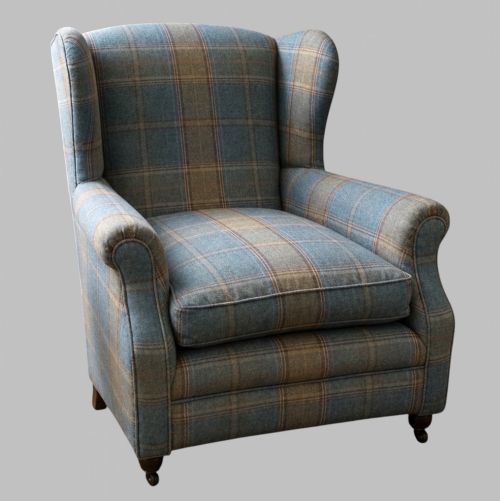
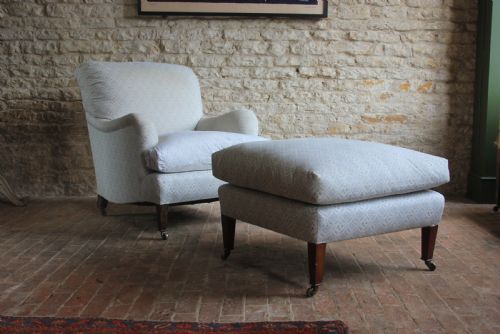
An antique English club armchair represents the archetype of deep, upholstered lounging furniture developed across the nineteenth and early twentieth centuries. These seats span Victorian library forms, Edwardian country house styles, and sturdy buttoned designs built for long hours of reading or relaxation.
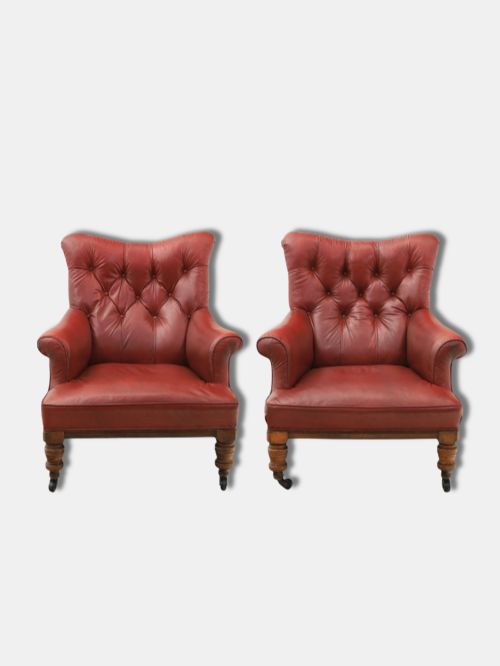
The versions most commonly met on this page range from nineteenth-century walnut and leather library chairs to early twentieth-century deep-seated easy chairs. Makers such as Howard and Sons frequently define the standard, alongside sturdy Chesterfield patterns and country house armchairs upholstered in ticking or rich hide.
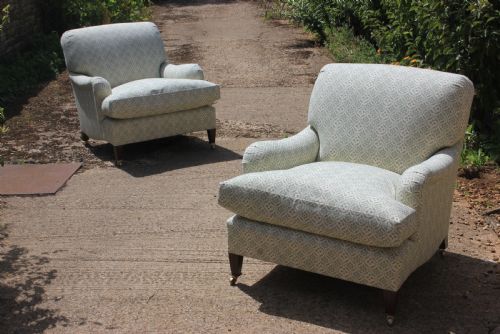
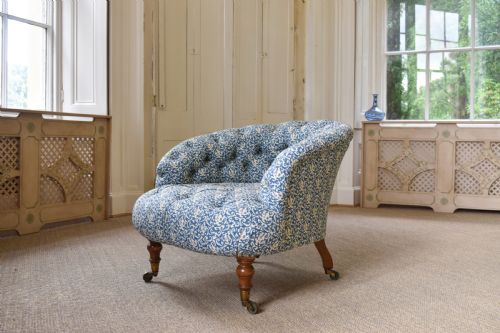
Buyers will encounter various proportions, from oversized open armchairs to compact tub chairs and low-slung club seats. Each piece reflects the domestic comfort prioritised in English studies, smoking rooms, and drawing rooms of the period.
Materials and construction methods
The structural framework relies upon seasoned timbers such as beech, oak, elm, mahogany, and walnut, providing a rigid skeleton for heavy daily use. Turnings, claw and ball feet, and exposed wooden legs occasionally accent the base beneath voluminous padding.
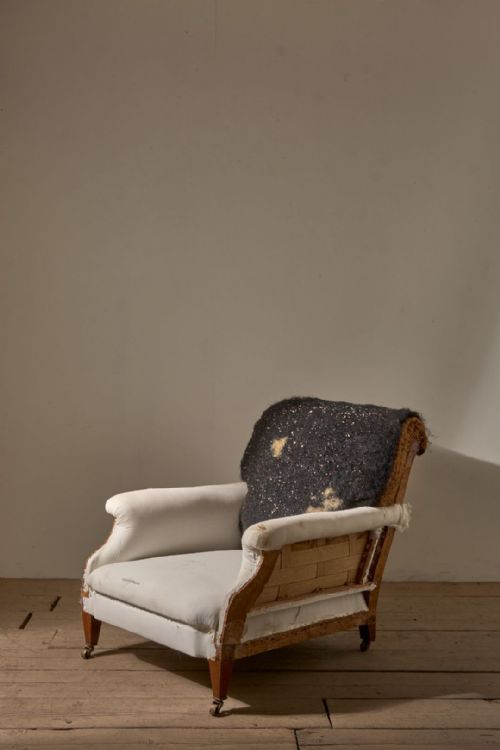
Upholstery techniques combined coil springing with natural stuffing materials like horsehair, secured under calico interliners before receiving top covers of leather, rexine, or heavy cotton ticking. Deep buttoning and hand-tacked welts maintained the tautness and shape of the deep seats over decades of wear.
Listings feature examples spanning the nineteenth century through the Edwardian period, utilising leather, walnut, mahogany, and heavy ticking.
Distinctions in quality
Quality rests upon the integrity of the internal spring frame and the depth of the original stuffing rather than surface appearance alone. Superior workshop execution shows in the balanced distribution of weight, substantial timber scantlings, and resilient hand-tied coils that resist sagging.
The grade of the covering material dictates much of the distinction, from supple patinated leathers to heavy institutional hide and branded ticking. Maker attribution, particularly pieces bearing the stamp or paper label of notable London cabinetmakers, elevates the standing of an armchair considerably.
Howard and Sons·Mellier and Co·James Shoolbred·Trollope and Sons·Hamptons and Sons·C Hindley and Sons
The Antique English Club Armchair Glossary
- Club armchair
- A deeply upholstered, low-slung easy chair designed for domestic lounging. These seats typically feature generous armrests and deep cushion platforms.
- Bridgewater style
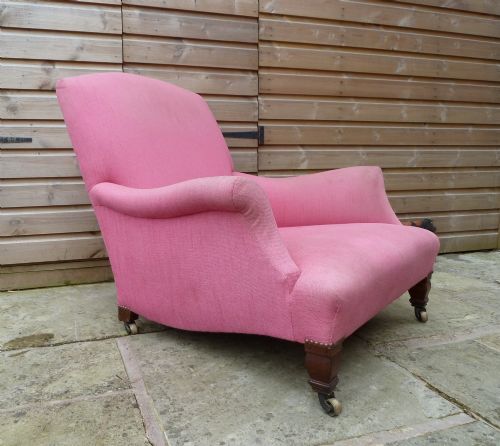
- A traditional upholstered form characterised by low, rolled arms and a relaxed profile. It forms a staple of English country house seating.
- Rexine
- A branded leathercloth made from woven fabric coated with nitrocellulose. It provided a durable, wipe-clean alternative to traditional hide on early twentieth-century furniture.
- Ticking
- A tightly woven, durable cotton or linen fabric traditionally used as an under-cover for springs and stuffing. It frequently appears as a primary loose cover on country house armchairs.
- Button back
- An upholstery method where depressions are formed in the padding by pulling tufting cord through to the wooden frame. This secures the internal stuffing and creates a distinct geometric pattern.
Antique English Club Armchair: Frequently Asked Questions
What defines an antique English club armchair?
An antique English club armchair is characterised by its deep seat, generous proportions, and heavy internal springing designed for maximum comfort. These chairs originate primarily from the Victorian and Edwardian eras.
They often feature leather, fabric, or ticking upholstery supported by sturdy timber frames made of walnut, mahogany, or beech.
How do I care for antique leather upholstery?
Antique leather requires gentle cleaning and periodic conditioning to prevent the hide from drying out and cracking over time. Avoid placing these chairs near direct heat sources or strong sunlight.
Dust the surface regularly with a soft cloth and consult a specialist restorer before applying modern chemical treatments.
How can I tell a Howard and Sons chair?
Howard and Sons chairs are distinguished by their exceptionally deep springs, low profiles, and specific construction methods under the upholstery. Many pieces carry stamped wooden legs, castors bearing the maker's name, or paper labels.
Even without stamps, their characteristic Bridgewater or Ivor shapes and reliance on ticking or branded ticking covers often point to the firm's workshop.
Where were these armchairs originally used?
These armchairs served primarily in private libraries, studies, smoking rooms, and drawing rooms of English country houses. Their robust construction and deep cushioning were intended for long hours of reading or resting.
Today, they transition easily into modern living spaces as statement reading chairs or fireside seating.