

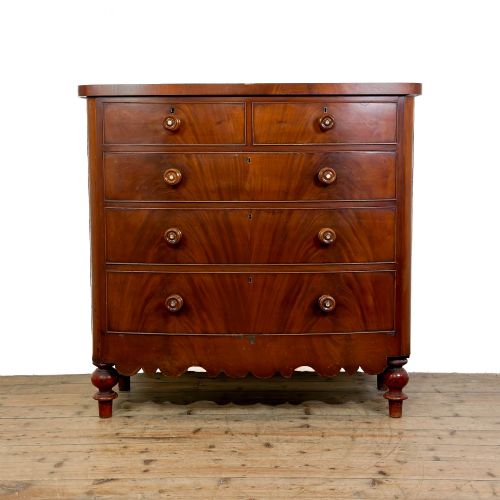
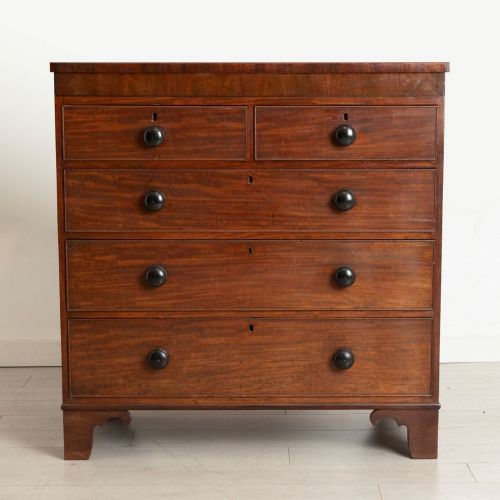


Victorian Turned Foot Chest
These victorian turned foot chest items are honest nineteenth-century storage pieces that anchor a bedroom with genuine period character.
Victorian Turned Foot Chest
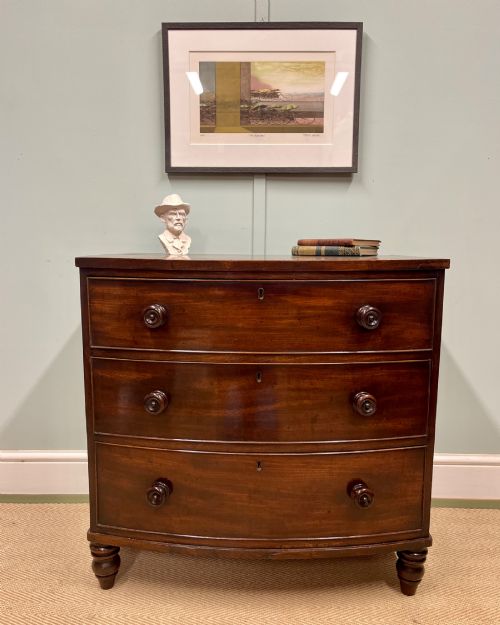
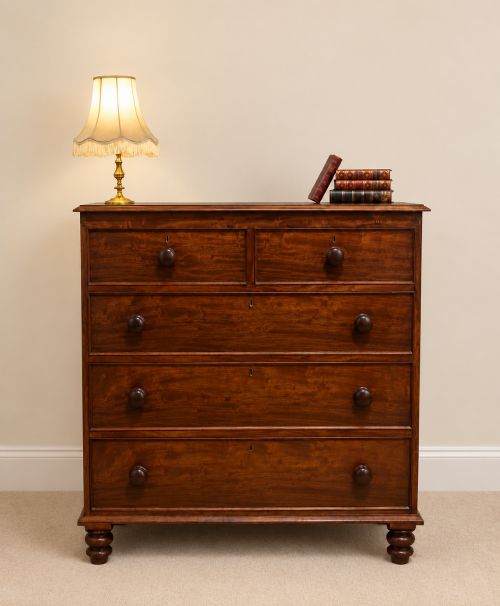
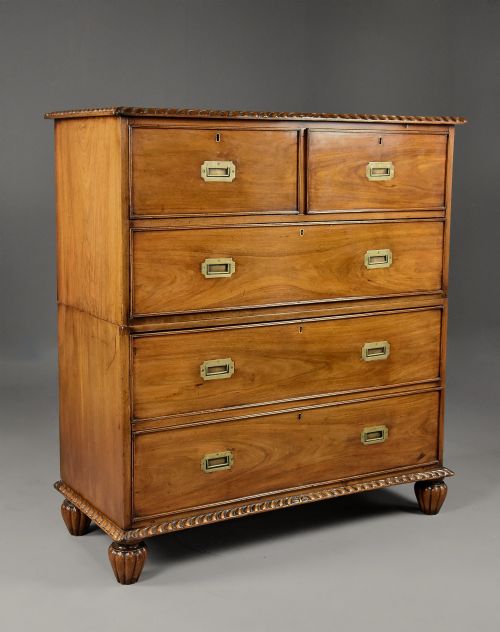
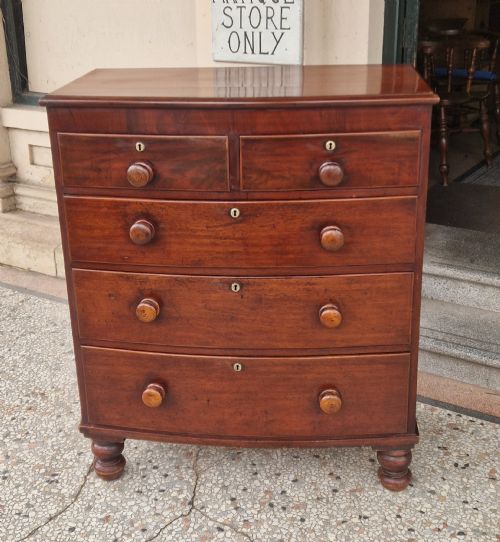
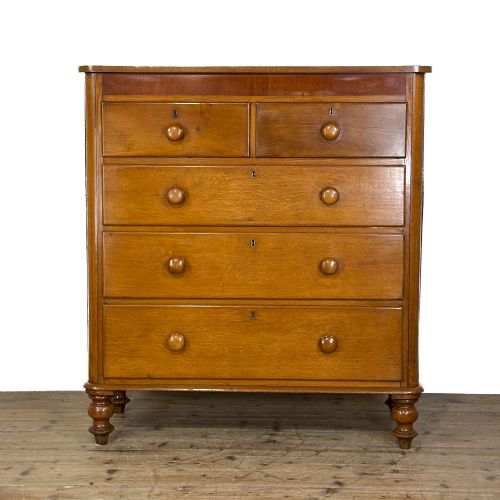
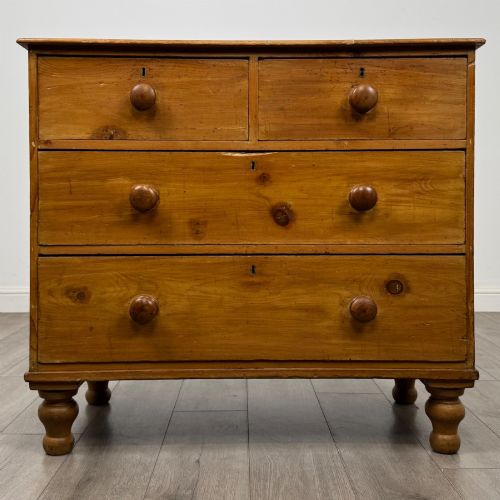
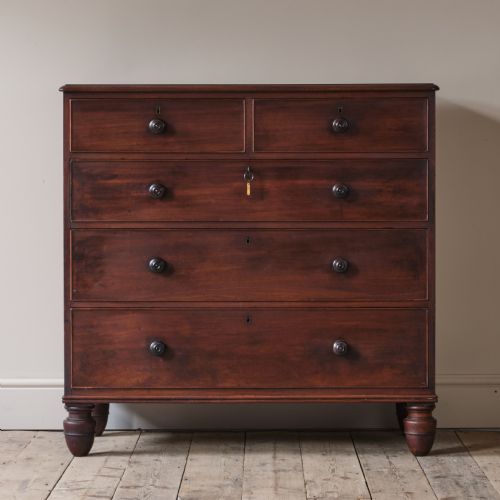
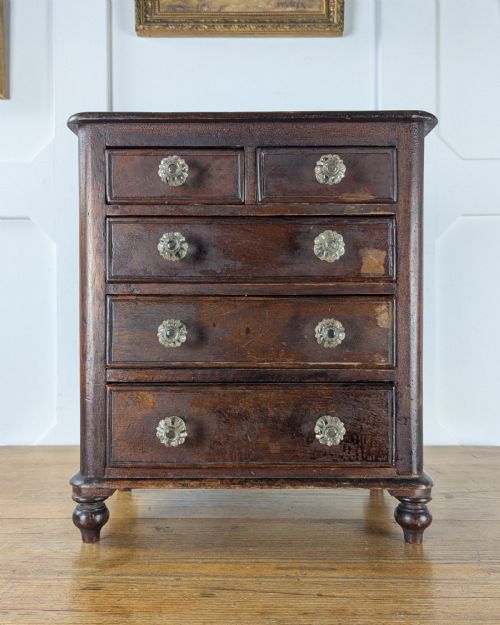
When you search for a victorian turned foot chest, you are looking at nineteenth-century storage furniture defined by raised supports at the base. The selection on this page centres on chests of drawers and miniature apprentice pieces from the Victorian era and the wider nineteenth century.
The standard forms appearing here include two-over-three drawer configurations, bow fronts, and smaller apprentice pieces. Woods range from pine and mahogany to satin birch, often featuring original turned knobs and feet.
Materials and construction
These pieces rely on solid timber construction using pine and mahogany, occasionally enhanced with wood veneer, brass, glass, or mother of pearl. Cabinetmakers shaped the distinct feet and drawer knobs on a lathe.
Surfaces frequently show original paint or clear finishes that highlight the natural grain of the wood. Tongue and groove construction appears in the joinery of specific maker-marked pieces.
Victorian Turned Foot Chest Retail Price Guide 2026
Typical asking prices for victorian turned foot chest among the pieces listed under this phrase on Sellingantiques today, from the lower quarter to the upper quarter. They describe what is for sale here now, not the wider market.
The documented materials across these items span solid pine, mahogany, satin birch, and painted wooden surfaces.
Judging the quality
Quality in these chests rests on the integrity of the timber and the crispness of the turned feet and knobs. Pieces retaining their original paint surfaces or untouched satin birch and mahogany hold greater interest for collectors.
Proportion and scale dictate the visual success of the piece, particularly in smaller miniature examples. The handling of the drawer construction and timber selection marks the difference between standard utility furniture and finer workshops.
T & G Seddon
The Victorian Turned Foot Chest Glossary
- Bow front
- A convex, outwardly curved front facade common on nineteenth-century case furniture. This shape softens the corners of the room and reflects light across mahogany or painted surfaces.
- Tongue and groove
- A method of fitting boards together where a protruding edge fits into a corresponding slot. This joint provides stability to the backboards and internal partitions of the chest.
- Satin birch
- A pale, fine-grained timber utilised for Victorian cabinet work. It offers a smooth, light surface that brightens smaller bedroom spaces.
Victorian Turned Foot Chest: Frequently Asked Questions
What is a Victorian turned foot chest?
It is a nineteenth-century storage unit raised off the floor on rounded wooden supports. These pieces include full-sized drawer chests and smaller miniature versions.
They reflect the domestic utility and craftsmanship of the period, using timbers like pine and mahogany.
How do I identify a miniature apprentice chest?
Apprentice chests are scaled-down models of standard furniture, built with the same attention to drawer construction and turned feet. They were often created as demonstration pieces.
Their smaller dimensions make them suitable for tabletop display or specialised collections.
Are painted finishes original on these chests?
Some pieces survive with their original nineteenth-century painted surfaces intact. This paint can range from simple utilitarian coatings to decorative finishes on pine.
Examining the wear patterns helps determine the age of the surface layer.
What woods were used for these chests?
Cabinetmakers utilised native and imported timbers, most commonly pine and rich mahogany. Satin birch also appears in specific finer examples.
Accents of brass, glass, or mother of pearl sometimes complement the primary wood.