



Victorian Trumpet Table
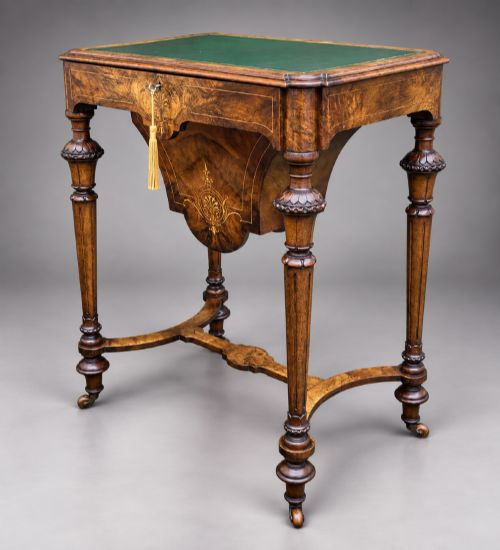
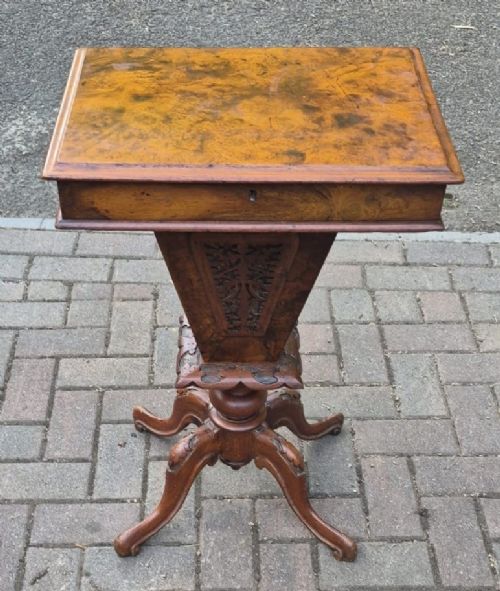
A victorian trumpet table combines domestic utility with distinctive flared pedestals designed to house fitted sewing compartments.

Victorian Trumpet Table
The materials recorded in these pieces rely heavily on rich timbers such as burr walnut, rosewood and mahogany, often enhanced with delicate marquetry, tunbridge inlay or parquetry geometric patterns. Many examples double as games tables, incorporating chess or backgammon boards onto the pivoting top surface.
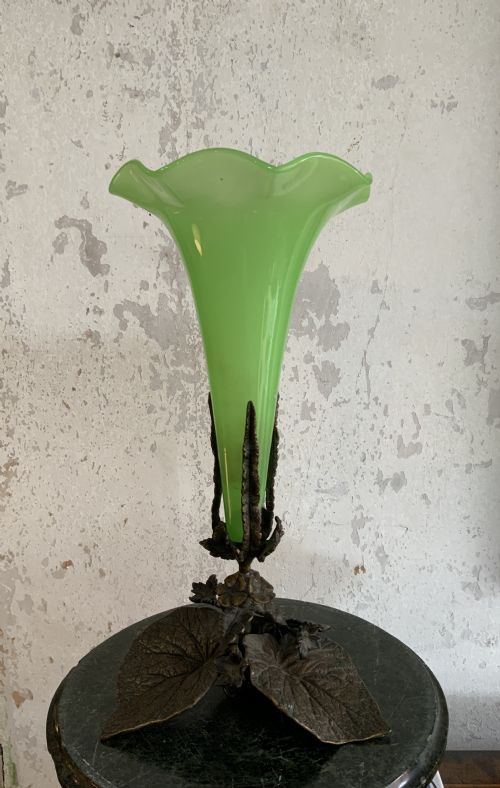
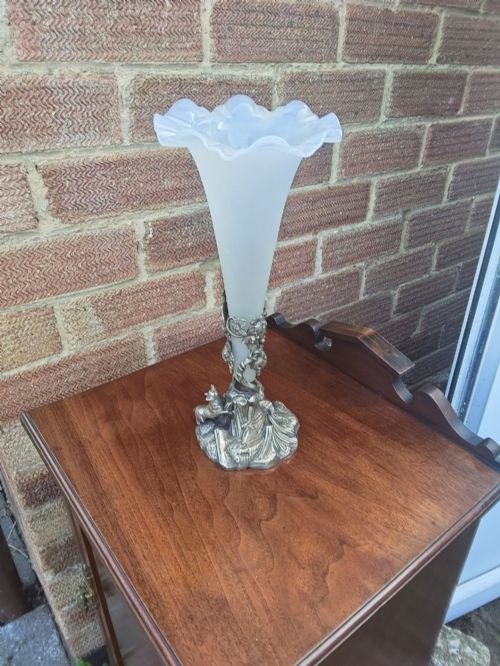
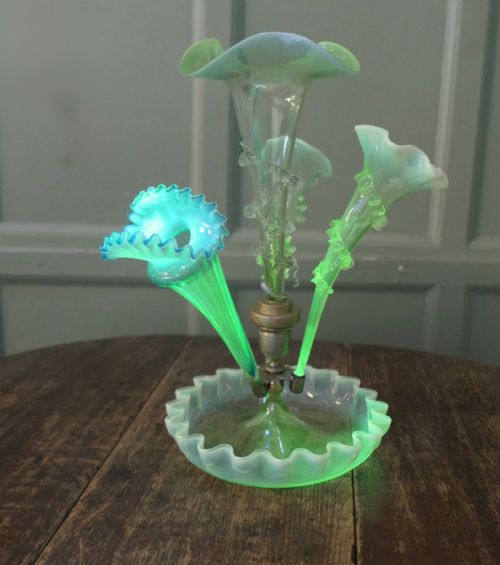
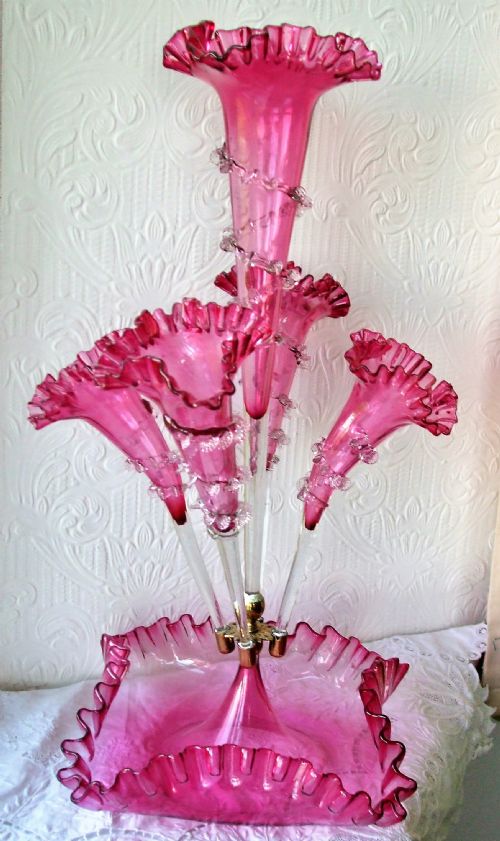
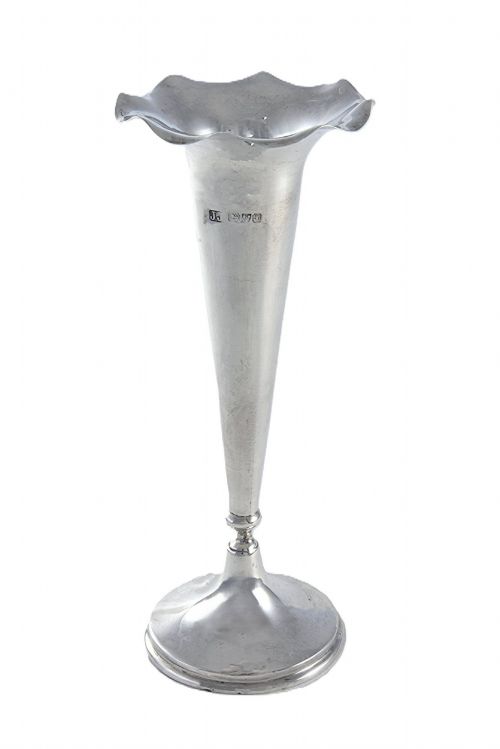
Origins span the nineteenth century, with the majority originating in English and Irish workshops during the Victorian era. Alongside standard work tables, related forms include occasional tables and table centrepieces utilising glass and silver elements.
Construction and Materials
Cabinet makers utilised dense native and exotic hardwoods, selecting burr walnut and rosewood for their dramatic grain patterns, which were sliced into thin veneers and applied to stable softwood carcases. Marquetry panels and contrasting light and dark wood inlays were meticulously hand-cut and fitted into the top surfaces.
The characteristic trumpet-shaped pedestal was often formed from steam-bent or carved solid timber sections united at a central core. Interiors required precise joinery to create miniature compartments, trays and lids for sewing implements, usually lined with fabric or velvet.
Victorian Trumpet Table Retail Price Guide 2026
Typical asking prices for victorian trumpet table among the pieces listed under this phrase on Sellingantiques today, from the lower quarter to the upper quarter. They describe what is for sale here now, not the wider market.
Some sewing tables hide tiny wooden wells designed specifically to store bone crochet hooks and ivory thread winders safely out of sight.
Measures of Quality
The distinction between standard examples and the finest work lies in the complexity of the timber figure and the precision of the inlay. Rich, highly figured burr walnut and intricate floral marquetry command greater appreciation than plain mahogany or unadorned surfaces.
Structural integrity also separates grades, visible in the smoothness of the pivot mechanism, the tightness of the fitted interior joinery, and the crispness of the hand-carved tripod base.
Josiah Williams And Co
The Victorian Trumpet Table Glossary
- Burr walnut
- A prized timber harvested from the wart-like growths on walnut trees, yielding turbulent, highly decorative grain patterns. Cabinet makers prized this wood for veneering tabletop surfaces.
- Marquetry
- The art of applying decorative veneer pieces to a structure to form pictorial or geometric designs. Craftsmen used various tinted woods to create contrasting motifs.
- Tunbridge inlay
- Miniature mosaic woodwork originating from Kent, forming microscopic geometric or floral patterns using thousands of tiny wood blocks. This technique frequently decorates nineteenth-century sewing boxes.
- Epergne
- A large table centrepiece featuring multiple branching holders or trumpets, usually made from glass and silver. These pieces often incorporate cranberry or uranium glass components.
- Parquetry
- Geometric wood inlay forming repeating patterns such as cubes or chequers. It differs from marquetry by strictly utilising angular, geometric shapes.
Victorian Trumpet Table: Frequently Asked Questions
What was a victorian trumpet table used for?
These pieces served primarily as ladies' work tables or sewing stations during the nineteenth century. The deep, funnel-shaped bag or box beneath the top held wool, needles and ongoing needlework projects.
Many examples also doubled as games tables, featuring reversible or pivoting tops inlaid with chess or draughts boards for evening entertainment.
Are the interiors usually original?
Most surviving pieces retain their fitted wooden compartments, though textile linings and velvet pads frequently show replacement over time. The presence of original miniature lidded compartments and trays adds significantly to the integrity of the piece.
Inspect the internal hinges and glue blocks to verify that the sewing well structure matches the age of the outer cabinet.
How should I care for a wood table?
Keep nineteenth-century timber furniture away from direct sunlight and heat sources to prevent the burr walnut or rosewood veneers from drying and cracking. Maintain a stable room humidity to protect delicate marquetry and inlay work.
Apply high-quality beeswax occasionally to nourish the grain, avoiding silicone-based polishes that damage antique French polish finishes.