





Victorian Transfer Printed Plates
Victorian transfer printed plates bring robust nineteenth-century narrative and pattern straight to the table through crisp cobalt imagery pressed onto earthenware and ironstone.

Victorian Transfer Printed Plates
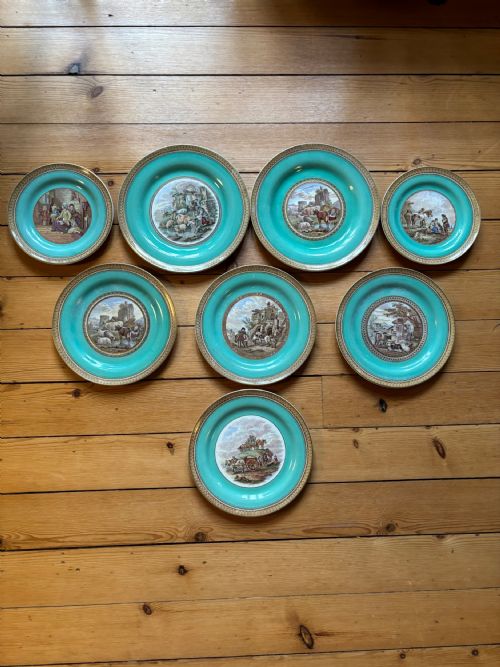
When you search for Victorian transfer printed plates, you encounter nineteenth-century earthenware and ironstone items decorated with monochrome blue scenes, ranging from large meat platters to domestic service pieces. The selection on this page leans heavily into nineteenth-century British production, featuring pictorial plates and blue and white serving dishes rooted in Staffordshire traditions.
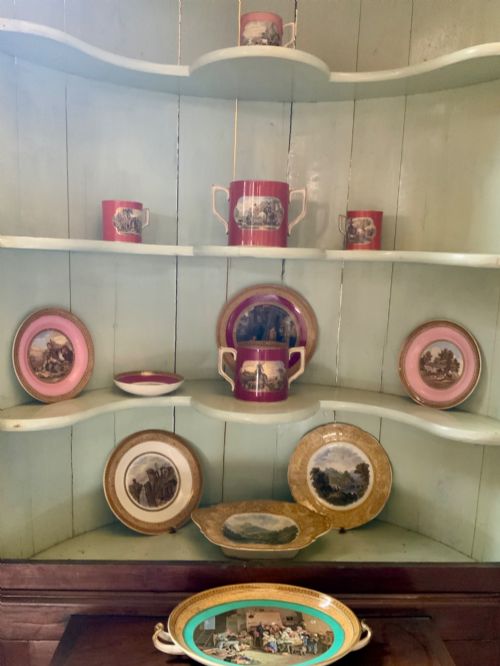
Most examples date across the nineteenth century, including pieces marked by Victorian Chinoiserie motifs and scenic views like the Chinese Garden pattern. Buyers routinely find individual meat plates alongside Prattware collections and paired items intended for display or traditional table use.
The forms vary between smaller pictorial plates and substantial platters designed for joint service. These ceramics capture a period of industrial domestic output where cobalt pigment under glaze dominated everyday dining rooms.
How they were made
Potters shaped earthenware and ironstone bodies before applying printed designs using prepared paper tissue pulled from engraved copper plates. This transfer method allowed workshops to replicate intricate pictorial scenes consistently across multiple vessels.
Cobalt pigment provided the deep blue coloration that workers sealed beneath a clear lead glaze before firing the ceramic in kilns. Gold leaf occasionally highlights specific details on select nineteenth-century pieces, adding a touch of contrast to the standard blue and white palette.
Victorian Transfer Printed Plates Retail Price Guide 2026
Typical asking prices for victorian transfer printed plates among the pieces listed under this phrase on Sellingantiques today, from the lower quarter to the upper quarter. They describe what is for sale here now, not the wider market.
Some nineteenth-century diners preferred their meat platters large enough to hold an entire Sunday roast without spilling gravy onto the parlour linen.
Variations in quality
The clarity of the transfer print dictates much of the visual success, separating sharp, well-registered pictorial scenes from blurred or smudged impressions where the paper slipped during application. Finer pieces maintain crisp outlines across complex architectural or botanical borders without breaking pattern continuity.
The choice of ceramic body also distinguishes standard utility wares from superior productions, with dense ironstone and refined earthenware offering better durability and smoother glaze surfaces. Potteries achieved different levels of depth in their cobalt pigment, resulting in rich navy tones on better items compared to pale, greyish washes on simpler domestic plates.
English Staffordshire Prattware·Staffordshire
The Victorian Transfer Printed Plates Glossary
- Transferware
- Pottery decorated by transferring a printed design from an engraved copper plate to the ceramic surface via tissue paper. This technique enabled mass production of detailed pictorial scenes during the nineteenth century.
- Ironstone
- A heavy, durable type of earthenware patented in the nineteenth century to imitate Chinese porcelain. It provides a robust body for large meat platters and heavy-use plates.
- Prattware
- English earthenware associated with multicoloured underglaze printing, though nineteenth-century examples often align with broader Staffordshire blue and white traditions. Collectors prize these for their distinct palette and historical manufacturing techniques.
- Cobalt Pigment
- A metallic oxide used to achieve deep blue colouring under the glaze. It withstood high kiln temperatures without fading, making it the standard choice for nineteenth-century blue and white ceramics.
- Lead Glaze
- A glossy coating applied to pottery before firing to waterproof the porous earthenware body and intensify the printed design beneath. It gives vintage plates their characteristic smooth sheen.
Victorian Transfer Printed Plates: Frequently Asked Questions
What are transfer printed plates?
Transfer printed plates are nineteenth-century ceramics decorated by applying an ink design from an engraved copper plate onto the pottery surface using paper. This mechanical process replaced hand-painting for many domestic wares.
Potters then glazed and fired the pieces to seal the cobalt pigment permanently beneath a protective glassy layer.
How were these plates used?
These pieces served practical dining functions in nineteenth-century homes, holding roasted meats, side dishes, or everyday meals. Large platters accommodated joint service on the dining table.
Many pictorial plates also served decorative roles on dresser shelves or walls, displaying scenic views and orientalist patterns.
Can I use antique plates daily?
While durable ironstone and earthenware bodies remain structurally sound, centuries of wear mean modern dishwashers and microwaves can damage historic glazes and lead content. Hand washing preserves the nineteenth-century surface integrity.
Gentle daily use is possible if you handle them carefully and avoid thermal shock from sudden temperature changes.
How do I date these plates?
Dating relies on stylistic clues like border patterns, backstamps where present, and the depth of the cobalt blue colour used in the transfer print. Early nineteenth-century pieces often feature heavier earthenware bodies and distinct Chinoiserie motifs.
Later Victorian examples shift towards standardised ironstone weights and different pictorial compositions reflecting changing domestic tastes.