

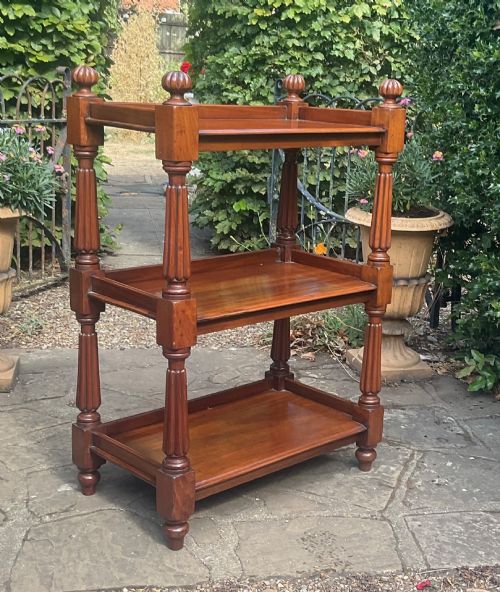

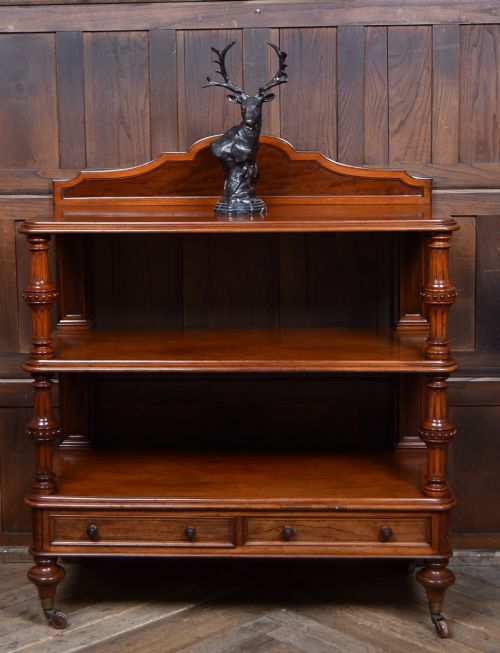
Victorian Tiered Shelf Stand
Victorian tiered shelf stand pieces offer functional multiple levels for display, originating from nineteenth century workshops in forms like whatnots and étagères.
Victorian Tiered Shelf Stand
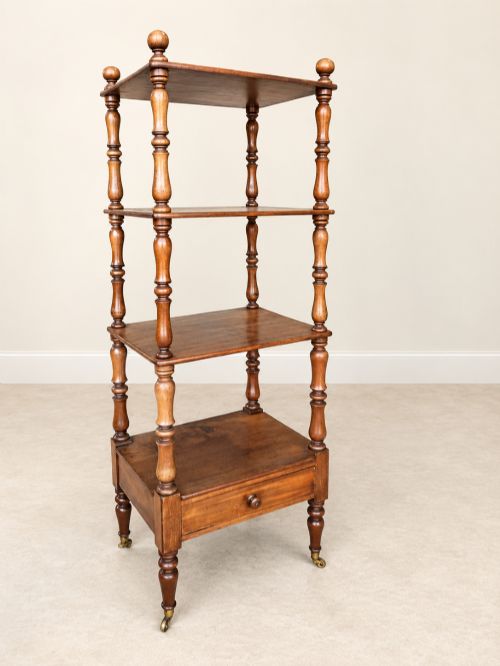
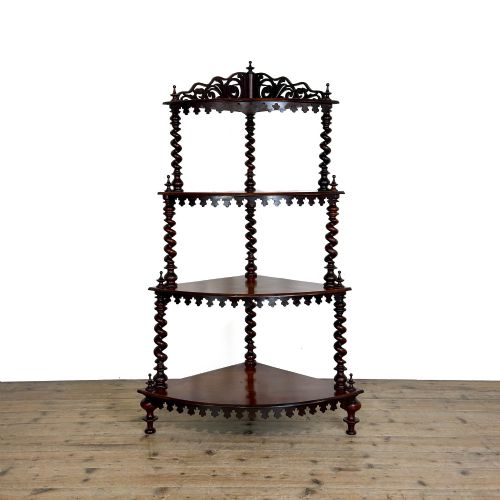
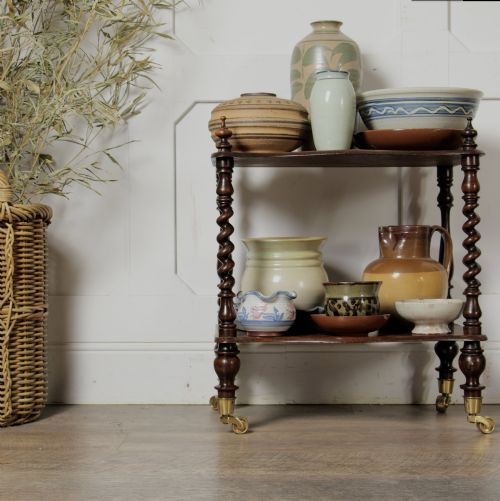
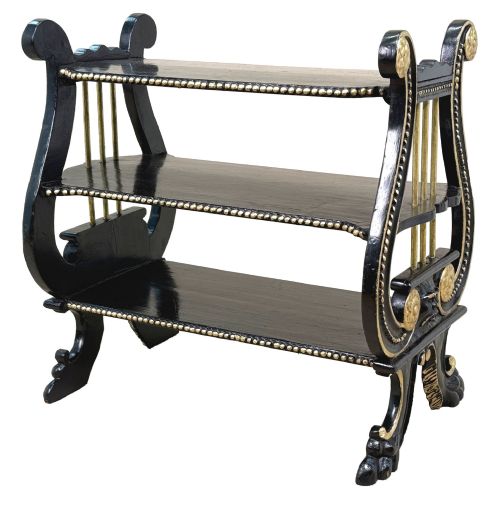
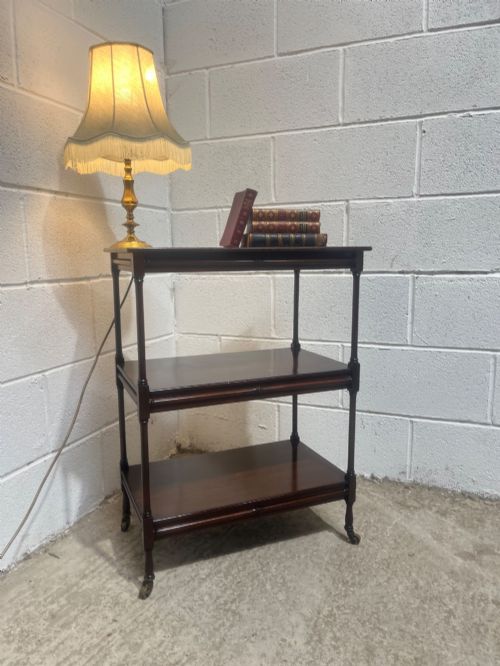
A Victorian tiered shelf stand brings vertical display space to rooms through distinct multi-level tiers supported by turned columns or uprights. The form includes various nineteenth century formats such as corner whatnots, freestanding étagères, and multi-tiered buffets.
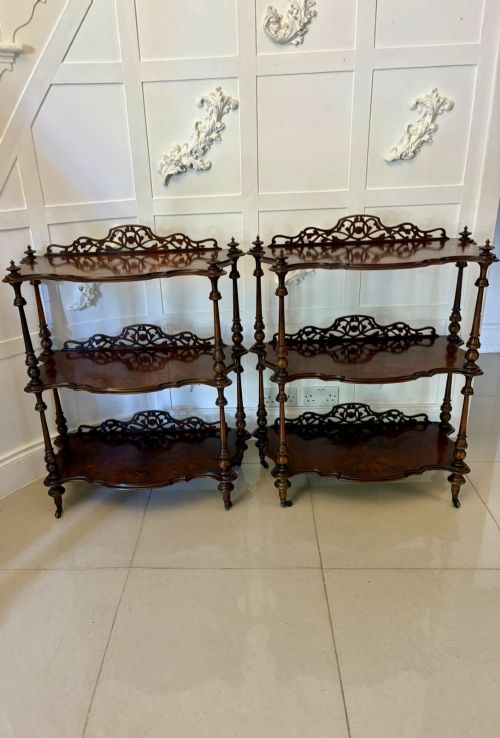
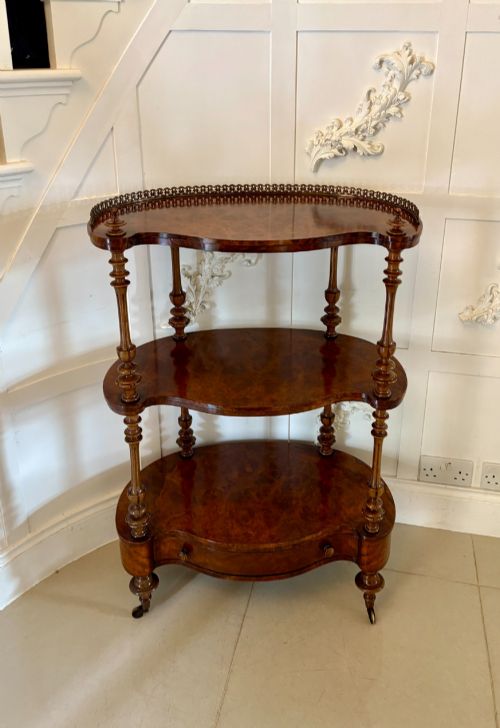
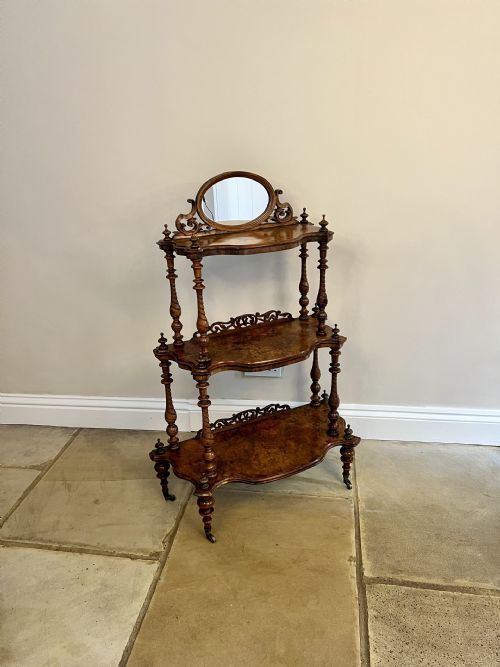
The most common examples on this page are mahogany and burr walnut whatnots dating across the Victorian period from eighteen fifty to nineteen hundred. These pieces frequently feature three or four shelves designed to hold books, ceramics, and decorative objects.
Materials and construction
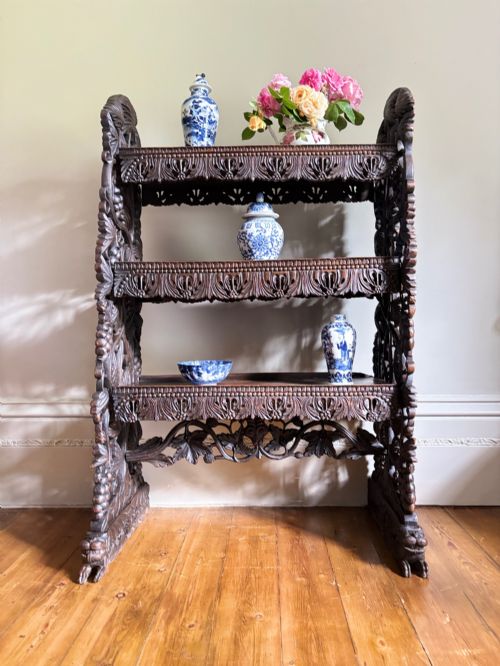
Cabinet makers utilised dense hardwoods including mahogany, walnut, burr walnut, and rosewood, alongside exotic timbers like padauk and teak. Ebonised wood and bamboo also appear, often paired with brass mounts, glass, and parcel gilding.
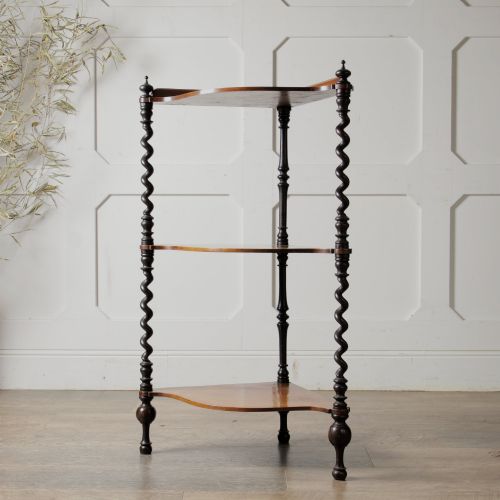
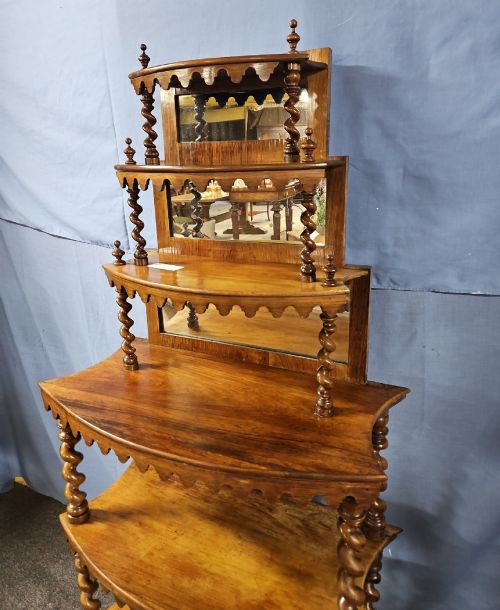
Joinery relies on solid timber frames and turned supports, including barley twist columns, supporting graduated tiers. Marquetry inlay, lacquer work, and fine turning demonstrate the technical skill applied during the nineteenth century.
Listings feature woods spanning mahogany, walnut, rosewood, teak, and bamboo across the nineteenth century.
Judging quality in tiered shelving
Quality rests upon the selection of timber veneers, such as richly figured burr walnut or straight-grained mahogany, and the crispness of the turning on the upright supports. Serpentine shaping to shelves and fine marquetry inlay separate standard utility pieces from exceptional cabinet work.
Structural integrity through rigid tier alignment and substantial brass or wood supports dictates the longevity of these tall items. The refinement of edge mouldings and the precision of joinery reveal the hand of a skilled nineteenth century workshop.
The Victorian Tiered Shelf Stand Glossary
- Whatnot
- A piece of furniture consisting of a set of open shelves for displaying small objects. This term is frequently used interchangeably with étagère in nineteenth century listings.
- Étagère
- A piece of furniture with a set of open shelves for displaying ornaments. Originating in France, these freestanding tiered display units became popular in Victorian drawing rooms.
- Canterbury
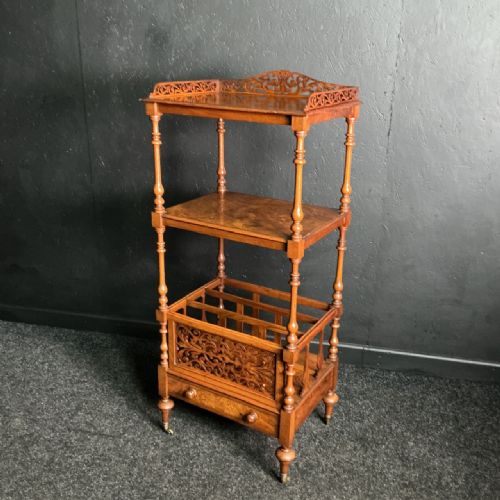
- A low stand with partitioned sections for sheet music or books, often combined with tiers or shelves above. Victorian examples frequently incorporate drawers or display platforms.
- Serpentine
- A curved line that is convex in the middle and concave at the ends. This shape appears on the front edges of superior quality shelves and cabinets.
- Ebonised
- Wood stained or painted black to imitate ebony. This finish was widely utilised in nineteenth century aesthetic movement and Victorian furniture.
Victorian Tiered Shelf Stand: Frequently Asked Questions
What is a Victorian tiered shelf stand used for?
These units provide open vertical shelving for holding books, ceramics, and decorative objects in living spaces. Nineteenth century households utilised them in parlours and drawing rooms to display ornaments.
They maximise floor space by building upwards, offering multiple tiers within a compact footprint. Today they serve the same practical display function in domestic interiors.
How do I distinguish a whatnot from an étagère?
A whatnot is typically a British term for multi-tiered shelving units used from the early nineteenth century onwards. They often feature corner formats or simple upright supports.
An étagère frequently implies a more decorative French influence with lighter proportions and elaborate open framing. Both terms describe tiered shelving but reflect slightly different stylistic origins.
Are these stands suitable for modern homes?
Their compact vertical design makes them practical for contemporary rooms requiring display space without a large floor footprint. The varied woods and forms integrate easily into traditional and modern interiors alike.
Placing them in corners or against walls provides stable platforms for plants, books, and collections. Their open construction keeps rooms feeling light while adding storage.