
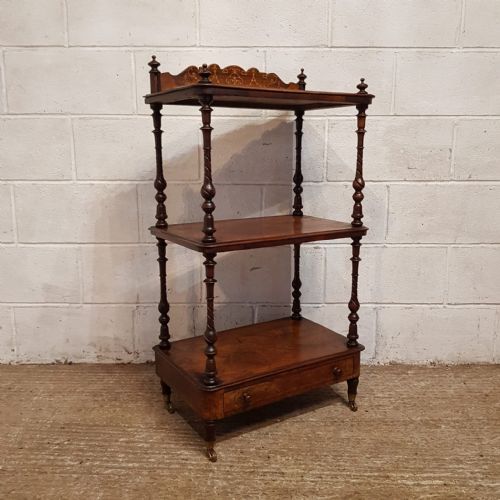
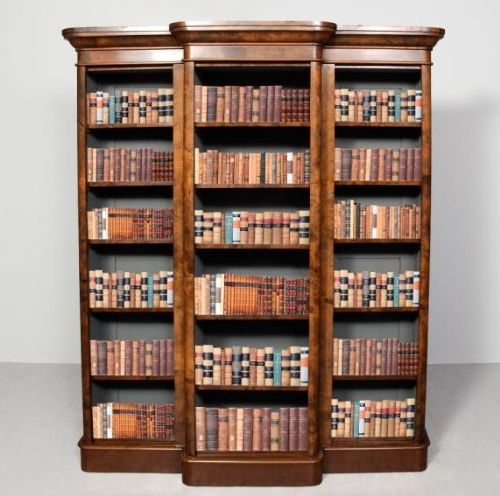
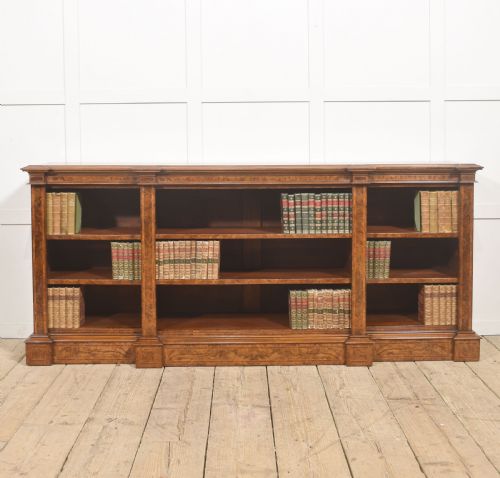


Burr Walnut Shelf Unit
A burr walnut shelf unit brings rich, swirling grain and tiered open storage to a room, offering both display space and architectural presence.
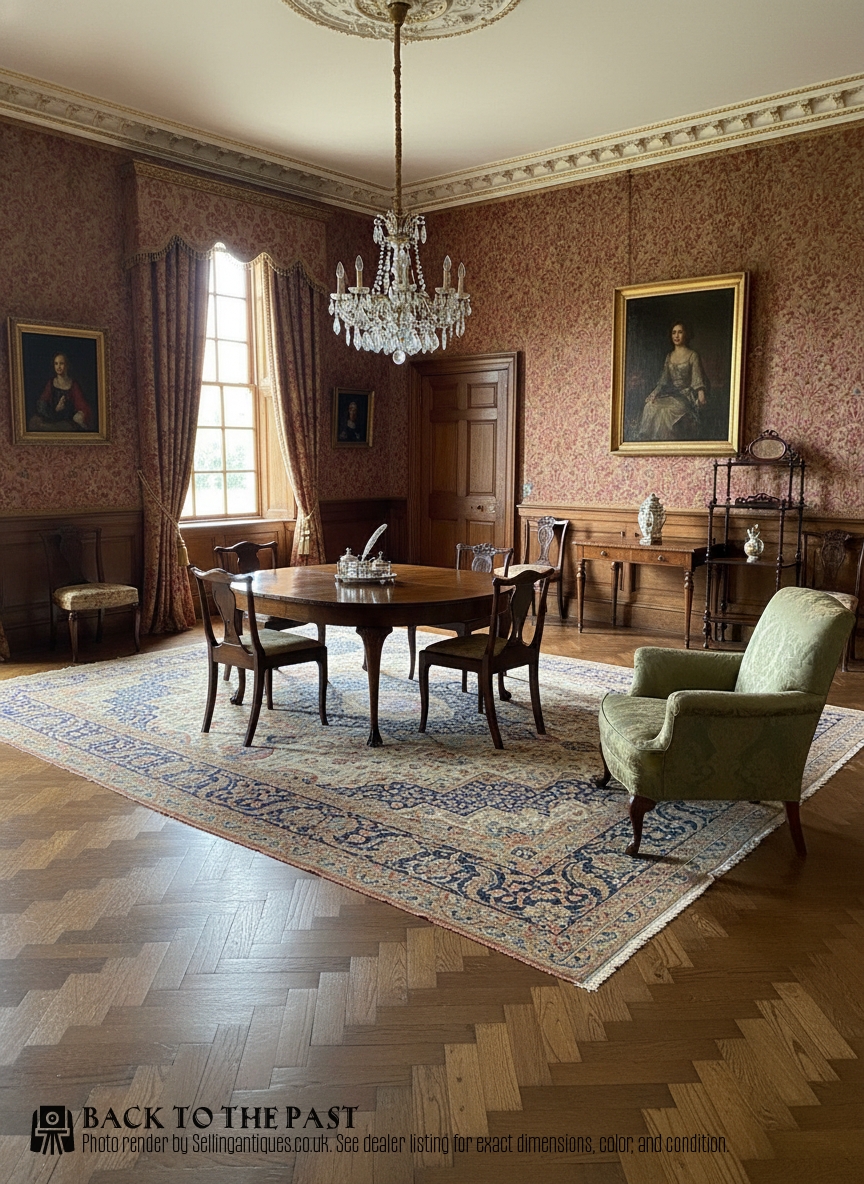
Burr Walnut Shelf Unit
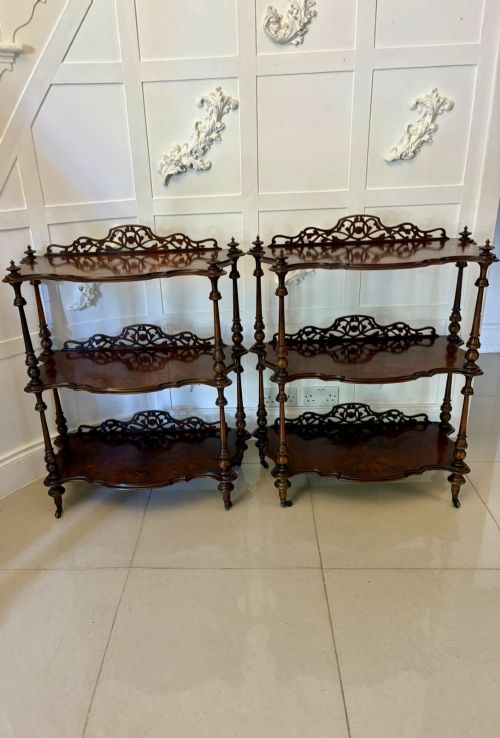
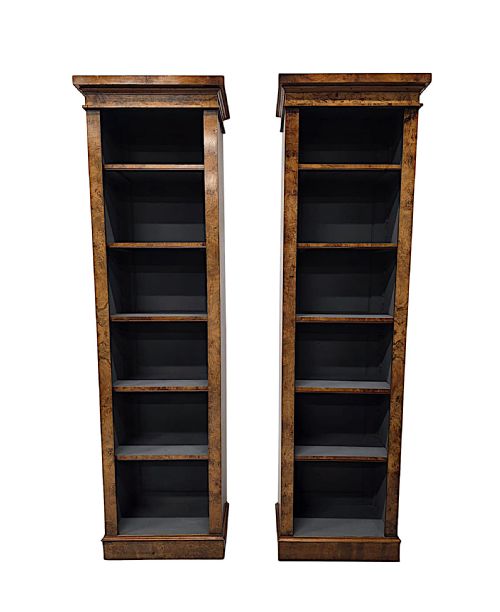
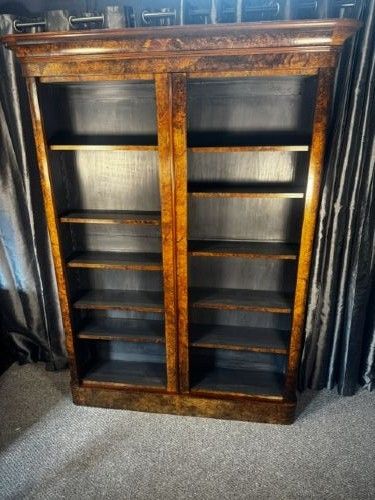
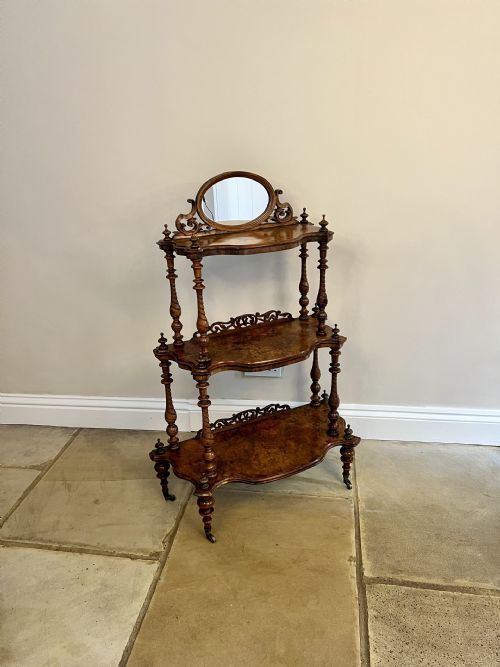
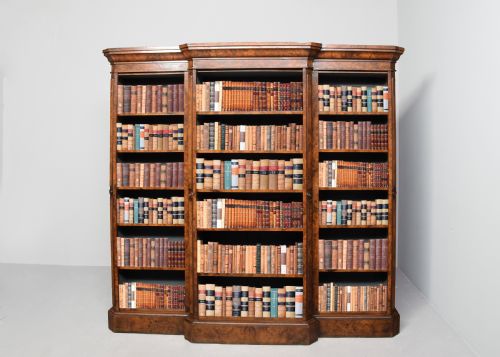
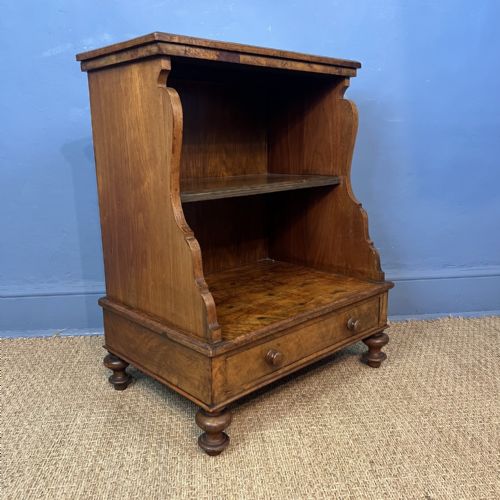
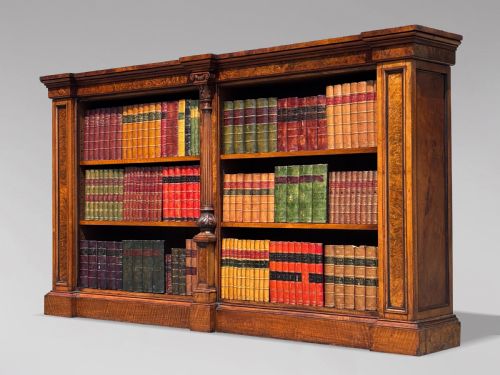
A burr walnut shelf unit covers open bookcases, breakfront bookcases, and tiered whatnots originating predominantly from the Victorian era, alongside examples from the early twentieth century. These pieces serve primarily for displaying books or decorative objects while introducing warmth through heavily figured wood.
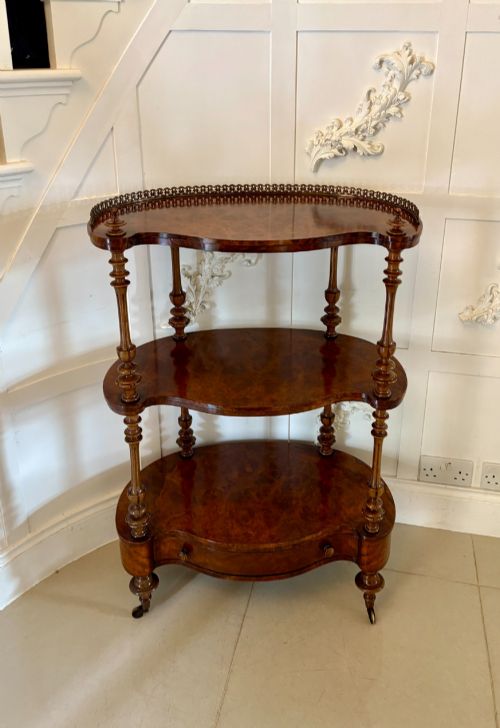
The versions most commonly found here include multi-tier whatnots, serpentine or corner models, and low open bookcases with adjustable shelves. Pieces span from the mid-nineteenth century through the 1930s, incorporating revival styles such as Queen Anne, Georgian, and Regency.
How they were made
Cabinet makers utilised timber, walnut, and burr walnut veneer applied over solid secondary woods to create striking grain patterns on flat surfaces and fronts. Marquetry inlay and ebonised details frequently appear alongside brass hardware and mirror glass panels.
Construction methods range from breakfront sectioning to freestanding multi-tier tiered frames, with adjustable shelving systems engineered into open bookcases and low cabinets.
Materials recorded across the selection include solid timber, walnut veneer, brass fittings, mirror glass, and figured burr walnut.
What varies in quality
Quality rests in the intensity and selection of the burr walnut veneer, where tighter, more varied grain configurations distinguish exhibition pieces from standard production. The crispness of carved details, marquetry precision, and the integration of serpentine or demi-lune shapes further elevate a piece.
Proportion and structural ambition also separate standard items from superior examples, such as freestanding multi-tier whatnots with fine turning, corner fitments, or three-section breakfront bookcases.
The Burr Walnut Shelf Unit Glossary
- Burr walnut
- A veneer sliced from walnut tree growths containing dense clusters of dormant buds, producing highly decorative swirling patterns. This grain type forms the primary visual draw on Victorian and later shelving furniture.
- Whatnot
- A tiered shelving unit designed for displaying ornaments, books, or small objects. These pieces often feature three or more tiers supported by turned columns or uprights.
- Breakfront
- A piece of furniture whose central section projects forward from the flanking wings. This configuration provides depth and architectural variation to open bookcases.
- Marquetry
- Decorative patterns formed by fitting together small pieces of veneer of different woods or materials. It appears on shelves and cabinet friezes to add ornamental contrast.
- Demi-lune
- A half-moon shape used for console tables, display tables, and corner-fitting shelving units. This profile allows furniture to sit flush against a wall while projecting a curved front.
Burr Walnut Shelf Unit: Frequently Asked Questions
What is a burr walnut whatnot?
A whatnot is a tiered open shelving stand designed to display decorative objects, porcelain, or books across multiple levels.
These pieces typically feature turned uprights and can be freestanding, serpentine shaped, or designed to fit neatly into a corner.
Where should I place a low open bookcase?
Low open bookcases suit living rooms, studies, and hallways where height restrictions prevent taller cabinetry from fitting comfortably.
Their accessible top surface also functions well for displaying lamps or decorative items alongside the books stored below.
What is the difference between a bookcase and an etagere?
A bookcase is primarily built for holding bound volumes on enclosed or open shelves, often with adjustable heights.
An etagere or whatnot leans more toward display, featuring open tiers intended for ornaments rather than heavy library storage.