





Victorian Tea Kettle Stand
A victorian tea kettle stand brings a heavy metal vessel and a matching burner together to hold heat at the tea table.
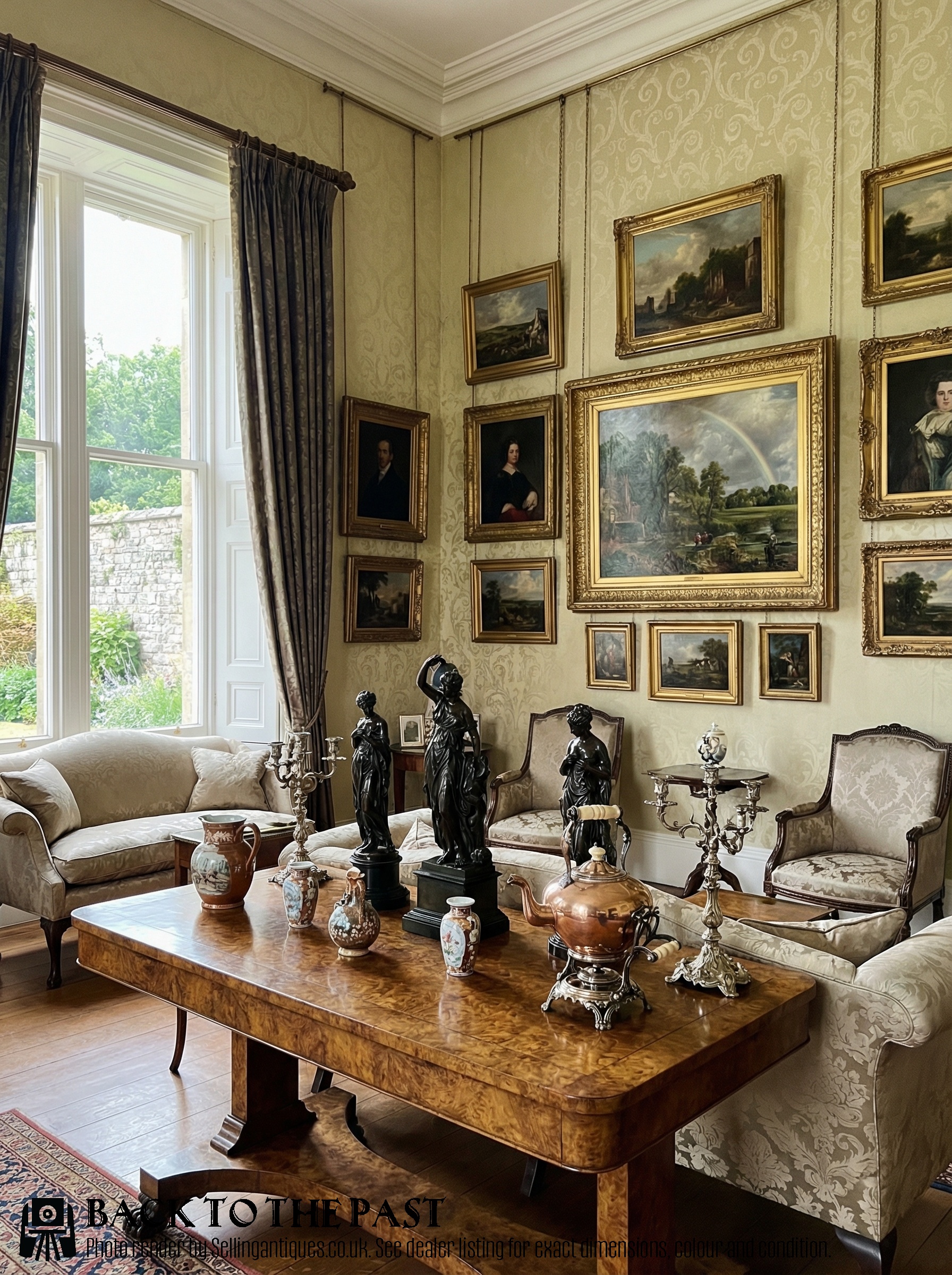
Victorian Tea Kettle Stand
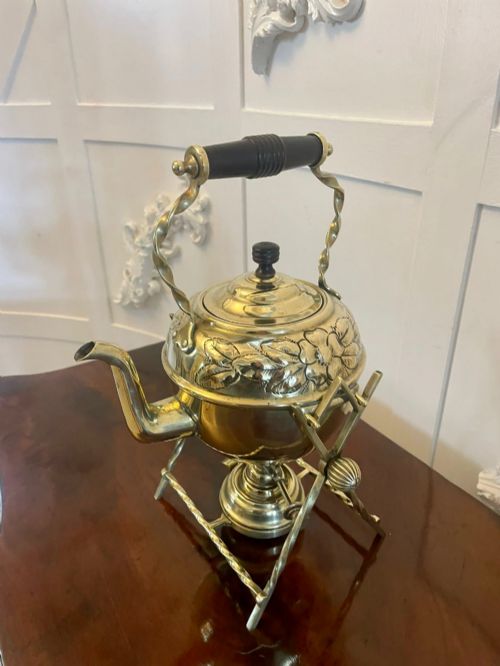
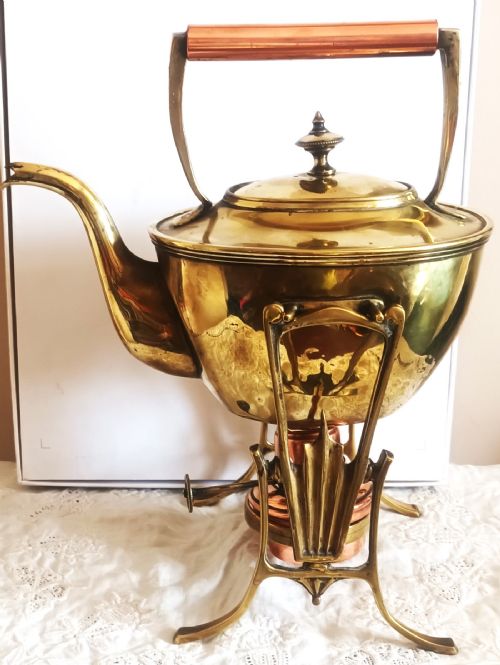
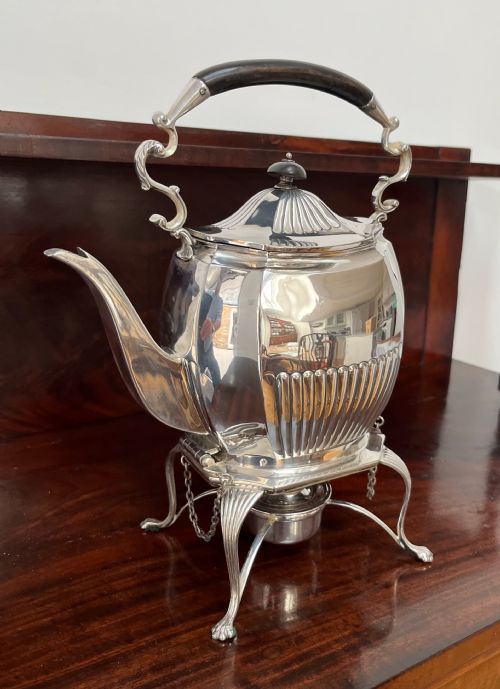
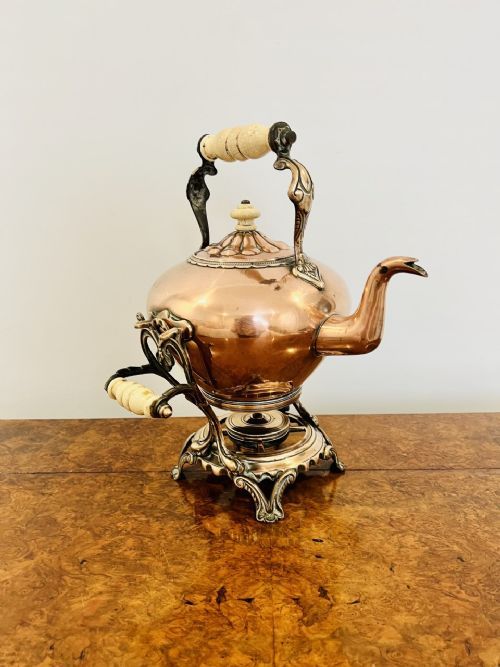
A victorian tea kettle stand combines a spirit kettle with a supporting frame and burner, designed to keep water hot during long sittings. The pieces you see span the nineteenth century and the Edwardian era, taking the form of spirit kettles, hanging kettles, and two-tier trivets.
Brass and copper examples dominate the earlier decades, often paired with wooden handles or bone insulators, while silver plated models emerge strongly around nineteen hundred. You will find standard table-standing frames alongside arts and crafts hanging variations and aesthetic movement designs.
Most entries pair the kettle directly with its original burner, though standalone trivets also appear in brass and wood configurations. The forms range from plain utilitarian frames to heavy dresser style mountings.
Materials and construction
Makers shaped the kettles and stands primarily from brass, copper, and silver plate, utilising wrought iron for certain hanging frames. Handles frequently incorporate insulating elements such as bone or ebony to protect the hand from heat.
Metal spinning, casting, and hand-beating determined the body of the kettle, while stands relied on soldered joints and forged metal rods. Burners sat centrally beneath the vessel within a fitted cradle or ring.
Materials recorded across the inventory include brass, copper, silver plate, wrought iron, wood, bone, and ebony.
Evaluating the standard
Quality rests in the weight of the metal and the integrity of the fitted joints between the kettle and its stand. Finer pieces show careful finishing on the burner components and sturdy framing that supports a full vessel without sway.
The presence of maker marks adds distinction, as seen in the work of established firms like William Soutter and Sons or Fenton Brothers. Decorative ambition also separates standard production from aesthetic movement or arts and crafts interpretations.
William Soutter and Sons·Fenton Brothers·Frederik Ellis Tim and Co
The Victorian Tea Kettle Stand Glossary
- Spirit kettle
- A water vessel mounted on a metal stand above a small alcohol or spirit burner. This setup maintained the water temperature for tea service in the parlour.
- Spirit burner
- A small container holding liquid fuel and a wick, placed beneath the kettle. It sits within the lower ring of the stand.
- Trivet
- A metal or wood stand used to elevate a kettle or teapot. Two-tier versions provide extra shelf space near the tea table.
- Aesthetic movement
- A late nineteenth century design style prioritising visual beauty over narrative meaning. Pieces from this movement often display refined surface treatments.
- Arts and crafts
- A design movement valuing visible handcraft and simple forms. Kettles in this style often use hammered copper and hanging frames.
Victorian Tea Kettle Stand: Frequently Asked Questions
What is a victorian tea kettle stand used for?
These assemblies kept water at a gentle boil during afternoon tea without requiring a trip back to the kitchen. The integrated burner provided steady heat throughout the gathering.
Hosts operated the tap on the kettle to top up individual teapots directly at the table.
How do I identify an Edwardian piece?
Edwardian examples often feature extensive silver plating alongside traditional brass and copper construction. They date from around nineteen hundred onward and share forms with late nineteenth century designs.
Stylistic shifts toward lighter ornamentation help distinguish them from earlier heavy Victorian models.
Are the burners safe to light?
Original burners are designed for liquid spirit fuel, but testing them requires caution due to their age. Many collectors treat them as decorative display components rather than functioning heaters.
Ensure the wick and fuel chamber are clean before attempting any demonstration use.
What is the difference between a kettle and a trivet?
A spirit kettle includes the water vessel and its dedicated heating stand as a combined unit. A trivet is simply the support frame or shelf, sometimes used independently to hold teaware.
Some listings group two-tier trivets alongside kettle stands due to their similar role in tea service.