



Silver Plated Hot Water Kettle
A silver plated hot water kettle brings warmth and traditional hospitality to a room, offering the elegance of period tea service without the weight of solid silver.
Silver Plated Hot Water Kettle
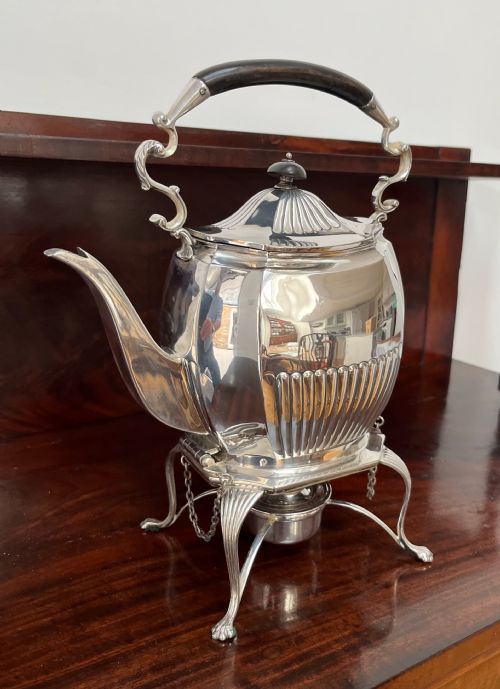
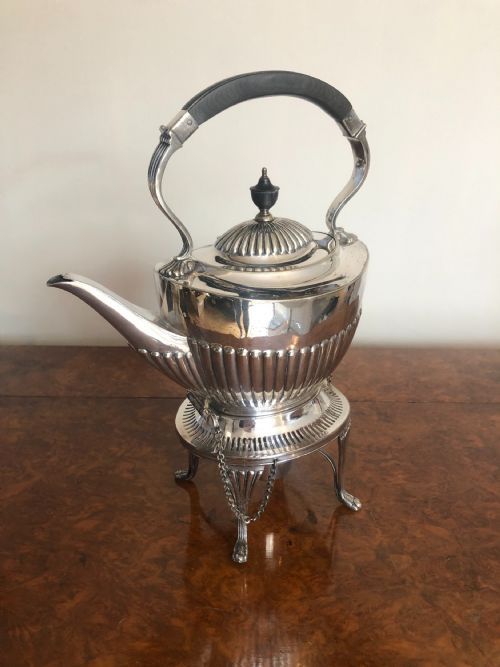
A silver plated hot water kettle is typically found in Edwardian and Victorian designs, often mounted on a dedicated stand complete with its original spirit burner. These items formed part of grand tea services, providing a constant supply of hot water during formal gatherings.
The selection here encompasses spirit kettles, tea urns, and samovars alongside related teaware. Pieces range from Regency examples through to the 1930s, reflecting changing domestic rituals across multiple decades.
How they were made
Manufacturers utilised silver plate over base metals, including nickel silver and Old Sheffield plate, achieving the lustrous appearance of solid silver through electroplating or fused plating techniques. Workshops such as Walker & Hall applied these durable surfaces to sturdy metal bodies.
Handles and insulators incorporated materials like ebony, bone, and ebonised wood to prevent heat transfer during use. These organic elements provide tactile contrast against the reflective silver plated surfaces.
Materials recorded across the inventory include silver plate, nickel silver, ebony, bone, and ebonised wood.
What varies in quality
Quality rests in the harmony of the complete ensemble, specifically whether the kettle, stand, and burner survive together as a matching set. Finer examples display crisp casting on the mounts and substantial gauge metal that maintains its structural integrity.
The refinement of the decorative engraving and the presence of documented maker marks distinguish standard production items from superior workshop output. Maker attribution adds historical context to the physical construction.
Walker & Hall·Frederik Ellis Tim & Co
The Silver Plated Hot Water Kettle Glossary
- Spirit kettle
- A portable water vessel mounted above a small fuel burner, designed to keep water hot at the tea table. These units sit within metal frames that allow the vessel to tilt or lift off for pouring.
- Samovar
- A large heated urn traditionally used to boil and heat water for tea. Victorian examples often feature a central internal tube for fuel and a tap near the base.
- EPNS
- Electroplated nickel silver, a common base material introduced in the nineteenth century for silver plated wares. It provides a strong, durable foundation for the outer layer of silver.
- Old Sheffield plate
- An early form of plating created by fusing a sheet of silver to a copper base before fabrication. This technique produces a rich surface quality characteristic of Regency and earlier pieces.
- Ebonised wood
- Timber treated to imitate ebony, commonly utilised for kettle handles and insulators. This dark finish resists heat and complements the bright metalwork.
Silver Plated Hot Water Kettle: Frequently Asked Questions
How do I use a spirit burner?
The burner holds a small amount of methylated spirit or similar fuel, which is lit to maintain the temperature of the water inside the suspended kettle.
Regulating the flame allows you to keep the water at a simmer throughout a tea service without needing to return to the kitchen.
Are these kettles safe for daily use?
While these items are historically functional objects, many collectors choose to display them rather than use them with modern heat sources.
If you intend to heat water, ensure the interior lining remains clean and intact, though old silver plate requires gentle handling.
What is the difference between a samovar and a spirit kettle?
A samovar is typically a larger urn operated with a tap for dispensing water, whereas a spirit kettle is a smaller vessel on a stand designed to tilt for pouring.
Both served the same practical purpose of providing hot water during extended social gatherings.
How do I identify the period of a kettle?
Dating relies on stylistic markers such as Edwardian ornamentation, Victorian proportions, or Regency manufacturing methods like Old Sheffield plate.
Maker marks and stamps stamped into the base also provide clues to the exact era of production.