



Victorian Tea Canister
These Victorian tea canisters bring period storage and display into daily rooms, offering solid silver and painted tin built for dry leaf preservation.
Victorian Tea Canister
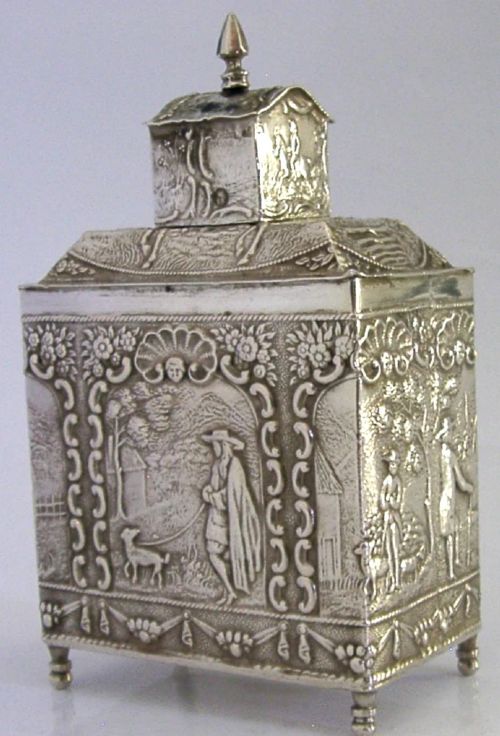
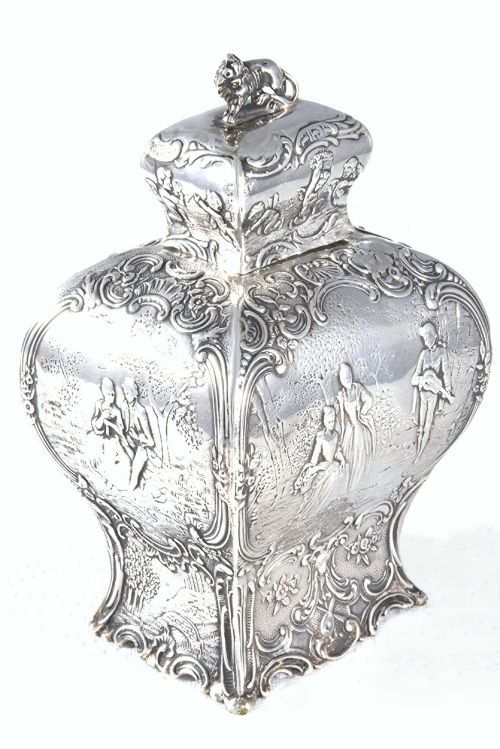
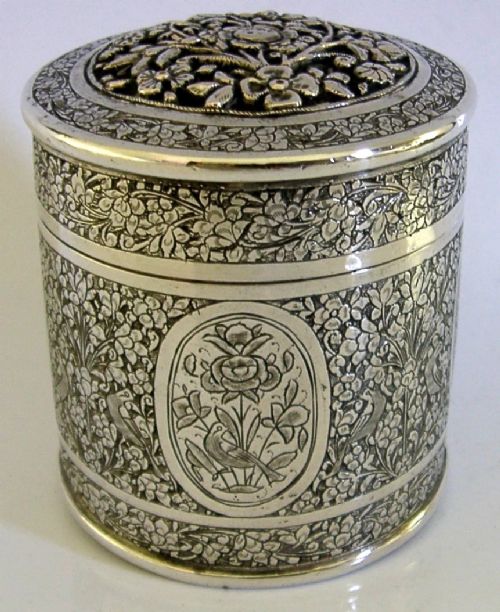
A victorian tea canister serves as a domestic storage box for dried leaves, taking forms from simple rectangular tins to elaborate bombe silver boxes. Buyers searching this phrase meet everything from humble shop canisters to refined parlour caddies designed to lock away costly tea.
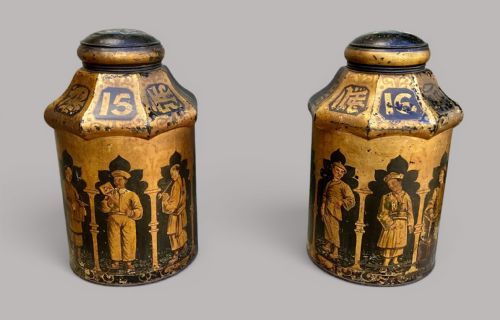
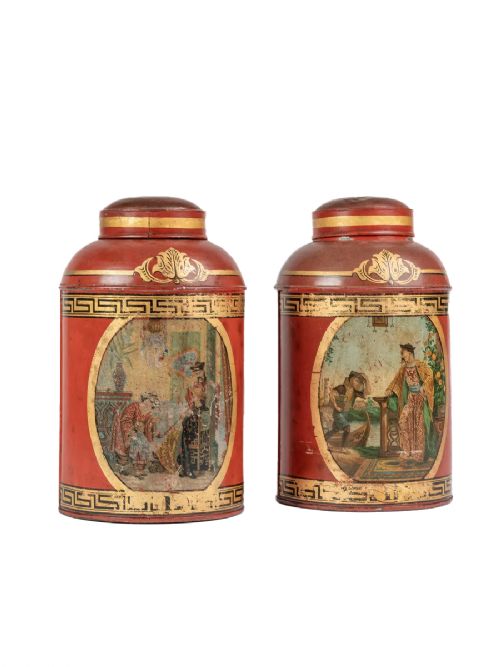
Metalwork dominates the selection, featuring sterling silver, silver plate and black toleware painted with Chinoiserie decoration. Alongside these sit timber versions built from rosewood, burr maple and flame mahogany, sometimes inlaid with Tunbridge Ware mosaic work.
Functional variants include double compartment boxes, table lamps converted from canisters, and cylindrical or hexagonal porcelain vessels. The period output spans simple kitchen wares and highly decorated dressing or drawing room containers.
Materials and construction
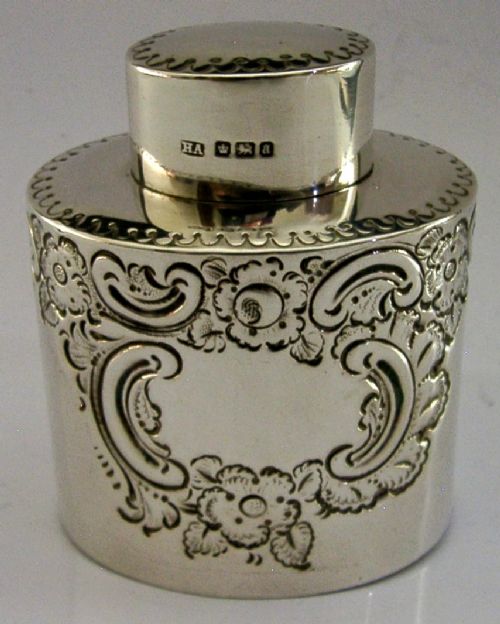
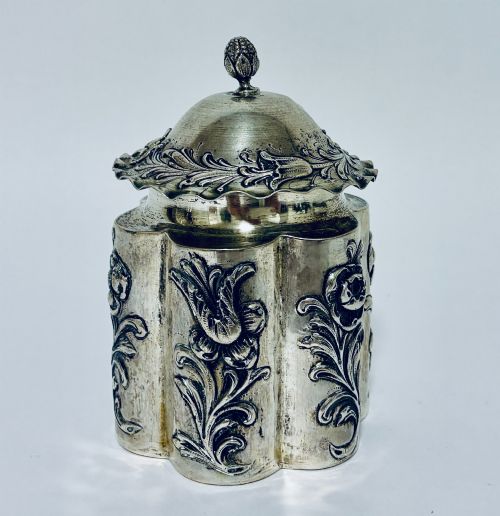
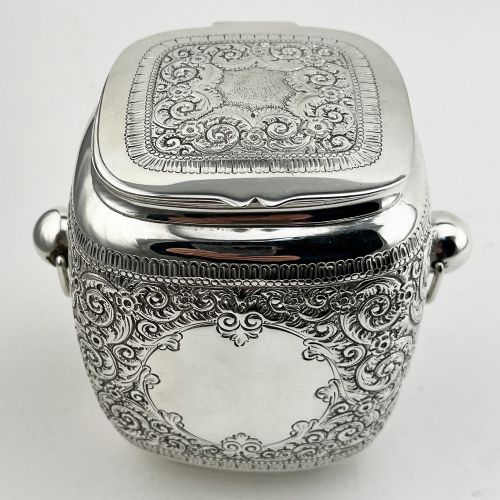
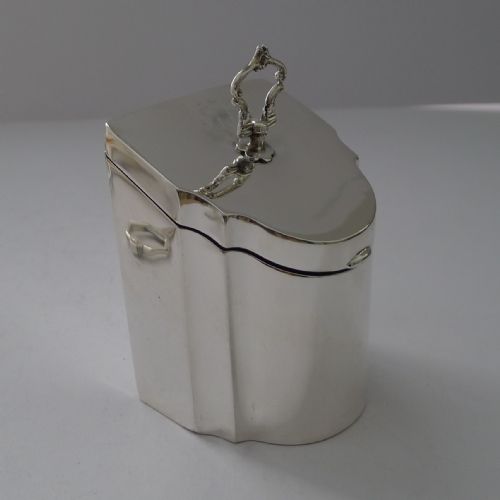
Silver items rely on sterling grade metal, shaped by hammering, casting and repousse embossing to form hinged lids, pull-off tops and decorative cartouches. Makers applied silver plate over base metals to achieve a similar lustre at lower cost.
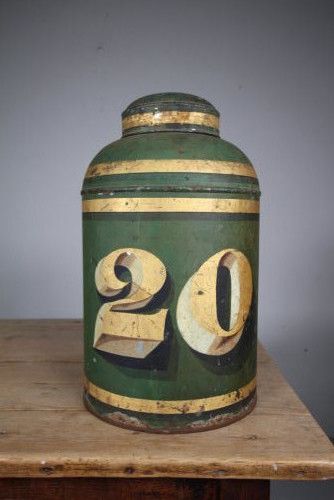
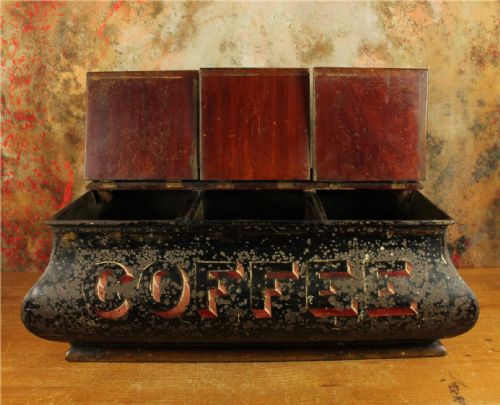
Toleware pieces utilise sheet tin or tinplate coated in dark paint and finished with hand-applied gilt Chinoiserie motifs or floral scenes. Wooden boxes employ dense hardwoods like rosewood and coromandel, strengthened with brass bindings or intricate wood mosaics.
Some nineteenth-century grocers utilised decorative painted tin boxes so brightly patterned that customers bought them just to keep biscuits.
Assessing quality
Metal thickness and gauge define the upper tier of silver canisters, where heavy hand-wrought bodies resist denting and hold crisp repousse detail. Simpler plated items or thin tinplate sit lower on the scale, relying solely on surface finish.
Surface preservation separates standard examples from exceptional ones, particularly on painted toleware and fragile wood mosaics where original gilding and tight joints remain intact. Internal fittings, including original foil linings or multiple internal canisters, elevate a piece above altered survivors.
Martin Hall And Co·Henry Hollamby·Atkin Brothers·William Hutton·William Comyns·Deakin And Francis
The Victorian Tea Canister Glossary
- Toleware
- Painted or japanned metalware, usually tinplate, decorated with lacquer or gilt motifs. It gained popularity in the nineteenth century for household storage containers.
- Tunbridge Ware
- Woodworking specialty using tiny mosaic tesserae of naturally coloured woods to create pictorial or geometric designs. It appears on nineteenth-century rosewood boxes.
- Chinoiserie
- European interpretation of Chinese artistic traditions, shown in gilt landscapes and figures painted on black backgrounds. It decorates many nineteenth-century tole canisters.
- Bombe
- Swelling, convex furniture or container profile curving outward toward the base. Victorian silversmiths utilised this shape to create curved caddy bodies.
Victorian Tea Canister: Frequently Asked Questions
How do I date a silver canister?
Check the interior or rim for assay office hallmarks, date letters and sterling marks. These stamps provide the exact year of manufacture and the city where testing occurred.
Stylistic cues like embossing depth and lid construction also point to the correct decade.
Were these used for actual tea?
Tea canisters served as primary storage for dry leaves when tea was an expensive commodity. Many contained internal compartments or fitted lids to preserve aroma.
Some larger examples later served commercial grocers or coffee shops before entering domestic rooms.
How should I clean painted tin?
Dust painted toleware gently with a dry microfibre cloth to protect fragile gilt and lacquer layers. Avoid abrasive liquids or modern cleaning chemicals that strip original finishes.
Wax polish can protect the surface if applied sparingly with a soft cloth.
What is the difference between a caddy and a canister?
The terms often overlap, though caddy traditionally refers to a partitioned box holding loose tea inside a larger container. Canister denotes a standalone vessel designed to hold the leaf directly.
Both functioned to store dry goods in nineteenth-century interiors.