


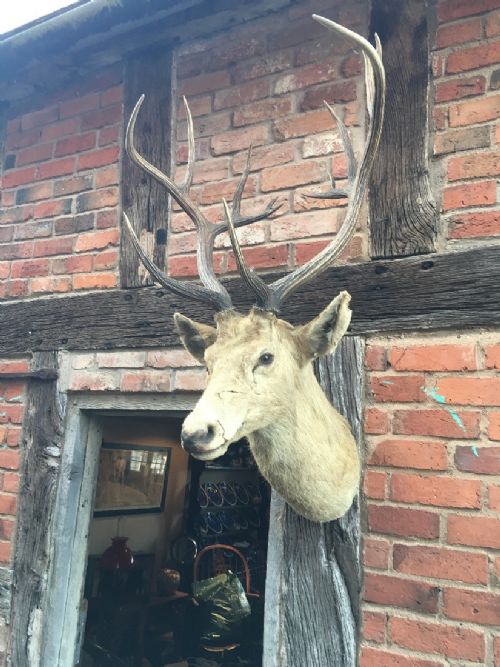
Victorian Taxidermy Head
These Victorian taxidermy head pieces bring nineteenth-century natural history and sporting tradition directly into modern interiors as striking wall mounts.
Victorian Taxidermy Head
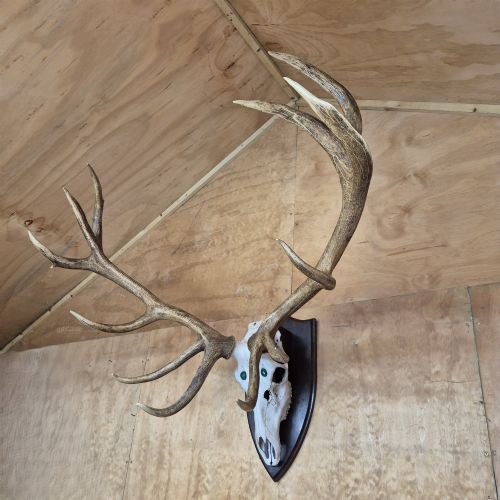
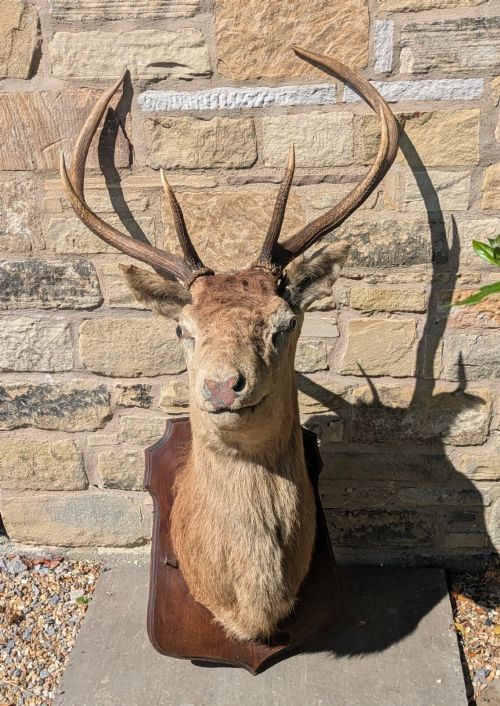
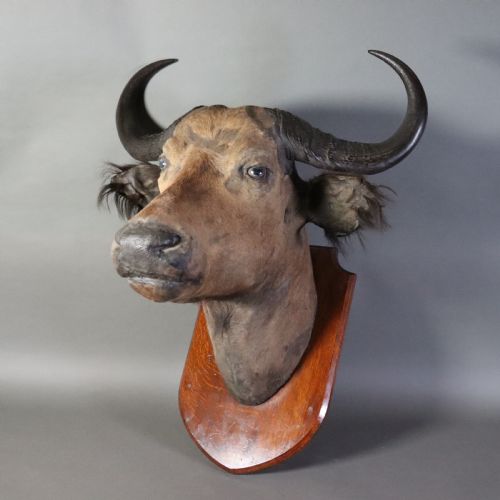
A Victorian taxidermy head represents the pinnacle of nineteenth and early twentieth-century preservation, encompassing both British sporting subjects and exotic specimens from global explorations. When searching for a Victorian taxidermy head, buyers encounter everything from modest roebuck and red stag mounts to formidable African buffalo and Nile crocodile trophies. Many examples take the form of wall decor, featuring animals fixed to carved oak shields or timber panels designed for display.
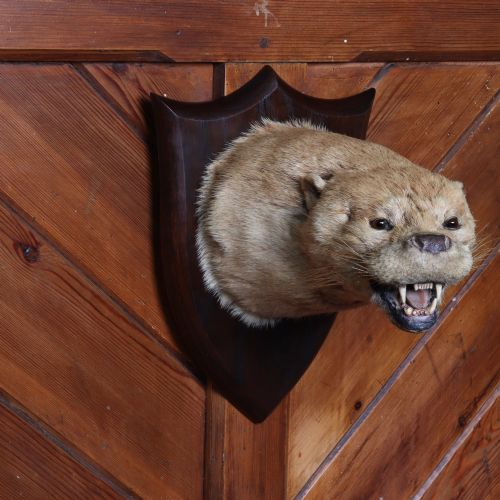
The selection ranges across several decades, touching both the Victorian era and the Edwardian period with later pieces extending into the 1920s and 1930s. Alongside traditional stags and rams horns, collectors find specialised items like otter masks and fox hounds mounted by notable practitioners. These mounts serve as historical documents of period sporting culture and domestic interior ornamentation.
Evaluating Quality
Quality in a taxidermy head rests upon the anatomical accuracy and the lifelike expression achieved by the taxidermist during preservation. Superior examples maintain the natural contours of the animal without distortion of the hide or unnatural positioning.
The craftsmanship of the supporting woodwork also distinguishes finer pieces, particularly where carved oak shields or detailed timber mounts complement the specimen. Attributed works by established makers demonstrate superior skill in both skin preparation and final assembly.
Listings feature periods spanning from the Victorian era through the Edwardian period, extending into the 1920s and 1930s.
Peter Spicer & Sons·Gerrard & Sons London·Edward Gerrard & Sons·Rowland Ward of London·James Gardner
The Victorian Taxidermy Head Glossary
- Taxidermy
- The art of preserving, stuffing, and mounting the skins of animals for display. This practice evolved significantly during the nineteenth century into a sophisticated craft.
- Shield
- A wooden backing board, often carved from oak, upon which animal heads and antlers are mounted for wall display. It provides structural support and an aesthetic border.
- Mask
- The head and facial portion of an animal preserved as a trophy, commonly applied to foxes and otters in British sporting taxidermy. These smaller mounts were frequently displayed on timber plaques.
- Antlers
- The deciduous bony appendages shed and regrown by cervids, appearing on red stag, roebuck, and caribou mounts. Point counts and spread measurements often define their scale.
- Natural Hide
- The untreated or preserved skin and fur of an animal used in mounting specimens. Its condition reflects the longevity and storage history of the piece.
Victorian Taxidermy Head: Frequently Asked Questions
How should I hang a heavy taxidermy head?
These wall mounts require secure fixings into solid masonry or substantial wall studs to support the combined weight of the timber shield and specimen. Using appropriaterawl plugs and heavy-duty screws ensures the piece remains safely suspended.
Position the mount at eye level where the structural integrity of the wall can bear the downward load of the timber backing.
What is the difference between a stag and a roebuck mount?
Red stags are substantially larger deer with complex, multi-pointed antlers, whereas roebucks are a smaller species with shorter, more upright antlers.
Stag mounts generally dominate a room due to their scale, while roebucks offer a more compact profile suitable for smaller wall spaces.
How do I care for historical taxidermy hide?
Keep mounted specimens away from direct sunlight and damp environments to prevent the natural hide and fur from drying out or degrading. Gentle dusting with a soft brush helps maintain the surface without damaging delicate hairs.
Avoid using chemical cleaners or water on the skin, as traditional preservation methods can react poorly to moisture.
What defines Edwardian taxidermy compared to Victorian pieces?
Edwardian taxidermy shares many techniques with the preceding Victorian era but often reflects shifts in sporting fashions and interior design preferences up to the 1930s. The treatment of timber shields and the choice of species can indicate this transition into the twentieth century.
Both periods utilised similar mounting methods involving glass eyes and carved wood, making provenance or maker marks key for precise dating.