



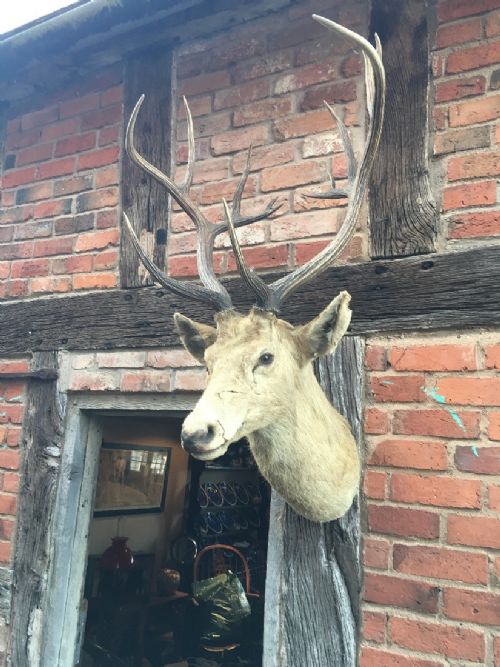
Mounted Deer Head
A mounted deer head brings the character of the Victorian study or Highland lodge straight onto your wall.
Mounted Deer Head
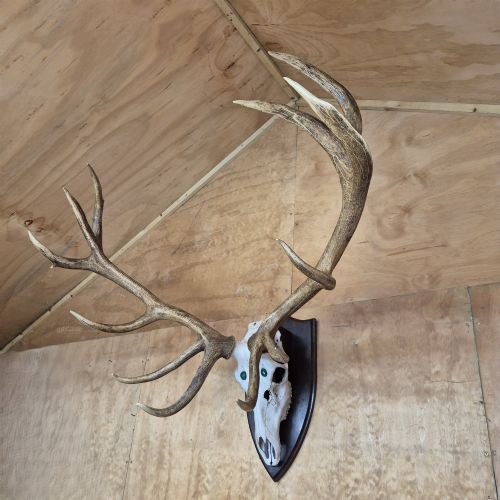
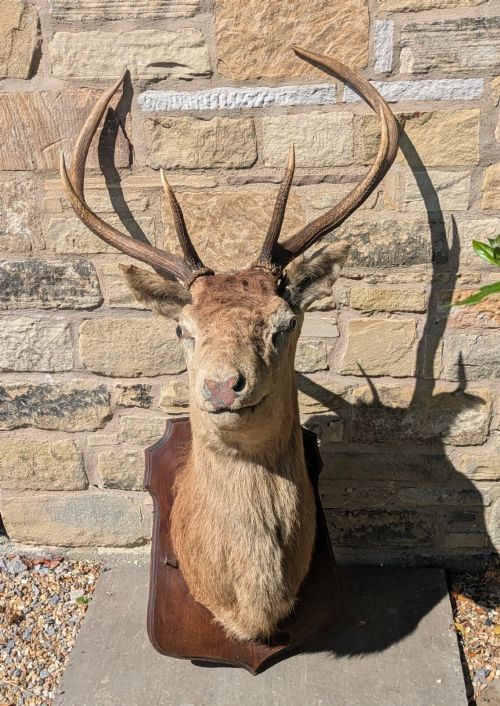
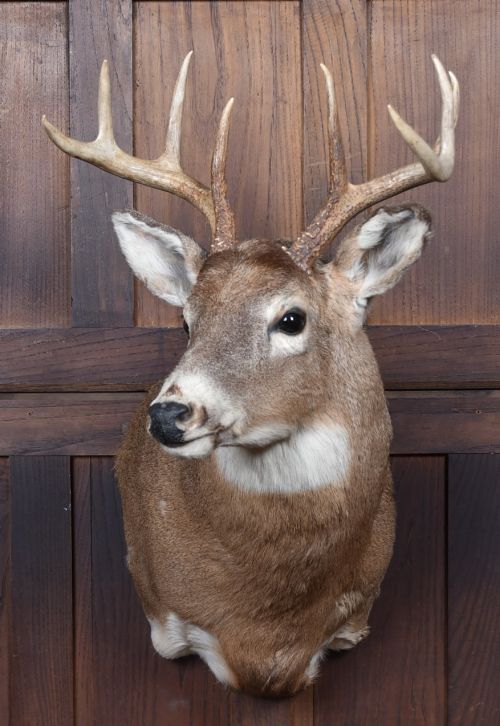
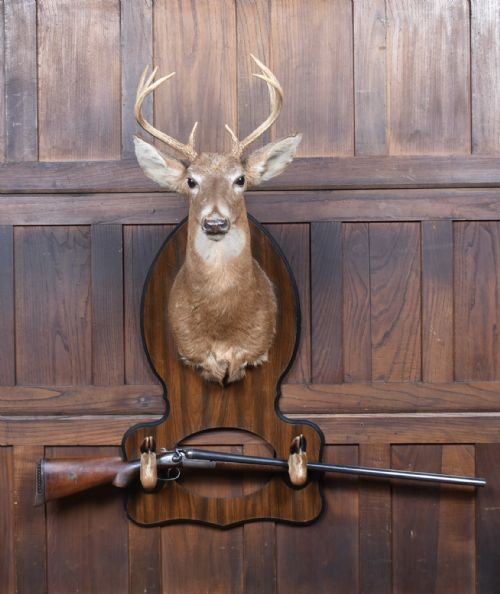
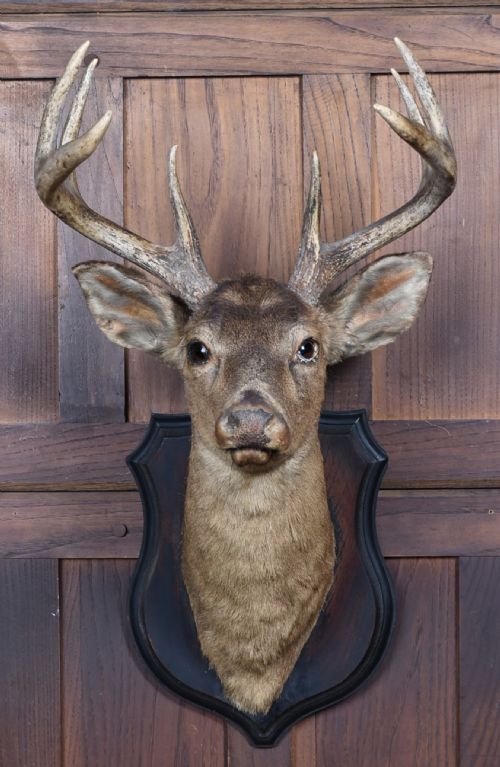
A mounted deer head encompasses traditional taxidermy wall mounts and carved wooden trophies from the nineteenth and twentieth centuries. These pieces typically present red deer, roebuck, or whitetailed deer arranged on wooden shields or plaques.
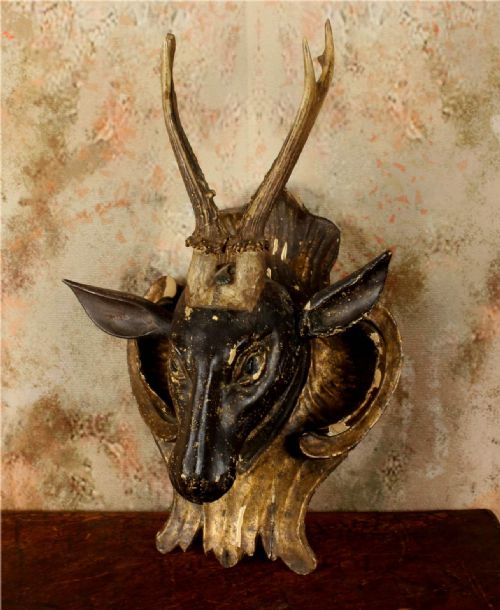
The selection ranges from grand twelvepoint royal stags down to smaller roe deer heads and folk art interpretations. Highland lodge and Black Forest styles predominate, reflecting nineteenth and early twentiethcentury hunting and forestry traditions.
Wall sculptures and inkstands also appear alongside standard taxidermy mounts, offering alternative ways to display antlers and carved wood. Most specimens date from the Victorian, Edwardian, and interwar periods.
Materials and construction methods
Taxidermy mounts combine natural hide and real antlers with internal forms, preserved and mounted onto wooden backing shields. Oak and carved wood provide sturdy support for heavy antlers while framing the head against the wall.
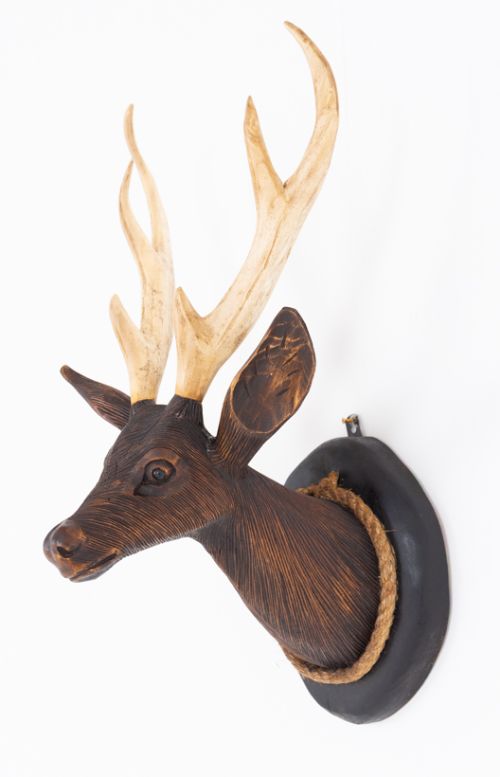
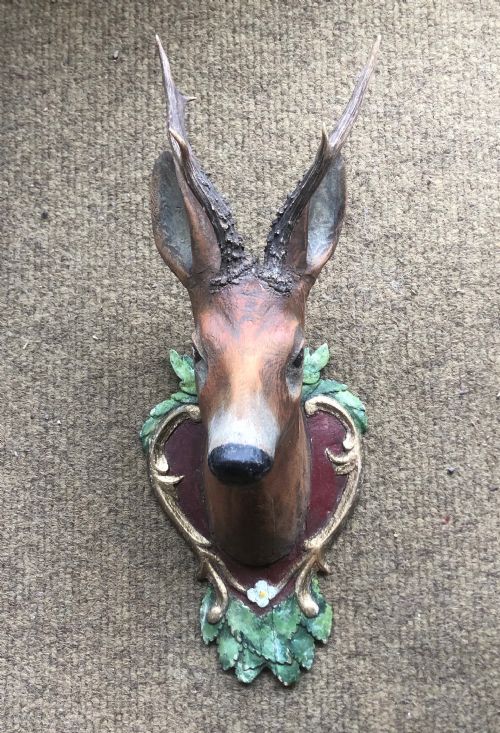
Carved wooden examples utilise solid timber shaped by hand to imitate natural antler and bone. Paint and glass occasionally feature, adding realistic eye details or decorative finishes to folk art pieces.
A Swedish painted folk art deer brings a dash of rustic charm to the wall, complete with hand-painted character.
Assessing quality in taxidermy and carvings
Quality rests upon the naturalism of the taxidermy work and the anatomical accuracy of the form. Skilled taxidermists capture alert expressions and correct posture, whereas lesser pieces appear stiff or disproportionate.
The carving skill on the wooden shields and the symmetry of the antlers dictate the overall visual impact. Richly carved oak shields with deep relief work elevate the status of the piece significantly.
The Mounted Deer Head Glossary
- Taxidermy mount
- The art of preserving and displaying an animal carcass in a lifelike state. These specimens form the core of historical wall trophies.
- Shield
- The wooden plaque or backing board upon which a head or set of antlers is mounted. Oak is frequently utilised for this structural element.
- Black Forest style
- Carved woodwork originating from central Europe known for naturalistic foliage and animal motifs. Pieces in this style often feature deeply carved wooden heads.
- Folk art
- Utilitarian or decorative objects made by self-taught artisans using traditional local methods. Swedish painted examples sit within this broad category.
- Point
- An individual branch or tine on a deer antler. Counting these points helps determine the maturity and status of the stag.
Mounted Deer Head: Frequently Asked Questions
What periods do these wall mounts come from?
The pieces span the nineteenth century, the Edwardian era, and into the 1920s and 1930s. Victorian and Edwardian examples often display the traditional taxidermy methods of their respective decades.
Later pieces from the interwar period maintain similar Highland lodge aesthetics but utilise slightly different preservation techniques.
How should I clean and maintain taxidermy hide?
Gentle dusting with a soft brush keeps the fur free from debris without damaging the preserved hide. Avoid direct sunlight and excessive moisture to prevent the materials from drying out or degrading.
Keeping the mount in a stable room environment ensures the longevity of both the taxidermy and the wooden shield.
What is the difference between taxidermy and carved wood pieces?
Taxidermy mounts utilise the actual skin, fur, and natural antlers of the animal combined with a prepared form. Carved wood pieces are entirely sculpted from timber by artisans as artistic representations.
Both styles served as hunting trophies or interior decor in traditional Highland and Alpine lodges.