





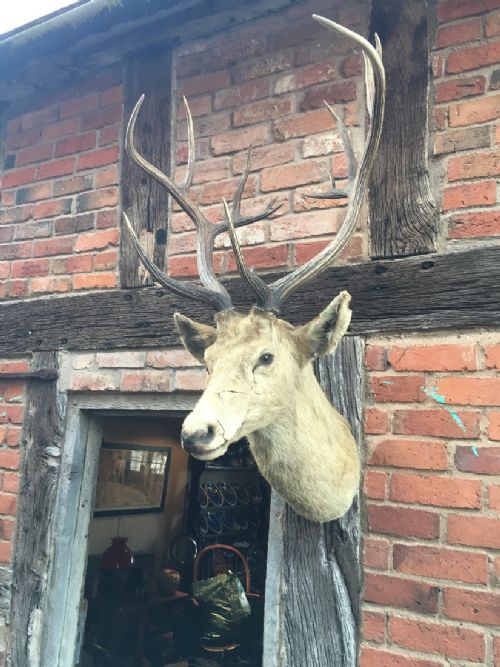
Natural Stag Antlers
Natural stag antlers bring the rugged spirit of the Scottish Highlands and alpine lodges directly into interior spaces through authentic nineteenth and early twentieth century taxidermy and carved horn objects.
Natural Stag Antlers
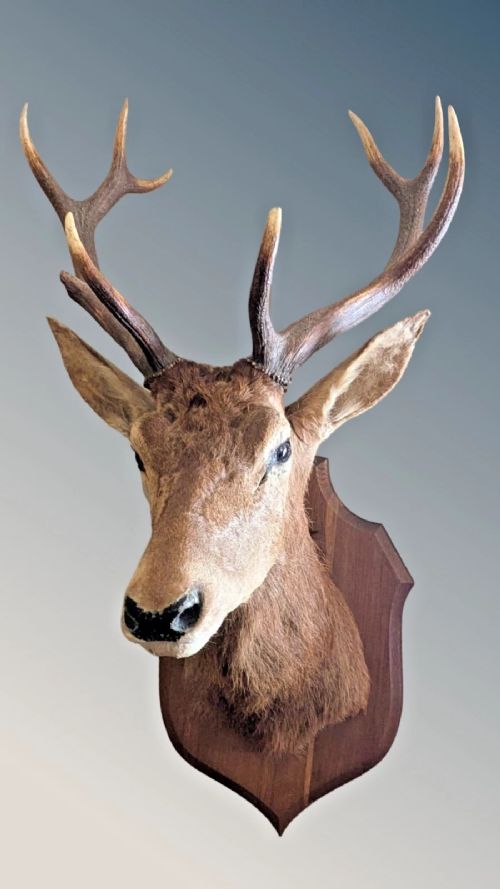
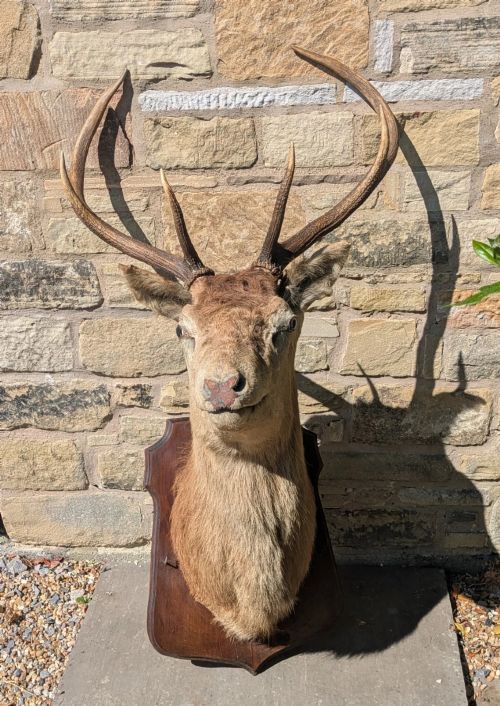
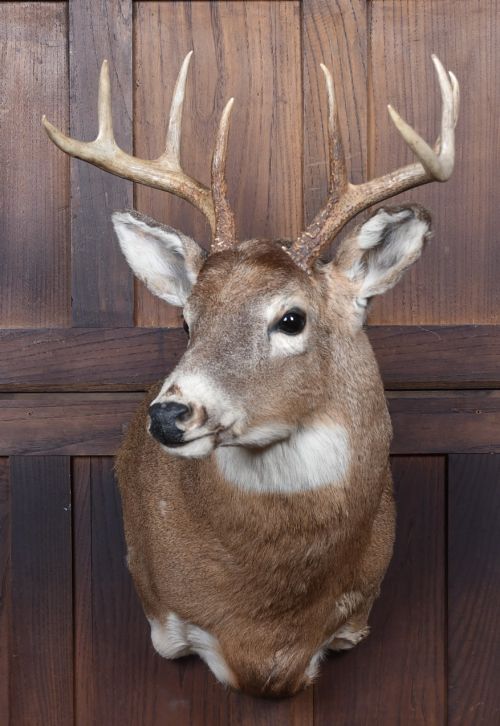
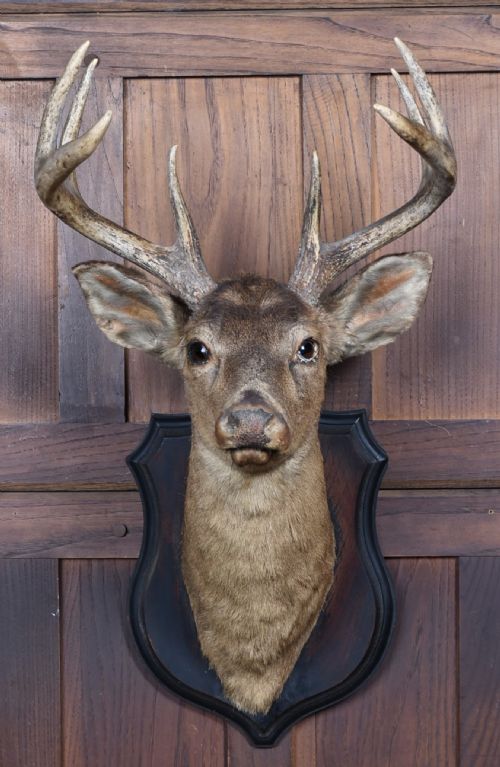
Natural stag antlers encompass taxidermy mounts, armchairs, chandeliers, wall decor, and small carved items that capture the essence of Highland Country House and Victorian hunting lodge aesthetics. When searching for natural stag antlers, buyers encounter everything from grand red deer wall mounts to functional furnishings and intricately carved accessories.
The selections span distinct periods ranging from the mid-nineteenth century through the 1930s, including Victorian, Edwardian, and Meiji period craftsmanship. Wall mounts dominate the offerings, often presented on carved wooden shields alongside specialised lighting and seating constructions.
How they were made
Craftsmen utilised organic materials such as raw antler, bone, and hide, frequently pairing them with solid woods like oak for structural support and mounting shields. Antlers were selected for point counts and symmetry, then meticulously fitted into complex domestic objects like armchairs, chandeliers, and games boards.
Carving techniques appear on smaller items like parasol handles and cribbage boards, demonstrating detailed manipulation of horn alongside traditional taxidermy mounting methods for heads and shields.
Natural Stag Antlers Retail Price Guide 2026
Typical asking prices for natural stag antlers among the pieces listed under this phrase on Sellingantiques today, from the lower quarter to the upper quarter. They describe what is for sale here now, not the wider market.
Object forms range widely from grand taxidermy wall mounts and chandeliers to small cribbage boards and parasol handles.
What varies in quality
Quality rests upon the symmetry and scale of the antler points, such as desirable twelve-point sets, alongside the integrity of the taxidermy preservation and the complexity of the object form. Superior examples show careful proportion in constructed pieces like armchairs and chandeliers rather than simple utilitarian assembly.
The depth and precision of carving on secondary elements, such as oak shields or horn handles, distinguish standard decorative items from finer works originating from Victorian lodges and the Black Forest tradition.
The Natural Stag Antlers Glossary
- Taxidermy
- The art of preparing, stuffing, and mounting the skins or horns of animals for display. This technique preserves the anatomical presence of stags for interior wall decoration.
- Antler
- The shed or harvested bony growth born by members of the deer family. These natural formations serve as both structural framing and decorative surface material.
- Shield
- A shaped wooden board used as a backing plate for wall-mounted antlers and taxidermy heads. Carved oak versions provide a traditional display platform.
- Chandelier
- A branched hanging light fixture. Antler chandeliers utilise the natural branching of red and roe deer antlers to create rustic illumination.
Natural Stag Antlers: Frequently Asked Questions
How do I hang a heavy antler mount?
Heavy taxidermy mounts require secure fixing directly into wall studs using heavy-duty brackets to support the substantial weight of the antlers and wooden shields.
Ensuring proper wall anchorage protects both the historic piece and the surrounding plaster during display.
What periods do these pieces come from?
The available pieces originate primarily from the Victorian era through the 1930s, encompassing nineteenth-century Highland styles and early twentieth-century lodge decor.
Each period reflects distinct approaches to taxidermy preservation and antler furniture construction.
How should I clean natural antler items?
Dust natural antlers gently with a soft, dry cloth to remove surface particles without damaging the organic material or taxidermy mounts.
Avoid liquid cleaners and excessive moisture, which can degrade old bone, hide, and wooden shields.
Are these items from the Scottish Highlands?
Many pieces reflect Highland Country House and Victorian hunting lodge traditions, celebrating traditional deer stalking culture from Britain and continental Europe.
The aesthetic focuses on preserving the natural form of red deer and roe buck antlers within domestic settings.