





Oak Mounted Taxidermy
These oak mounted taxidermy pieces bring the atmosphere of the Victorian and Edwardian country house straight to your wall.
Oak Mounted Taxidermy
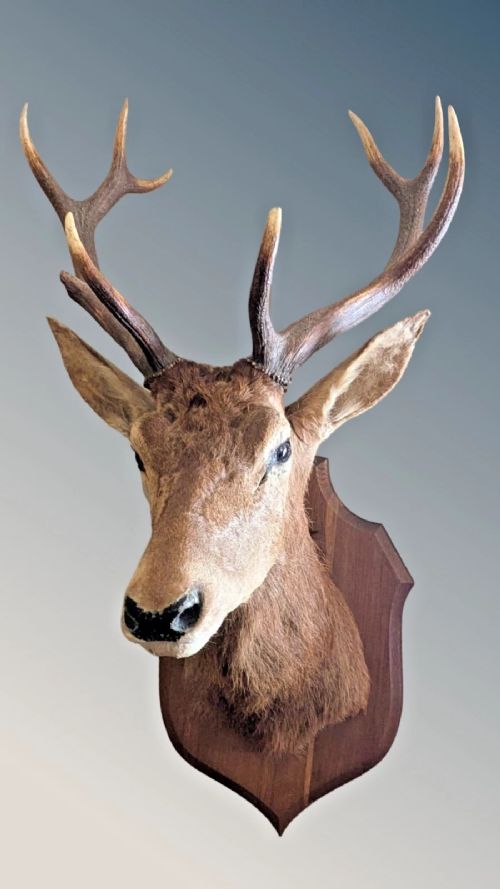
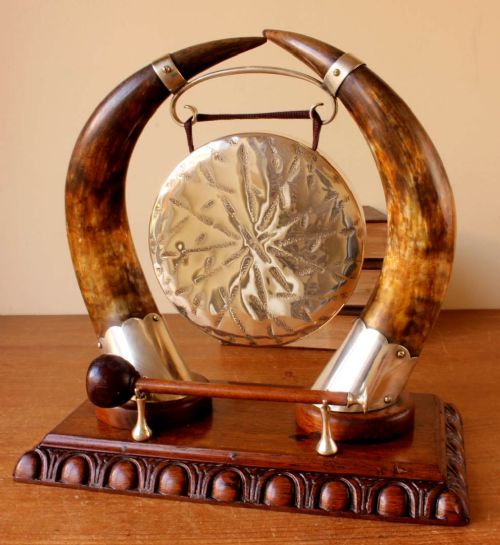
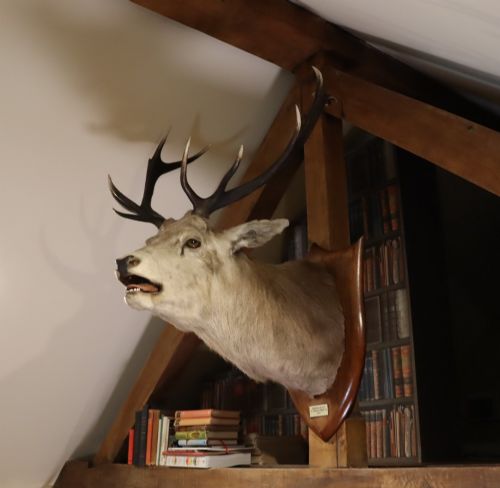
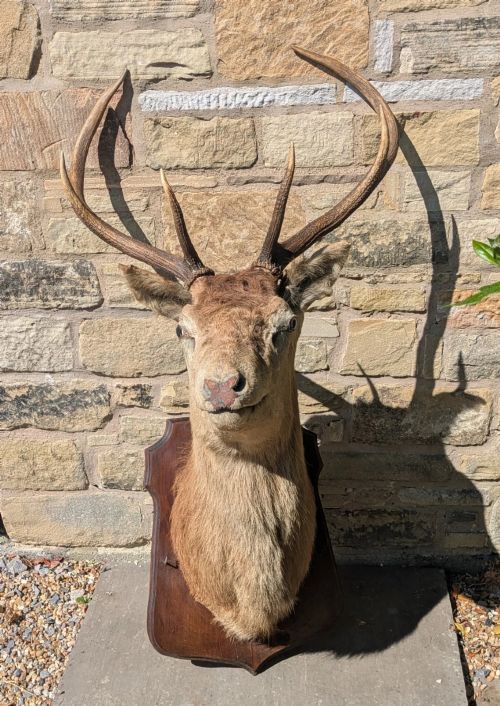
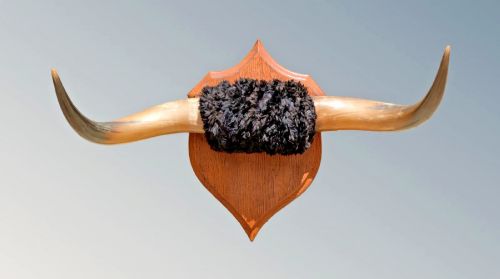
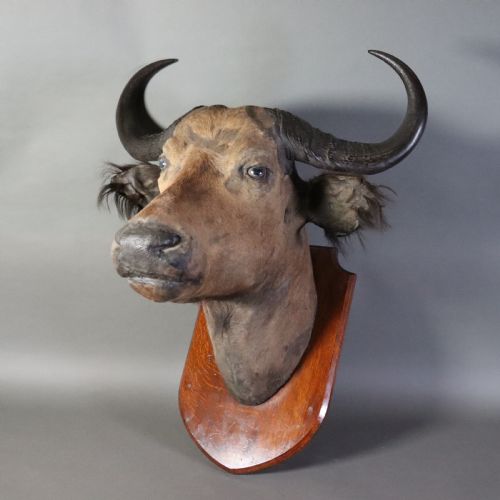
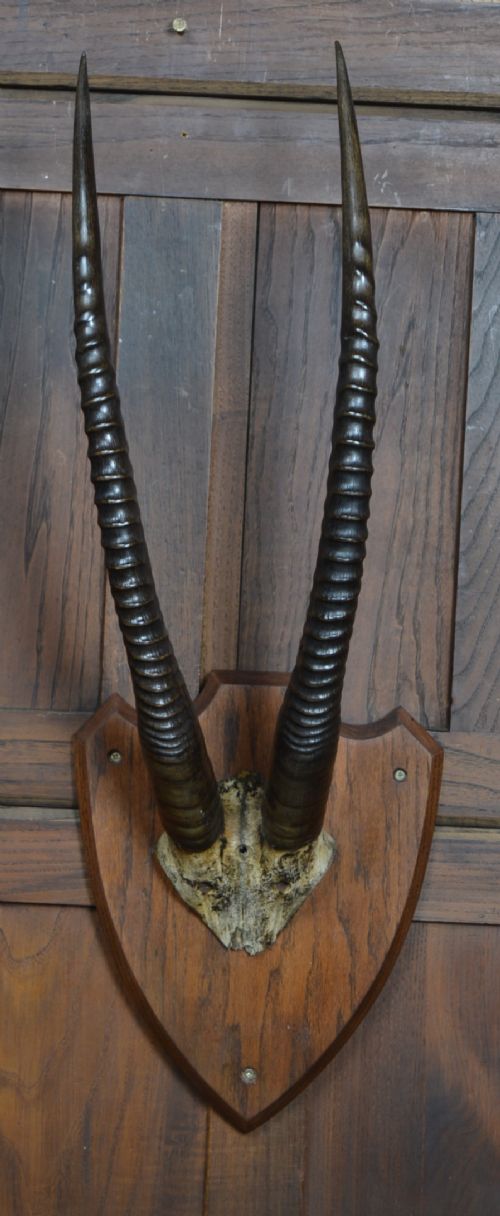
When you search for oak mounted taxidermy, you encounter a distinct genre of sporting decoration that ranges from substantial red deer stags to individual roe deer, fox masks, and horns. The forms include standard wall mounts, dinner gongs, coat racks, and shields supporting bovine horns or antlers.
You are most likely to meet pieces originating from the late nineteenth century through to the mid-twentieth century, with styles spanning Victorian Sporting, Edwardian, and Highland Lodge traditions. These works reflect a long-standing British interior aesthetic centred on field sports and natural history.
How they were made
Makers fixed animal hides, antlers, horns, and entire heads onto carved or panelled wooden shields using metal fixings. Oak serves as the primary support material across the selection, often accompanied by glass, natural fur, and deer hide.
Specialist taxidermists shaped the mounts to emulate natural postures while securing the specimens firmly to solid timber backs. Details such as silver plate are occasionally integrated into functional items like dinner gongs.
Oak Mounted Taxidermy Retail Price Guide 2026
Typical asking prices for oak mounted taxidermy among the pieces listed under this phrase on Sellingantiques today, from the lower quarter to the upper quarter. They describe what is for sale here now, not the wider market.
Object types recorded across the selection include wall mounts, dinner gongs, coat racks, and horn displays on carved shields.
What varies in quality
Quality rests upon the lifelike modelling of the taxidermy and the sculptural depth of the supporting carved oak shield. Superior examples maintain the natural expression and form of the animal without distortion.
The distinction between standard mounts and exceptional pieces also involves the prestige of the workshop and the symmetry and scale of the horns or antlers.
Peter Spicer & Sons·Gerrard & Sons London
The Oak Mounted Taxidermy Glossary
- Taxidermy mount
- A preserved animal specimen prepared and positioned for display, typically fixed to a rigid backing for wall hanging. These range from single horns to complete heads.
- Oak shield
- A wooden wall plaque shaped like a heraldic shield, used as the mounting base for stags' heads, horns, and roe deer. Carving on the timber often enhances the decorative impact.
- Dinner gong
- A percussion instrument formed of a metal disc or shell suspended within a wooden or horn frame, frequently utilising bovine horns mounted on oak.
- Fox mask
- The head and upper neck skin of a fox preserved and mounted as a hunting trophy, often fixed to a small wooden shield.
- Antlers
- The branched, bony horns shed and regrown annually by members of the deer family, mounted singly or attached to a skull plate upon wood.
Oak Mounted Taxidermy: Frequently Asked Questions
How were these mounts used historically?
Landowners and sportsmen originally displayed these trophies in country houses, hunting lodges, and halls to record successful field sports. They served both as decorative statements of sporting prowess and as rustic interior furnishings.
Certain pieces incorporated functional elements, such as dinner gongs used to summon household members or coat racks placed in boot rooms and hallways.
How do I care for historic taxidermy?
Maintain the condition of the fur and hide by dusting gently with a soft brush on a regular basis. Keep the items away from heat sources and damp environments to prevent the skin from drying out or the wood from warping.
Avoid using liquid cleaners on the taxidermy elements or the oak shields. A dry microfibre cloth suffices for the wooden backing.
How can I tell Victorian pieces apart from later ones?
Victorian examples often feature deep, dark oak shields paired with traditional sporting aesthetics from the late nineteenth century. Documentation, taxidermist stamps, and specific mounting styles help establish the exact era.
Pieces from the Edwardian period and the early twentieth century tend to display slight variations in carving styles and taxidermy techniques while retaining the core Highland Lodge aesthetic.