




Wall Mounted Antlers
Wall mounted antlers bring the presence of the Highland country house and the hunting lodge directly into domestic rooms.
Wall Mounted Antlers
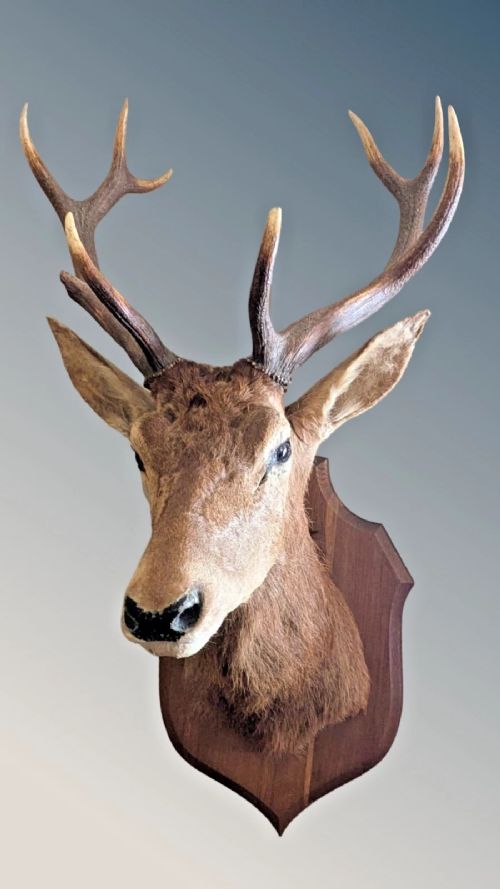
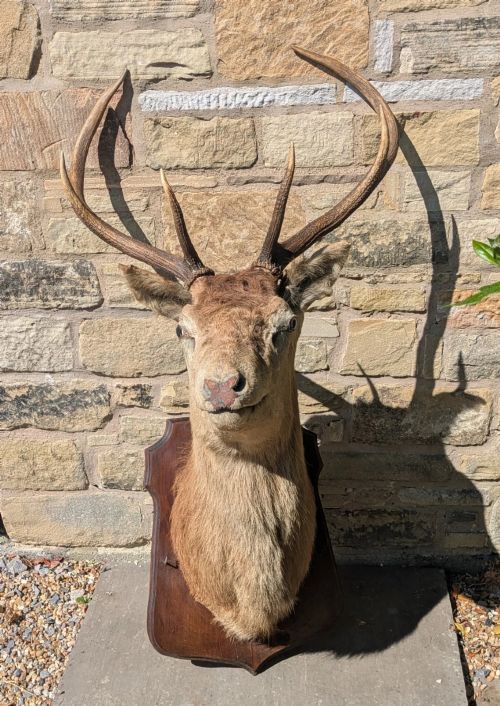
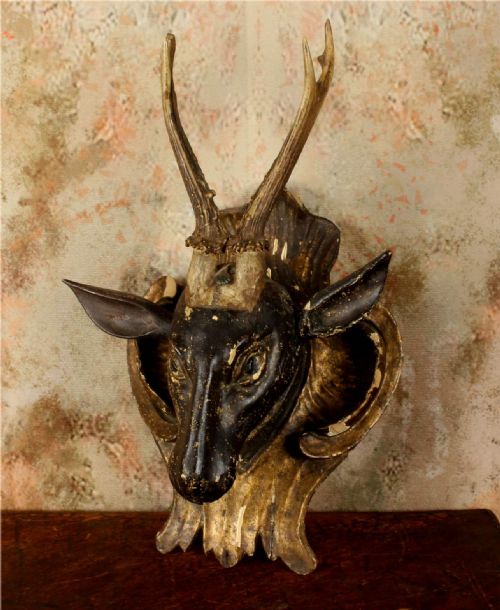
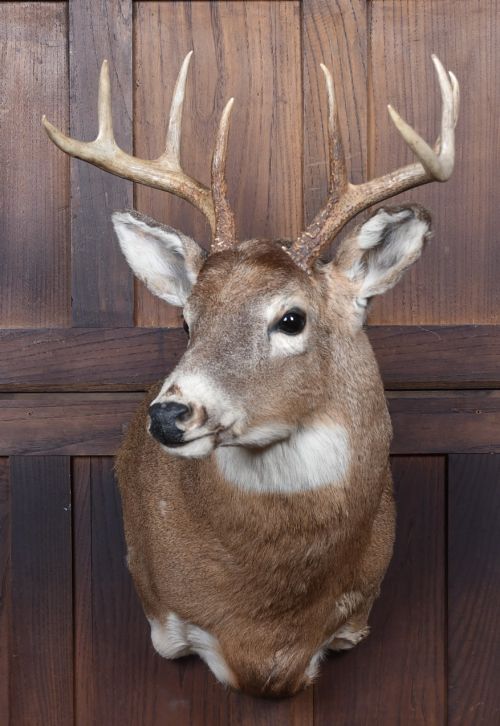
Wall mounted antlers encompass taxidermy stag heads, mounted horns, and carved wood trophies originating from the nineteenth and early twentieth centuries. These pieces reflect Highland country house and Victorian aesthetics, where natural history and utility merged in interior decoration.
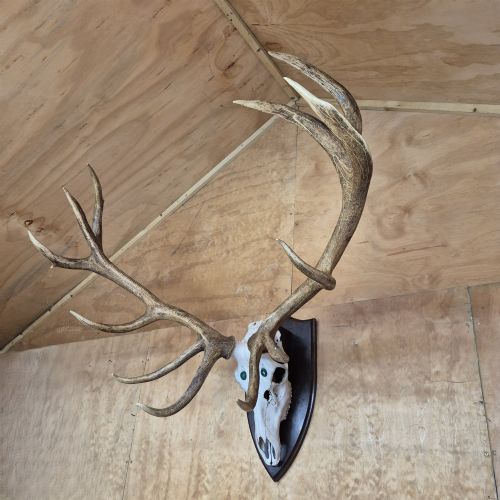
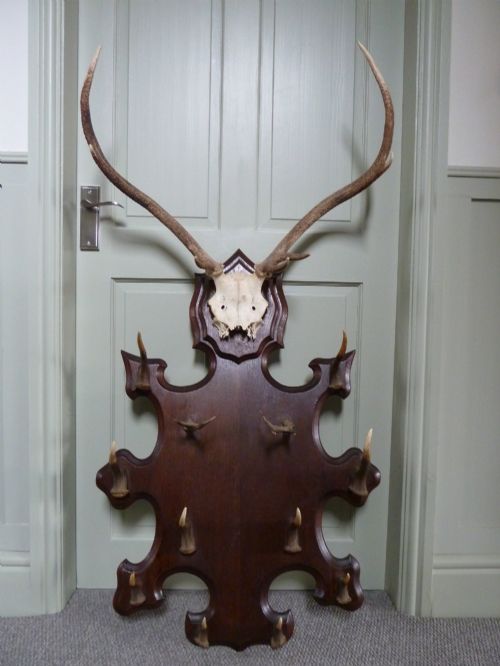
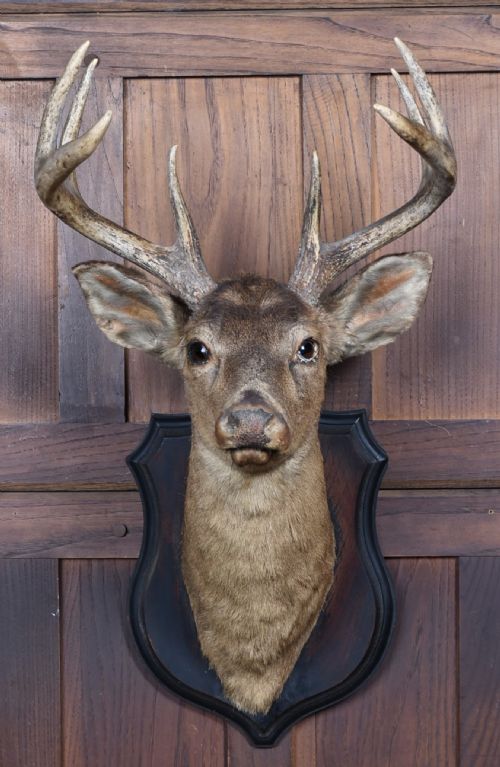
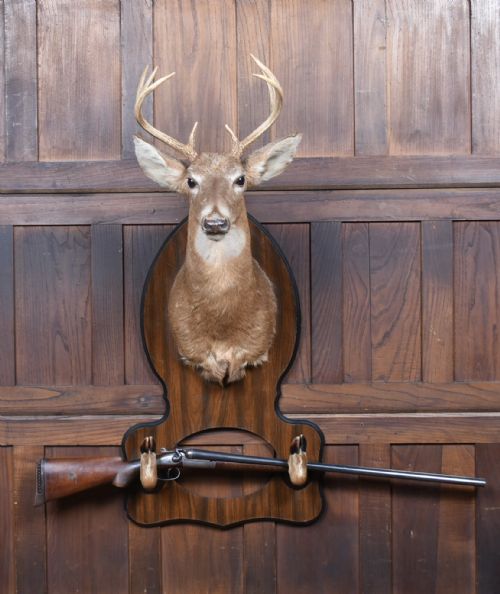
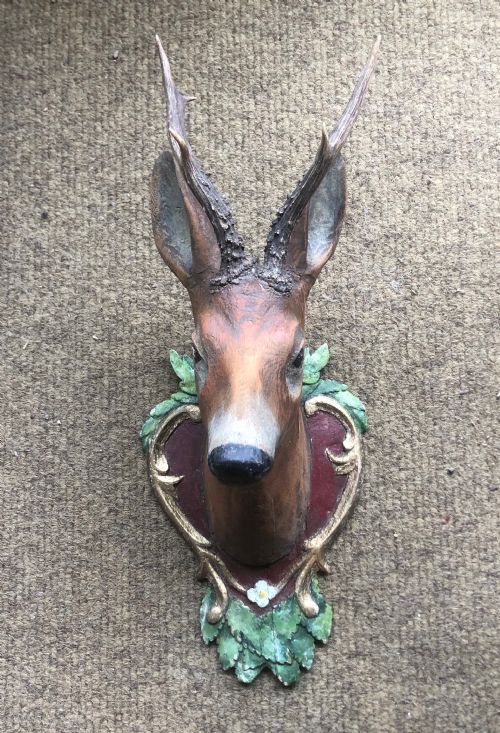
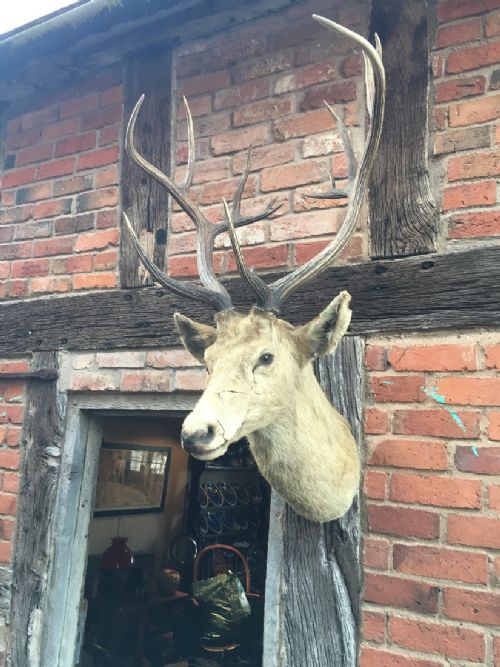
The form varies from grand red deer and waterbuck heads with substantial point counts to smaller roebuck and white-tailed deer mounts secured on carved oak shields. Functional variants also appear, including hallstands, coat racks, and hat hooks fashioned from horns.
Originating largely from British, French, and Swedish traditions, these objects range from formal taxidermy mounts to folk art interpretations involving carved wood and painted surfaces. Buyers most frequently encounter nineteenth-century taxidermy stag heads and twentieth-century deer mounts on this page.
Materials and construction
Taxidermy mounts utilise natural hide and bone over anatomical forms, securing the skull and antlers to wooden shields of oak or carved timber. Glass eyes are typically integrated into the taxidermy process to recreate a lifelike appearance in the animal's head.
Folk art pieces and functional items employ carved wood alongside natural antler and horn, sometimes incorporating deer hide or painted finishes as seen in Swedish and Black Forest examples. Structural mounting relies on fitted wooden backplates designed to bear the weight of heavy bone structures.
Wall Mounted Antlers Retail Price Guide 2026
Typical asking prices for wall mounted antlers among the pieces listed under this phrase on Sellingantiques today, from the lower quarter to the upper quarter. They describe what is for sale here now, not the wider market.
Periods represented span from the early nineteenth century through the Edwardian era and into the 1930s.
Factors of distinction
The fidelity of the taxidermy work and the symmetry of the antler points largely dictate the distinction between pieces, alongside the complexity of the carved wooden shield. Well-preserved hide and secure mounting to the timber base indicate superior original preparation and subsequent care.
Folk art and functional pieces separate themselves through the distinctiveness of the carving and the clever integration of horns into coat racks or hallstands. The presence of documented regional characteristics, such as French horn hooks or Swedish painted surfaces, adds further distinction.
The Wall Mounted Antlers Glossary
- Antler
- The branched, bony growth shed and regrown annually by members of the deer family. These are utilised both in taxidermy mounts and as functional coat hooks.
- Taxidermy
- The art of preparing, stuffing, and mounting the skins of animals for display. This technique preserves the head and neck of stags and deer for wall hanging.
- Shield
- The carved wooden backing plate upon which a deer head or set of antlers is mounted for wall display. Oak is commonly used for these supportive plaques.
- Royal
- A designation given to a red deer stag antler set possessing twelve or more points. This term indicates a specific size and maturity of the animal.
- Folk art
- Utilitarian or decorative objects created by self-taught or local artisans using traditional methods. Examples include carved wood deer heads and painted animal representations.
Wall Mounted Antlers: Frequently Asked Questions
What is the difference between red deer and roebuck mounts?
Red deer mounts are considerably larger, often featuring expansive antlers with numerous points suitable for prominent dining or hallway spaces.
Roebuck mounts are much smaller and more compact, making them adaptable for tighter wall spaces or grouped arrangements.
How should I clean and maintain taxidermy antlers?
Dust the antlers and hide gently with a soft brush or a dry cloth on a regular basis to prevent particle accumulation.
Keep the mounts away from direct sunlight and excessive moisture to protect the natural hide, bone, and wooden shields.
Where were these pieces traditionally displayed?
These items originated in Highland hunting lodges, country houses, and Victorian halls as symbols of the hunt and rural life.
Today, they translate easily into modern interiors, adding texture and historical character to residential spaces.