





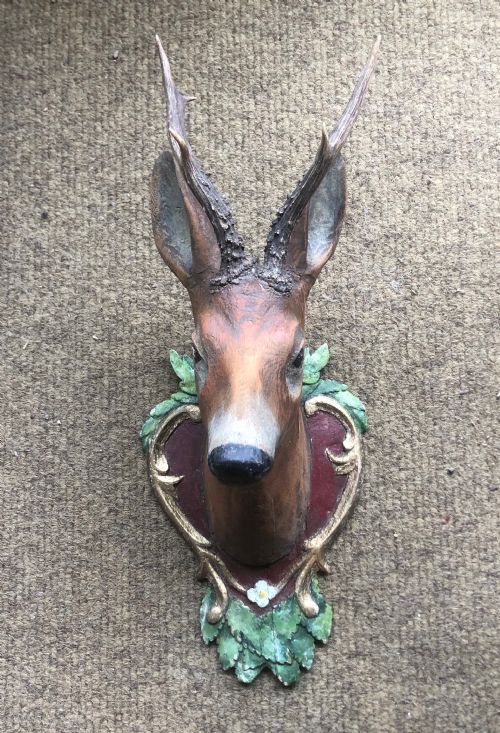
Brown Taxidermy Stag Head
A brown taxidermy stag head brings the atmosphere of the nineteenth-century Highland sporting lodge straight onto the modern wall.
Brown Taxidermy Stag Head
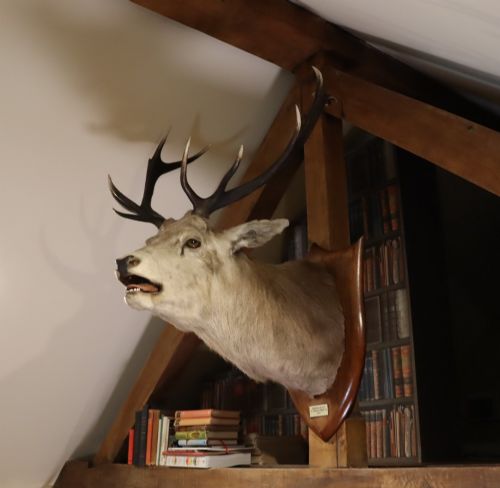
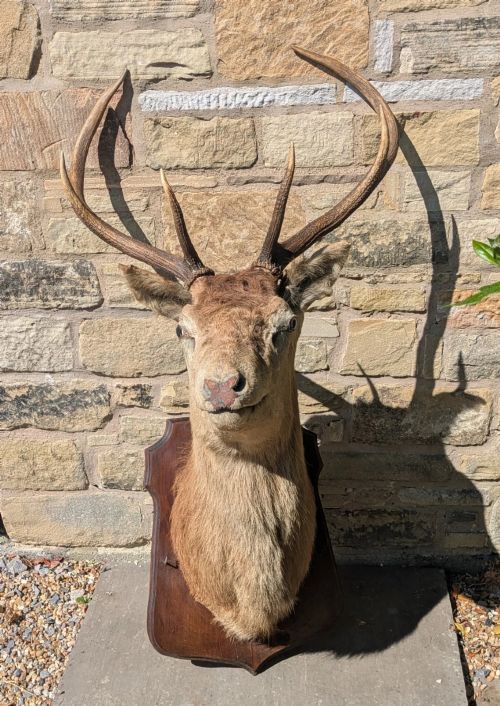
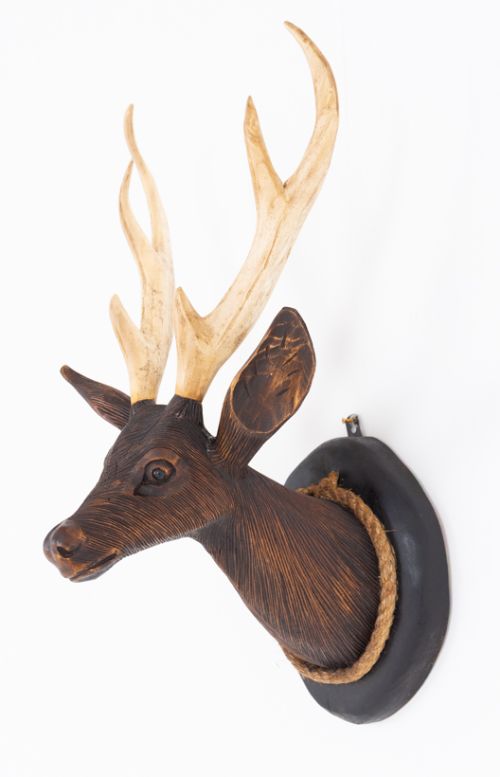
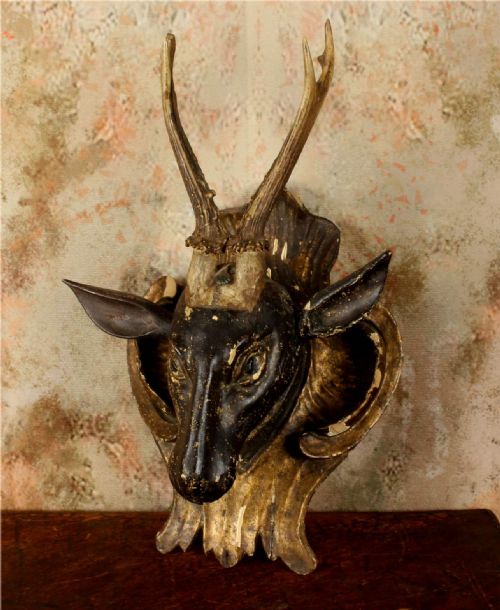
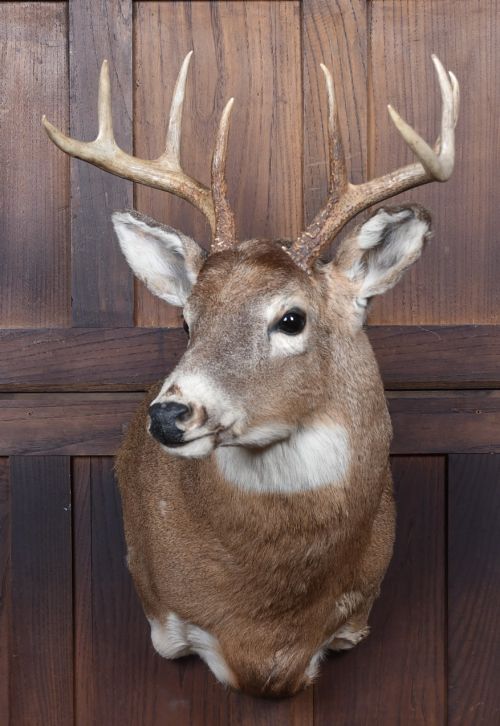
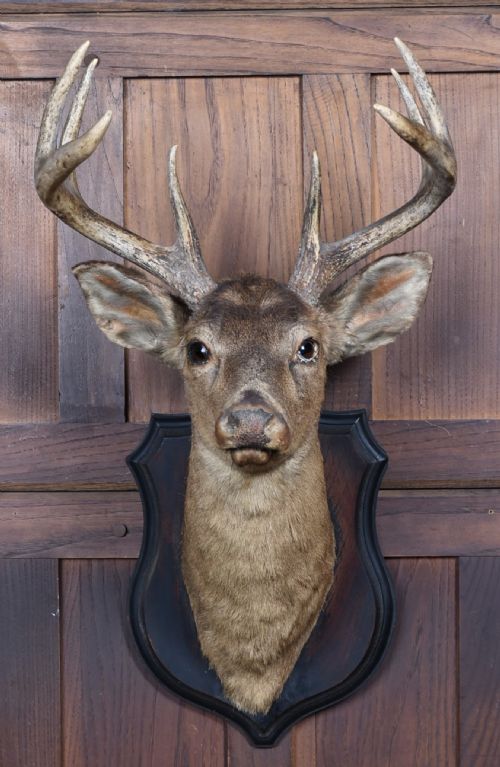
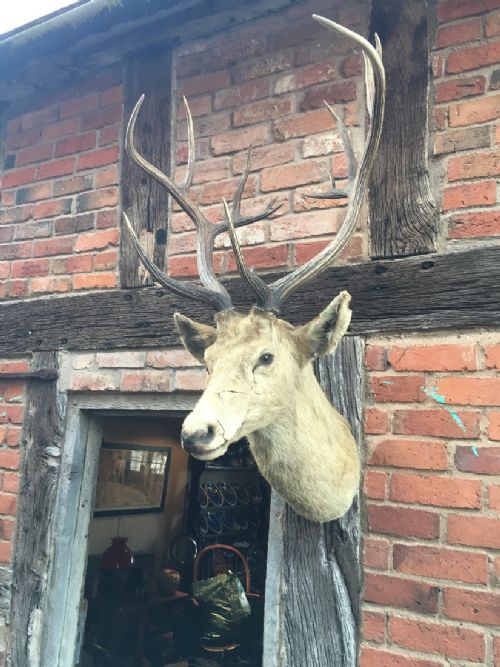
A brown taxidermy stag head encompasses traditional wall mounts and carved wooden trophies from periods spanning the nineteenth century through to the Edwardian era and the nineteen-twenties. Buyers searching for a brown taxidermy stag head encounter mounted red deer, roebuck, and white-tailed deer alongside carved wooden interpretations in the Black Forest and folk art traditions.
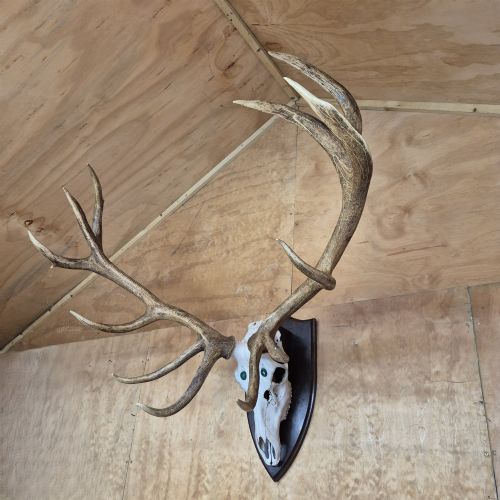
The most frequent examples on this page are nineteenth-century taxidermy mounts and twentieth-century decorative pieces featuring natural antlers fixed to carved wooden shields or oak backs. These range from eight-point and twelve-point red deer sets to Swedish painted folk art variants that lean into decorative rustic charm rather than strict naturalism.
Materials and construction
Taxidermist mounts utilise natural hide and genuine antlers combined with glass eyes, prepared and preserved over supportive internal structures. Wooden elements typically involve carved oak shields or backing boards that anchor the weight of the antlers securely to the wall.
Folk art and Black Forest variants rely heavily on carved wood, employing hand-chiselled detailing to mimic natural fur and bone structure. Paint and applied finishes occasionally highlight the grain of the timber or accent the surface of Swedish decorative pieces.
Brown Taxidermy Stag Head Retail Price Guide 2026
Typical asking prices for brown taxidermy stag head among the pieces listed under this phrase on Sellingantiques today, from the lower quarter to the upper quarter. They describe what is for sale here now, not the wider market.
Swedish folk art deer occasionally feature painted expressions that look delightfully surprised to find themselves hanging in a modern sitting room.
Judging quality and character
Quality rests primarily on the anatomical accuracy of the taxidermy work and the symmetry and span of the antler points, such as a twelve-point royal set. Superior examples display lifelike glass eyes and well-preserved hide that shows minimal wear across the bridge of the nose and ears.
In carved wooden pieces, quality depends upon the depth and vigour of the chisel work on the shield and head, distinguishing sharp traditional craftsmanship from simpler provincial interpretations. The joinery connecting the antlers to the wooden mount also dictates the overall stability and presence of the piece.
The Brown Taxidermy Stag Head Glossary
- Taxidermy mount
- The art of preparing, stuffing, and mounting the skin of animals for display. These pieces capture realistic postures intended for interior wall decoration.
- Carved Black Forest
- A style of intricate wood carving originating from central Europe, particularly known for naturalistic animal subjects and rustic furniture. Such pieces often feature deep relief work and dark varnished finishes.
- Folk art
- Utilitarian or decorative objects made by self-taught or provincial craftspeople working outside academic traditions. These items emphasise regional character and practical materials over strict adherence to natural proportions.
- Oak shield
- A wooden backing board shaped like a heraldic shield upon which animal trophies are mounted for wall hanging. This serves both to distribute weight and to frame the head visually.
Brown Taxidermy Stag Head: Frequently Asked Questions
How do I hang a heavy stag head safely?
Wall mounts require secure fixings into structural brickwork or timber studs rather than standard plasterboard alone due to the combined weight of the antlers and wooden shield.
Using a heavy-duty picture hook or a direct wall-plug and screw system matching the weight capacity ensures the piece stays firmly anchored.
What is a royal set of antlers?
A royal set specifically refers to red deer antlers possessing twelve distinct points on a single rack. This classification denotes a mature and impressive specimen sought after by collectors.
Such configurations provide a commanding focal point when displayed above a fireplace or in a hallway.
How do I care for antique taxidermy hide?
Preserved animal skins benefit from regular gentle dusting with a soft brush and protection from direct sunlight to prevent fading of the brown hide. Keeping mounts away from damp environments and extreme temperature fluctuations preserves the natural materials over time.
Avoiding liquid cleaners on the fur prevents moisture damage to the internal structure.
What distinguishes folk art deer from standard taxidermy?
Folk art deer are entirely carved from wood or constructed as artistic interpretations rather than utilising preserved animal hides and taxidermy techniques. These pieces often incorporate painted surfaces and charming stylistic quirks unique to the maker.
They offer a decorative alternative for interiors where traditional taxidermy is not preferred.