
Victorian Style Hall Stand
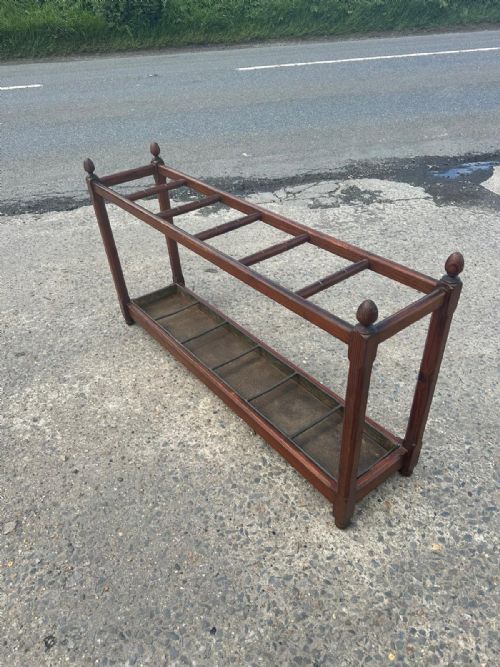
A victorian style hall stand anchors an entrance hall with functional timber and metalwork designed to hold coats, hats and umbrellas.
Victorian Style Hall Stand
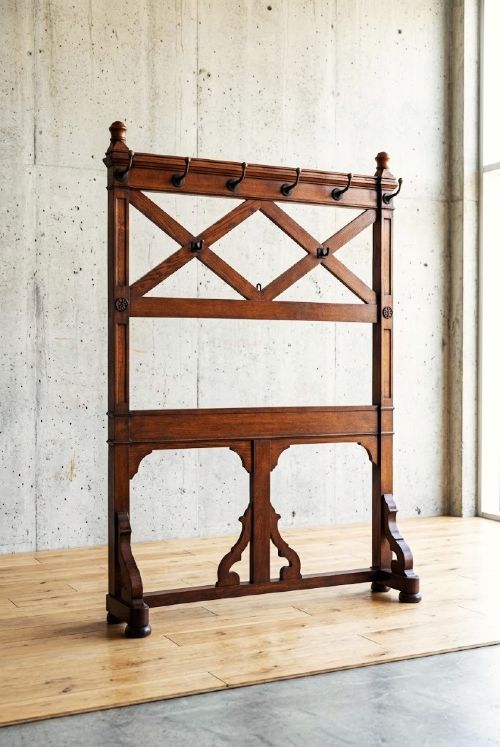
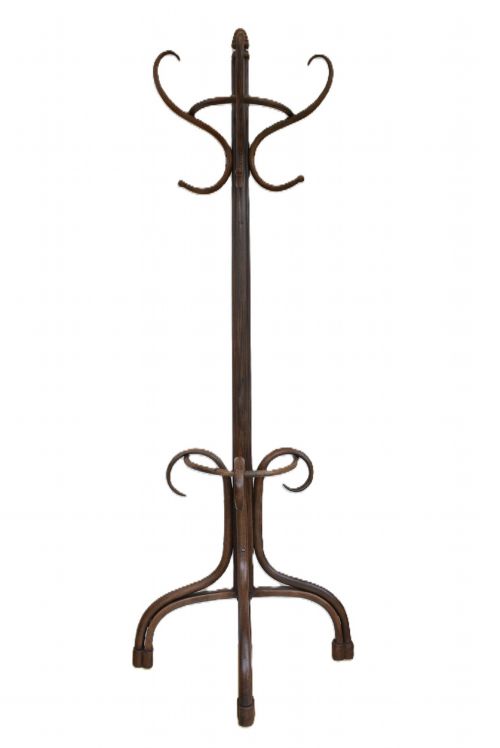
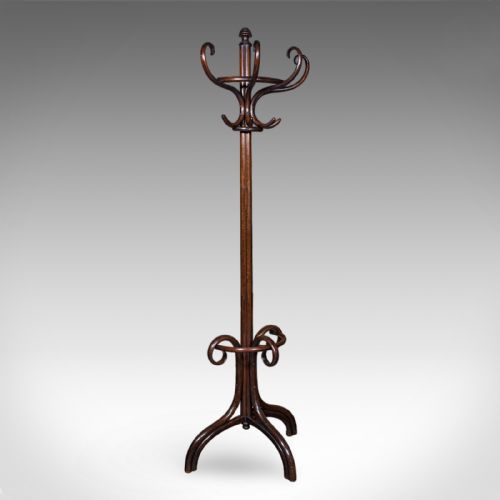
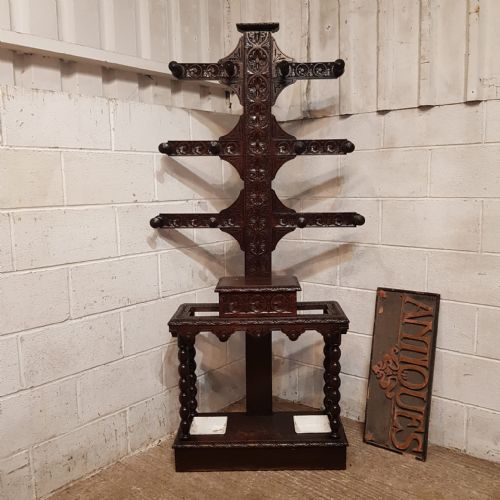
When you search for a victorian style hall stand, you encounter substantial oak and carved pieces alongside lighter bentwood and bamboo iterations. The selection spans the nineteenth century into the Edwardian era, incorporating Gothic Revival and Aesthetic Movement designs.
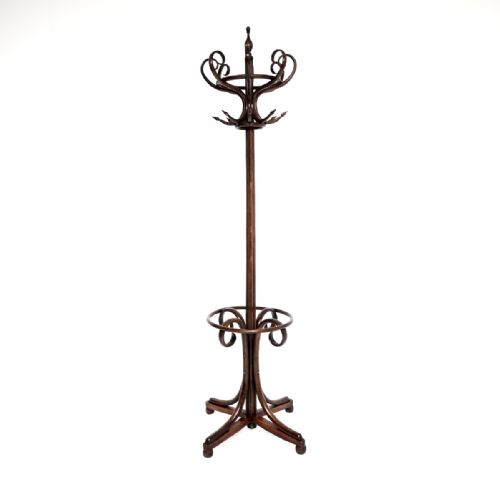
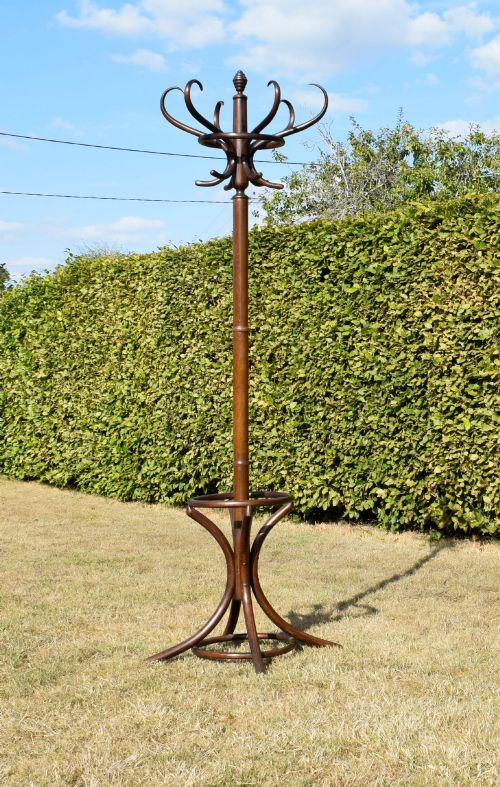
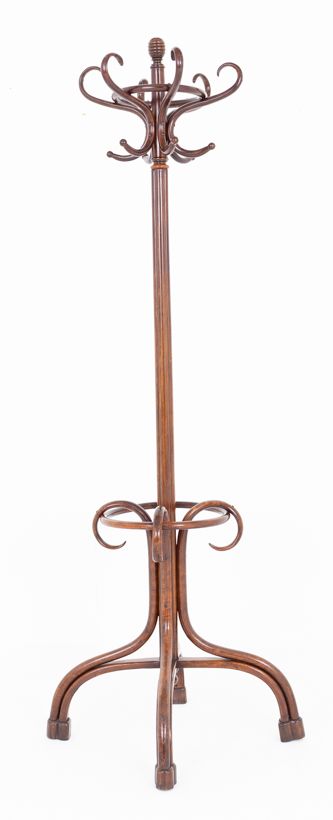
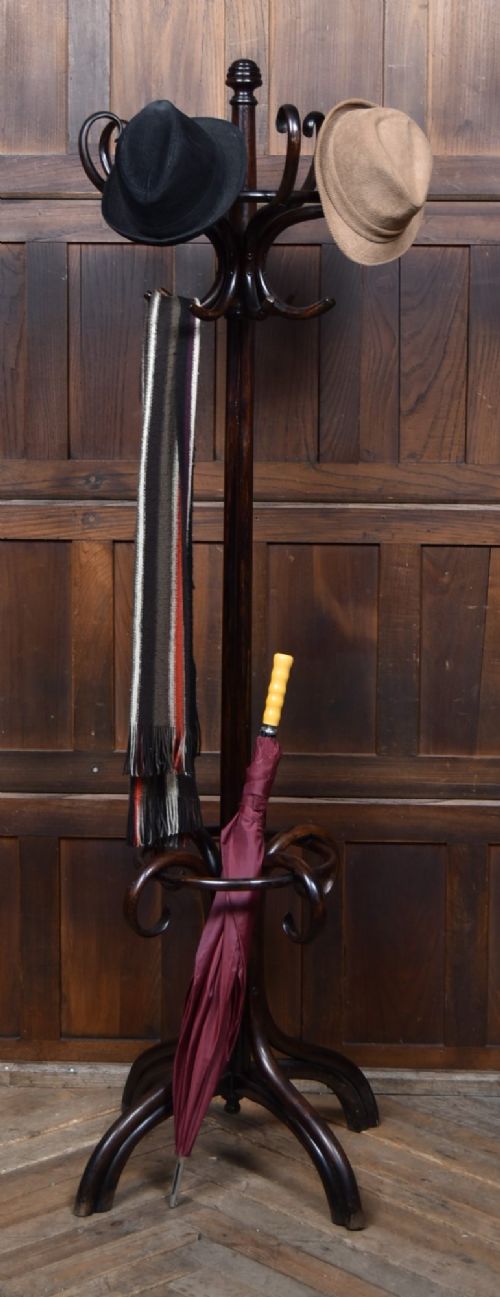
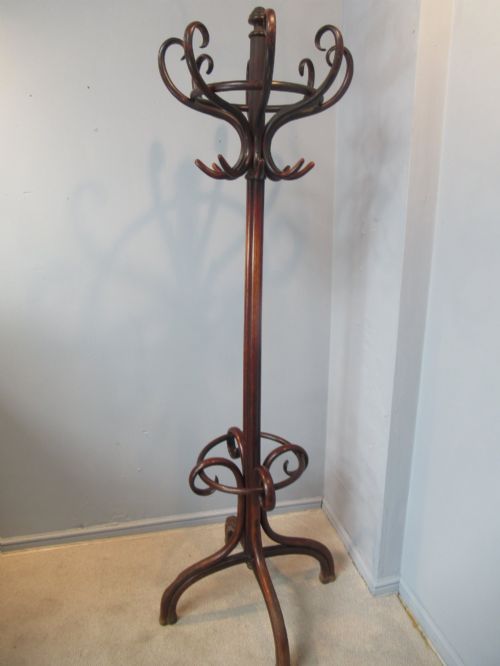
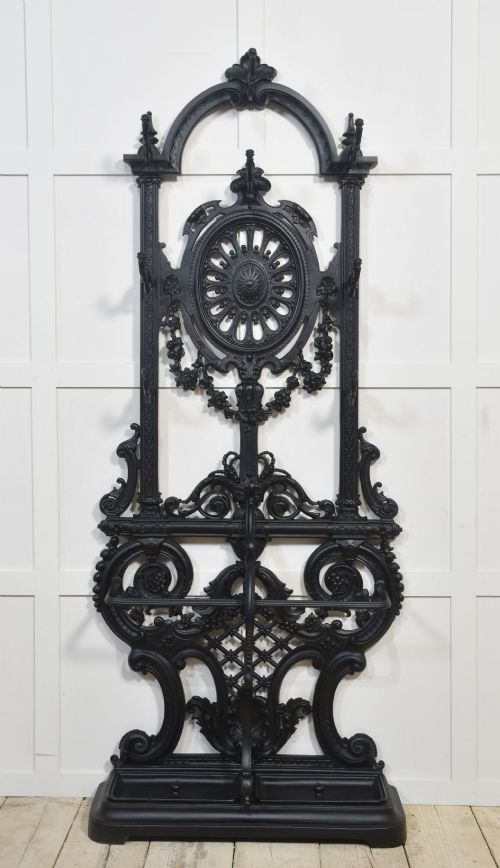
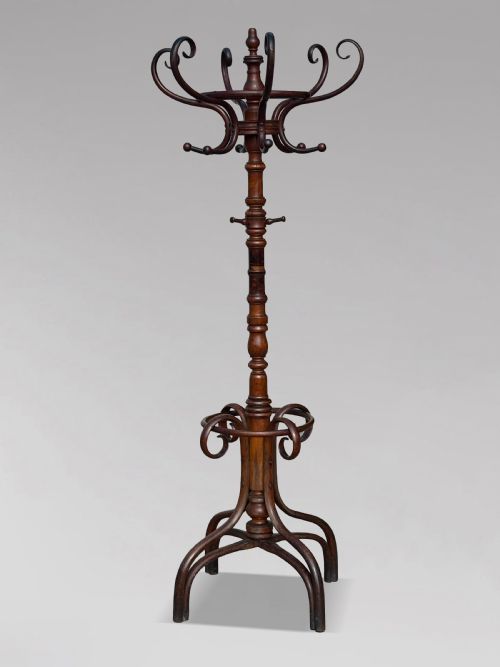
The versions most commonly met here include steam-bent beech hat stands from makers like Thonet, alongside cast iron umbrella stands modelled in the Coalbrookdale manner. These pieces served the Victorian hallway primarily to organise outerwear before guests entered the main rooms.
Materials and construction
Makers utilised solid oak, pitch pine and beechwood, frequently employing steam-bent techniques to shape circular rails and scrolled hooks. Cast iron provided heavy, rigid weight for umbrella and stick stands, often styled with openwork foliage.
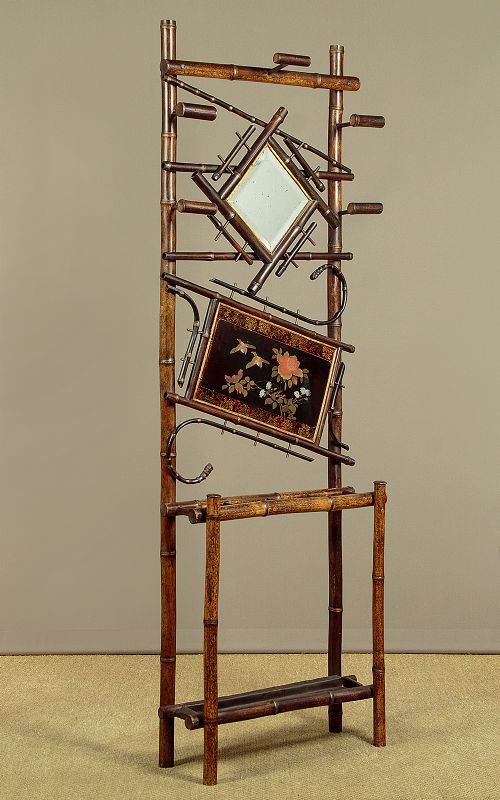
Brass fittings and hooks secured hats and coats to wooden backboards, while lacquered panels and bamboo introduced lighter, exotic textures during the late nineteenth century.
Materials recorded across the inventory include oak, beech, bentwood, cast iron, brass, bamboo, and pitch pine.
Assessing the work
Quality rests in the integrity of the steam bends and the crispness of carved oak details or cast iron moulding. Superior examples maintain structural rigidity across complex frames without excessive replacement of hooks or drip pans.
J Parker of Woodstock·Fischel
The Victorian Style Hall Stand Glossary
- Bentwood
- Timber shaped by steaming it until pliable and bending it into curved forms. This technique produced light, resilient coat and hat stands.
- Gothic Revival
- An architectural and decorative style drawing on medieval forms. Pieces display pointed arches, heavy oak and carved tracery.
- Aesthetic Movement
- A late nineteenth century design focus prioritising visual beauty over narrative function. Items often utilise bamboo and lacquered panels.
- Coalbrookdale
- An ironfoundry famous for ornate cast iron work. Pieces in this style utilise openwork patterns for umbrella and stick stands.
Victorian Style Hall Stand: Frequently Asked Questions
What is a victorian style hall stand?
A victorian style hall stand is a piece of entrance furniture designed to hold coats, hats, and walking sticks in a hallway.
They combine practical hooks and umbrella wells with decorative woodwork or cast iron frames.
How were these stands used originally?
Households used them in the entrance hallway for hanging outdoor garments and storing wet umbrellas upon arrival.
They kept outerwear organised and protected the main living areas from damp weather.
How do I place one in a modern home?
Position the stand near the main entrance to serve its original purpose of holding daily coats and umbrellas.
Ensure there is enough wall clearance and floor space to accommodate the protruding hooks and umbrella bases.
How do I tell bentwood from carved wood?
Bentwood exhibits smooth, continuous curves formed by steaming timber rather than joining cut pieces together.
Carved wood displays distinct joints and relief ornamentation chiselled directly into solid planks.