

Victorian Storage Trunk Coffer
These Victorian storage trunk coffer pieces bring functional nineteenth-century utility into modern rooms as robust blanket boxes and sturdy coffee tables.
Victorian Storage Trunk Coffer
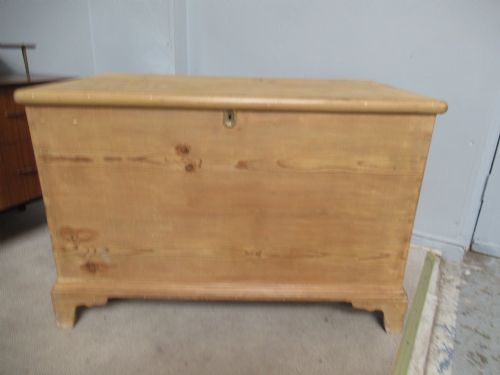
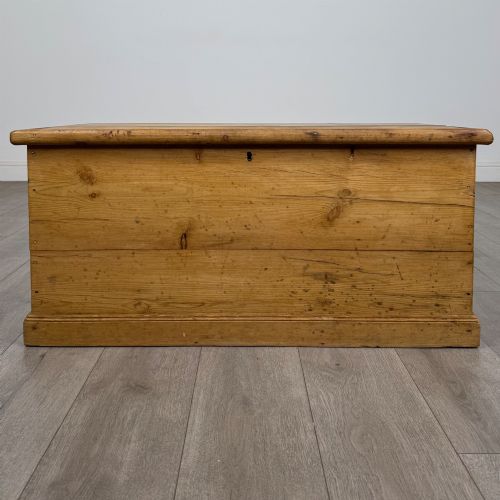
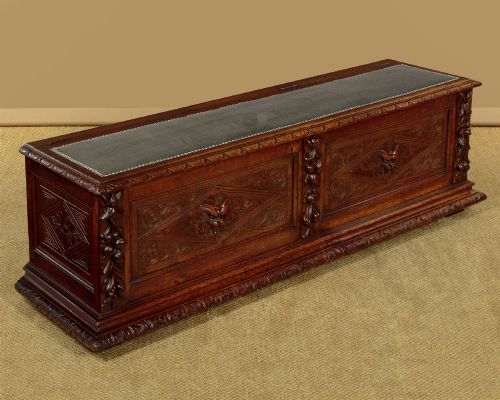
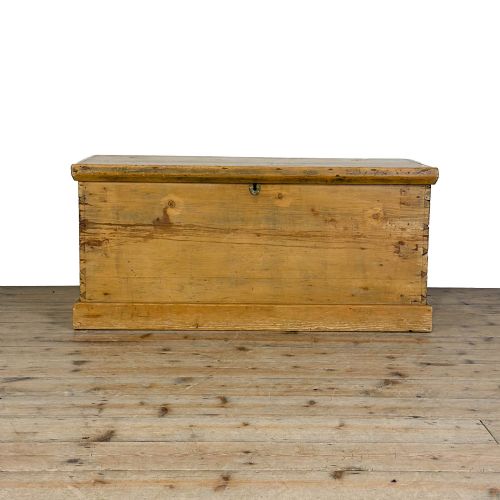
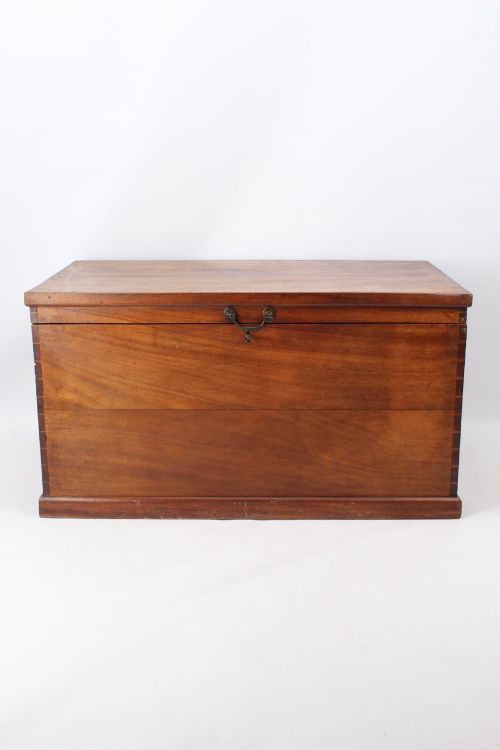
When searching for a victorian storage trunk coffer, buyers encounter a utilitarian range spanning simple domestic pine blanket boxes to robust travel trunks. These heavy-duty receptacles originated to store household textiles, linens, or personal belongings securely in domestic or colonial settings.
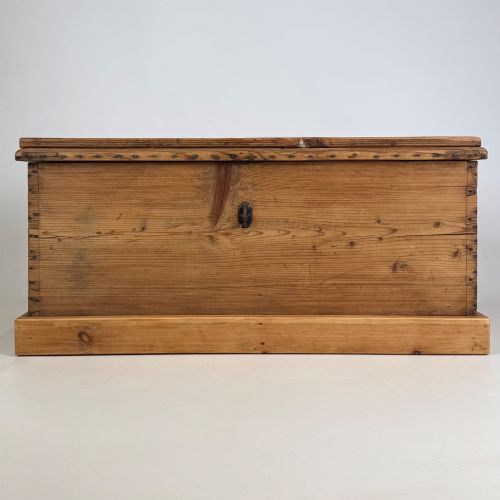
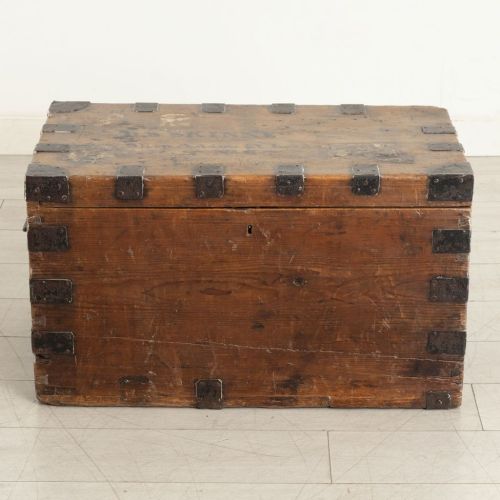
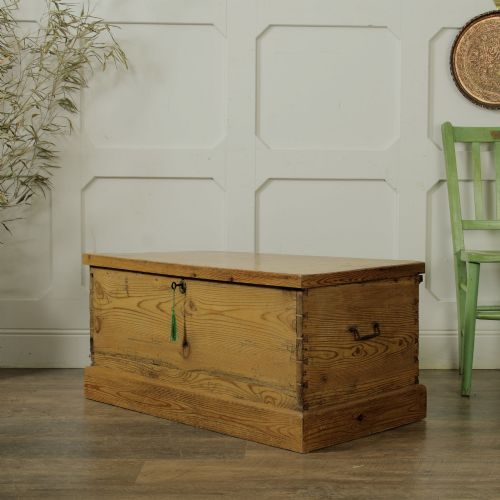
Pine examples dominate the domestic offerings, often surfaced with historic wax or simple paint, while harder woods serve military travel needs. Forms vary from plain hinged boxes to fitted interiors containing small drawers and lidded compartments for orderly storage.
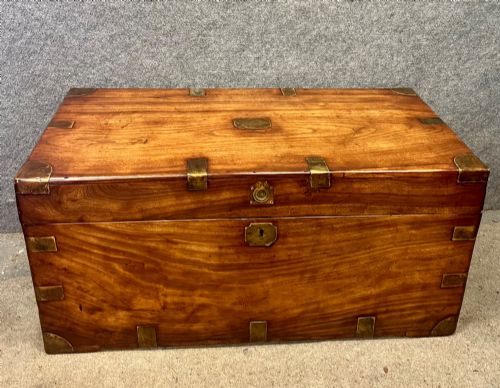
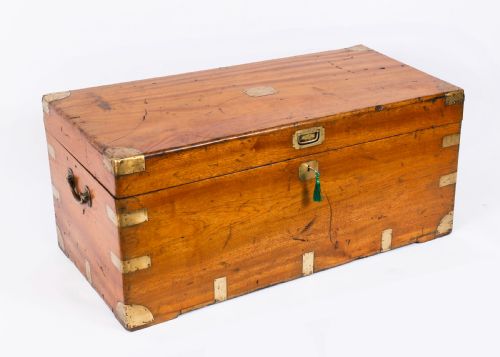
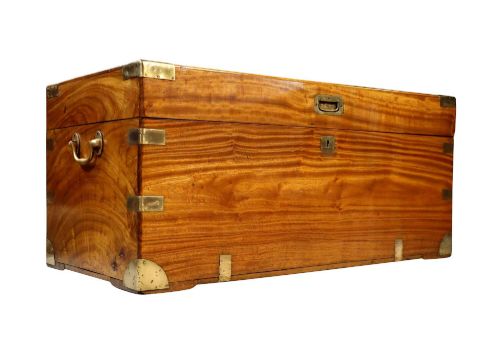
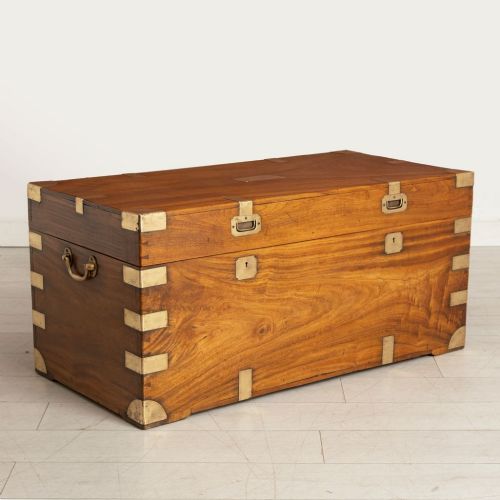
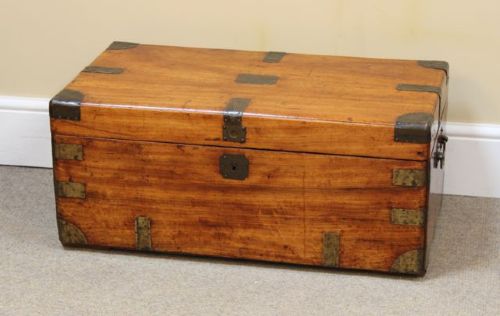
Travel-oriented variations frequently incorporate recessed handles, protective corners, and structural banding for transit. More settled domestic coffers employ solid timber construction suited to static placement at the foot of a bed or within a hallway.
Materials and Construction
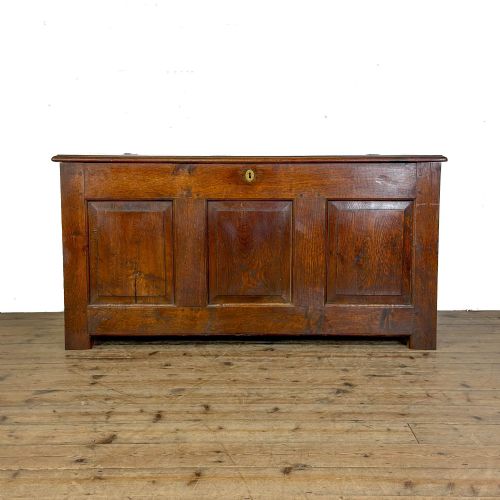
Pine and camphor wood form the primary body timbers, selected respectively for domestic affordability and insect-resistant durability during colonial transport. Heavier examples utilise teak, oak, or mahogany for maximum structural integrity.
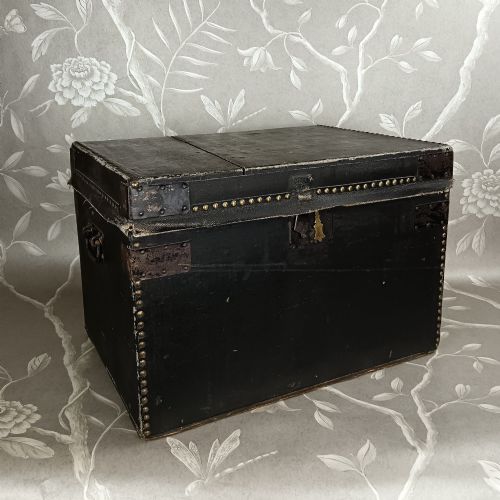
Metal reinforcement defines travel pieces, incorporating brass banding, iron straps, and studded leather to withstand frequent transit. Joinery relies on traditional methods including dovetailing at the corners and solid board construction for lids and bases.
Listings feature woods spanning pine, camphor wood, teak, oak, and mahogany alongside iron and brass hardware.
Craftsmanship and Proportion
Superior examples display crisp dovetail joinery, intact original metal fittings, and secondary interior fitments such as small drawers. Lesser grade pieces exhibit heavy utilitarian alterations, replaced hardware, or compromised timber integrity from moisture exposure.
Proportion and surface preservation separate standard utility boxes from superior furniture pieces. Finer specimens retain untouched surface patination, original brass bound edges, and structural hardware that operates without binding.
Wm. Insall of Bristol
The Victorian Storage Trunk Coffer Glossary
- Campaign trunk
- A portable storage chest designed for military officers, typically featuring brass corners, flush-fitting handles, and sectional construction for ease of transport.
- Camphor wood
- An aromatic hardwood utilised for nineteenth-century maritime and military chests because its natural scent repels insects from stored textiles.
- Coffer
- A heavy wooden chest traditionally used for holding valuables, clothes, or documents, usually fitted with a hinged lid and robust locking mechanism.
- Dowry chest
- A large storage box traditionally prepared for a bride to collect household linens and personal items prior to marriage.
- Pitch pine
- A resinous pine variety offering enhanced durability and prominent grain patterns, frequently chosen for heavy-duty Victorian trunk construction.
Victorian Storage Trunk Coffer: Frequently Asked Questions
What is a campaign trunk?
A campaign trunk is a portable storage chest built for military officers on the move. These pieces feature flush brass handles and reinforced corners designed to endure rough transport.
Their modular construction allowed officers to pack belongings securely across distant territories during the nineteenth century.
Why use camphor wood?
Camphor wood contains a natural aromatic oil that repels moths and insects. This made the timber essential for protecting woolen uniforms and linens in tropical climates.
Trunks made from this wood retain a distinct fragrance that distinguishes them from domestic pine boxes.
How to use a coffer today?
These trunks function well at the foot of a bed for spare blankets and pillows. Their flat tops also allow them to double as occasional coffee tables in living spaces.
Internal compartments in fitted models accommodate smaller items like books, magazines, or accessories.
How to date these trunks?
Dating relies on examining construction methods, timber types, and hardware styles. Hand-cut dovetails and brass strapping typically point towards nineteenth-century production.
Factory-stamped locks and iron reinforcements help narrow down the manufacturing decade alongside prevailing regional styles.