



Victorian Storage Ottoman
When you handle a Victorian storage ottoman, you meet a practical piece of nineteenth-century furniture that combines concealed depth with upholstered comfort.
Victorian Storage Ottoman
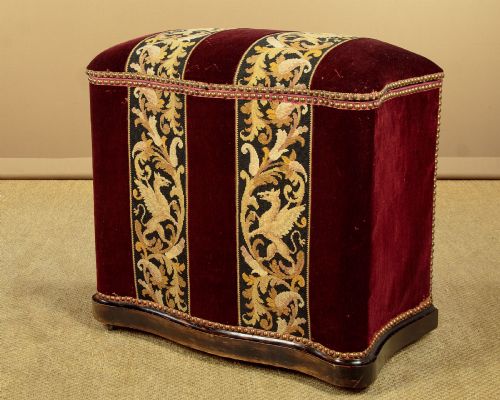
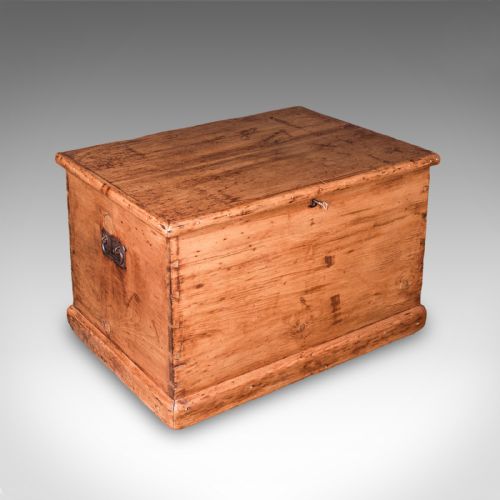
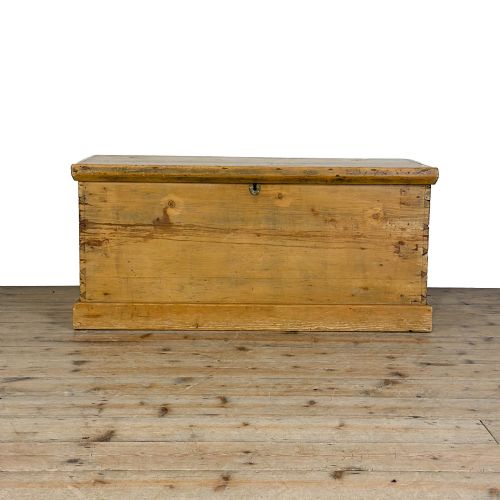
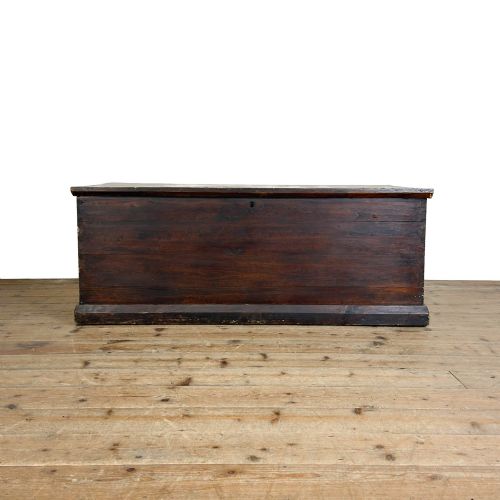
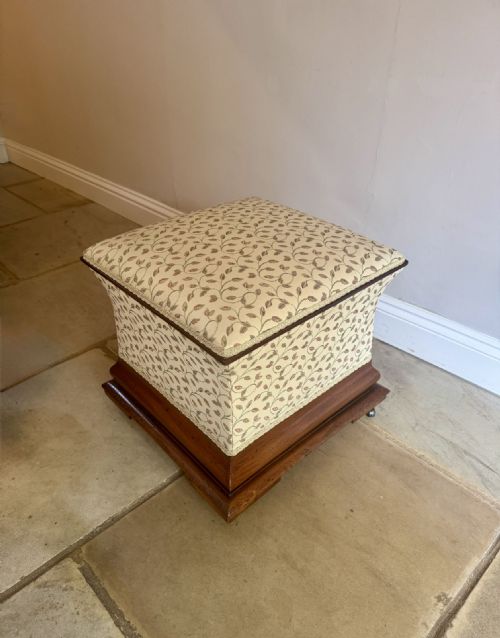
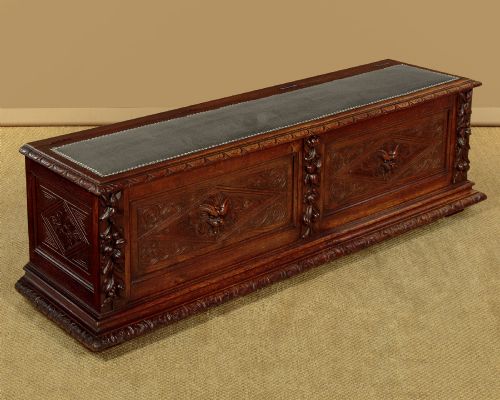
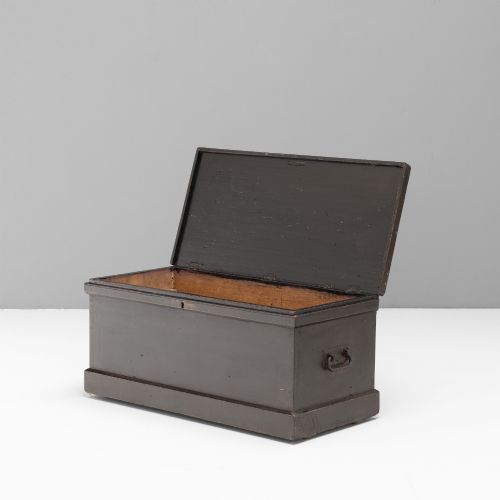
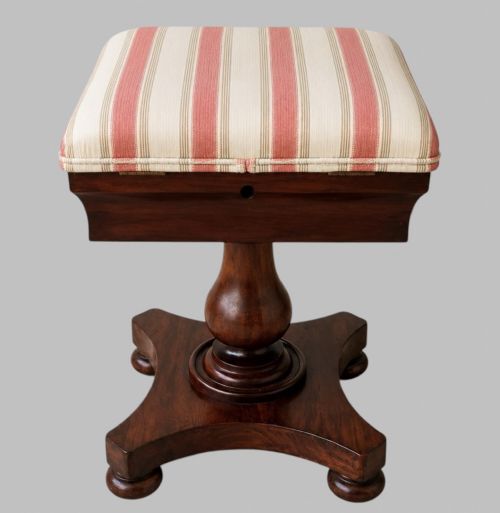
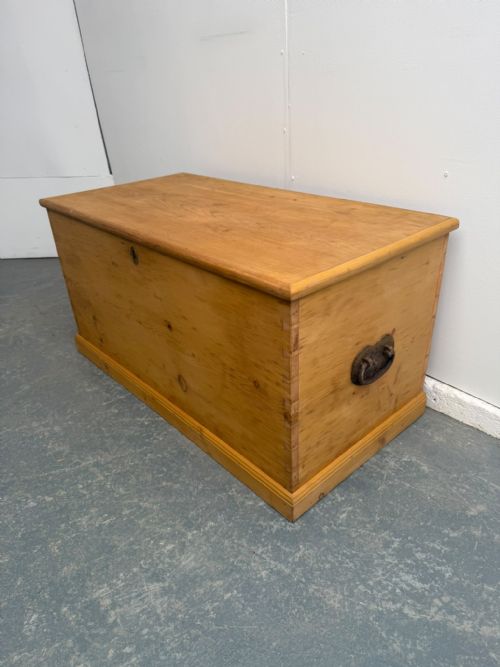
A Victorian storage ottoman is essentially a dual-purpose box seat, designed to hold blankets, linens or personal items beneath a hinged or lift-off top. On this page, you will most frequently encounter pine blanket boxes, mahogany or rosewood upholstered stools, and mule chests spanning the nineteenth century.
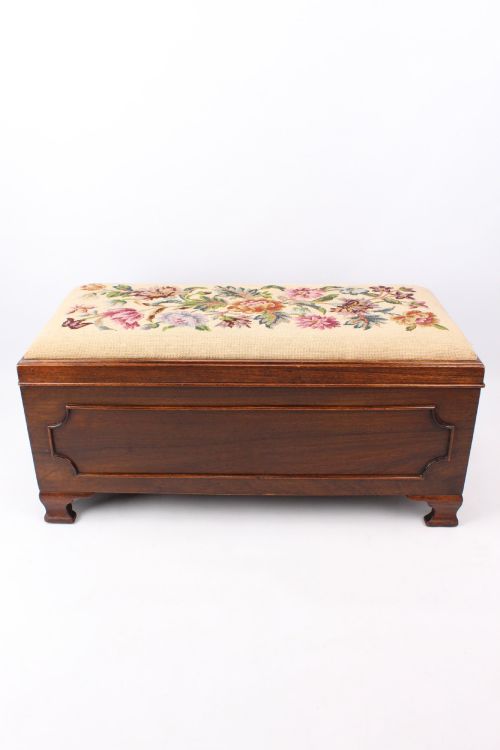
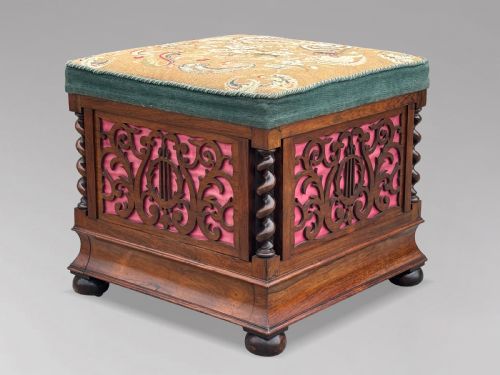
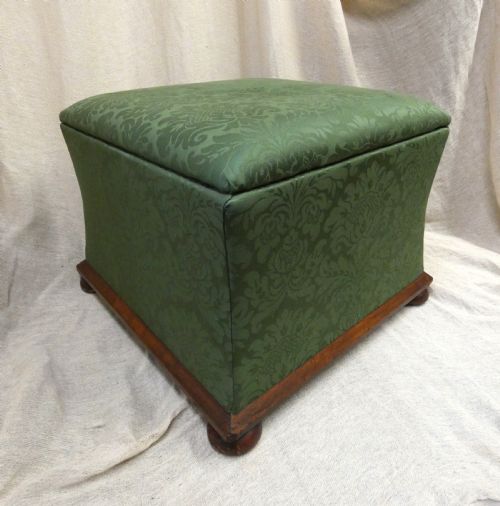
The forms range from low coffee-table proportions and piano stools to large country house storage chests and deep shoe box cabinets. Many examples feature needlework, leather or fabric upholstery on the seat, merging domestic utility with the formal styles of the period.
Materials and construction
Makers built these pieces primarily using solid timbers like pine, mahogany, rosewood and birch, often reinforced with brass hardware, iron fittings and side lifting handles. Pine serves utilitarian blanket boxes and mule chests, while richly grained rosewood and mahogany form the frames of refined parlor and bedroom ottomans.
Upholstery techniques involve traditional stuffing secured beneath needlework, leather, velvet or printed fabric tops. Structural joinery relies on solid timber construction, with many surviving examples retaining working locks and original hinged compartments.
Victorian Storage Ottoman Retail Price Guide 2026
Typical asking prices for victorian storage ottoman among the pieces listed under this phrase on Sellingantiques today, from the lower quarter to the upper quarter. They describe what is for sale here now, not the wider market.
The selection includes formal Regency rosewood pieces alongside rustic pine country house mule chests and gothic revival walnut designs.
What separates the tiers
Quality rests in the selection of timbers and the integrity of the original frame rather than mere age alone. Dense, well-figured rosewood and mahogany command attention, as do substantial pine chests with clean wax finishes and intact internal compartments.
The treatment of the top sets pieces apart, particularly where original gros-point needlework, hand-dyed leather or specialised fabric upholstery remains undisturbed. Solid construction details, such as working brass locks and robust side handles, distinguish utilitarian storage from finer salon seating.
Hallett & Sons
The Victorian Storage Ottoman Glossary
- Mule chest
- A traditional storage chest featuring one or more drawers beneath the main lifting compartment. This form bridges the gap between a standard blanket box and a chest of drawers.
- Canterbury stool
- A low compartmented piece designed originally for holding sheet music or books beneath a seat. These often incorporate turned wooden supports and divided interior sections.
- Gros-point needlework
- A heavy, counted-thread embroidery technique using wool on canvas to create durable textured upholstery. It appears frequently on the seat tops of mid-century parlor ottomans.
- Kist
- A regional term for a heavy wooden storage chest or trunk, usually constructed from pine. These sturdy boxes served practical storage needs in country houses and farmsteads.
Victorian Storage Ottoman: Frequently Asked Questions
What did they store inside?
These boxes held bulky household textiles, spare blankets, heavy garments and personal belongings before built-in wardrobes became standard in British homes. Their deep interiors kept dust away from linens while providing extra seating.
In reception rooms or bedrooms, they adapted to hold sewing supplies, music folios or footwear depending on the specific form of the box or stool.
Are the locks still working?
Many pine trunks and mahogany ottomans retain their original brass locks, though keys are sometimes absent or replaced over time. Working mechanisms appear frequently on better quality country house pieces and refined salon seats.
A locksmith can often supply a matching key if the internal mechanism remains intact and uncompromised by age.
Where should I place one?
A low pine or mahogany box sits comfortably at the end of a bed to hold extra bedding and pillows. Wide variants also function effectively as coffee tables in a living room with hidden storage.
Stool forms work well in hallways or dressing rooms where a seated surface combined with internal space proves useful.