




Victorian Stoneware Pottery
Victorian stoneware pottery brings together dense ceramic bodies and rich salt glazes, offering collectors enduring utility and striking surface decoration.
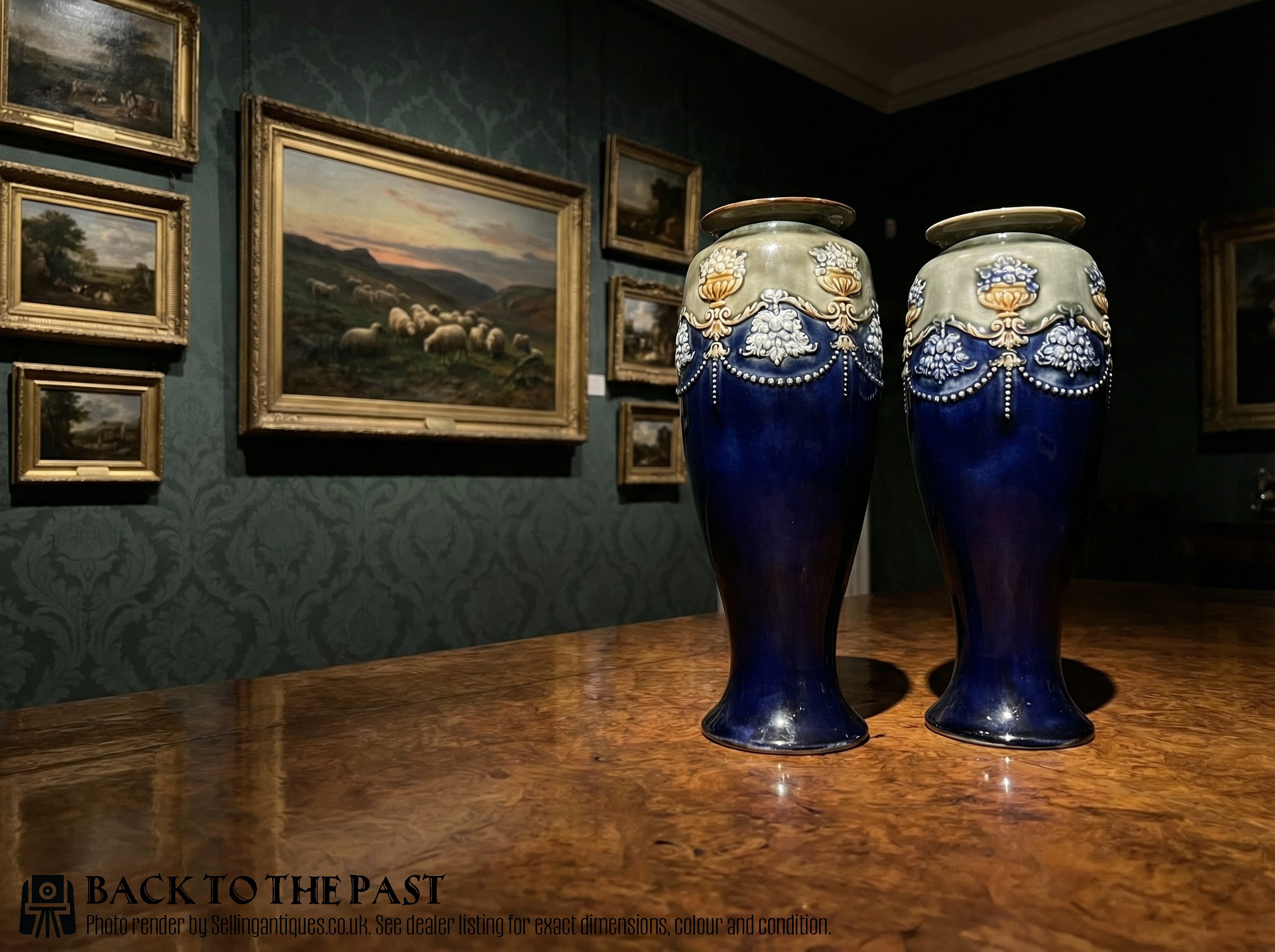
Victorian Stoneware Pottery
When you search for victorian stoneware pottery, you encounter a dense range of durable ceramics primarily produced during the nineteenth century. These objects include utilitarian vessels, decorative vases, and tablewares that served both domestic and commercial purposes.
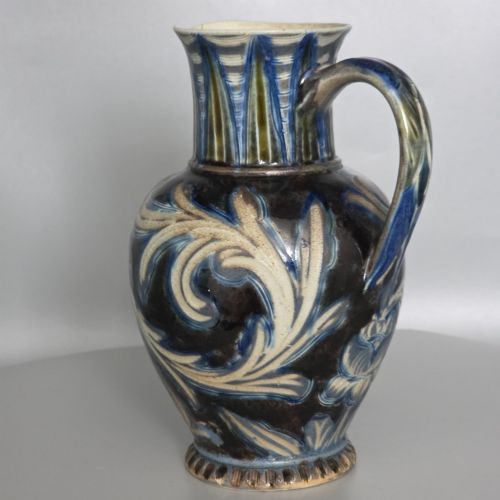
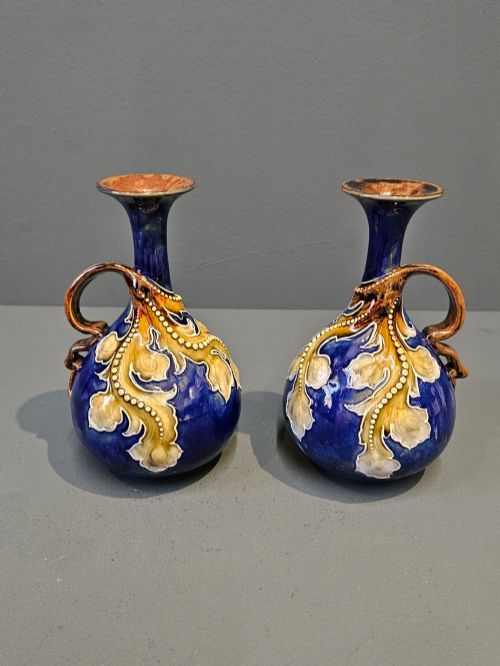
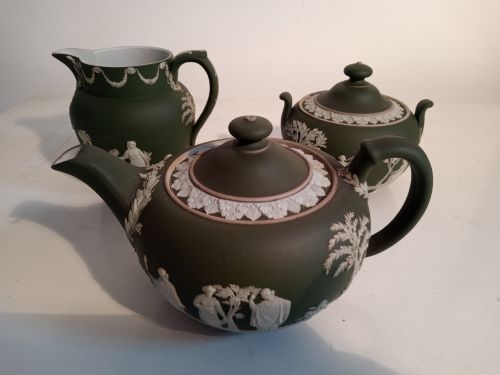
The pieces on this page are dominated by English production, particularly the output of the Doulton factories in Lambeth and Burslem. Alongside these, buyers find related earthenware, jasperware, and salt-glazed items from the same period.
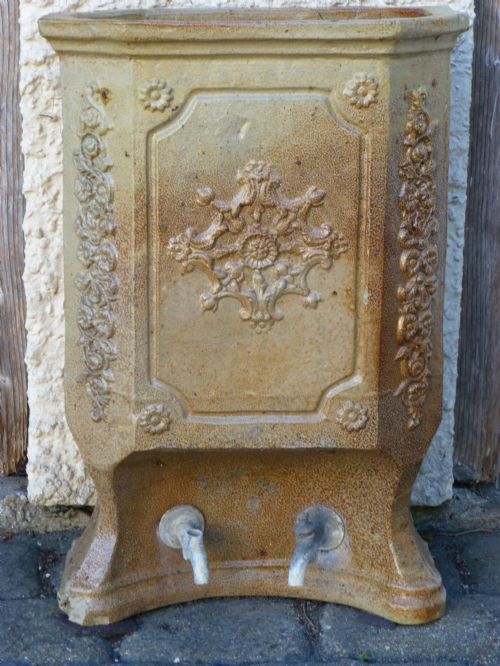
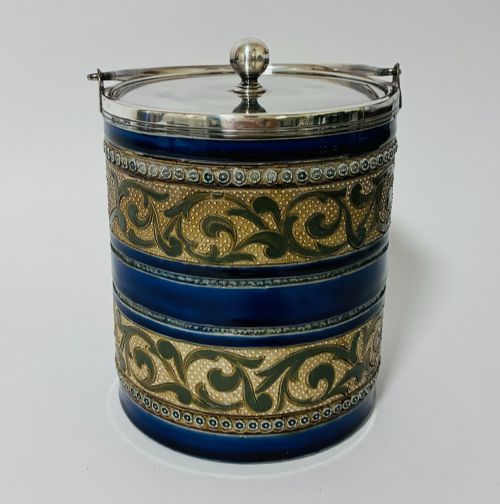
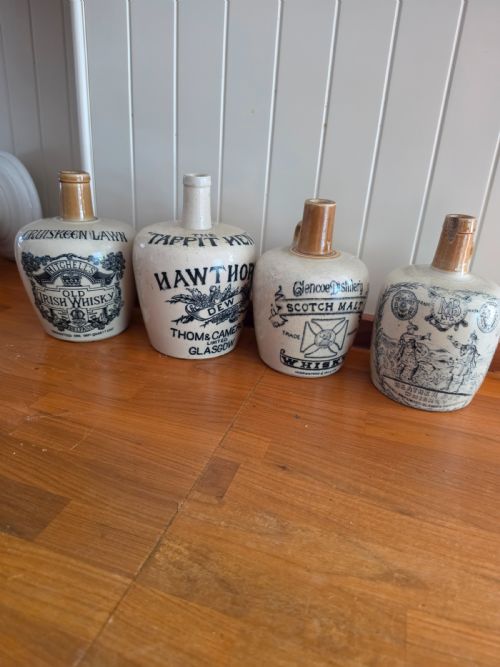
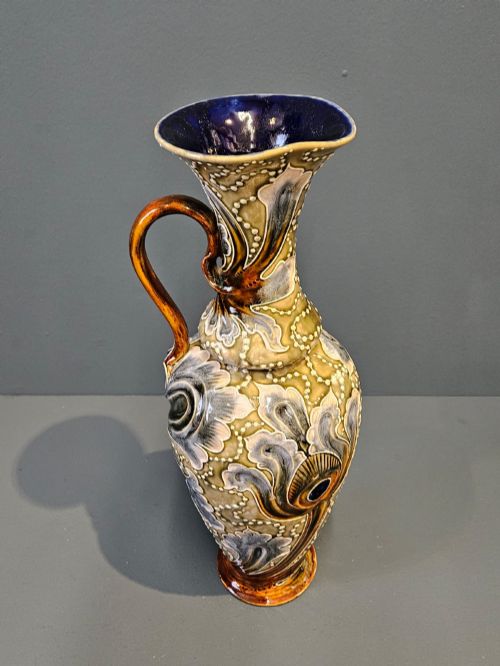
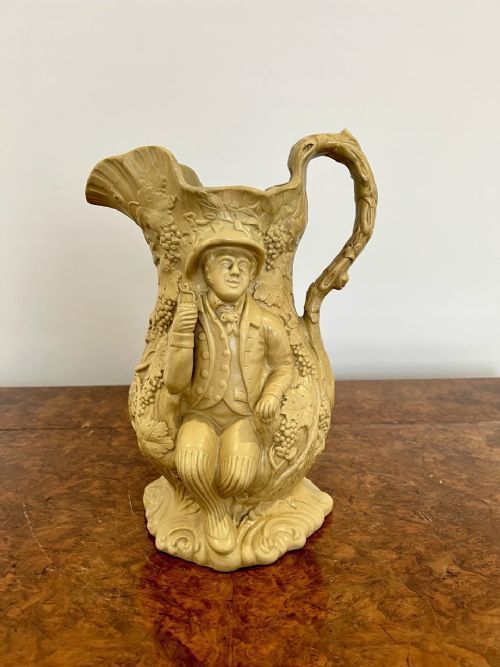
Forms span from large ewers and water filtration fountains to smaller jugs, tankards, and biscuit barrels. Many carry specific commemorative or advertising functions, reflecting the industrial and social output of the era.
Materials and Techniques
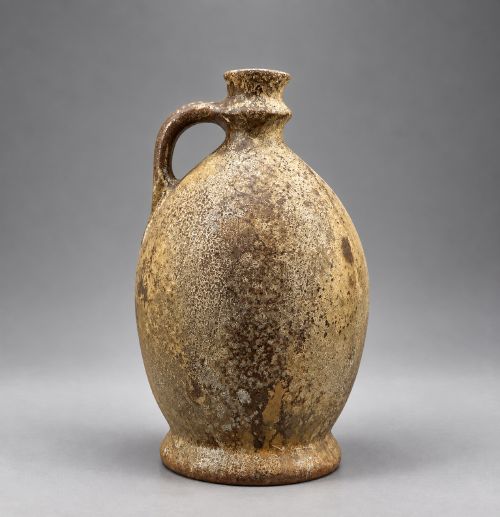
The primary material is vitrified stoneware, fired at high temperatures to achieve impermeability and strength. Manufacturers often applied salt during the kiln firing to produce a characteristic pitted, orange-peel texture on the glaze.
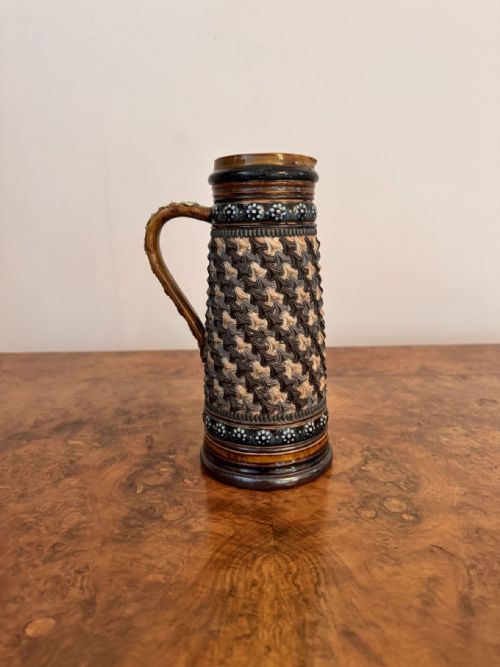
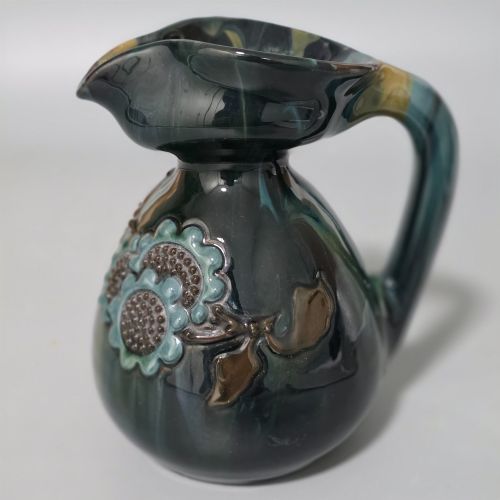
Surface decoration frequently involves incising, relief moulding, and slip painting executed by named studio artists. Metal mounts in silver plate or silver frequently frame the rims and handles of finer table vessels.
A pottery King Charles spaniel waits patiently among the jugs, keeping watch over the entire ceramic menagerie.
Judging Quality
Quality rests heavily on the crispness of the modelling and the depth of the incised or relief decoration. Pieces showing the hand of a known artist or decorator command greater attention than standard factory output.
The sophistication of the glaze application and the integration of any metal mounts also define the upper tier of the range. Uniformity in the salt glaze and strong definition in floral or figurative motifs separate superior examples from simpler utilitarian stock.
Doulton Lambeth·Royal Doulton·Lipscombe And Co London Pottery·Sunflower Pottery·Wedgwood·John Ridgway
The Victorian Stoneware Pottery Glossary
- Salt Glaze
- A vitreous coating formed by throwing common salt into the kiln during high-temperature firing. This process creates a distinctive textured surface resembling orange peel.
- Stoneware
- A robust, non-porous ceramic body fired at high temperatures until vitrified. It resists liquids naturally without requiring an interior lead glaze.
- Jasperware
- A type of fine-grained stoneware developed to display contrasting coloured reliefs against a coloured background. It appears in several table and decorative items.
- Ewers
- Large jugs featuring a wide spout and an ornate handle designed for pouring liquids. They frequently appear as decorative centrepieces in nineteenth-century interiors.
- Jardinieres
- Large decorative ceramic pots intended to hold potted plants. They often share the incised patterns and floral motifs found on contemporary vases.
Victorian Stoneware Pottery: Frequently Asked Questions
What is victorian stoneware pottery?
Victorian stoneware pottery encompasses durable ceramic vessels, jugs, and decorative objects produced during the nineteenth century. These items are characterised by hard, vitrified bodies and often feature salt glazes or intricate incised decoration.
The category is heavily represented by pieces from English potteries, particularly Doulton Lambeth, which employed notable artists to shape and decorate individual items. Collectors value them for their combination of utilitarian strength and artistic execution.
How do I identify salt glaze?
Salt glaze is identified by its characteristic pitted surface texture, which often resembles the skin of an orange. This texture results from salt vaporization inside the kiln during high-temperature firing.
On Victorian pieces, this glaze provides a durable, glossy finish that protects the dense stoneware body underneath. It appears frequently on utility jugs, barrels, and large decorative planters.
Were these items used daily?
Many pieces were designed for everyday domestic or commercial tasks, including water filtration, storing spirits, and serving tea or beer. Utility items like whisky flasks and tavern jugs saw robust service in public houses and homes.
At the same time, elaborate vases, ewers, and jardiniere stands served purely decorative purposes in Victorian parlours. The presence of artist signatures often indicates pieces intended primarily for display rather than rough utility.
How should I clean them?
Cleaning victorian stoneware pottery requires gentle handling with warm water and a soft cloth to protect the glaze and any delicate surface incising. Harsh detergents and abrasive brushes should be avoided, especially on pieces with metal mounts or enamel work.
Care must also be taken with antique silver-plated rims or collars, which benefit from specialised metal care without touching the ceramic body. Proper maintenance preserves both the salt glaze and the integrity of the clay.